Living in Wake Forest, NC (2026 Guide)
Is Wake Forest the Smartest Move in the Triangle Right Now?
Thinking about moving to Wake Forest? This guide uses current Wake County MLS data to break down home prices, neighborhoods, and the 2026 commute reality. Whether you're comparing Wake Forest to Cary, Apex, or staying closer to Raleigh — here's what serious buyers need to know.
Updated: May 28, 2026
Living in Wake Forest, NC: The Northward Expansion of Raleigh
Thinking about moving to Wake Forest? The 2026 real estate market here tells a story that the national media is finally catching up to. With a median home price of $500,000, a population nearing 65,000, and an average of 7 new residents arriving every day, Wake Forest has evolved from a quiet northern outpost into Raleigh’s most compelling northward expansion play.
The market here is defined by one word: momentum. The S-Line rail project is fully funded, the Grove 98/Wegmans corridor is a thriving commercial hub, and the downtown renaissance has reached a fever pitch. For buyers who want more home and community character than Cary or Apex can deliver at this price point—Wake Forest is the answer.
Morning: The Value vs. Time Decision
The day in Wake Forest starts with a choice that every buyer here makes consciously: the commute.
The RTP Run: From most Wake Forest neighborhoods, Research Triangle Park is a 35–45 minute drive off-peak, stretching to 60+ minutes during the 7:30 AM rush. This is the longest average RTP commute of the major suburbs, and it is the primary variable in the Wake Forest decision.
The Local Reality: For those working in North Raleigh, the story changes. Capital Boulevard (US-1) improvements have significantly smoothed the path to Raleigh's northern employment hubs, making Wake Forest a highly accessible live-near option for North Raleigh professionals.
Afternoon: The Space and Community Payoff
By midday, the reasons people endure the commute become obvious.
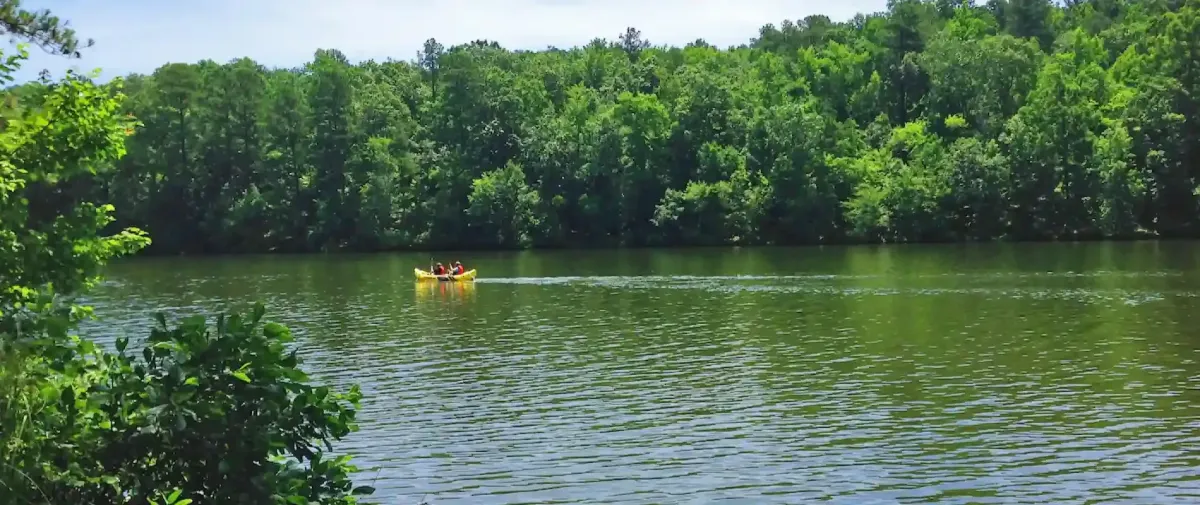
The Neighborhoods: Whether it's kayaking at Holding Village's 30-acre lake, golfing at Heritage, or exploring the wooded trails of Dansforth, Wake Forest offers a mature suburban feel. The trees are taller, the lots are often larger, and the pace is a gear lower than the southern suburbs.
The Grove 98 Corridor: Anchored by Wegmans, this mixed-use district has solved the lack-of-infrastructure complaints of the past decade. With new dining and retail concepts continuing to open, Grove 98 has become a legitimate regional destination.
Evening: Downtown Wake Forest’s Genuine Character
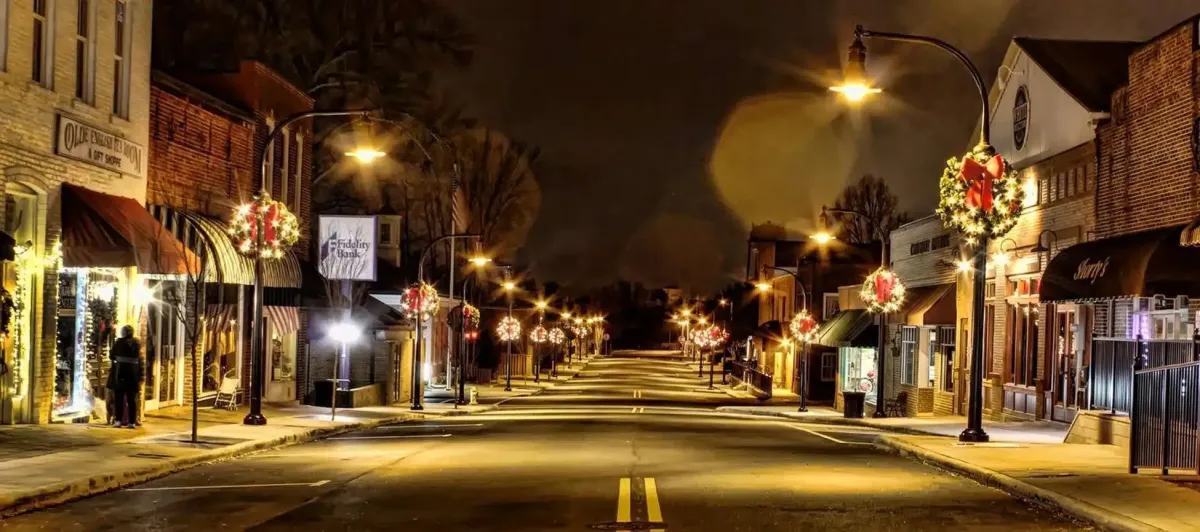
As the sun sets, Wake Forest offers something manufactured suburbs can't replicate: an authentic historic core.
The Renaissance District: S. White Street is the heart of the town. The Wake Forest Food Hall — located in the restored historic Chevrolet building — has become the town's social anchor, joining the Loading Dock and PowerHouse Row to create a walkable, high-energy district.
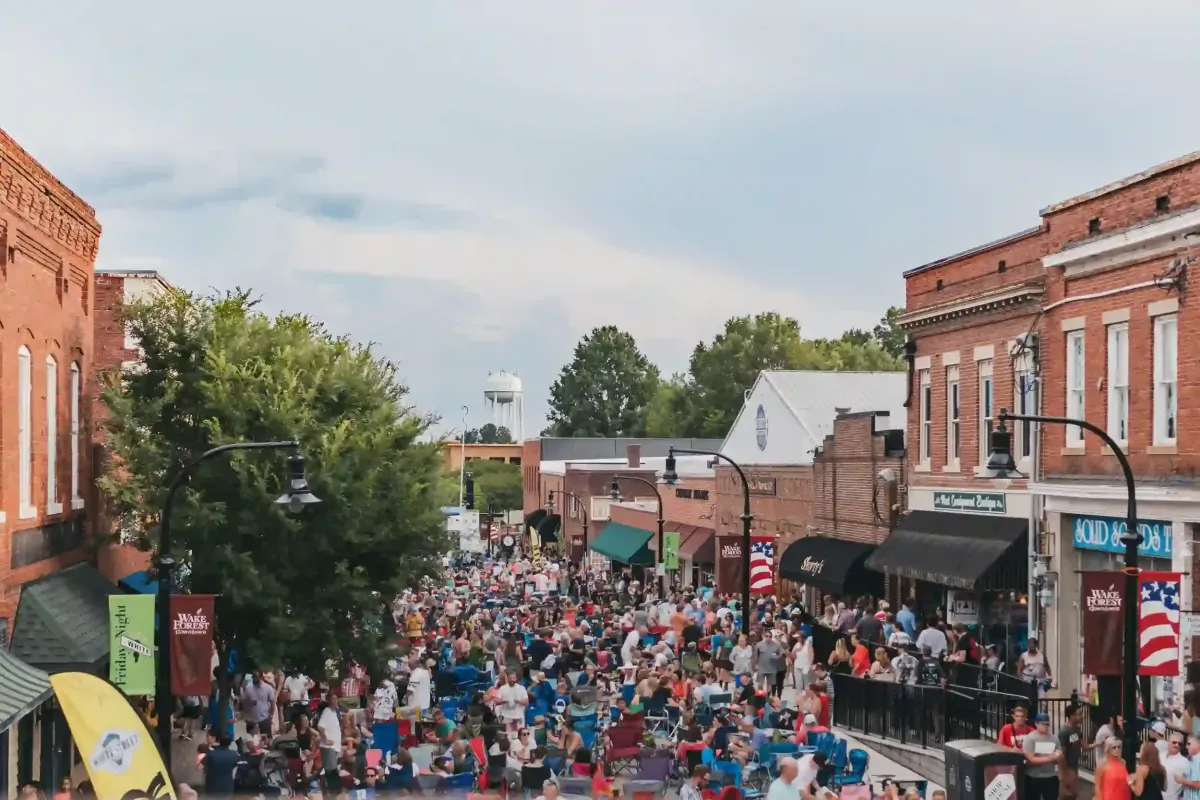
The Social Scene: Unlike town centers built last year, this downtown grew organically. On Friday nights, the social district status allows for a seamless flow between local breweries and restaurants, creating a community vibe that feels like a small city rather than a bedroom suburb.
💡 Phil’s Perspective
"I tell my clients that Wake Forest is the market where you buy ahead of the story. Between the S-Line rail project — which will eventually connect Wake Forest to Raleigh and Richmond via high-performance rail — and the continued northward migration out of Raleigh, the appreciation signals are all flashing green. You're buying into a Peak Apex lifestyle at a 20% discount — you just have to be okay with the 45-minute podcast on the way to work."
The Honest Trade-Off
Wake Forest's commute penalty is real. At a $500,000 median price point, you are paying roughly $195.77 per square foot — a meaningful discount compared to the $300+ seen in Apex or Cary. However, you are also dealing with a combined tax rate of $0.9371 and a longer haul to the airport and RTP.
For buyers comparing Wake Forest to Apex or Cary, the question isn't whether Wake Forest is better — it's whether the commute trade-off is justified by your specific lifestyle, schedule, and priorities. For many buyers, the space, the value, and the community character make that trade-off an easy yes. For others, Apex's shorter commute or Cary's finished infrastructure makes more sense.
That's not a knock on Wake Forest. It's just the honest read of the market in 2026.
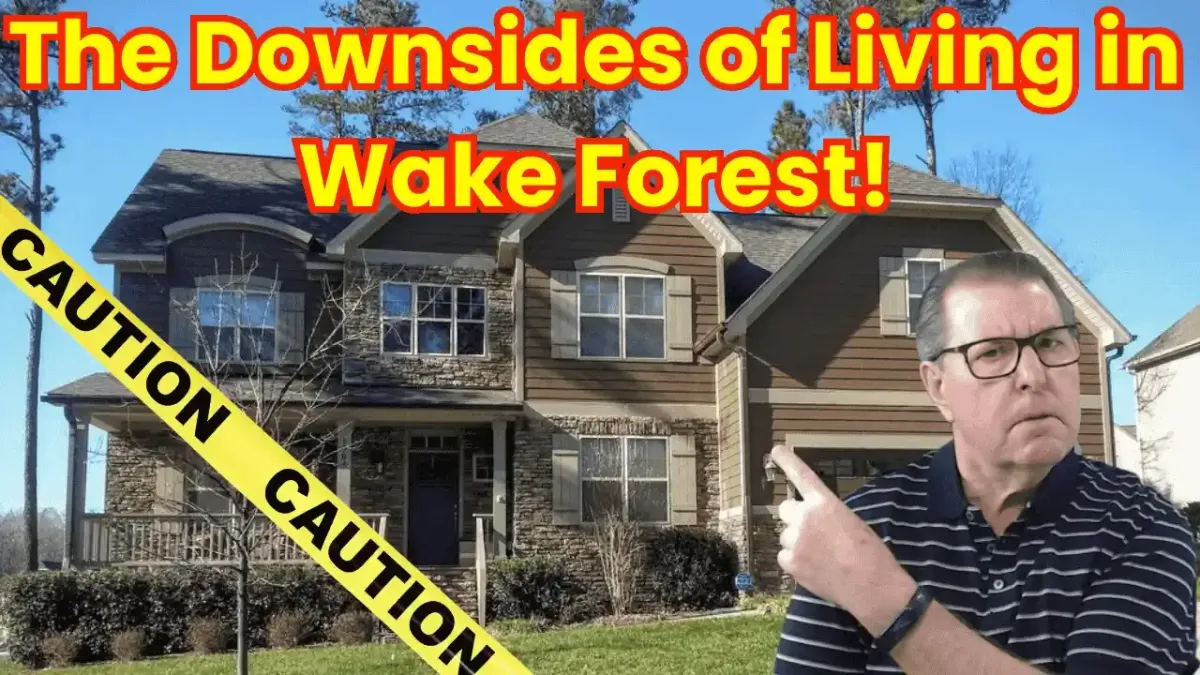
Watch: Living in Wake Forest, NC
Wake Forest, NC Population & Demographics
Population: ~64,618 — Wake Forest is one of the fastest-growing municipalities in Wake County, ranking in the top 3% of North Carolina's 551 towns for growth rate. It delivers a genuine small-city feel with established neighborhood pockets, an active historic downtown, and suburban infrastructure that is maturing rapidly to match its residential base.
County: Wake County, North Carolina.
Region: Raleigh–Durham–Chapel Hill Triangle.
Median Household Income: ~$120,777 — Nearly 73% higher than the North Carolina median, reflecting a workforce concentrated in technology, healthcare, research, and professional services. Within a five-mile radius, median household income exceeds $132,000, reinforcing Wake Forest's positioning as a high-income suburban market.
Median Age: ~38.6 — Slightly younger than the regional average, indicating a market dominated by young families, move-up buyers, and early-career professionals relocating from higher-cost markets. The largest age cohort is 25–44 year olds, who make up 27% of the population.
Educational Attainment: Nearly 58% of Wake Forest residents hold a bachelor's degree or higher — supported by proximity to three Tier One research universities: NC State, Duke, and UNC-Chapel Hill, which together conduct more than $3.5 billion in research annually.
The Evolution of Wake Forest — From Bedroom Community to Regional Destination
Wake Forest has transitioned from a quiet northern outpost into what national media outlets, including Travel + Leisure, have recognized as the most in-demand suburb in the United States for 2026. Unlike the finished, mature growth of Cary, Wake Forest's evolution is defined by active momentum — infrastructure investment, downtown revitalization, and commercial development finally catching up to years of residential expansion.
The town's evolution is now defined by what locals call the "Northward Expansion" of Raleigh — best exemplified by:
The S-Line Rail Project: The S-Line high-performance passenger rail project is actively under construction along the Raleigh corridor, with the Wake Forest hub expected to begin construction in 2028. When operational, this line will connect Wake Forest directly to downtown Raleigh — fundamentally changing the commute calculus for rail-adjacent residents and unlocking transit-oriented development in the heart of downtown Wake Forest.
The Grove 98/Wegmans Corridor: A thriving commercial engine that has brought high-end retail and dining to the town's northern edge, anchored by a 100,000+ square foot Wegmans — one of the first in the Southeast — and surrounded by boutique retail, restaurants, and seasonal programming that has made Grove 98 a legitimate regional destination.
The Renaissance Plan: An intentional transformation of S. White Street into a walkable urban core that retains its historic 19th-century architecture while supporting 21st-century amenities — including the Wake Forest Food Hall, the Loading Dock entrepreneur hub, PowerHouse Row, and a planned 360-space downtown parking deck to serve the growing district.
This intentional planning has created a market where real estate is viewed as a strategic opportunity — a place where the appreciation signals are converging before the national audience fully arrives.
Jump to:
• Wake Forest Population & Demographics – Understanding Wake Forest's rapid growth to 64,618 residents and what it means for buyers.
• Wake Forest Market Report – Real-time 2026 data on median prices, days on market, new construction share, and what buyers should expect.
• Wake Forest Homes For Sale – Active inventory in the Wake County MLS updated daily.
• Wake Forest New Construction vs Resale – Custom builders, production homes, and the strongest new construction pipeline in northern Wake County.
• How Wake Forest compares to other Triangle suburbs – Wake Forest vs. Apex vs. Cary vs. Holly Springs vs. Raleigh — the ultimate comparison for Triangle relocators.
• Wake Forest Neighborhoods – From Richland Hills and Bishops Grant to Heritage, Hasentree, and Grand Highland Estates.
• Cost of Living in Wake Forest – Property taxes, HOA fees, utilities, and the honest tax math buyers need before deciding.
• Schools in Wake Forest, NC - WCPSS assignments, enrollment caps, Heritage High uncapping July 2026, and private school options.
• Parks and Outdoor Living – Joyner Park, Holding Village lake, Falls Lake access, and Wake Forest's expanding greenway network.
• Amenities and Community Services – Healthcare trifecta, Grove 98 corridor, downtown Renaissance District, and the 2026 event calendar.
• Dining and Entertainment in Wake Forest – Farm Table, Norse Brewing, Bodega, the Social District, and the Grove 98 dining corridor.
• Where is Wake Forest Located – Highway access, commute matrix, what's north of Wake Forest, and the northern Wake County geographic advantage.
• Wake Forest Future Growth – S-Line rail, Capital Boulevard improvements, Wake Forest Exchange, and the Downtown Renaissance pipeline.
• Awards, Recognition, and Reputation – Travel + Leisure #1 suburb in the U.S., MoveBuddha 4.6-to-1 inbound ratio, and top 3% NC growth ranking.
Pros and Cons of Living in Wake Forest — The honest 2026 assessment of Wake Forest's trade-offs.
Is Wake Forest Safe? — Neighborhood-level safety reality and how to research any specific Wake Forest address.
What Salary Do You Need in Wake Forest? — Monthly cost breakdown, coastal city comparison, and the Wake Forest value proposition.
Why Are People Moving to Wake Forest? — The five pull factors driving Wake Forest's sustained in-migration wave.
About Phil Slezak — Your Wake Forest Real Estate Guide – How Phil Slezak uses AI-assisted analysis and 20+ years of local experience to protect your move.
FAQs About Wake Forest, NC – Quick answers to the most common relocation questions buyers ask before moving to Wake Forest.
About This Wake Forest Guide – Meet Phil and learn about his approach to Triangle real estate and the exclusive programs available to qualified clients.
Wake Forest, NC Real Estate Market Snapshot (2026)
📊 Current Market Overview
| Metric | Value (2026) |
|---|---|
| Median Home Price | $500,000 |
| Average Price per Sq. Ft. | $195.77 |
| Average Days on Market | 32 Days |
| Sale-to-List Price Ratio | 99% |
| Active Listings | 495 |
| New Construction Share | ~35% (175 listings) |
| Inventory Trend | Stable to Rising |
| Wake County Tax Rate | $0.5171 per $100 assessed value |
| Town of Wake Forest Tax Rate | $0.4200 per $100 assessed value |
| Combined Tax Rate | $0.9371 per $100 assessed value |
| Typical Commute to RTP | 35–45 min off-peak / 60+ min peak |
| Typical Commute to Raleigh | 20–35 min off-peak |
| Typical Commute to North Raleigh | 15–25 min |
The 35% new construction share of active listings — 175 of 495 active homes — is one of the highest ratios of any Triangle suburb. For buyers who want new construction without overpaying for Apex or Cary premiums, Wake Forest is one of the strongest markets in Wake County right now.
At $195.77 per square foot, Wake Forest delivers meaningful value versus Cary (~$310/sq ft) and Apex (~$295/sq ft). Buyers consistently report getting more home — more square footage, more lot, more community amenities — than they expected for the price. *Total property tax rates vary depending on whether a property is located inside Wake Forest town limits and any applicable special tax districts.
Wake Forest, NC Homes for Sale - View Current Listings
Wake Forest, NC Homes for Sale
Browse current listings including new construction, resale homes, and luxury properties across all Wake Forest neighborhoods.
👇 View Current Wake Forest Listings 👇Listings open in a new tab — no login required
Housing in Wake Forest, NC: New Construction vs. Resale
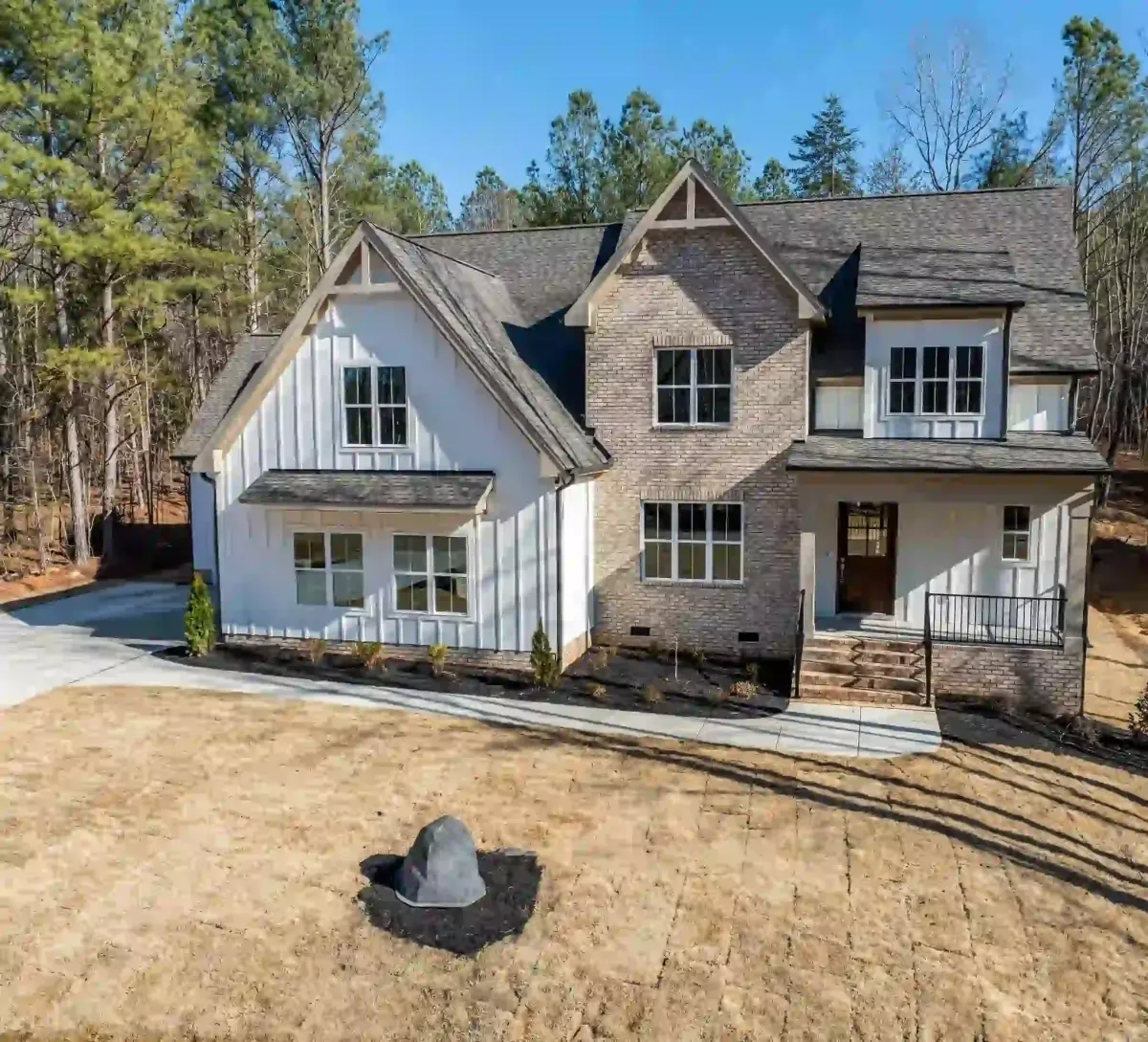
Wake Forest's housing landscape ranges from established ranch-style homes in Richland Hills to luxury golf estate communities in Hasentree and Wakefield. For most buyers, the choice comes down to modern finishes and builder incentives versus established character, mature lots, and neighborhood identity. With 35% of active listings being new construction — one of the highest ratios in Wake County — Wake Forest gives buyers more options on both sides of that decision than any comparable Triangle suburb.
New Construction: Strong Pipeline & Genuine Value
New development is concentrated in master-planned communities along the US-1 corridor, NC-98 Bypass, and the town's northern and western growth edges.
The Profile: Modern Craftsman and Transitional styles with open floor plans, energy-efficient systems, and smart home technology standard in most communities.
The 2026 Advantage: Many builders are offering mortgage rate buydowns (4.99%–5.25%) and closing cost credits to move inventory. Wake Forest's new construction price points — starting in the mid-$300s — offer entry that is simply not available in Apex or Cary.
The Trade-off: Higher price-per-square-foot than resale in established neighborhoods, and smaller lots in higher-density new construction communities.
Top Custom & Luxury Builders in Wake Forest
Rufty Homes — Award-winning luxury builder specializing in custom homes with high-end materials and innovative technology.
Hearthstone Luxury Homes — Design-build firm and winner of Custom Builder of the Year, offering in-house architectural and interior design services.
Kendall Custom Homes — Specializes in 3,500+ sq ft custom homes, building on private land and in communities like Waterstone Manors.
Speight Built — Custom luxury designs in premier Wake Forest communities including Hasentree, balancing refined architecture with natural surroundings.
Deep South Building Company — Custom builder featured in Grand Highland Estates.
Exeter Building Company — High-end builder specializing in custom projects including Wexford Reserves.
Oak & Stone Custom Homes — Serves Wake Forest and surrounding areas with fully custom building services.
Triple A Homes — Luxury homes with energy-efficient designs.
Top Production & Semi-Custom Builders in Wake Forest
D.R. Horton — Largest production builder in the U.S., active across multiple Wake Forest communities at accessible price points.
Lennar — "Everything's Included" model with strong energy efficiency and smart home packages.
Tri Pointe Homes — Lifestyle-focused communities with thoughtful floor plan design.
Drees Homes — Semi-custom options with strong personalization at the design center.
Stanley Martin — Active in townhome and single-family communities including downtown-adjacent projects.
Taylor Morrison — Lifestyle-focused builds with strong community amenity packages.
Davidson Homes — Growing Triangle presence with value-focused semi-custom options.
Garman Homes — NC-based builder known for energy-efficient, design-forward construction.
Resale Homes: Character, Maturity, and Value
Established neighborhoods like Heritage, Dansforth, Bishops Grant, and Richland Hills offer privacy and community identity that new construction communities rarely replicate immediately.
The Profile: Larger, mature lots (0.25 to 0.5+ acres) with established tree canopies, especially in older Heritage sections and Dansforth.
The 2026 Advantage: Median resale prices offer a better value per square foot than new builds, and established HOA communities come with proven amenity packages and functioning community governance.
The Trade-off: Homes built in the 1990s and 2000s may require age-typical updates including roofs, HVAC systems, and kitchen modernization.
Wake Forest Housing Style Comparison
Traditional Two-Story
Common Locations: Heritage (older sections), Bishops Grant, Richland Hills (1990–2010)
Best For: Buyers wanting larger lot sizes, privacy, mature tree canopies, and established neighborhood identity.
Modern Craftsman
Common Locations: Holding Village, newer Heritage sections, Traditions at Wake Forest
Best For: Buyers prioritizing energy efficiency, open floor plans, and builder incentives with community amenity packages.
Luxury Golf Community
Common Locations: Hasentree, Heritage Golf Club, Wakefield Plantation
Best For: High-end buyers seeking private club amenities, championship golf, prestige address, and resort-style community living.
Luxury Estate
Common Locations: Stonewater, Wakefield, custom lots along the town's northern corridors
Best For: High-end buyers needing larger lots, custom architecture, or semi-custom builds with upscale finishes at prices below comparable North Raleigh communities.
Lakefront & Resort-Style
Common Locations: Holding Village (30-acre lake), Hasentree
Best For: Buyers who want lifestyle amenities — kayaking, fishing, walking trails — integrated into their daily routine without leaving the neighborhood.
Townhomes & Attached
Common Locations: Downtown Wake Forest core, Traditions at Wake Forest entry-level sections
Best For: First-time buyers, downsizers, and investors seeking lower maintenance, HOA-managed living, and proximity to the downtown social district.
55+ Active Adult
Common Locations: Del Webb at Traditions, select Heritage sections
Best For: Age-qualified buyers focused on low-maintenance living, social programming, and proximity to healthcare and downtown amenities without the full suburban footprint.
*Rate buydown availability and terms vary by builder, phase, and market conditions — verify directly with the builder's preferred lender. Age-qualified communities are governed by federal HOPA guidelines — buyers interested in this housing type should verify eligibility and availability directly.
How Wake Forest Compares to Other Triangle Suburbs
Buyers comparing Wake Forest often also evaluate Apex, Cary, Holly Springs, and Raleigh. While all five offer strong quality of life and access to the Triangle's employment base, they serve very different priorities regarding commute tolerance, budget, space, new construction availability, and town character.
At-a-Glance Comparison (2026 Data)
How Wake Forest Compares to Other Triangle Suburbs (2026)
| Wake Forest | Apex | Cary | Holly Springs | Raleigh | |
|---|---|---|---|---|---|
| Median Home Price | ~$500,000 | ~$623,500 | ~$625,000 | ~$607,500 | ~$470,000 |
| Municipal Tax Rate | $0.4200 | $0.3560 | $0.3400 | $0.3435 | $0.3550 |
| Combined Tax Rate | $0.9371 | $0.8731 | $0.8571 | $0.8606 | $0.8721 |
| Price Per Sq Ft | $195.77 | ~$295 | ~$310 | ~$260 | ~$230 |
| Market Character | Value & momentum | Historic charm & growth | Mature & prestigious | New construction & biotech | Urban core & diverse |
| New Construction | Abundant (35%) | Active | Limited | Abundant | Limited |
| RTP Commute | 50–75 min peak | 20–35 min | 10–20 min | 25–40 min | 15–25 min |
| Downtown Scene | Historic & revitalizing | Historic Social District | Revitalized & walkable | Still developing | Vibrant urban core |
| Golf Communities | 3+ (Hasentree, Heritage, Wakefield) | Limited | Preston, MacGregor Downs | 12 Oaks, Sunset Ridge | Limited |
| Lot Sizes | Generous — 0.25 to 1+ acres | Moderate | Moderate to large | Moderate | Smaller — urban density |
| Best For | Value, space & community | Community & new construction | Commuters, families, prestige | Value & new construction | Urban lifestyle & walkability |
Nearby Triangle Relocation Guides
Buyers researching Wake Forest often compare it with other Wake County and Triangle communities. Explore the full guide library below.
Apex: The Southern Corridor Alternative
⚖️ The Trade-off: Apex offers a historic Social District downtown, the $3 billion Veridea development as a long-term appreciation anchor, and a significantly shorter RTP commute at 20–35 minutes versus Wake Forest's 50–75 minute peak-hour reality. Entry pricing is higher at ~$623,500 median, and price per square foot runs ~$295 versus Wake Forest's $195.77.
✅ Why Choose Wake Forest: Wake Forest delivers significantly more home per dollar, a stronger new construction pipeline, multiple golf communities at multiple price points, and an authentic historic downtown that Apex's newer social district is still working to match in depth and character. For buyers who can manage the commute — especially those with hybrid schedules or North Raleigh employment — Wake Forest's value gap over Apex is hard to ignore.
Cary: The Established Prestige Option
⚖️ The Trade-off: Cary offers the shortest RTP commute of any major Triangle suburb (10–20 minutes), the most mature infrastructure, 100+ miles of greenways, and a Blue Chip resale track record. At ~$625,000 median and ~$310 per square foot, buyers pay a meaningful premium for that certainty — and new construction options are limited.
✅ Why Choose Wake Forest: Wake Forest delivers roughly 37% more home per square foot than Cary at current pricing. For buyers who want a newer home, a larger lot, a golf community lifestyle, or simply more space for the same investment — and who can absorb the longer commute — Wake Forest is the most compelling value play in northern Wake County.
Holly Springs: The Southern Growth Market
⚖️ The Trade-off: Holly Springs shares Wake Forest's new construction strength and value positioning, anchored by the Fujifilm and Genentech biotech corridor driving sustained high-wage employment demand. The RTP commute from Holly Springs runs 25–40 minutes — meaningfully shorter than Wake Forest. However, Holly Springs lacks Wake Forest's historic downtown character, golf community depth, and the long-term transit upside of the S-Line rail project.
✅ Why Choose Wake Forest: Wake Forest wins on price per square foot ($195.77 vs ~$260 for Holly Springs), golf community variety, downtown authenticity, and the S-Line appreciation signal. For buyers who don't need proximity to the biotech corridor and want more community identity and lifestyle options, Wake Forest is the stronger long-term play.
Raleigh: The Urban Alternative
⚖️ The Trade-off: Raleigh offers the Triangle's most vibrant urban lifestyle — walkable neighborhoods, a growing food and arts scene, shorter RTP commute at 15–25 minutes, and a lower median home price at ~$470,000. For buyers who want city energy, urban density, and proximity to downtown Raleigh's amenities, no suburb can replicate what Raleigh itself delivers. The combined tax rate of $0.8721 is lower than Wake Forest's $0.9371, and the municipal infrastructure is fully built out.
✅ Why Choose Wake Forest: Wake Forest wins decisively on space, lot size, community character, and school environment. At $195.77 per square foot versus Raleigh's ~$230, Wake Forest buyers get meaningfully more home. The neighborhoods here — Heritage, Holding Village, Hasentree, Dansforth — deliver a level of residential privacy, mature landscaping, and golf community lifestyle that no Raleigh neighborhood can match at comparable price points. For buyers with families, hybrid work schedules, or a preference for suburban quality of life over urban density, Wake Forest is the clear choice.
💡 Phil's Perspective: Every week I work with buyers who come into the Triangle with a budget and a shortlist. Wake Forest consistently surprises them. They come in expecting to settle for less because of the commute — and they leave realizing they're getting a Peak Apex lifestyle at a 20% discount. The buyers who compare Wake Forest to Raleigh often discover they can get twice the lot, a newer home, a golf community address, and top-rated Wake County schools for the same monthly payment — with the only trade-off being a longer drive to RTP. The buyers who win in Wake Forest are the ones who understand that the S-Line, the Capital Boulevard improvements, and the continued northward migration out of Raleigh are the kinds of converging signals that historically drive the next decade of appreciation. The question isn't whether Wake Forest will be recognized nationally. Travel + Leisure already answered that. The question is whether you're going to be in the market before or after that recognition is fully priced in.
Best Neighborhoods in Wake Forest, NC (2026)
Wake Forest offers one of the most diverse neighborhood lineups of any Triangle suburb — from accessible entry-level communities to world-class private golf estates. Here is the 2026 breakdown.
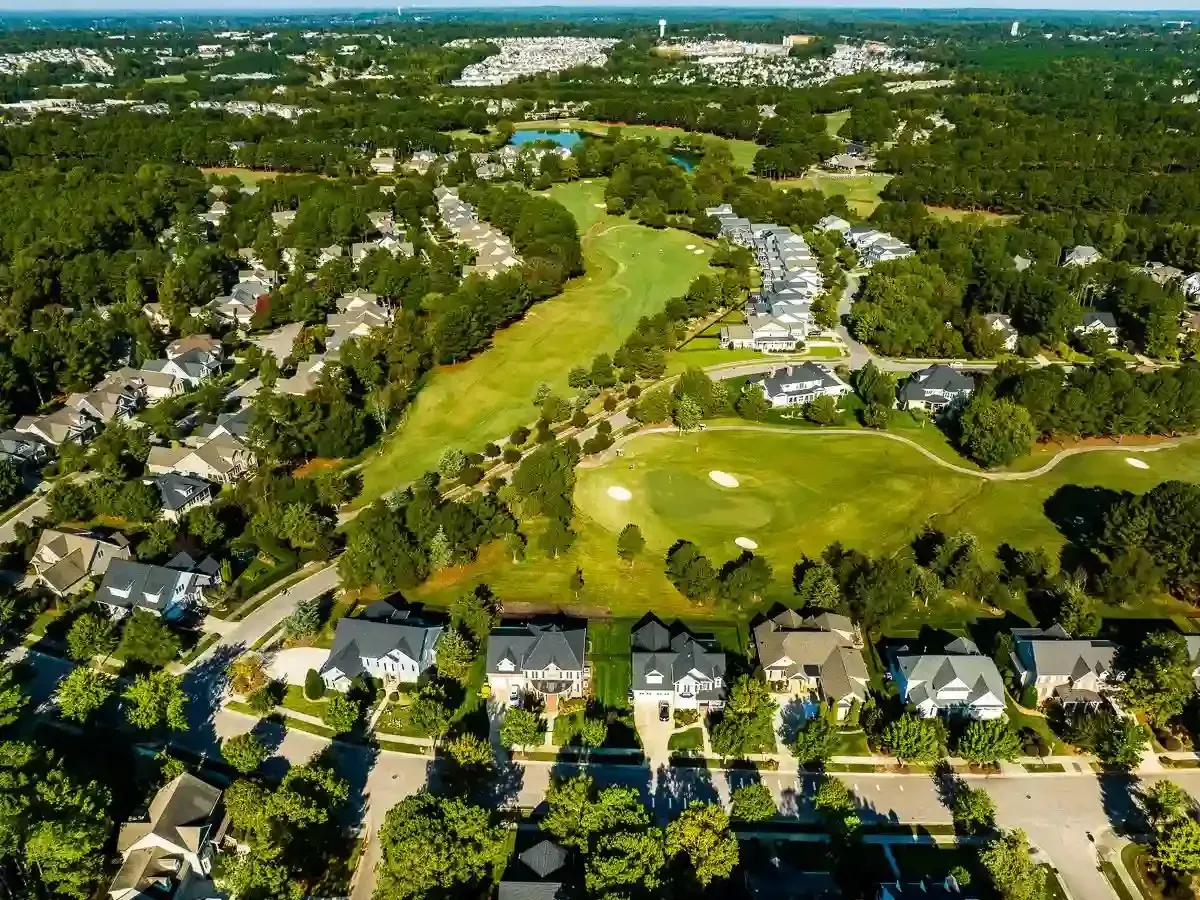
Heritage — $350,000 to $1,100,000+
Heritage is Wake Forest's most established and recognizable master-planned community. It is a self-contained ecosystem with its own elementary school, multiple pools, and the Heritage Golf Club.
The Vibe: Mature, active, and multi-generational.
The Local Read: It's the first neighborhood most buyers tour. The variety of housing — from townhomes to $1M+ custom estates — ensures it remains the heart of Wake Forest real estate.
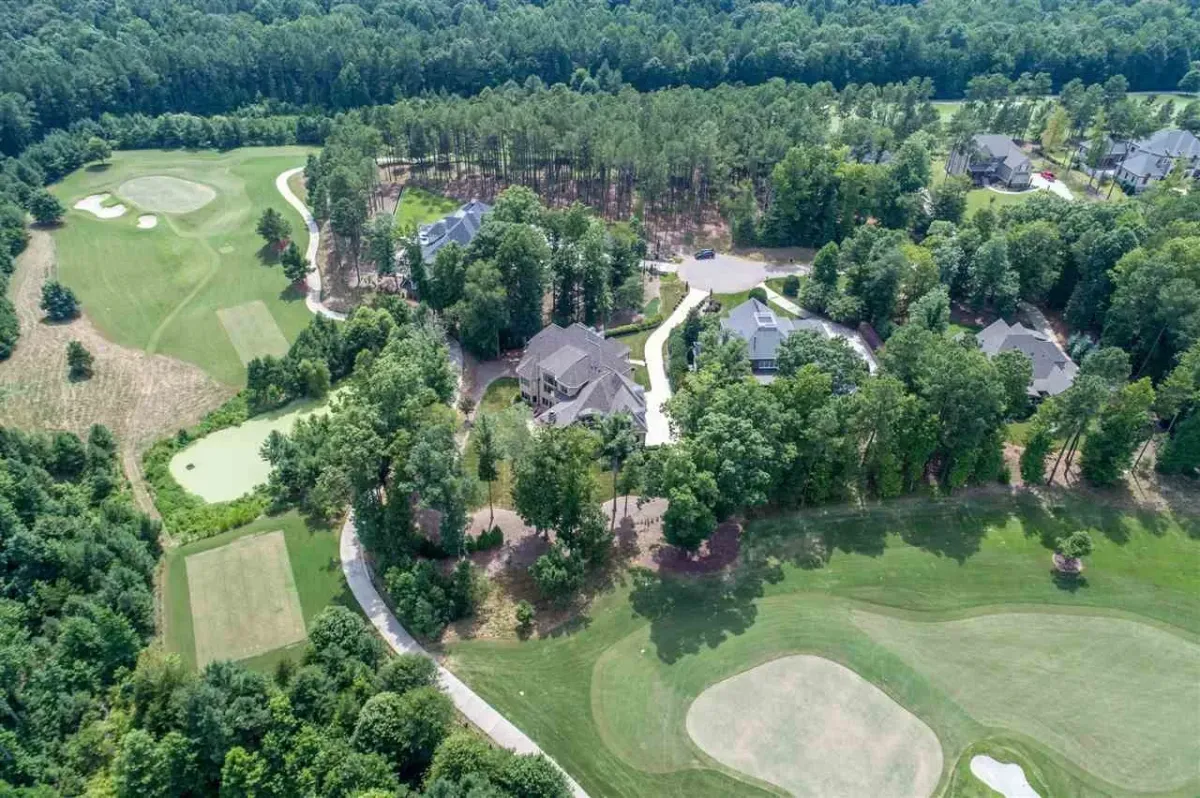
Hasentree — $850,000 to $2,500,000+
Wake Forest's premier luxury address. Centered around a Tom Fazio-designed championship course, it offers a resort-style lifestyle that competes with any high-end club community in the Southeast.
The Vibe: Private, prestigious, and architecturally distinct.
The Local Read: In 2026, Hasentree is the go-to for buyers who want the Cary luxury feel but want more land and a more intimate club atmosphere. The Tom Fazio course is the differentiator no other Wake Forest community can match.
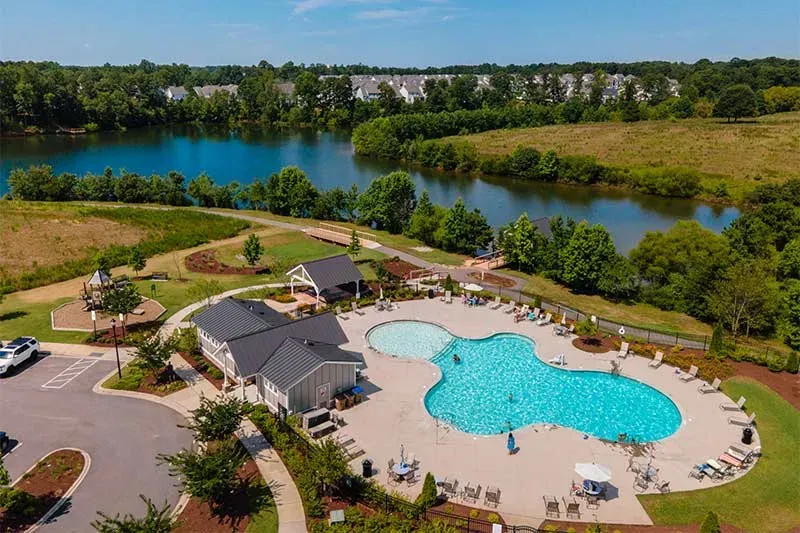
Holding Village — $375,000 to $950,000+
Built around a 30-acre spring-fed lake, Holding Village is a modern-nostalgic community with a heavy focus on outdoor programming and front-porch living.
The Vibe: High-energy, young professional, and nature-centric.
The Local Read: The townhome phase (mid-$300s) has been one of the most active 2026 entry points for first-time buyers who don't want to sacrifice amenities. The lake is real, the trails are finished, and the community identity is already established.
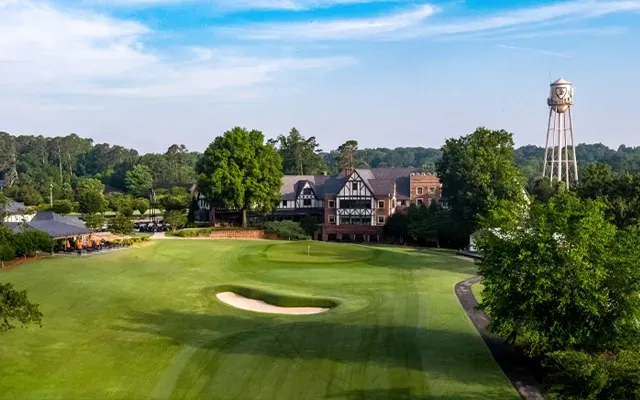
Wakefield — $1,200,000 to $3,000,000+
Technically straddling the Raleigh and Wake Forest line, Wakefield Plantation is a legacy luxury community offering massive estate lots and the prestige of Wakefield Plantation Golf Club.
The Vibe: Established, wooded, and stately.
The Local Read: Many buyers cross from North Raleigh into Wakefield to get 20% more square footage for the same price point as comparable North Hills estates. The dual-market positioning gives Wakefield access to both Wake Forest and North Raleigh amenity ecosystems.
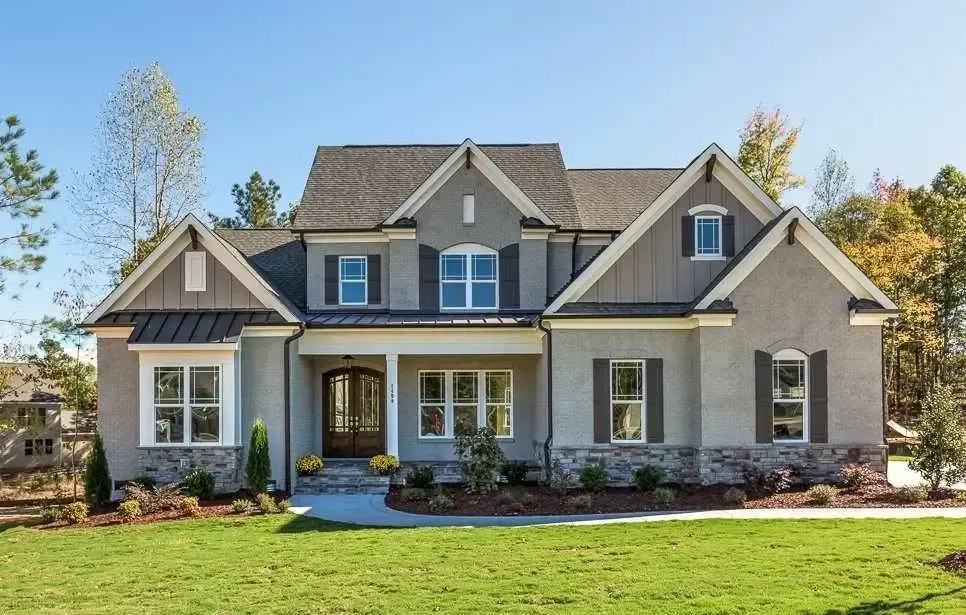
Stonewater — $950,000 to $1,800,000+
Stonewater has emerged as the Apex-alternative for 2026 — delivering high-end custom and semi-custom construction on generous lots without the West Cary premium.
The Vibe: Polished, new, and upscale suburban.
The Local Read: This is where you see the most relocation buyers from high-cost markets like DC or New Jersey. The positive sticker shock is real — $1M–$1.5M in Stonewater delivers what $2M+ buys in Northern Virginia.
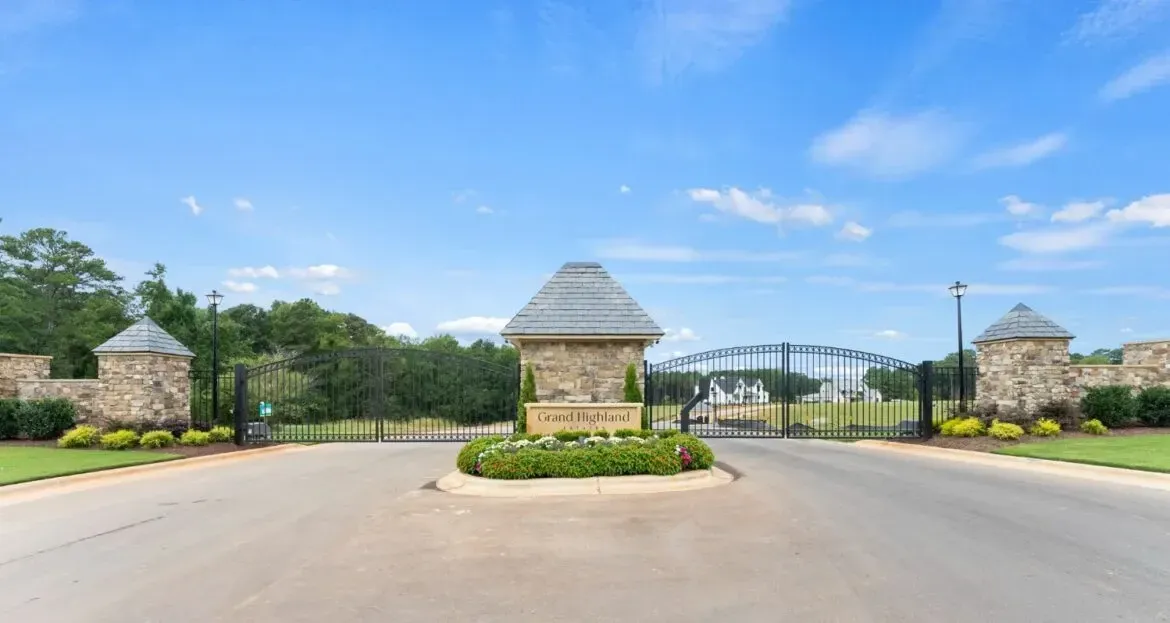
Grand Highland Estates — $1,750,000 to $3,500,000+
The newest addition to Wake Forest's 2026 luxury roster. A private gated community of only 66 homesites on lots up to 2.5 acres — the ultra-privacy play in northern Wake County.
The Vibe: Rural-luxury, gated privacy, and maximum square footage.
The Local Read: Grand Highland Estates represents the New Wake Forest — large custom estate homes for buyers who prioritize privacy and lot size above all else. At this price point it competes directly with Chapel Hill's most exclusive addresses and wins on acreage every time.
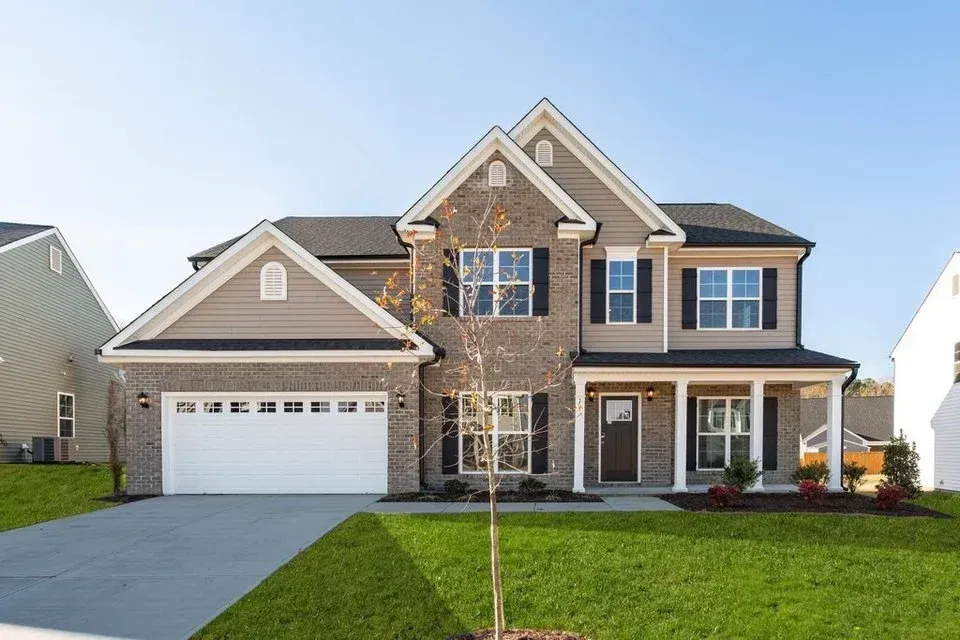
Bishops Grant — $400,000 to $750,000
A well-regarded established community popular with families seeking a traditional suburban neighborhood feel with community pool, walking trails, and solid school assignments.
The Vibe: Family-focused, traditional, and unpretentious.
The Local Read: Bishops Grant is one of those neighborhoods that doesn't generate a lot of buzz but consistently performs on resale. Buyers who choose it tend to stay, which keeps the community character stable and the neighbor quality high. One of the best options in Wake Forest for families who want amenities without stretching the budget.
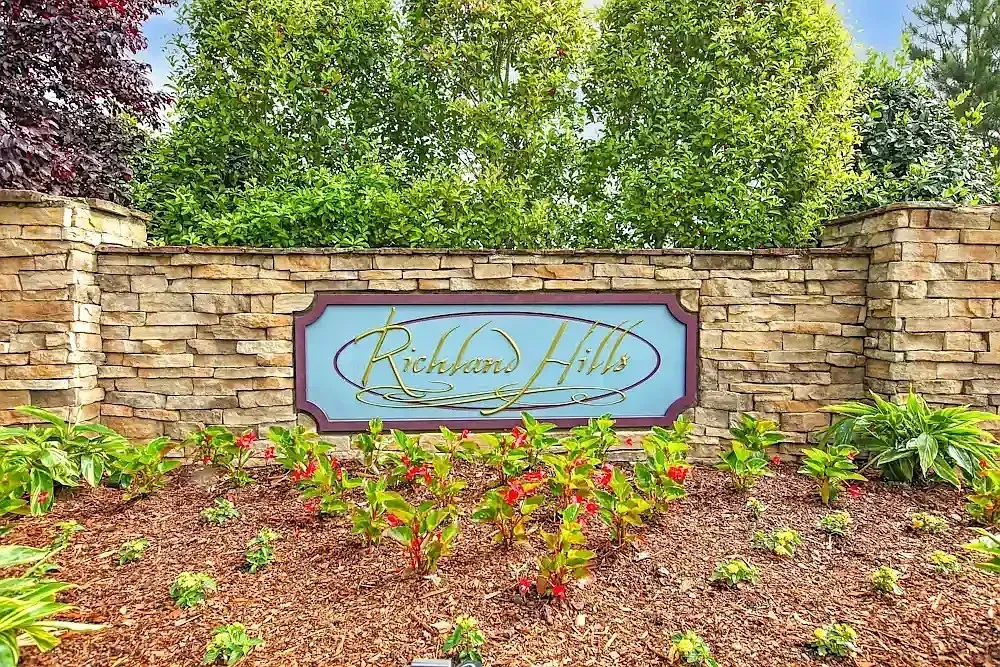
Richland Hills — $300,000 to $575,000
Wake Forest's best-kept secret for value. A mature neighborhood with character-filled homes on large lots, without the heavy HOA restrictions of the master-planned communities.
The Vibe: Traditional, quiet, and budget-friendly.
The Local Read: Ideal for buyers who want the Wake Forest school system and location benefits without paying for a golf club they won't use. One of the few remaining Wake Forest neighborhoods where buyers can still find genuine value at under $400,000.
Also Worth Knowing
Dansforth ($500,000 to $850,000)
A wooded, established neighborhood with custom-quality homes, cul-de-sac streets, and generous lot sizes. Buyers who tour multiple Wake Forest communities often end up here after realizing the lot quality and tree canopy are difficult to match at this price point. Feels more like a custom neighborhood than a production community.
Traditions at Wake Forest ($325,000 to $1,000,000+)
One of Wake Forest's largest master-planned communities with a wide range of housing types from townhomes to single-family estates. Strong new construction pipeline, active Del Webb 55+ section, and community amenities that include pools, fitness center, and miles of walking trails. A strong option for buyers who want variety and flexibility within one community.
🏘️ Neighborhood Selection Tips from Phil
Three things I tell every Wake Forest buyer before they start touring:
Verify school assignments first. WCPSS assignments are address-specific and change frequently. Use wcpss.net before making an offer — not after.
Drive your commute at 8:00 AM. A home in northern Heritage has a very different commute experience than a home in south Holding Village. Test the reality before you sign.
Check the Reserve Fund. In master-planned communities, look at the HOA's financial health. You want to see healthy reserves for long-term amenity maintenance so you aren't hit with a special assessment three years after moving in.
*Verify current school assignments directly with Wake County Public Schools before making any purchase decision based on a specific school. Properties outside Wake Forest town limits may be subject to different tax rates and special districts — confirm with your agent.
Cost of Living & Taxes in Wake Forest, NC (2026)
Wake Forest delivers one of the most compelling cost-of-living propositions in the Triangle — more home, more space, and more community character per dollar than any comparable suburb. The trade-off is a higher combined tax rate and a longer commute. Here is the complete financial picture buyers need before making a decision.
Property Taxes
Wake Forest property owners inside town limits pay a combined Wake County and municipal tax rate of $0.9371 per $100 of assessed value for FY2026:
Wake County rate: $0.5171 per $100
Town of Wake Forest municipal rate: $0.4200 per $100
Combined rate: $0.9371 per $100
What that means in real dollars:
Home Value - $350,000 Annual Tax Bill - $3,280
Home Value - $500,000 Annual Tax Bill - $4,686
Home Value - $750,000 Annual Tax Bill - $7,028
Home Value - $1,000,000 Annual Tax Bill - $9,371
Home Value - $1,500,000 Annual Tax Bill - $14,057
Wake Forest's combined rate of $0.9371 is the highest of the major Triangle suburbs — higher than Cary ($0.8571), Apex ($0.8731), Holly Springs ($0.8606), and Raleigh ($0.8721). The differential on a $500,000 home versus Cary is approximately $400 per year — a meaningful but manageable number given the significant price-per-square-foot advantage Wake Forest delivers.
Properties outside Wake Forest town limits pay only the Wake County rate of $0.5171 — approximately $2,586 annually on a $500,000 home. Always verify tax jurisdiction for any specific property at wakegov.com before closing.
Home Value and What You Get
At a median of $500,000 and $195.77 per square foot, Wake Forest consistently delivers more home than comparable price points in any other major Triangle suburb:
vs. Cary (~$310/sq ft) — 37% more home per dollar
vs. Apex (~$295/sq ft) — 34% more home per dollar
vs. Holly Springs (~$260/sq ft) — 25% more home per dollar
vs. Raleigh (~$230/sq ft) — 15% more home per dollar
A $600,000 budget in Wake Forest buys a newer single-family home with 3,000–3,500 square feet, a generous lot, and a master-planned community amenity package. That same budget in Cary is likely a smaller resale detached home or a townhome with limited outdoor space.
New Construction Value
With 35% of active listings being new construction — 175 of 495 active homes — Wake Forest offers one of the strongest new build pipelines in Wake County. Production builders including D.R. Horton, Lennar, Taylor Morrison, and Davidson Homes are active across multiple communities with entry points starting in the mid-$300s. Custom and semi-custom options through Rufty Homes, Hearthstone, Speight Built, and others serve the $800,000–$3M+ segment.
New construction buyers in Wake Forest consistently report getting more square footage, more lot, and more builder incentives than comparable new builds in Apex, Holly Springs, or Cary at the same price point.
Everyday Cost of Living
Beyond housing, Wake Forest's cost of living tracks closely with the broader Triangle market:
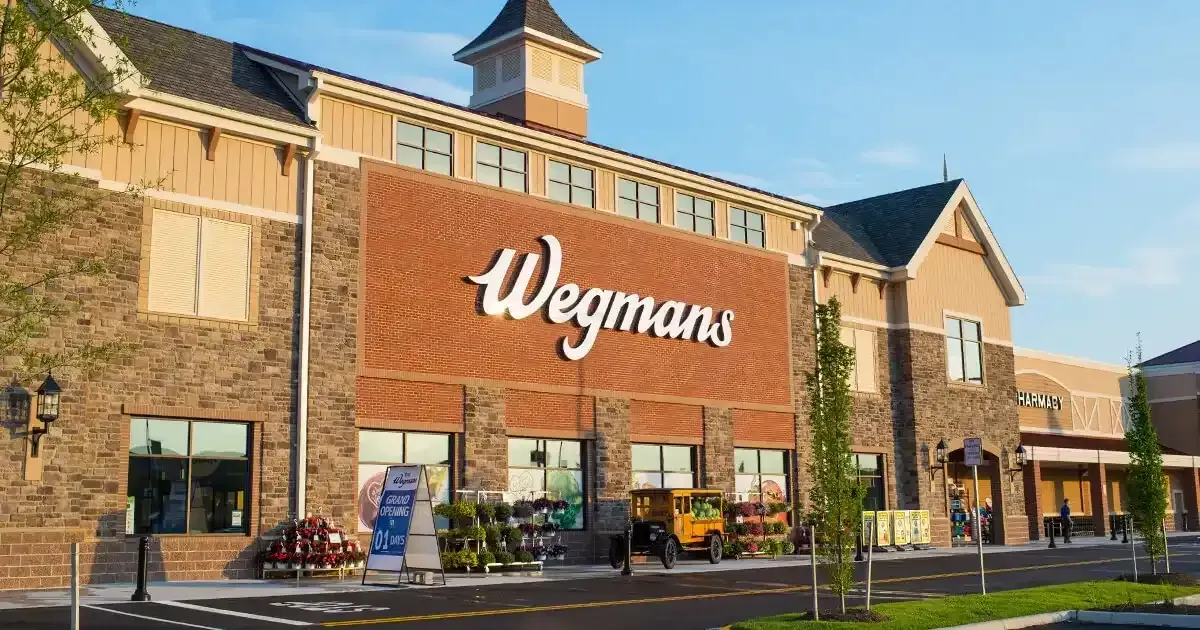
Groceries: The Grove 98 Wegmans is now the anchor grocery destination — one of the Southeast's flagship locations with pricing competitive with regional chains. Harris Teeter, Publix, and Lidl serve additional corridors.
Healthcare: WakeMed Wake Forest, Duke Health Wake Forest, and UNC Health Rex outlets provide primary and specialty care within the town footprint. No need to drive to Raleigh for routine healthcare.
Dining: Downtown Wake Forest's S. White Street social district and the Grove 98 corridor have meaningfully expanded the local dining scene. Farm Table, Norse Brewing, Bodega, and the Wake Forest Food Hall give residents genuine options without a Raleigh drive.
Utilities: Duke Energy serves most of Wake Forest's residential base. Average monthly utility costs for a 2,500 sq ft home run approximately $150–$200 in moderate months and $250–$350 in peak summer and winter months — consistent with Triangle averages.
HOA Fees: Master-planned communities carry HOA fees that vary significantly by community. Heritage runs approximately $600–$900 annually. Hasentree and Holding Village run $1,200–$2,400 annually depending on amenity tier. Grand Highland Estates and Wakefield carry higher fees reflecting private gate and club infrastructure. Always request the full HOA financials including reserve fund status before making an offer.
The Honest Tax Math
Wake Forest's higher combined tax rate is the most common financial objection buyers raise. Here is how to think about it honestly:
The $400 annual tax premium versus Cary on a $500,000 home is $33 per month. For that $33, buyers are getting roughly 37% more home per square foot, a stronger new construction pipeline, multiple golf community options, and an authentic historic downtown with active appreciation signals including the S-Line rail project.
For most buyers, that is not a close trade-off. The tax rate is higher — but the value equation more than compensates. The buyers who should genuinely weigh the tax differential most carefully are those buying at the $1M+ level, where the annual dollar difference between Wake Forest and Cary becomes $8,000+ per year — a number worth factoring into a long-term financial plan.
Wake Forest, NC Schools — What Buyers Need to Know
Wake Forest is served by Wake County Public School System (WCPSS), the largest school district in North Carolina and one of the most respected in the Southeast. For buyers relocating from out of state, WCPSS is consistently ranked among the top 5 largest districts in the country by academic performance metrics — a meaningful data point when evaluating the Triangle against other relocation markets.
High Schools Serving Wake Forest
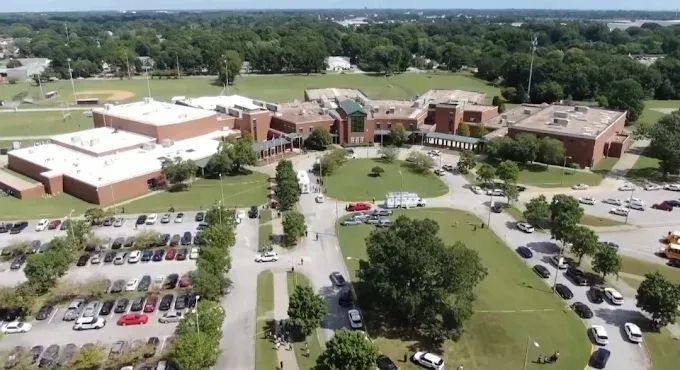
Wake Forest-Rolesville High School Wake Forest-Rolesville High is the town's flagship public high school — a large, comprehensive high school with strong academic programs, competitive athletics, and one of the most active performing arts programs in Wake County. The school serves a significant portion of Wake Forest's established residential base including Heritage and surrounding neighborhoods.
Heritage High School Heritage High School serves the Heritage master-planned community and surrounding corridors. It is one of Wake County's newer high schools with modern facilities, strong STEM programming, and a growing athletics tradition. Heritage High consistently performs above state averages on academic metrics.
Rolesville High School Rolesville High serves portions of Wake Forest's eastern and southern growth corridors. It is a smaller, community-focused high school with strong athletics and a tight-knit student culture that many families specifically seek out over larger alternatives.
The Wake County School Assignment Reality
This is the most important thing I tell every buyer considering Wake Forest — and it applies to every Wake County suburb equally:
School assignments in Wake County are address-specific and change annually. Proximity to a school does not guarantee assignment to that school. Several schools serving high-growth Wake Forest corridors have operated under enrollment caps in recent years, meaning new residents may be assigned to schools outside their immediate area.
Three rules every Wake Forest buyer must follow:
Use the WCPSS Address Lookup Tool at wcpss.net for your specific property address before making an offer — not after going under contract.
Never purchase a home based on proximity to a school without verifying the current assignment for that exact address.
Ask your agent about enrollment cap history for any school that is central to your family's decision. Caps can change year to year.
Charter and Private School Options
Wake Forest and the surrounding northern Wake County area have a growing charter and private school ecosystem for families with specific educational priorities:
Wake Forest Charter Academy — K–8 public charter school with strong academic performance and a waitlist-based enrollment process.
Thales Academy Wake Forest — Private classical K–12 school with a structured curriculum and affordable tuition relative to comparable private options.
Franklin Academy Wake Forest — Public charter school serving K–12 with a college-preparatory focus.
Heritage Christian Academy — Faith-based private school option serving northern Wake County families.
Charter schools in Wake County use a lottery-based enrollment system. Applications typically open in January for the following school year. If a specific charter school is central to your family's decision, verify enrollment timelines and waitlist status before committing to a neighborhood.
Elementary and Middle School Feeder Patterns
Elementary and middle school assignments follow the same address-specific WCPSS system. Key elementary schools serving Wake Forest neighborhoods include:
Heritage Elementary — Located within the Heritage community, serving Heritage residents and surrounding areas.
Rolesville Elementary — Serves eastern Wake Forest and Rolesville corridors.
Forest Pines Elementary — Serves portions of northern Wake Forest growth areas.
Wake Forest Elementary — Serves portions of the town's established residential core.
Middle schools feeding into Wake Forest high schools include Wake Forest Middle, Rolesville Middle, and Heritage Middle — all subject to address-specific assignment verification.
Phil's School Advisory
"The number one mistake I see relocation buyers make in Wake Forest — and in every Wake County suburb — is assuming that because a neighborhood is zoned near a highly rated school, their kids will attend that school. Wake County doesn't work that way. I've had buyers lose their dream school assignment because the address they chose was on the wrong side of a boundary line that changed that spring. Use wcpss.net. Use it before you fall in love with the house. It takes three minutes and it can save you from a decision you'll spend years second-guessing."
*Always verify using the WCPSS Address Lookup Tool at wcpss.net/addresslookup before making a purchase decision.
Parks & Outdoor Living in Wake Forest, NC
Wake Forest has invested heavily in parks, greenways, and outdoor infrastructure over the past decade — and the results are visible throughout the town. For buyers coming from North Raleigh or Cary, the outdoor amenity package in Wake Forest is often a genuine surprise.
E. Carroll Joyner Park — The Crown Jewel
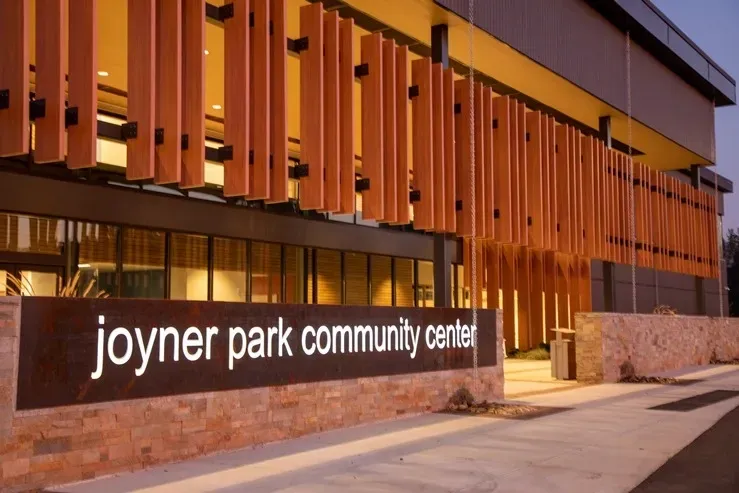
At 117 acres, E. Carroll Joyner Park is Wake Forest's flagship park and one of the most beautifully designed green spaces in northern Wake County. The park features open meadows, a historic farm, event pavilions, picnic shelters, a dog park, a children's playground, and miles of walking and biking trails winding through mature hardwoods along the Smith Creek corridor.
Joyner Park hosts Wake Forest's most popular community events including the annual Joyner Park Criterium cycling race, outdoor concerts, and seasonal festivals that draw residents from across northern Wake County. For buyers evaluating community character, the park is one of the strongest signals that Wake Forest takes quality of life seriously.
Heritage Lake Park
Located within the Heritage master-planned community, Heritage Lake Park offers fishing, walking trails, and lakefront green space that serves as the recreational heart of Wake Forest's largest neighborhood. The park is a daily destination for Heritage residents and reflects the community's emphasis on accessible outdoor programming within walking distance of home.
Holding Village Lake — 30 Acres of Lakefront Living
The centerpiece of the Holding Village community is its 30-acre spring-fed lake — one of the most distinctive residential amenity features of any Wake County master-planned community. Residents enjoy kayaking, fishing, stand-up paddleboarding, lakefront walking trails, and community programming built around the water. For buyers who want lakefront lifestyle without lakefront pricing, Holding Village is one of the best value propositions in the Triangle.
Dr. Calvin E. Jones Park
A well-regarded community park serving central Wake Forest with athletic fields, tennis courts, a playground, and open green space. A primary venue for youth sports leagues and community recreation programming that keeps the town's active family demographic engaged year-round.
Wake Forest Greenway System — Growing Fast
Wake Forest's greenway network is actively expanding. Current greenway corridors connect neighborhoods to parks, schools, and the downtown core along the Smith Creek and Richland Creek corridors. While not yet at Cary's 100-mile scale, Wake Forest's greenway master plan calls for significant expansion over the next decade — with several new corridor connections funded and in active development as of 2026.
For buyers who use greenways for daily commuting, exercise, or recreation, the current network is functional and growing — but buyers coming from Cary's mature greenway system should calibrate expectations accordingly.
Outdoor Recreation Beyond the Parks
Wake Forest's outdoor lifestyle extends beyond the formal park system:
Falls Lake State Recreation Area — 15 minutes north of Wake Forest, Falls Lake offers 26,000 acres of reservoir with boating, swimming, hiking, fishing, and camping. One of the Triangle's premier outdoor recreation assets and a meaningful quality-of-life differentiator for Wake Forest versus more southern suburbs.
American Tobacco Trail — The 22-mile rails-to-trails corridor connecting Durham to the Triangle is accessible from northern Wake County communities for cycling and hiking.
Golf — Wake Forest's three private golf communities (Hasentree, Heritage Golf Club, Wakefield Plantation) give residents access to championship-level golf within minutes of home — a lifestyle feature no other Triangle suburb can match at this scale.
The Outdoor Living Summary
Wake Forest's outdoor amenity package is stronger than most buyers expect — anchored by Joyner Park, the Holding Village lake, an expanding greenway network, and Falls Lake access. The gap versus Cary's 100-mile greenway system is real but closing. For buyers who prioritize golf, lakefront living, or large-scale natural recreation over urban greenway connectivity, Wake Forest's outdoor package is arguably superior to Cary's.
Amenities & Community Services: The Wake Forest Standard
Wake Forest has undergone a dramatic commercial transformation over the past five years. In 2026, the combination of the Grove 98 corridor, a revitalized historic downtown, expanding healthcare infrastructure, and a rapidly maturing retail scene means the "too many rooftops, not enough amenities" criticism that once followed Wake Forest no longer applies.
Grove 98 — The Commercial Anchor
The nearly 100-acre Grove Ninety-Eight development along NC-98 Bypass is Wake Forest's answer to a major suburban retail destination. Anchored by one of the Southeast's flagship Wegmans locations — a 100,000+ square foot store that was one of the first Wegmans in the South — Grove 98 has become a legitimate regional draw.
The Vibe: A true mixed-use destination with boutique retail, dining, fitness, and seasonal programming including outdoor concerts, movies on the green, and holiday events that draw from across northern Wake County.
Current Tenants: Wegmans, Torchy's Tacos, CAVA, Nothing Bundt Cakes, Sleep Number, One Medical, Ideal Dental, O2 Fitness, Outback Steakhouse, and Whataburger.
The Future: The Northeast and Northwest Quadrants are now fully leased and constructed. Additional outparcel development continues to fill in around the core — Grove 98 is not a finished product, it is an active commercial ecosystem still adding tenants.
Downtown Wake Forest & The Renaissance District
S. White Street is the historic heart of Wake Forest and the focus of the town's most ambitious redevelopment investment. Unlike the purpose-built town centers of newer suburbs, Wake Forest's downtown grew organically from a real Southern town with real 19th-century history — and that character is irreplaceable.
The Wake Forest Food Hall: Located in the restored historic Chevrolet building on Roosevelt Avenue, the Food Hall has become the town's social anchor — a gathering place that blends local cuisine, community programming, and historic preservation in one venue.
The Loading Dock: A 300-member entrepreneur hub and coworking space on S. White Street that has become the beating heart of Wake Forest's small business and startup community. Over 300 members, indoor and outdoor event venues, and a street-facing food and beverage space.
PowerHouse Row: A fully leased mixed-use building at the corner of S. White Street and Elm Avenue with ground-floor retail and apartment homes above. Phase II is planned.
The Social District: Wake Forest's downtown Social District designation allows residents to carry open beverages between participating establishments — creating a walkable, connected evening experience along S. White Street that feels authentically local rather than manufactured.
353 S. White Street Redevelopment: The former SunTrust Bank site is being redeveloped into a mixed-use building with 13,000 sq ft of ground-level retail and 110 apartment homes, plus a new 360-space public parking deck — the infrastructure investment that signals the town is serious about downtown density and activation.
📍 Note on the Wake Forest Exchange: The 27-acre Wake Forest Exchange development along US-1 at Star Road — a $38 million private investment delivering 120,000+ sq ft of flex and R&D space, 28,000 sq ft of medical and office space, and 30,000+ sq ft of retail — is the commercial infrastructure signal that positions Wake Forest for sustained employment growth. At full capacity it is projected to create 532 jobs.
The Wake Forest Healthcare Network
Wake Forest has built a strong healthcare infrastructure serving northern Wake County across all three major Triangle health systems:
WakeMed Wake Forest: Full-service emergency and primary care serving the town's residential base with 24/7 emergency access without driving to Raleigh.
Duke Health Wake Forest: Primary care and specialty clinics giving Wake Forest residents access to the Duke Health network in their own community.
UNC Health Rex Wake Forest: Outpatient and specialty care facilities completing Wake Forest's access to all three major Triangle health systems — a healthcare trifecta that few suburban markets outside of Cary can claim.
The Wake Forest Event Calendar (2026)
Joyner Park Criterium: One of the Triangle's premier cycling races held annually at E. Carroll Joyner Park, drawing competitive cyclists and spectators from across the region.
Wake Forest Food and Wine Festival: An annual downtown celebration drawing chefs, wineries, and food vendors to S. White Street for a weekend of culinary programming.
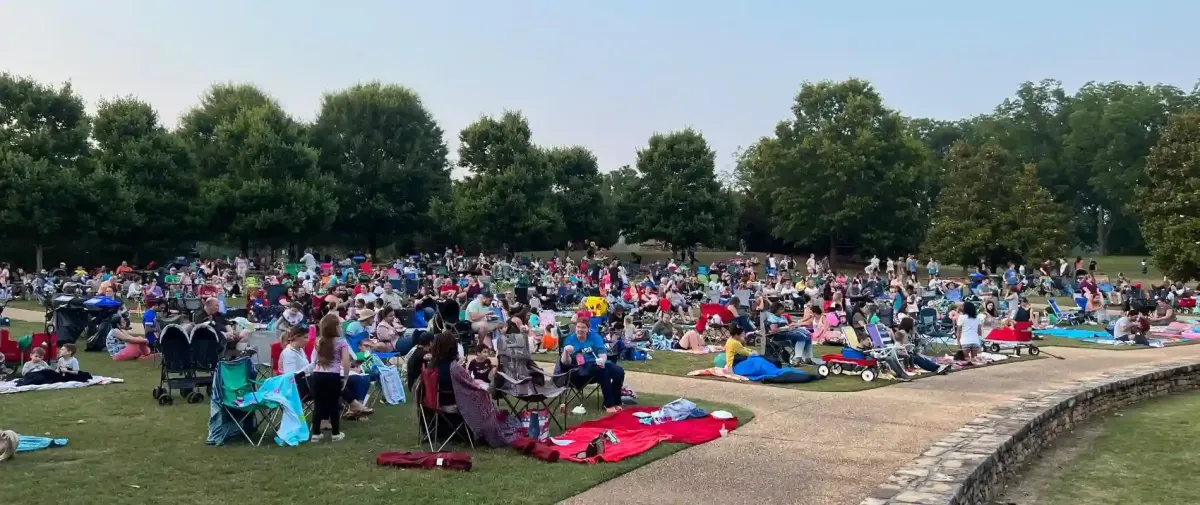
Concerts at Joyner Park: Seasonal outdoor concert series bringing live music to Wake Forest's flagship park throughout spring and summer.
Holiday Events at Grove 98: Seasonal programming including outdoor movie nights, holiday markets, and community gatherings anchored by the Wegmans corridor.
Downtown Farmers Market: Weekly market on S. White Street connecting residents to local farms, artisan vendors, and community programming throughout the growing season.
💡 Local Insight: For the best Wake Forest evening, start with dinner at Farm Table, then head downtown to the Social District on S. White Street for a local craft beer at one of the corridor's breweries. It's a night that genuinely surprises buyers who came in expecting a bedroom suburb — because Wake Forest stopped being just a bedroom suburb several years ago.
Amenities as a Buyer Consideration
Heritage / Dansforth / Bishops Grant: Best served by the Grove 98 corridor on NC-98 Bypass — Wegmans, dining, fitness, and medical all within 5–10 minutes.
Holding Village / Stonewater: Positioned between Grove 98 and the US-1 corridor with quick access to Wake Forest Exchange and downtown via S. White Street.
Wakefield / Grand Highland Estates: Closest to the North Raleigh retail ecosystem along Falls of Neuse Road and Six Forks Road, plus easy Grove 98 access via NC-98.
Richland Hills / Downtown-Adjacent: Best positioned for the Social District walkability experience — S. White Street restaurants, the Food Hall, and the Loading Dock are all within easy reach.
The Downtown Dining Scene — S. White Street & The Social District
Downtown Wake Forest holds Social District status, allowing you to grab a beverage in a designated cup and stroll freely between boutiques and the historic district along S. White Street.
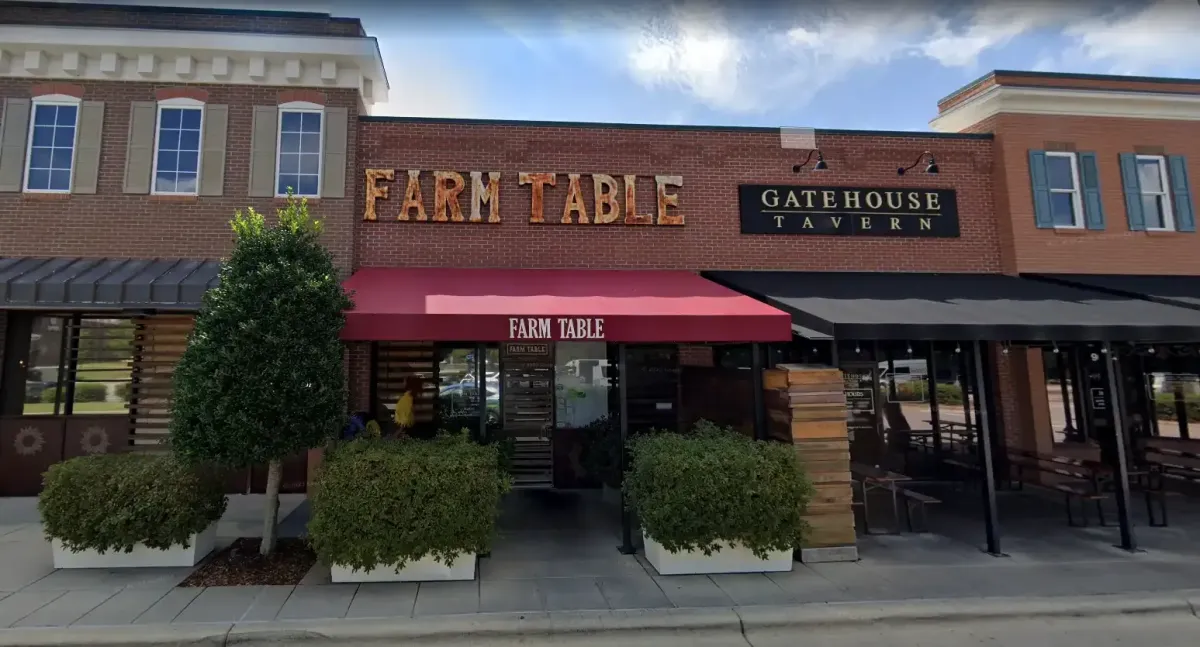
Farm Table Restaurant — One of Wake Forest's most celebrated dining destinations and a true farm-to-table concept done right. Farm Table sources ingredients from local North Carolina farms and delivers a seasonally rotating menu that reflects the region's agricultural heritage. This is the restaurant locals take out-of-town guests to when they want to show off what Wake Forest has become. If you make one dining reservation before your home search is over, make it here.
Bodega Tapas Wine and Rum — A small-plate dining and cocktail bar that has become one of downtown Wake Forest's most distinctive evening destinations. The tapas format and rum program make it genuinely different from anything else in northern Wake County.
The Gatehouse — A local pub and community gathering spot with the kind of regulars-know-your-name atmosphere that is increasingly rare in fast-growing suburbs. A true neighborhood anchor on S. White Street.
Pat Murnane's Irish Pub — Wake Forest's authentic Irish pub delivering live music, a full bar, and a genuinely local crowd. The kind of place that makes a town feel like a town rather than a collection of subdivisions.
Norse Brewing Company — A craft brewery and taproom with a loyal local following that has become a cornerstone of Wake Forest's emerging craft beverage scene. The taproom atmosphere is relaxed, the beer program is serious, and the patio draws a crowd on warm evenings.
The Wake Forest Food Hall — Located in the restored historic Chevrolet building, the Food Hall brings multiple local food concepts under one roof — making it the town's most versatile dining destination and social gathering point.
The Grove 98 Corridor — High-Energy & Growing
For buyers relocating from major metros, the Grove 98 corridor offers a curated, high-energy dining and retail scene anchored by nationally recognized brands.
Torchy's Tacos — A beloved Texas-born taco chain with a cult following and one of the best queso programs in the region. A perpetual weekend crowd favorite.
CAVA — The fast-casual Mediterranean bowl concept that has become a lunchtime staple for Grove 98's health-conscious professional traffic.
Outback Steakhouse — A reliable full-service dining option that rounds out the corridor's family-friendly dining mix.
Whataburger — The legendary Texas burger chain that Wake Forest residents have enthusiastically adopted as a late-night staple.
📍 Expert Advice: For the best Wake Forest evening, start with dinner at Farm Table or Bodega downtown, then stroll the Social District on S. White Street and finish at Norse Brewing. It's a night that genuinely surprises buyers who came in expecting a bedroom suburb — because Wake Forest stopped being just a bedroom suburb several years ago.
Casual Gems & Local Favorites
Hayashi Japanese Restaurant — Wake Forest's most established Japanese dining option, popular with residents who want quality sushi without driving to Raleigh.
El Rodeo Mexican Restaurant — A long-standing local institution that remains the go-to for unpretentious, consistently good Mexican food in a town that has seen a lot of new competition arrive.
Junction West — A craft cocktail bar and gathering spot that has become a definitive evening anchor for Wake Forest's growing young professional crowd.
Shorty's Famous Hot Dogs & Grille — A Wake Forest institution with decades of local history. If you want to understand the town's soul, start here.
📍 Local Tip: Wake Forest's dining scene is evolving faster than most residents realize. The Food Hall, the Grove 98 additions, and several independent concepts in the downtown pipeline mean that buyers who tour the town today will find a meaningfully different dining landscape in 18–24 months. This is a market building its culinary identity in real time — and that trajectory matters for long-term quality of life.
Arts, Culture & Entertainment
E. Carroll Joyner Park Concert Series — Seasonal outdoor concerts at Wake Forest's flagship park bring live music to the community throughout spring and summer in one of the Triangle's most beautiful natural settings.
Wake Forest Renaissance Centre for the Arts — A community arts venue hosting theater productions, gallery exhibitions, and cultural programming that gives Wake Forest a genuine arts identity beyond its suburban footprint.
Norse Brewing Live Music — Norse Brewing regularly hosts live music events in its taproom and outdoor space, making it one of the most active community entertainment venues in downtown Wake Forest.
Grove 98 Seasonal Programming — Outdoor movies, holiday markets, concerts, and community events anchored by the Wegmans corridor create a year-round social calendar that complements the downtown scene.
Downtown Farmers Market — Weekly market on S. White Street connecting residents to local farms, artisan vendors, and community programming throughout the growing season.
Wake Forest Joyner Park Criterium — One of the Triangle's premier cycling races held annually at Joyner Park, drawing competitive cyclists and spectators from across the region.
📍 Local Insight: The best kept secret in northern Wake County is a summer evening at Joyner Park during the concert series — spread out a blanket on the lawn, bring food from Farm Table downtown, and watch the sun set over one of the most beautifully designed green spaces in Wake County. It's the kind of evening that makes buyers stop second-guessing the commute.
Where Wake Forest is Located in the Triangle
Wake Forest sits in the northern tier of Wake County, approximately 18–22 miles north of Downtown Raleigh along the US-1 / Capital Boulevard corridor. It occupies a unique geographic position in the Triangle — far enough from Raleigh's urban core to deliver genuine suburban space and privacy, close enough to remain fully connected to the Triangle's employment base, healthcare network, and cultural amenities.
The Geographic Reality
Wake Forest is the northernmost major suburb in Wake County's established residential market. Its position along the US-1 corridor places it at the northern edge of what most Triangle buyers consider the "primary suburban ring" — which is precisely why it delivers the value it does. Land is more available, lots are more generous, and home prices per square foot are meaningfully lower than the southern and western corridors.
What the geographic position also means: Wake Forest is the Triangle suburb best positioned to benefit from northward population expansion. As Raleigh continues growing and North Raleigh matures, Wake Forest is the natural next tier — which is the core thesis behind the "buy ahead of the curve" narrative that defines the 2026 Wake Forest investment story.
Distance & Drive Times from Wake Forest (2026)
Off-peak estimates. Peak-hour times to RTP and Downtown Raleigh add 15–30+ minutes depending on time of day and route.
| Destination | Distance | Off-Peak Drive | Peak-Hour Note |
|---|---|---|---|
| 🏢 Research Triangle Park (RTP) | ~28–32 miles | 35–45 min | 50–75 min peak |
| 🏙️ Downtown Raleigh | ~18–22 miles | 25–35 min | 35–50 min peak |
| 🏘️ North Raleigh (Falls of Neuse / Six Forks) | ~10–15 miles | 15–20 min | 20–30 min peak |
| ✈️ RDU International Airport | ~30–35 miles | 35–50 min | 50–70 min peak |
| 🏙️ Durham | ~35–40 miles | 45–60 min | 60–80 min peak |
| 🎓 Chapel Hill / UNC | ~40–45 miles | 50–65 min | 65–85 min peak |
| 🏘️ Cary | ~25–30 miles | 30–45 min | 45–60 min peak |
| 🏘️ Apex | ~28–32 miles | 35–50 min | 50–65 min peak |
| 🏘️ Holly Springs | ~30–35 miles | 40–55 min | 55–70 min peak |
| 🌊 Falls Lake State Recreation Area | ~8–12 miles | 15–20 min | 15–25 min peak |
| 🏘️ Rolesville | ~5–8 miles | 10–15 min | 15–20 min peak |
What's North of Wake Forest
One of the questions buyers from out of state consistently ask is what lies north of Wake Forest — and whether the town feels isolated. The honest answer is no. Immediately north of Wake Forest, the landscape transitions to:
Rolesville — A fast-growing small town with its own residential development pipeline and a tight-knit community character that many Wake Forest buyers cross-shop.
Franklin County — Rural countryside with larger parcels, equestrian properties, and land opportunity for buyers who want acreage without sacrificing Triangle access.
Louisburg — The Franklin County seat, approximately 25 miles north, with its own small-town character and growing commuter base.
Henderson / Vance County — Further north along US-1, representing the true rural transition out of the Triangle's suburban market.
For buyers, this northward geography matters because it means Wake Forest is not hemmed in by competing suburban development to the north — land availability and relative affordability are structural features of the market, not temporary conditions.
The Triangle Context — Where Wake Forest Fits
The Research Triangle region is anchored by three university cities — Raleigh (NC State), Durham (Duke), and Chapel Hill (UNC) — with Research Triangle Park sitting at the geographic center of the three. Wake Forest sits in the northeastern quadrant of this triangle, north of Raleigh along the US-1 spine.
In the broader suburban hierarchy:
Closest RTP access: Cary and Morrisville (10–20 min)
Best value per square foot: Wake Forest and Fuquay-Varina
Strongest new construction pipeline: Wake Forest and Holly Springs
Most historic downtown character: Apex and Wake Forest
Best golf community selection: Wake Forest (Hasentree, Heritage, Wakefield)
Best northward appreciation signal: Wake Forest (S-Line, Capital Boulevard, northward expansion)
Wake Forest's position in this hierarchy is clear — it is the value leader among northern Wake County markets, with the strongest appreciation signal of any Triangle suburb that hasn't yet been fully discovered by national buyers.
The Commute Reality in Geographic Context
Wake Forest's geographic position creates its primary trade-off: distance from RTP. The Research Triangle Park campus sits roughly 28–32 miles southwest of Wake Forest's residential core — a drive that crosses Raleigh's northern growth corridors and encounters the Capital Boulevard and I-540 congestion that defines the peak-hour commute experience.
For buyers whose employment is in North Raleigh rather than RTP, the commute story changes dramatically. The North Raleigh employment corridor along Falls of Neuse Road, Six Forks Road, and the Brier Creek / Umstead corridor sits 10–15 miles from most Wake Forest neighborhoods — a commute that is both shorter and less congested than the RTP run.
This is why employment location is the single most important variable in the Wake Forest decision. The same house that represents a difficult daily commitment for an RTP employee represents a highly accessible suburban address for a North Raleigh professional.
📍 Phil's Geographic Perspective: "I tell buyers to think of Wake Forest as the northern extension of North Raleigh — not as a suburb of RTP. If your office is in North Raleigh, Wake Forest is a 15-minute drive with no tolls and no highway congestion. If your office is at Cisco or Lenovo in RTP, you're looking at 45–60 minutes in traffic. That geographic reality is the first conversation I have with every Wake Forest buyer — because getting it right determines whether this is the best decision you've ever made or one you'll spend years reconsidering."
Awards & Recognition for Wake Forest, NC
Wake Forest has earned national recognition that reflects both its rapid growth trajectory and its quality of life — recognition that is increasingly driving relocation interest from buyers in high-cost markets across the country.
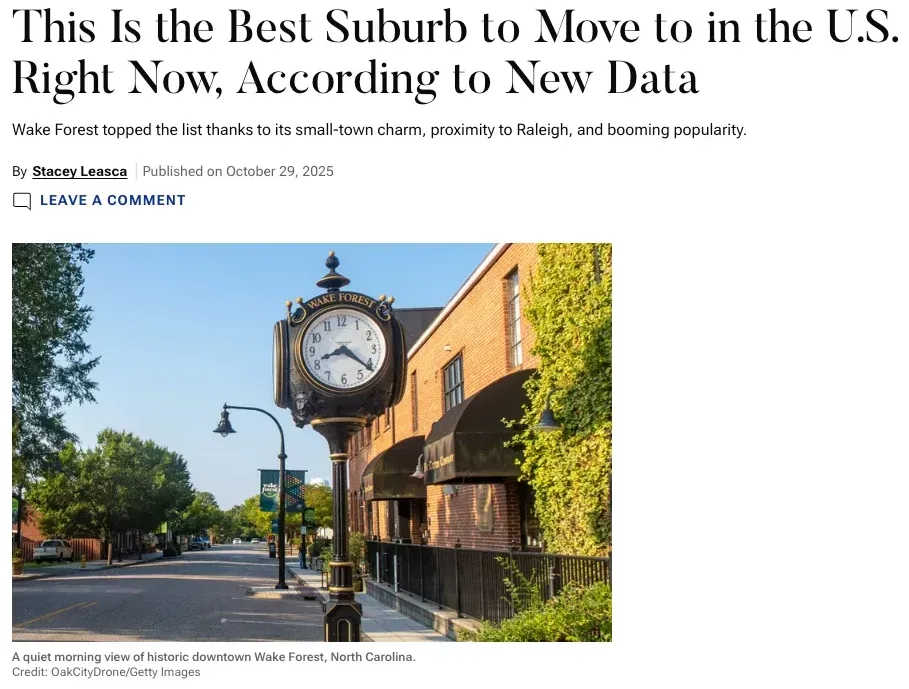
Travel + Leisure — "The Best Suburb to Move to in the U.S. Right Now" (2026)
The most significant recognition Wake Forest has received in its history. Travel + Leisure — one of the most widely read travel and lifestyle publications in the United States — named Wake Forest the best suburb to relocate to in the entire country for 2026. The designation specifically cited Wake Forest's balance of small-town Southern charm, access to Raleigh's employment base, quality of life, and value relative to comparable suburbs in other major metros.
For buyers evaluating Wake Forest, this recognition matters beyond the headline. Travel + Leisure's readership skews toward exactly the demographic that relocates — affluent, educated, lifestyle-driven buyers from coastal and high-cost metros. When that audience reads "best suburb to move to right now," Wake Forest gets added to shortlists in New York, Northern Virginia, Boston, and California. That inbound buyer attention is itself an appreciation signal.
Top 3% Fastest-Growing Municipality in North Carolina
Wake Forest ranks in the top 3% of North Carolina's 551 municipalities for growth rate — a designation that reflects years of intentional planning, strategic infrastructure investment, and sustained demand from buyers relocating from across the country. At 4.25% year-over-year population growth and an average of 7 new residents per day, Wake Forest's growth momentum is not a recent phenomenon — it is a sustained trend that has compounded over more than a decade.
2026 Wake Forest Community Profile Recognition
The 2026 Community Profile published by the Wake Forest Business and Innovation Park documents Wake Forest's standing as one of North Carolina's most dynamic communities. Key recognition points from the profile:
Population growth of 4.25% year-over-year — among the highest of any established Wake County municipality
Estimated population of 64,618 in 2026 — reflecting sustained demand from relocating buyers and growing families
Recognition as a community that pairs strong economic fundamentals with a high quality of life that continues to attract talent and investment from across the country
Strategic & Sustainable Growth Recognition
Wake Forest has been recognized for its approach to planned, intentional growth — a distinction that matters to buyers evaluating long-term quality of life. The town's corridor planning, transportation master plan, historic preservation investments, public art programming, greenway and open space initiatives, and Renaissance Plan for the downtown core have collectively earned Wake Forest a reputation as one of North Carolina's most thoughtfully managed growth markets.
Unlike towns that have grown reactively — adding rooftops faster than infrastructure — Wake Forest has consistently invested in planning ahead of demand. That discipline is reflected in the quality of its parks, the coherence of its downtown, and the stability of its neighborhood character even as the population has grown rapidly.
The Recognition Summary — What It Means for Buyers
Awards and recognition matter in real estate for one practical reason: they drive buyer awareness, and buyer awareness drives demand, and demand drives appreciation. When Travel + Leisure tells its national readership that Wake Forest is the best suburb to move to right now, the pool of informed buyers considering Wake Forest expands immediately.
For buyers already in the market, that expanding awareness is a tailwind. The buyers who act before national recognition fully translates into pricing pressure are the ones who capture the most appreciation upside. Wake Forest's recognition curve is still early — the pricing has not yet fully reflected the national profile the town is building.
📍 Phil's Perspective on Recognition: "Awards are lagging indicators — they confirm what local agents already know. I was telling buyers about Wake Forest's value before Travel + Leisure made it official. The question now is how quickly that national recognition gets priced into the market. Based on what I'm seeing in 2026, we're in the early innings of that repricing. Buyers who wait for the recognition to be fully reflected in home prices will pay more for the same opportunity."
The Bottom Line: Pros & Cons of Living in Wake Forest, NC (2026)
Every market has trade-offs. Wake Forest's are more transparent than most — which is exactly why buyers who understand them make better decisions and stay longer. Here is the honest 2026 assessment.
✅ The Pros — Why Buyers Choose Wake Forest
1. Best Price Per Square Foot of Any Major Triangle Suburb At $195.77 per square foot, Wake Forest delivers significantly more home per dollar than Apex (~$295) or Cary (~$315). For buyers relocating from high-cost metros, the value gap is the primary driver for choosing the northern corridor.
2. Strongest New Construction Pipeline in Northern Wake County With nearly 35% of active listings being new construction, Wake Forest offers more brand-new inventory than almost any other Triangle suburb. From entry-level townhomes to $2M+ custom estates in Hasentree, the builder ecosystem is deep and diverse.
3. Multiple Golf Communities at Every Price Point Wake Forest is the Triangle's golf capital. Hasentree (Tom Fazio), Heritage Golf Club, and Wakefield Plantation offer three distinct luxury lifestyles that Cary and Apex simply cannot replicate in such close proximity.
4. Authentic Historic Downtown & Social District S. White Street isn't a lifestyle center — it's a century-old downtown. The 2026 Social District status, the Wake Forest Food Hall, Farm Table, Norse Brewing, and Bodega give the town an organic evening energy that feels like a real community rather than a shopping mall.
5. The S-Line Rail Appreciation Signal Groundbreaking on the S-Line corridor has already begun with active construction underway on the Raleigh segment. As a federally funded high-performance rail project with the Wake Forest hub expected to begin construction in 2028, this is the single biggest long-term appreciation catalyst in the market — positioning Wake Forest as a future transit-oriented hub.
6. Falls Lake Access Located just 10–15 minutes from most Wake Forest neighborhoods, Falls Lake State Recreation Area provides 26,000 acres of boating, hiking, fishing, and camping — natural amenities that are much harder to access from the landlocked southern suburbs.
7. National Recognition — #1 Most In-Demand Suburb in the U.S. Travel + Leisure named Wake Forest "The Best Suburb to Move to in the U.S. Right Now" for 2026. A February 2026 MoveBuddha report published by The Independent confirmed a 4.6-to-1 inbound-to-outbound move ratio — making Wake Forest the most in-demand suburb in the country by net migration. The town is on the national radar in a way that has not yet been fully priced into home values.
8. Heritage High School Uncapping July 2026 Wake County has confirmed that Heritage High School is scheduled to uncap on July 1, 2026 — a significant development for families whose school assignment decisions have been complicated by enrollment caps. This is current, address-specific information that meaningfully changes the school calculus for buyers in Heritage and surrounding corridors. Always verify your specific address at wcpss.net before making an offer.
⚠️ The Cons — What Buyers Need to Weigh Honestly
1. The RTP Commute Is the Elephant in the Room Peak-hour commutes to Research Triangle Park run 55–75 minutes. Capital Boulevard (US-1) is the most significant hurdle. If you work in the office five days a week at RTP on a strict 8-to-5 schedule, this is a lifestyle tax you must be willing to pay — roughly 8–10 hours per week in the car.
2. Higher Combined Tax Rate At $0.9371, Wake Forest's combined tax rate is higher than Cary ($0.8571) and Apex ($0.8731). On a $500,000 home the annual difference versus Cary is approximately $400. On a $1,000,000 home you're looking at a roughly $800+ annual difference versus Cary — a real number worth factoring into your long-term budget.
3. School Enrollment Caps — With a 2026 Update While WCPSS caps have historically impacted Wake Forest growth corridors, Heritage High School is confirmed to uncap on July 1, 2026. However other schools in the area remain capped. Address-specific verification at wcpss.net is still a mandatory part of your due diligence — every address, every time, before making an offer.
4. Airport Access RDU is a 35–50 minute drive off-peak from most Wake Forest neighborhoods. For frequent business travelers, the southern suburbs of Morrisville and Cary offer a 10–15 minute convenience that Wake Forest cannot match.
5. Rapid Growth Pains With 7 new residents arriving every day, infrastructure is playing catch-up in active growth corridors. You will see orange cones. You will see land clearing for new shopping centers and road widening projects. If you want a finished town, look at Cary. If you want growth potential, look at Wake Forest.
The Honest Summary
Wake Forest is the RIGHT market if you:
✅ Prioritize lot size, space, and more house for the money
✅ Work remotely, have a hybrid schedule, or work in North Raleigh
✅ Value a genuine historic downtown over a modern lifestyle center
✅ Are looking for long-term appreciation tied to the S-Line rail
✅ Want new construction options that don't exist at comparable prices elsewhere in the Triangle
Wake Forest is the WRONG market if you:
❌ Commute to RTP daily on a strict 8-to-5 schedule
❌ Need 10–15 minute access to RDU International
❌ Expect the polished finished infrastructure of Cary or Apex today
❌ Prioritize walkability and urban density over space and privacy
Is Wake Forest, NC Safe?
For buyers relocating from larger metros, Wake Forest's suburban character generally answers this question before it's even asked. As a master-planned suburban community of approximately 64,000 residents in northern Wake County, Wake Forest does not carry the neighborhood-level variation that defines urban safety research in cities like Durham or Raleigh. The vast majority of Wake Forest's residential communities — Heritage, Holding Village, Hasentree, Dansforth, Bishops Grant, Stonewater, and Richland Hills — reflect the community character and neighbor cohesion that buyers relocating from high-cost metros consistently cite as one of Wake Forest's most appealing qualities.
That said, no community of 64,000 people is without nuance, and buyers should always do address-specific research rather than relying on town-level averages.
How to Research Safety for Any Wake Forest Address
Three resources give buyers the most accurate, address-specific picture:
NeighborhoodScout — block-level crime data and trend analysis for any specific address in Wake Forest or surrounding corridors.
Niche.com — aggregated safety grades by neighborhood based on FBI crime data, with resident reviews that reflect lived experience rather than statistics alone.
Town of Wake Forest — official town resources including public safety information and community services.
Your real estate agent can help you access and interpret current data for any specific address during your due diligence period — and can provide neighborhood-level context that no online tool fully captures.
💡 Phil's Perspective: "Buyers from New York, DC, or California almost always ask me about safety in Wake Forest — and my answer is consistent: this is a suburban community where most neighborhoods have the kind of front-porch, know-your-neighbor character that people move here specifically to find. My advice is always the same — use NeighborhoodScout for the data, then drive the specific streets you're considering on a weekday evening and a Saturday morning. Wake Forest neighborhoods tell you who they are in person."
Safety data varies by specific address and changes over time. Always conduct independent research using current sources and consult your agent for neighborhood-specific context before making a purchase decision.
What Salary Do You Need to Live in Wake Forest, NC (2026)?
One of the most searched questions from buyers relocating from New York, California, DC, and Florida — and the answer is more accessible than most buyers expect at this level of community quality.
To comfortably purchase a median-priced home in Wake Forest ($500,000) with a 20% down payment, most financial advisors recommend a household income of approximately $120,000–$140,000 per year. With a 10% down payment, that range rises to approximately $135,000–$155,000.
For buyers coming from high-cost metros, the value equation is striking — Wake Forest delivers significantly more home per dollar than any comparable suburb, at $195.77 per square foot versus $295–$315 in Apex and Cary.
Monthly Cost Breakdown — $500,000 Home
| Cost | Monthly Estimate |
|---|---|
| Mortgage (20% down, 6.5% rate, 30yr) | ~$2,528/mo |
| Property Taxes ($4,686/yr combined rate) | ~$391/mo |
| Homeowner's Insurance | ~$140/mo |
| HOA (varies by community) | $50–$200/mo |
| Total Housing Cost | ~$3,109–$3,259/mo |
Monthly Cost of Living Beyond Housing
| Category | Monthly Estimate |
|---|---|
| Groceries (2-person household) | ~$400–$550 |
| Utilities (Duke Energy, avg.) | ~$150–$350 |
| Transportation (gas, insurance, tolls) | ~$350–$500 |
| Dining & Entertainment | ~$300–$600 |
| Healthcare (employer-supplemented) | ~$200–$400 |
| Total Non-Housing | ~$1,400–$2,400/mo |
Varies depending on lifestyle, family size, HOA community, commute route, and down payment amount.
How Wake Forest Compares to the Cities Buyers Are Leaving
| City | Median Home Price | Income Needed to Buy |
|---|---|---|
| San Francisco, CA | ~$1,300,000 | ~$320,000+/yr |
| New York City, NY | ~$780,000 | ~$190,000+/yr |
| Washington, DC | ~$650,000 | ~$160,000+/yr |
| Austin, TX | ~$525,000 | ~$130,000+/yr |
| Atlanta, GA | ~$420,000 | ~$105,000+/yr |
| Wake Forest, NC ⭐ | ~$500,000 | ~$120,000–$140,000/yr |
A household earning $150,000 per year in Washington, DC is effectively cost-burdened. That same household in Wake Forest is comfortably upper-middle class — able to own a newer home in a master-planned community with a golf club address, save aggressively, and still have money left over for Falls Lake weekends and Farm Table dinners.
That gap — and the realization that the commute penalty is the only real trade-off — is what converts most out-of-state buyers from skeptics to signed contracts.
"The salary question I hear most from relocating buyers is 'can we actually afford Wake Forest?' — and the answer almost always surprises them. A dual-income household with one North Raleigh salary and one remote income can live exceptionally well here. You're getting a newer home, a larger lot, a golf community address, and top Wake County schools — for a monthly payment that would get you a one-bedroom condo in the city they're leaving. That realization is usually the moment the conversation shifts from 'is Wake Forest affordable' to 'why didn't we look here sooner.'"
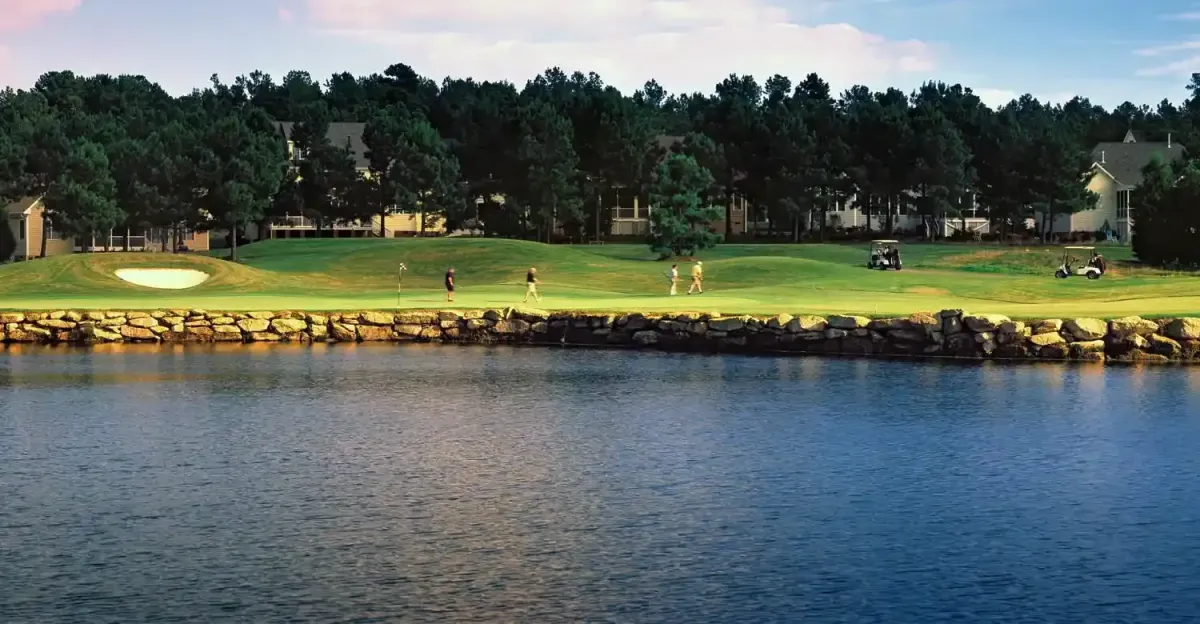
Why Are So Many People Moving to Wake Forest, NC in 2026?
Wake Forest is experiencing one of the most sustained in-migration waves of any North Carolina municipality — and it is not a coincidence. Travel + Leisure named it the best suburb to move to in the United States right now. A February 2026 MoveBuddha report confirmed a 4.6-to-1 inbound-to-outbound move ratio — the highest of any suburb in the country. At an average of 7 new residents arriving every day, Wake Forest's growth is not a trend. It is a convergence of five pull factors that rarely exist in the same community at the same time.
1. The Value Gap Is Impossible to Ignore
At $195.77 per square foot, Wake Forest delivers more home per dollar than any other major Triangle suburb. Buyers relocating from Washington DC, New York, California, and Florida consistently arrive expecting to compromise — and leave realizing they can afford a newer home on a larger lot in a master-planned golf community for the same monthly payment that bought them a modest condo in the city they left. That positive sticker shock is the single most powerful driver of Wake Forest's sustained inbound migration, and it has not yet been fully priced into the market.
2. The S-Line Rail Project Changes the Long-Term Math
The S-Line federally funded high-performance passenger rail project is under active construction on the Raleigh corridor, with the Wake Forest downtown hub expected to begin construction in 2028. For buyers who understand how transit-oriented development historically reshapes suburban real estate values, the S-Line is not a future amenity — it is a present-day appreciation signal. Buyers who position themselves before the line is operational capture the most upside. That calculation is driving a specific and financially sophisticated segment of Wake Forest's inbound buyer pool.
3. The Golf Community Lifestyle Doesn't Exist Anywhere Else at This Price
Hasentree with its Tom Fazio-designed championship course, Heritage Golf Club anchoring Wake Forest's largest master-planned community, and Wakefield Plantation offering legacy luxury estate living — three distinct private golf communities at three distinct price points, all within minutes of each other. No other Triangle suburb offers this depth of golf community lifestyle at comparable pricing. For buyers relocating from markets where a golf club address costs $2M+, Wake Forest's $850K entry point into Hasentree reads as one of the most compelling value propositions in the Southeast.
4. The Downtown Is Authentic in a Way That Can't Be Built
S. White Street is not a lifestyle center opened five years ago. It is a century-old Southern downtown that has been intentionally revitalized rather than manufactured — and that authenticity is irreplaceable. The Social District designation, the Wake Forest Food Hall in the restored historic Chevrolet building, Farm Table, Norse Brewing, Bodega, and the Loading Dock entrepreneur hub give Wake Forest an evening energy that feels like a real community. Buyers who tour the downtown on a Friday night consistently cite it as the moment Wake Forest stopped feeling like a compromise and started feeling like a destination.
5. The Appreciation Story Is Still Early
The S-Line hub breaks ground in 2028. The 353 S. White Street mixed-use redevelopment with 110 apartments and a 360-space parking deck is still under construction. The Wake Forest Exchange at US-1 and Star Road — 120,000+ square feet of flex, R&D, and retail space — is still filling its tenant roster. Grove 98's outparcel development continues to add tenants. National recognition from Travel + Leisure has expanded the buyer pool but has not yet been fully reflected in pricing. The buyers who understand where Wake Forest is in its development cycle — and who can manage the commute while that cycle completes — are the ones arriving in 2026 rather than waiting until the story is fully told.
💡 Phil's Perspective: "I've watched buyers come into Wake Forest skeptical every week for years — usually because someone told them the commute was too long or the infrastructure wasn't finished. And then they spend a Saturday morning at Joyner Park, drive through Hasentree, have dinner at Farm Table, and do the math on what $500,000 actually buys here versus anywhere else in the Triangle. The skepticism evaporates fast. The buyers who are moving to Wake Forest in 2026 are the ones who did the math before the rest of the market caught up. That window is still open — but it won't be forever."

Experience Meets Innovation
I'm Phil Slezak, a Triangle-based real estate agent with more than 20 years of experience helping buyers, sellers, and relocating clients evaluate communities across Wake County and the greater Raleigh–Durham area.
This Wake Forest, North Carolina guide is built to provide clear, objective local market insight — including home pricing trends, neighborhood differences, commute patterns to RTP and North Raleigh, and long-term development considerations including the S-Line rail project and the Grove 98 corridor.
As one of the first AI-Certified Real Estate Agents in the country, this means more than a credential. In a market moving at the pace of Wake Forest, I use AI-assisted analysis to evaluate neighborhood-level pricing trends, inventory shifts, builder incentive cycles, and school assignment stability — giving you a faster, more defensible picture of what a specific home is actually worth before you write a check. That analytical layer, combined with two decades of local boots-on-the-ground experience, is what separates a confident move from an expensive mistake.
For many clients, a move to the Triangle isn't just a transaction — it's a major life transition. To provide more security and flexibility, I offer qualified clients access to several unique programs:
Quick Summary for Buyers
Wake Forest, NC is best suited for buyers who want access to Wake County Public Schools, a hybrid or North Raleigh commute, strong long-term appreciation signals, and a value-driven suburban lifestyle — while remaining connected to Raleigh and North Raleigh's employment base.
People Also Ask About Wake Forest, NC
What is Wake Forest, NC known for? Wake Forest is known for four things that define its 2026 identity: the S-Line high-performance passenger rail project positioning it as the Triangle's next transit-oriented hub, three private golf communities at multiple price points (Hasentree, Heritage Golf Club, and Wakefield Plantation), an authentic historic downtown on S. White Street with Social District status, and the Grove 98/Wegmans corridor. Travel + Leisure named it the best suburb to move to in the United States right now — recognition that has accelerated national buyer awareness without yet being fully reflected in home prices.
How far is Wake Forest from downtown Raleigh? Downtown Raleigh is 18–22 miles from most Wake Forest neighborhoods — approximately 25–35 minutes off-peak via US-1/Capital Boulevard. During peak morning hours expect 35–50 minutes. The commute improves for buyers in southern Wake Forest neighborhoods closer to the I-540 interchange.
Want a list of the best Wake Forest neighborhoods for your budget + commute?
👉 Text WAKEFOREST to 984-789-4554 for a custom neighborhood short list.
Frequently Asked Questions About Wake Forest, NC
Is Wake Forest, NC a good place to live?
Wake Forest is widely considered one of the Triangle's strongest value markets and most in-demand relocation destinations in 2026. Travel + Leisure named it "The Best Suburb to Move to in the U.S. Right Now" and a February 2026 MoveBuddha report confirmed a 4.6-to-1 inbound-to-outbound move ratio — the highest of any suburb in the country. With top Wake County schools, multiple golf communities, an authentic historic downtown, Falls Lake access, and a median home price of $500,000 at $195.77 per square foot, Wake Forest consistently delivers more community character and more home per dollar than any comparable Triangle suburb.
How much do homes cost in Wake Forest, NC 2026?
The median sale price in Wake Forest is $500,000 as of Q2 2026, with a price per square foot of $195.77 — the lowest of any major Triangle suburb.
Entry-level homes in Richland Hills start in the $300,000s.
Mid-market family homes in Heritage and Bishops Grant range from $400,000 to $800,000.
Luxury golf community homes in Hasentree range from $850,000 to $2,500,000+.
Ultra-luxury gated estate homes in Grand Highland Estates start at $1,750,000 and reach $3,500,000+.
With a 99% sale-to-list ratio and 32 average days on market, the market is active but not as frenetic as the 2021–2022 peak.
What is the property tax rate in Wake Forest, NC in 2026?
The combined property tax rate for properties inside Wake Forest town limits is $0.9371 per $100 of assessed value for FY2026 — Wake County at $0.5171 plus Town of Wake Forest at $0.4200.
On a $500,000 home, annual property taxes are approximately $4,686.
On a $1,000,000 home, approximately $9,371 annually.
Properties outside Wake Forest town limits pay only the Wake County rate of $0.5171. Always verify tax jurisdiction at wakegov.com before closing — some addresses near the town boundary may fall outside municipal limits.
What are the best neighborhoods in Wake Forest, NC?
Wake Forest offers a diverse range of neighborhoods across multiple price points and lifestyle profiles.
According to Niche.com community ratings and local market data, top-performing communities include:
- Heritage ($350K–$1.1M+), an established master-planned community with its own elementary school and golf club.
- Hasentree ($850K–$2.5M+) is a private golf community centered around a Tom Fazio course.
- Holding Village ($375K–$950K+) is a lakefront community built around a 30-acre spring-fed lake.
- Wakefield ($1.2M–$3M+) is a legacy luxury golf estate community.
- Stonewater ($950K–$1.8M+) delivers newer luxury construction.
- Grand Highland Estates ($1.75M–$3.5M+) is a private gated community of 66 homesites.
- Bishops Grant ($400K–$750K) is a well-established family community.
- Richland Hills ($300K–$575K) is the most accessible entry point in Wake Forest.
The best neighborhood for your family depends entirely on your budget, lifestyle priorities, commute route, and school assignment needs — factors that vary by individual household. School assignments are address-specific and change annually — always verify at wcpss.net before purchasing. For a personalized neighborhood recommendation based on your specific situation, contact Phil directly.
What schools serve Wake Forest, NC?
Wake Forest is served by Wake County Public School System (WCPSS).
High schools include Wake Forest-Rolesville High School, Heritage High School, and Rolesville High School.
Heritage High School is confirmed to uncap on July 1, 2026 — a significant development for families whose school decisions have been impacted by enrollment caps. School assignments are address-specific and change annually.
Always verify your specific address using the WCPSS Address Lookup Tool at wcpss.net before making an offer — never purchase based on proximity to a school without confirming the current assignment for that exact address.
What is the commute from Wake Forest to RTP?
Off-peak, the Wake Forest to RTP commute runs 35–45 minutes.
Peak morning hours (7–9 AM) extend that to 55–75 minutes.
Peak afternoon (4–6:30 PM) runs similarly. Capital Boulevard (US-1) is the primary artery and experiences significant congestion during peak hours.
The NC-540 Triangle Expressway outer loop is in its final construction phase as of 2026, with the remaining section expected to complete soon in 2028. When fully open, the completed 540 loop will meaningfully improve connectivity between northern Wake County and the western RTP corridor — a direct benefit for Wake Forest commuters. Factor current toll costs into your housing budget analysis if you plan to use 540 as your primary commute route.
Buyers with flexible schedules, hybrid work arrangements, or employment in North Raleigh (10–20 minutes) find the commute very manageable. Buyers on a strict 8-to-5 RTP schedule should budget 8–10 hours per week in the car.
Is Wake Forest, NC still affordable in 2026?
Wake Forest is the most affordable major suburb in northern Wake County at $195.77 per square foot — significantly below:
- Cary (~$315/sq ft) and Apex (~$295/sq ft).
- The median home price of $500,000 is below Apex ($623,500), Cary ($625,000), and Holly Springs ($607,500).
With 35% of active listings being new construction, Wake Forest also offers entry-level new build options starting in the mid-$300s that simply don't exist at comparable price points in Cary or Apex.
The trade-off is a higher combined tax rate ($0.9371) and a longer RTP commute.
What is the S-Line rail project and how does it affect Wake Forest buyers?
The S-Line is a federally funded high-performance passenger rail project connecting Raleigh to Wake Forest and ultimately to Richmond, Virginia. Active construction is underway on the Raleigh corridor as of 2026, with the Wake Forest downtown hub expected to begin construction in 2028. When operational, the S-Line will connect Wake Forest directly to downtown Raleigh — fundamentally changing the commute calculus for rail-adjacent residents and unlocking transit-oriented development in the heart of the Renaissance District. Transit-oriented development historically drives meaningful property value appreciation in suburban markets along commuter rail corridors. Buyers who position themselves before the S-Line is operational capture the most appreciation upside.
Are there new construction homes available in Wake Forest, NC?
Yes — Wake Forest has one of the strongest new construction pipelines in Wake County with 35% of active listings being new construction.
Active production builders include D.R. Horton, Lennar, Taylor Morrison, Tri Pointe Homes, Drees Homes, Stanley Martin, Davidson Homes, and Garman Homes with entry points starting in the mid-$300s.
Custom and luxury builders including Rufty Homes, Hearthstone Luxury Homes, Speight Built, and Kendall Custom Homes serve the $800,000–$3.5M+ segment.
New construction is concentrated in Heritage, Holding Village, Traditions at Wake Forest, and several master-planned communities along the US-1 and NC-98 corridors.
How does Wake Forest compare to Apex and Cary?
Wake Forest offers the lowest price per square foot of the three at $195.77, versus approximately $295 for Apex and $315 for Cary — meaning buyers get roughly 34–37% more home per dollar than in the southern suburbs. Wake Forest has the longest peak-hour RTP commute at 55–75 minutes, compared to 20–35 minutes for Apex and 10–20 minutes for Cary. In exchange, buyers get significantly more home, more lot size, multiple golf communities, an authentic historic downtown, Falls Lake access, and the S-Line appreciation signal. Wake Forest is the right choice for buyers who prioritize space and value over commute efficiency. Cary is the right choice for buyers who prioritize commute efficiency and finished infrastructure over space and value.
Is Wake Forest growing too fast?
Wake Forest ranks in the top 3% of North Carolina's 551 municipalities for growth rate — averaging 7 new residents per day and 4.25% year-over-year population growth in 2026. Growth is real, sustained, and ongoing. The honest answer on infrastructure: commercial and retail development has historically lagged residential growth in Wake Forest, but the Grove 98 corridor, Wake Forest Exchange, downtown Renaissance investment, and the S-Line rail project represent a meaningful acceleration of infrastructure catching up to population. The town has a track record of intentional, planned growth through corridor planning, transportation master planning, and historic preservation — which distinguishes it from markets that have grown reactively without infrastructure investment.
What makes Wake Forest different from other Triangle suburbs?
Three things set Wake Forest apart from every other Triangle suburb:
- First, value — at $195.77 per square foot, no major Triangle suburb delivers more home per dollar, period.
- Second, golf — Hasentree, Heritage, and Wakefield give Wake Forest a private golf community depth that no other Triangle suburb can match at any price point.
- Third, the appreciation curve — the S-Line rail project, Capital Boulevard improvements, national recognition from Travel + Leisure and MoveBuddha, and the continued northward migration of North Raleigh buyers are converging signals that historically precede a market's transition from regional value play to nationally recognized address.
Wake Forest is at the early stage of that transition in 2026. Buyers who understand where they are in that cycle — and who can manage the commute while the cycle completes — are positioning themselves ahead of a repricing that is already underway.
💡 Phil's Perspective: The most common mistake I see out-of-state buyers make in Wake Forest is assuming a school assignment is guaranteed because the house is in a neighborhood with a great reputation. In a market where Heritage High has historically been capped — and where the July 2026 uncapping is still address-specific — proximity to a school means nothing without verification. Get the address lookup done before you fall in love with a street — not after.
Verify current school assignments at wcpss.net, tax rates at wakegov.com and townofwakeforest.com, and market data with your agent before making any purchase decision.

Next Steps: Talk to Phil About Wake Forest
If you're seriously considering a move to Wake Forest, the next step isn't more research — it's a conversation. The data on this page gives you the framework. A 15-minute call gives you the address-specific answers that no guide can provide.
Here's what we cover in that first call:
Your commute reality — based on your specific employer location and schedule, not a generic average
Your neighborhood shortlist — based on your budget, lot size preferences, school priorities, and lifestyle
Your builder options — which production and custom builders are active in communities that match your criteria right now
Your timeline — whether you should be in the market now, in 90 days, or watching and waiting
Your program eligibility — whether the Buyer Home Guarantee or Sold Zero Commission Program applies to your situation
Three ways to connect:
📅 Schedule a 15-Minute Strategy Call — Book directly here
📱 Text WAKE FOREST to 984-789-4554 — Get instant market updates, coming soon alerts, and neighborhood comparisons.
🏠 Get Your Custom Wake Forest Home Search — Tell us what you're looking for
📍 Phil's Final Perspective: Wake Forest is a Buy-Ahead-of-the-Curve market. The S-Line rail project, the Capital Boulevard improvements, the Grove 98 commercial maturation, the Travel + Leisure national recognition, and the continued northward migration of North Raleigh buyers are the kinds of converging signals that historically produce meaningful appreciation in suburban markets that follow this development pattern. The buyers who position themselves correctly before those signals reach critical mass are the ones who make the best long-term decisions. My job is to make sure you're one of them.
DISCLAIMER: All stats, data, house pricing, and local project timelines mentioned on this page are subject to change and are provided merely as information at the time of publication (Q2 2026). This guide is updated regularly using Wake County MLS data and local market reporting, but buyers should independently verify all information — especially school assignments, tax jurisdictions, S-Line rail project timelines, and new construction availability — before making a purchase decision. School assignment information reflects WCPSS data as of May 2026 including the confirmed Heritage High School uncapping effective July 1, 2026 — verify all assignments at wcpss.net before making an offer.
Sources & Further Reading
For official town information, visit the Town of Wake Forest website
For background on the town's history and demographics, see the Wake Forest, NC Wikipedia entry
For neighborhood ratings and resident reviews, see Wake Forest on Niche
For the S-Line rail project updates, visit the NCDOT S-Line project page
For the 2026 Wake Forest Community Profile, visit Discover Wake Forest
For property tax rate verification, visit Wake County Tax Administration
For the Travel + Leisure recognition, read the original article
PHIL SLEZAK REAL ESTATE
PHIL SLEZAK REAL ESTATE
CONNECT
OUR PROGRAMS
LEGAL
Explore more Triangle relocation guides including Cary, Holly Springs, Fuquay-Varina, Wake Forest, and Raleigh.
Phil Slezak Real Estate
421 Fayetteville Street, Suite 1100
Raleigh, NC 27601
(984)-789-4554


© Copyright 2026. Phil Slezak Real Estate. All Rights Reserved.