
Living in Apex, NC (2026 Guide)
Is Apex the Right Move for Triangle Buyers?
Thinking about moving to Apex? This guide uses current Wake County MLS data to break down home prices, neighborhoods, and the 2026 commute reality. Whether you're comparing Apex to Cary or Holly Springs, here's what you need to make a confident move.

Updated May 31, 2026 | Data: Triangle MLS, Wake County Tax Administration
Living in Apex, NC: The Complete Package
Living in Apex, NC or thinking about moving to Apex? In 2026, the answer starts with three numbers: a median home price of $623,500, a price per square foot of $237, and a $3 billion Veridea development bringing approximately 8,000 jobs to southwest Wake County. No other Triangle suburb combines historic downtown character, quad-corridor commute access, and a long-term appreciation signal of this scale in a single address.
The Apex NC real estate market in 2026 is unique in the Triangle: you don't have to choose between historic character and modern growth. In 2026, Apex is the only suburb where you can walk Salem Street's Social District after dinner, watch a live show at the Halle Cultural Arts Center, and drive 15 minutes to one of the largest mixed-use developments in North Carolina's history. The character is already here. The growth is still coming.
The Honest Trade-Off
Apex's value proposition is real, but it comes with context. The median price of $623,500 is a meaningful premium over Holly Springs and well above Fuquay-Varina — and entry-level buyers may find more house per dollar further south. HOA costs in master-planned communities like Bella Casa and Sweetwater run $1,200–$3,600+ annually, adding meaningfully to monthly carrying costs. And western Apex near the Veridea footprint will remain an active construction zone well into the early 2030s — buyers who want quiet established streets should look at Haddon Hall, Scotts Mill, or central Apex neighborhoods specifically.
The commute premium is also real for buyers not positioned near NC-540. NC-55 and Ten-Ten Road congestion during peak hours is a genuine quality-of-life consideration that corridor-level evaluation — not town-level assumptions — can help you navigate.
For many buyers, none of that changes the math. Apex is the only Triangle suburb where the historic character, the infrastructure, the commute flexibility, and the long-term appreciation signal all exist in the same address.
That combination doesn't come cheap. But in 2026, it's still available.
💡 Phil's Perspective: The Complete Package Play
"I tell my clients that Apex is the only town in the Triangle where you can buy on a mature Salem Street block, walk to dinner, and still be 15 minutes from one of the largest mixed-use developments in North Carolina's history. You're not choosing between character and growth — you're getting both.
The median sits around $623,500, which is a premium over Holly Springs, but what you're buying is optionality. Apex works whether you're in RTP today or Downtown Raleigh tomorrow, whether you want a $500K resale townhome in Scotts Mill or a $1.3M custom estate in Ivory Hills. That range and flexibility is rare in any market.
And then there's Veridea. The $3 billion mixed-use development on Old US-1 — with the NC Children's Hospital campus bringing approximately 8,000 jobs — is the kind of long-term demand signal that most markets never see. Buyers who get into Apex now are buying ahead of that curve."
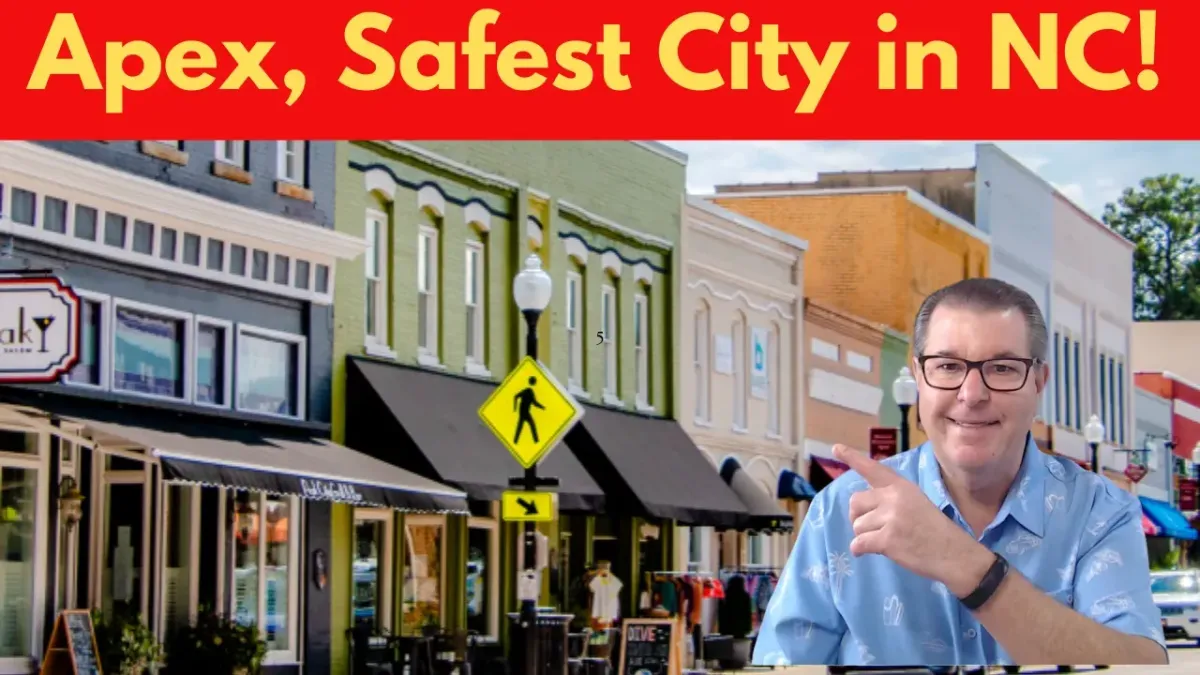
Watch: Living in Apex, NC (2026)
Jump To:
Apex, NC Population & Demographics — Evolution from railroad town to Triangle's complete package, income profile, and what the demographic shift means for buyers.
Apex Market Snapshot (2026) — Median home price, days on market, tax rates, and 2026 inventory trends.
Apex Homes for Sale — Current active listings updated daily from Wake County MLS.
New Construction vs Resale in Apex — Builder lineup, production vs custom, housing style comparison, and the 2026 incentive landscape.
How Apex Compares to Other Triangle Suburbs — Apex vs Cary, Holly Springs, Fuquay-Varina, Garner, and Raleigh side by side.
Living in Apex: The Lifestyle Reality — Morning commute, afternoon character, and two distinct evening scenes.
Popular Neighborhoods in Apex — Bella Casa, Scotts Mill, Haddon Hall, Ivory Hills, Sweetwater, Huxley, Jamison Park, Green Level Trail, and more.
Cost of Living in Apex — Property taxes, HOA fees, utilities, town limits difference, and the NC due diligence reality.
What Salary Do You Need in Apex? — Monthly cost breakdown, coastal city comparison, interactive calculator, and the Apex value proposition.
Is Apex, NC Safe? — Crime data, neighborhood-level reality, and how to research any specific address.
Why Are So Many People Moving to Apex? — The five pull factors driving Apex's sustained in-migration wave.
Schools in Apex, NC — WCPSS assignments, Felton Grove opening, charter and private options.
Parks & Outdoor Living in Apex — Pleasant Park, Apex Nature Park, greenways, and Jordan Lake access.
Amenities & Community Services — Beaver Creek Commons, WakeMed Healthplex, downtown Salem Street, and the 2026 event calendar.
Dining & Entertainment in Apex — Scratch Kitchen, Tap Station, Common Grounds, Peak City Pig Fest, and the Social District scene.
Where Apex Is Located in the Triangle — Quad-corridor access, drive times table, what surrounds Apex, and geographic positioning.
Future Growth & Development — Veridea, NC Children's Hospital, Salem Street renovation, and infrastructure milestones.
Awards & Recognition for Apex — #3 Best Small City in America, #7 Best Place to Live, AAA bond rating.
Pros & Cons of Living in Apex — The honest 2026 assessment of Apex's trade-offs.
Nearby Triangle Relocation Guides — Holly Springs, Fuquay-Varina, Cary, Raleigh, Durham, Wake Forest, and more.
About Phil Slezak — AI-Certified agent, 20+ years Triangle experience, and exclusive buyer programs.
People Also Ask — More common questions from Apex relocation buyers.
Frequently Asked Questions About Apex, NC — Quick answers to the most common relocation questions buyers ask before moving to Apex.
Next Steps — Schedule a strategy call, text APEX, or start your custom home search.
Apex, NC Population & Demographics
Population: ~85,000 — Apex is the third-largest municipality in Wake County and has consistently ranked among the fastest-growing towns in the United States. Large enough for full retail and healthcare infrastructure, yet still intimate enough to retain the community identity that defines its "Peak of Good Living" brand — a balance most suburbs at this population level have already lost.
County: Wake County
Region: Raleigh–Durham–Chapel Hill Triangle (Southwest Wake)
Median Household Income: ~$144,135 — Reflecting a high concentration of dual-income professional households, Apex's income levels rival Cary's. The workforce is primarily fueled by the life sciences, clean energy, and technology sectors anchored by nearby Research Triangle Park — with a growing healthcare concentration as the NC Children's Hospital campus approaches operational status within the Veridea footprint.
Median Age: ~36.4 — Younger than the regional average, this metric highlights a market dominated by young professionals, move-up buyers, and professional parents drawn to the town's award-winning park system and Salem Street's authentic community character.
Educational Attainment: 69.5% Bachelor's Degree or higher — The highest educational attainment of any major Wake County suburb and a direct reflection of the RTP-anchored professional workforce that has chosen Apex as its primary residential address. That intellectual capital supports long-term property values and a community culture oriented around schools, parks, and family infrastructure.
Homeownership Rate: ~78.2% — A strong owner-occupied residential base reflecting the stability of a market where buyers choose Apex with intention rather than necessity — and tend to stay. Low transient population is a meaningful signal for long-term neighborhood stability and community investment.
The Evolution of Apex — From Railroad Town to the Triangle's Complete Package
Apex has completed one of the most deliberate suburban transformations in Wake County's history. Once defined as a quiet railroad town at the southwestern edge of the Triangle, the town has rebuilt its identity around four converging forces that no other Wake County suburb has managed to combine simultaneously.
Historic Downtown Preservation: While most Triangle suburbs were building from scratch, Apex was preserving what it already had. Salem Street's century-old working historic district — original buildings, locally owned businesses, and the Halle Cultural Arts Center — became the authentic community anchor that master-planned lifestyle centers across the region have spent decades trying to replicate. The Social District designation formalized what Salem Street already was: the genuine social heart of a real town.
Quad-Corridor Infrastructure: The completion of the NC-540 Triangle Expressway loop transformed Apex's geographic position from a southwestern suburb into the Triangle's most commute-flexible address. The intersection of NC-540, US-1, US-64, and NC-55 gives Apex residents something no other Wake County suburb can claim — four independent route options to every major employment hub in the region, from RTP to downtown Raleigh to RDU Airport.
The Veridea Demand Signal: The $3 billion Veridea mixed-use development on Old US-1 — anchored by the NC Children's Hospital, a Duke Health and UNC Health partnership bringing approximately 8,000 jobs — is the kind of generational employer investment that reshapes residential values for decades. Buyers entering the Apex market in 2026 are purchasing before that employment and commercial infrastructure is fully priced into surrounding residential values.
Premier Park Infrastructure: Pleasant Park's 92-acre destination campus, Apex Nature Park, the Beaver Creek Greenway, and direct American Tobacco Trail access from multiple neighborhoods have given Apex an outdoor lifestyle package that active families consistently rank as a deciding factor in their move. Unlike the parks in fast-growing southern Wake County suburbs that are still under construction, Apex's flagship park infrastructure is finished — and in daily use.
The result is a community that has successfully scaled its historic character into a modern economic engine. Apex in 2026 is not a town you settle for when you can't afford something else. It is a town people choose with intention — because no other Wake County address delivers all four of those advantages in a single zip code.
💡 Phil's Perspective: "The demographic story in Apex that most buyers miss is what that 69.5% bachelor's degree figure actually means in practice. When nearly seven out of ten of your neighbors hold a four-year degree, you're not just buying a house — you're buying into a community culture that is oriented around schools, parks, civic engagement, and long-term neighborhood investment. That's why Apex neighborhoods hold their values through corrections that punish other markets. The people here chose this town carefully — and they take care of it the same way."
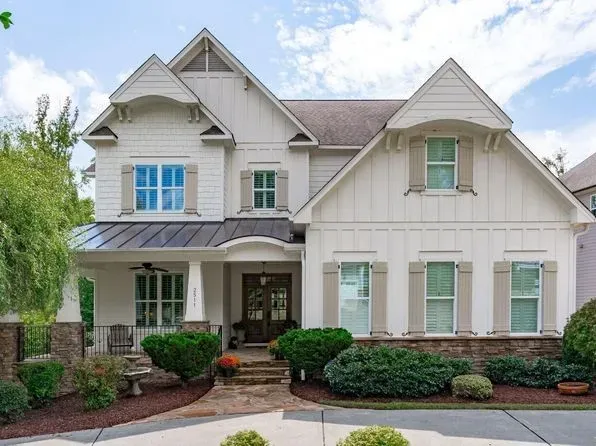
Apex, NC Real Estate Market Snapshot (2026)
📊 Current Market Overview
| Metric | Value (2026) |
|---|---|
| Median Home Price | $623,500 |
| Average Price per Sq. Ft. | $237 |
| Average Days on Market | 34 - 55 Days |
| % of New Construction | ~37% |
| Year-Over-Year Appreciation | 8% |
| Inventory Trend | Stable |
| Active Listings | 373 |
| Property Tax Rate (Combined FY2026) | $0.8731 per $100 (inside town limits) |
| Typical Commute to RTP | 20–30 mins |
| Typical Commute to Raleigh | 20–35 mins |
| Typical Commute to Durham | 25–40 mins |
Apex, NC Homes for Sale — View Current Listings
Apex, NC Homes for Sale
Browse current listings including new construction, resale homes, and luxury properties across all Apex neighborhoods.
👇 View Current Apex ListingsListings open in a new tab — no login required
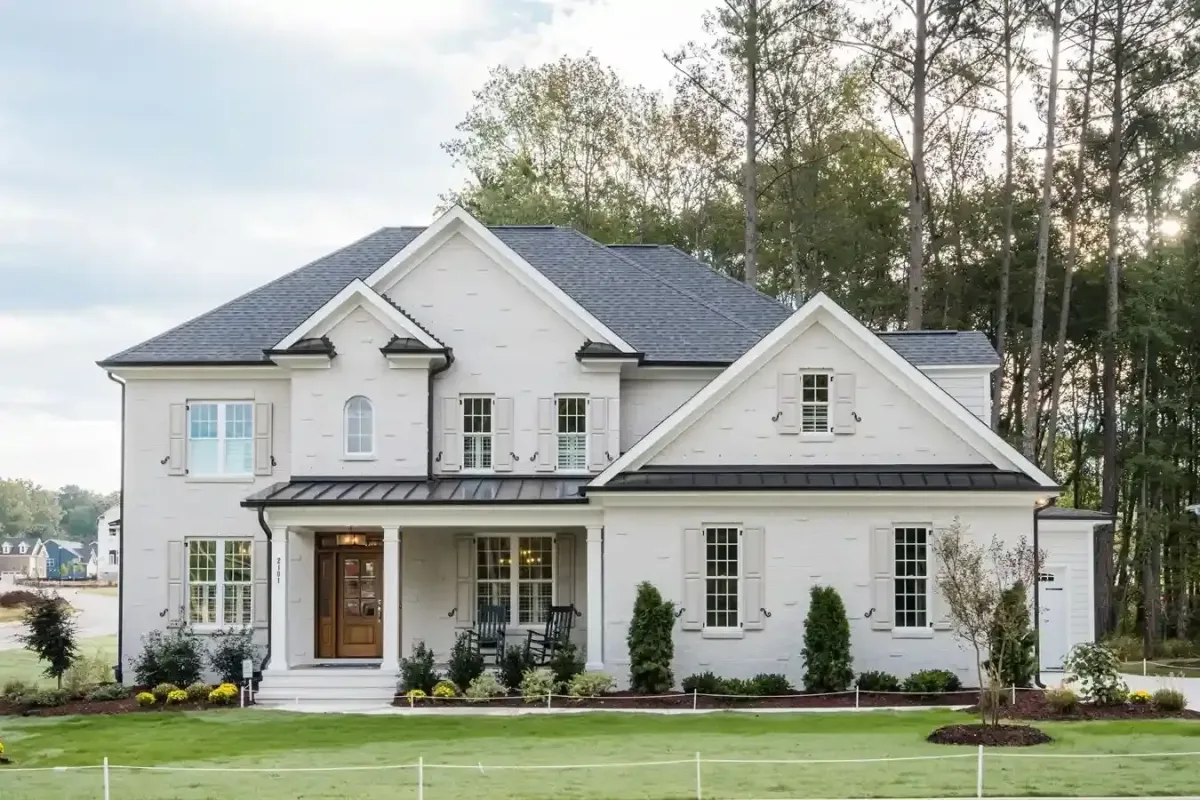
Housing in Apex, NC: New Construction vs. Resale
Apex's housing landscape ranges from historic bungalows near Salem Street to luxury custom estates in Ivory Hills and modern master-planned communities in West Apex. For most buyers, the choice comes down to modern efficiency and builder incentives versus established character, mature lots, and neighborhood identity.
New Construction: Modern Efficiency & Incentives
New development is concentrated in the growth corridors along NC-540, Richardson Road, and Olive Chapel Road, with additional activity near the emerging Veridea footprint on Old US-1.
The Profile: Expect Modern Craftsman and Transitional styles featuring smart-home technology and smaller, low-maintenance lots (often 0.15 to 0.25 acres).
The 2026 Advantage: With inventory growing, national builders like Lennar, Pulte, Stanley Martin and M/I Homes are offering aggressive mortgage rate buydowns. In early 2026, we are seeing 2/1 buydowns starting as low as *2.99%–3.99% for the first two years, providing a powerful hedge against current market rates.
The Trade-off: Higher HOA dues, structured community living, and smaller lot sizes are the norm in most new construction neighborhoods with resort-style amenities.
Local & Custom Authorities
Apex has become a primary hub for the Triangle's most respected custom builders, particularly as high-net-worth buyers seek healthy-home features, sustainable construction, and one-of-a-kind architecture. For buyers looking beyond high-volume production, these firms represent the gold standard:
Rufty Homes: Apex’s premier luxury builder; leader in healthy-home tech and precision craftsmanship.
Triple A Homes: Known for meticulous interior detail and floor plans that blend modern luxury with functional smart-living.
Elm Street Builders: A boutique firm focused on design-led architecture and one-of-a-kind spec homes.
Greystone of NC: Traditional Southern craftsmanship with contemporary luxury finishes
Loyd Builders: Specializing in high-end estates with seamless indoor-outdoor living.
McNeill Burbank: Praised for top-shelf architectural details and Humanist design at a thoughtful, livable scale.
Top Production & Semi-Custom Builders
M/I Homes — High energy-efficiency standards, active in Green Level Trail and surrounding corridors
Lennar — Everything's Included model with smart home integration
Pulte Homes — Modern functional floor plans, active in Huxley and western Apex
Toll Brothers — Luxury semi-custom leader with premium finish options
Resale Homes: Character & Elbow Room
Established neighborhoods like West Lake, Haddon Hall, Abbington, Ivory Hills, and Scots Laurel offer a different value proposition for those who prefer privacy and "neighborhood feel" over newness.
The Profile: Larger, mature lots (0.3 to 0.5+ acres) with established tree canopies and unique, non-repetitive architecture.
The 2026 Advantage: With a median resale price near $623,500, these homes typically offer a better value per square foot than new builds and are located in central pockets with established cut-throughs to avoid peak-hour highway congestion.
The Trade-off: Buyers should budget for cosmetic updates and deferred maintenance (roofs/HVAC) typical of homes built in the 1990s and early 2000s.
| Home Style | Common Locations | Best For |
|---|---|---|
| Historic Bungalow | Downtown Apex, Salem Street corridor | Buyers who want walkable historic character, proximity to the Social District, and original Craftsman architecture — and who understand that charm comes with age-typical maintenance. |
| Traditional Two-Story | Established subdivisions (1995–2010) | Buyers wanting mature lot sizes and established tree canopy with proven neighborhood stability across multiple market cycles. |
| Modern Craftsman | New growth corridors (NC-540), Richardson Road, Olive Chapel Road | Buyers prioritizing energy efficiency, smart-home technology, and builder incentives — who are comfortable with smaller lots and HOA community living in exchange for modern floor plans. |
| Luxury Townhomes | Downtown-adjacent, Beaver Creek corridor | Urban-suburban lifestyle buyers who want walkable Salem Street access or efficient highway commute positioning at a lower entry price than detached Apex homes. |
| Custom Estates | Southern 27523 outskirts, acreage lots | High-end buyers working with Rufty Homes, Loyd Builders, or McNeill Burbank who want bespoke architecture and private acreage at a price point below comparable North Raleigh estate markets. |
| 55+ Active Adult | Select corridors near US-64 and Jenks Road | Age-qualified buyers seeking low-maintenance exteriors, resort-style amenities, and a community identity built around the 55+ lifestyle — verify HOPA eligibility before purchasing. |
*Rate buydown availability and terms vary by builder, phase, and market conditions — verify directly with the builder's preferred lender. Builder preferred lenders work for the builder, not for you — always get an independent pre-approval before visiting any new construction sales office. Age-qualified (55+) communities are governed by federal HOPA guidelines — verify eligibility and availability directly before purchasing.
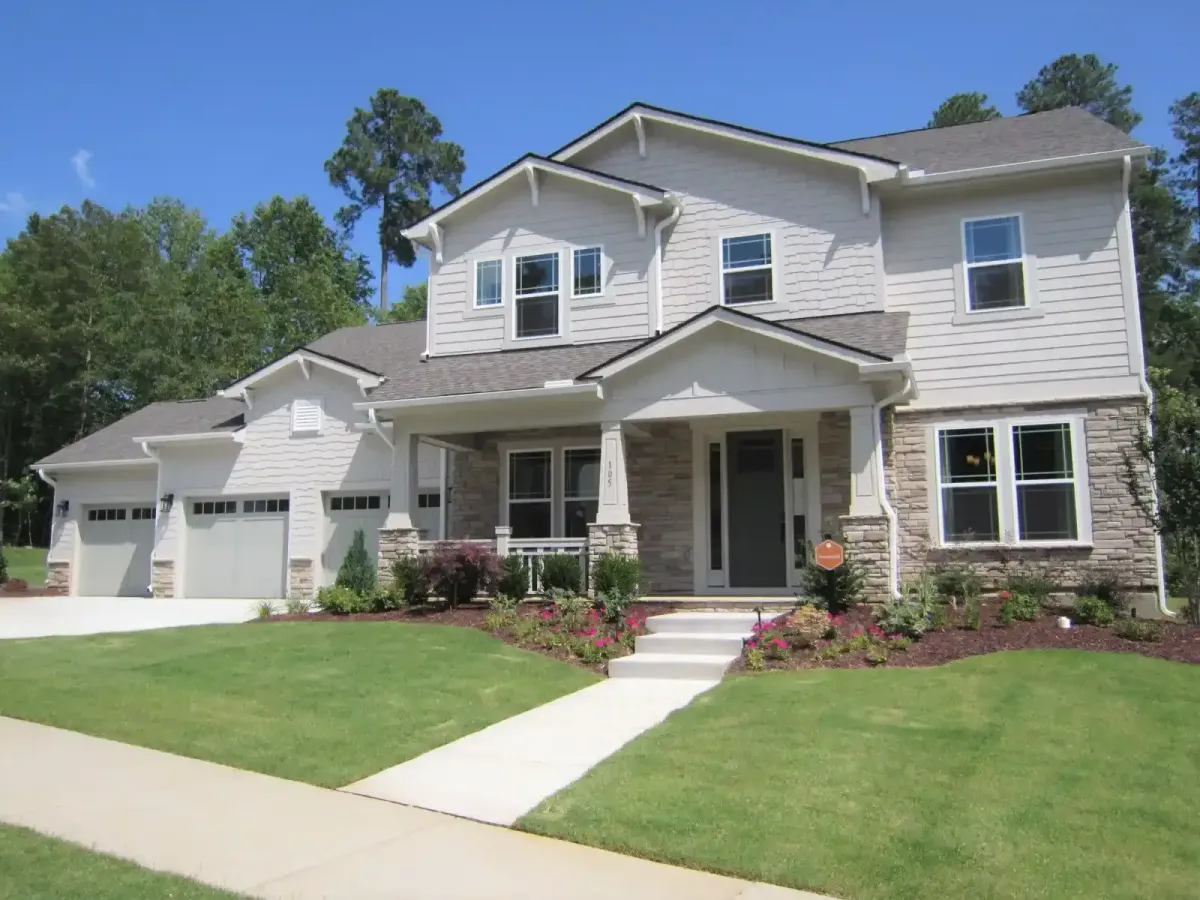
How Apex Compares to Other Triangle Suburbs
Buyers comparing Apex often also evaluate Cary, Holly Springs, and Fuquay-Varina. While all four offer top-tier quality of life, they serve different priorities regarding commute, budget, and town character.
At-a-Glance Comparison (2026 Data)
How Apex Compares to Other Triangle Suburbs (2026)
| Category | Apex | Cary | Holly Springs | Fuquay-Varina | Garner | Raleigh |
|---|---|---|---|---|---|---|
| Median Sold Price | ~$623,500 | ~$625,000 | ~$607,500 | ~$479,000 | ~$425,000 | ~$470,000 |
| Price Per Sq Ft | ~$237 | ~$259 | ~$231 | ~$206 | ~$195 | ~$230 |
| Combined Tax Rate | $0.8731 | $0.8571 | $0.8606 | $0.8751 | $1.0371 | $0.8721 |
| Median Days on Market | 23 Days | 11 Days | 13 Days | 30 Days | 28 Days | 22 Days |
| Active Listings | 379 | 413 | 467 | 697 | ~280 | 3,950 |
| Market Character | Historic charm & growth | Mature & prestigious | Biotech hub & high growth | Value leader & high growth | Value & commuter | Urban core & diverse |
| New Construction | Active | Limited | Abundant | Abundant (47%+) | Moderate | Limited |
| RTP Commute | 20–30 min | 10–20 min | 25–40 min | 30–45 min | 25–40 min | 15–25 min |
| Primary Employer | RTP / Tech / Veridea | SAS / Apple / Google | Fujifilm / Genentech / Biotech | John Deere / TE Connectivity / Wake Schools | Raleigh / Amazon / State Gov't | State Gov't / Tech / RTP |
| School District | Wake County Schools | Wake County Schools | Wake County Schools | Wake County Schools | Wake County Schools | Wake County Schools |
| Downtown Scene | Historic Social District | Revitalized & walkable | Developing & improving | Two historic districts | Developing | Vibrant urban core |
| Walkability | Moderate — Salem St walkable | Moderate — greenway-connected | Low — car dependent | Low-Moderate — downtown walkable | Low — car dependent | High — downtown core |
| Best For | Complete package buyers | RTP commuters & prestige buyers | Value buyers & life sciences | Value buyers & downtown character | Budget buyers near Raleigh | Urban lifestyle & walkability |
Median home prices, days on market, and tax rates reflect approximate figures as of Q2 2026. Active listing counts reflect current Wake County MLS data. Verify current inventory and rates with your agent before making comparisons.
Cary: The Established Standard
⚖️ The Trade-off: Cary offers the shortest RTP commute of any major Triangle suburb, 100+ miles of greenways, all three major Triangle health systems, and the most mature residential infrastructure in the region. The Fenton district and Downtown Cary have set a new standard for suburban lifestyle in North Carolina. However, at a median of $625,000 — essentially identical to Apex — new construction is severely limited, lot sizes in established Cary neighborhoods are often smaller than comparable Apex resale options, and Cary's growth story is one of refinement rather than transformation. There is no Veridea equivalent in Cary's pipeline.
✅ Why Choose Apex Over Cary: Apex delivers a more distinctive historic downtown anchored by the Salem Street Social District, stronger long-term appreciation signals through Veridea and the NC Children's Hospital, and active new construction availability that Cary simply cannot match. For split-commute households — one partner heading to RTP, another to downtown Raleigh — Apex's quad-corridor positioning beats Cary's more RTP-centric layout. For buyers who want to buy ahead of a growth story rather than pay for a finished one, Apex is the stronger 2026 decision.
Holly Springs: The Biotech Growth Alternative
⚖️ The Trade-off: Holly Springs offers an emerging biotech employment corridor anchored by Fujifilm and Genentech — creating a local employment base that Apex cannot yet match for life sciences professionals. Resort-style master-planned communities like 12 Oaks and the US-1 South corridor give Holly Springs a distinct suburban identity. However, at a median of $607,500 — approximately $16,000 below Apex — Holly Springs' downtown scene is still developing, its commercial infrastructure hasn't reached Salem Street's maturity, and it lacks the quad-corridor commute flexibility that makes Apex work for households whose careers may shift across the Triangle.
✅ Why Choose Apex Over Holly Springs: Apex delivers a finished historic downtown Social District, the quad-corridor commute advantage, and the Veridea appreciation signal — all at a price point only $16,000 above Holly Springs. For buyers whose careers are not anchored to the biotech corridor and who prioritize commute flexibility, walkable downtown character, and a more established community infrastructure, Apex wins the southwest Wake County comparison decisively.
Fuquay-Varina: The Value Leader
⚖️ The Trade-off: Fuquay-Varina offers the most affordable entry point in southwest Wake County at $479,000 median — approximately $144,500 below Apex — with two certified NC Main Street historic downtown districts and the deepest new construction inventory in southern Wake County at 47%+. For buyers whose primary constraint is budget, the purchasing power difference is genuinely decisive. However, the commute to RTP runs 30–45 minutes at peak hours versus Apex's 20–30 minutes, the commercial amenity infrastructure is still arriving, and the employment base is less diversified than Apex's quad-corridor positioning supports.
✅ Why Choose Apex Over Fuquay-Varina: Apex delivers quad-corridor commute access, a century-old working historic downtown, premier finished park infrastructure, and the Veridea appreciation signal — for buyers whose budget supports the $144,500 premium. For dual-income households with RTP-centered careers where commute time compounds significantly over a working year, the price of Apex is often justified by the time recaptured and the finished lifestyle infrastructure that Fuquay-Varina is still building. For buyers who prioritize budget over commute efficiency, Fuquay-Varina remains the stronger value play.
Garner: The Budget Commuter Alternative
⚖️ The Trade-off: Garner offers a significantly lower entry price point at approximately $425,000 median — roughly $198,500 below Apex — with strong proximity to Raleigh's eastern employment corridors and direct I-40 access. For buyers whose primary employment is in downtown Raleigh or east Raleigh, Garner's positioning is genuinely more efficient than Apex. However, Garner lacks Apex's historic downtown character, quad-corridor commute flexibility, premier park infrastructure, and the long-term appreciation signal of the Veridea development. The town's commercial infrastructure and community identity are meaningfully less developed than Apex at this stage.
✅ Why Choose Apex Over Garner: Apex delivers a century-old working historic Social District, the most commute-flexible address in Wake County, premier finished parks, and the strongest long-term appreciation signal of any active development project in the Triangle — for buyers whose budget supports the premium. For buyers who prioritize Salem Street, quad-corridor access, and the Veridea upside over entry price, Apex is not comparable to Garner — it is in a different category of suburban market entirely.
Raleigh: The Urban Core Alternative
⚖️ The Trade-off: Raleigh offers unmatched urban density — downtown dining, arts venues, NC State, WakeMed, and direct access to I-40 and I-440 without a suburban commute. For buyers whose lifestyle is centered on walkable city living and whose careers are anchored in downtown Raleigh or the state government corridor, Raleigh's geographic position is difficult to argue against. However, median home prices in desirable Raleigh zip codes approach Apex's median with significantly smaller lot sizes, new construction within city limits is limited and premium-priced, and Raleigh's school quality requires more address-specific due diligence than Wake County's suburban campuses.
✅ Why Choose Apex Over Raleigh: Apex delivers Salem Street's historic community character, quad-corridor commute access to every Triangle employment hub, premier park infrastructure, and the Veridea appreciation signal — at a comparable price point to desirable Raleigh zip codes but with significantly more square footage per dollar, larger lots, and Wake County school access. For buyers whose lifestyle doesn't depend on walkable urban nightlife every evening — and whose priority is a complete suburban package with genuine historic character and long-term equity — Apex offers the stronger return on every dollar spent in 2026.
💡 Phil's Perspective: The comparison question I get most often about Apex is whether it's worth the premium over Holly Springs or Fuquay-Varina. My honest answer is yes — but only for the right buyer. If your household has two careers that pull in different directions across the Triangle, Apex's quad-corridor positioning pays for itself in time recaptured every single week. If Salem Street's historic character matters to your daily quality of life — not just as something to visit occasionally but as something to walk to — Apex is the only Wake County suburb that delivers it authentically. And if you want to buy ahead of a generational employment anchor rather than after it's fully priced in, Veridea is that signal right now. The buyers who struggle with Apex are the ones who need Fuquay-Varina's value but convince themselves they need Apex's lifestyle. Be honest about which buyer you are — and the right answer becomes clear.
Median home prices and tax rates reflect approximate figures as of Q2 2026. Verify current rates and inventory with your agent before making comparisons.
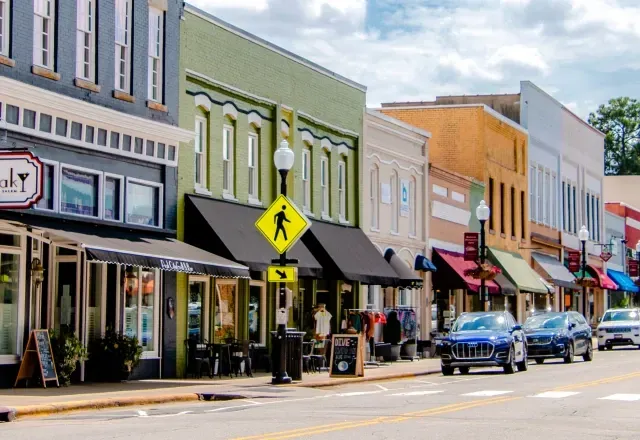
Living in Apex: The Lifestyle Reality (2026)
If you move to Cary for its polish and Holly Springs for its biotech potential, you move to Apex for the complete package. In 2026, living here means you no longer have to choose between small-town authenticity and serious suburban infrastructure. Apex is the only suburb in the Triangle that has successfully scaled its historic character into a modern economic engine.
Morning: The Quad-Corridor Advantage
The day starts with a geographic flexibility that most Triangle suburbs can't offer. Apex is the only address that puts you at the intersection of four major transit spokes.
The Commute Matrix: Whether you are heading to RTP (20–30 mins), Downtown Raleigh (25–45 mins), or RDU Airport (15–25 mins), you have multiple route options. The completion of the NC-540 loop has been the defining infrastructure win for West Apex, effectively bypassing the surface-street gridlock found in other growing towns
The Local Reality: Locals know that while NC-540 is the fastest option, NC-55 and Ten-Ten Road still carry the weight of the morning school rush. Between 7:30 AM and 8:30 AM, your corridor choice matters more than your town limits. Once that window clears, the rest of the Triangle feels surprisingly close
Afternoon: Where the Character Lives
By midday, Apex's identity as a historic core becomes its greatest differentiator. Unlike the manufactured lifestyle districts seen elsewhere, Salem Street is a genuine working downtown.
Historic Authenticity: The buildings are original and the businesses are locally owned. Common Grounds Coffee House remains the unofficial community office — a vibe that hasn't been diluted by the surrounding growth.
Finished Infrastructure: While other towns are still building their flagship parks, Apex's Pleasant Park is finished. From the 92-acre inclusive playground to the Beaver Creek Greenway and American Tobacco Trail connections, the afternoon lifestyle in Apex is built around direct multi-use access without ever needing to get in a car.
Evening: Two Distinct Scenes
As the sun sets, Apex offers something rare for a town its size — two completely different evening experiences.
Salem Street Social District: The historic heartbeat. Grab a drink on the rooftop at Tap Station or enjoy southern-inspired comfort food at Scratch Kitchen & Taproom and walk freely through the Social District with a beverage in hand. It rivals the polish of Cary's Fenton but with a grounded historic soul.
Sweetwater Town Center: For those in the western corridors, the vibe shifts to a modern upscale neighborhood energy. Residents gather at Southern Peak Brewery or Foxtail Coffee, creating a community hub that feels like a neighborhood block party without the drive downtown.
Popular Neighborhoods in Apex, NC
Apex neighborhoods offer distinct personalities, ranging from urban-suburban walkability near Salem Street to expansive resort-style communities on the town's western edge.
Market & Tax Note: Pricing reflects approximate market ranges as of Q1 2026 based on recent MLS activity. Properties located within Apex town limits carry a combined Wake County and municipal tax rate of approximately $0.8731 per $100 of assessed value. Some neighborhoods listed below may fall outside town limits, where only the Wake County rate of $0.5171 per $100 applies. Verify current tax status and inventory with your agent before making a purchase decision.
The Established Classics
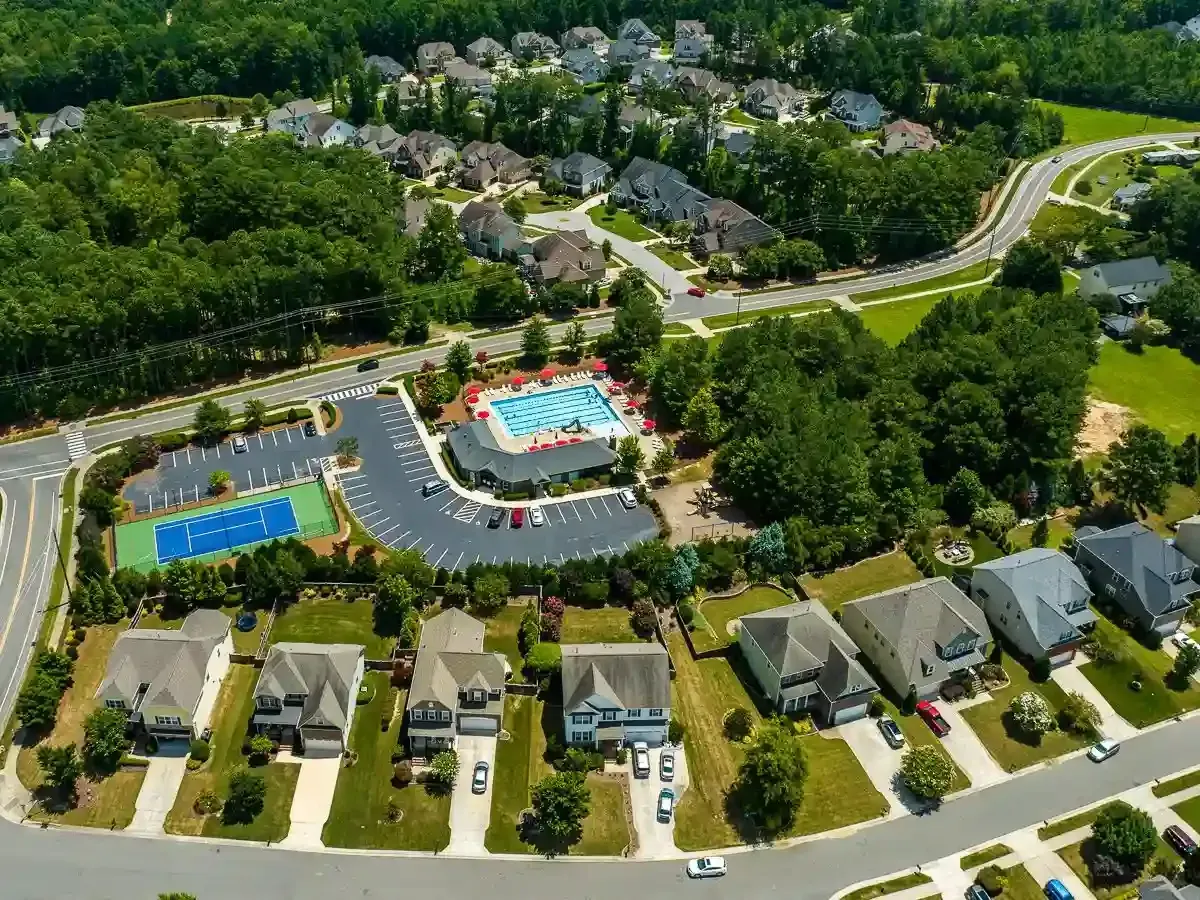
Bella Casa
The Vibe: High-amenity suburban resort
The 2026 Profile: Known for three distinct pool complexes and direct proximity to Apex Nature Park and Seymour Athletic Fields. One of the most socially active master-planned communities in western Apex with a strong HOA culture and resort-style amenity programming year-round.
Home Prices: $750,000–$1.3M+
Home Style: Modern Craftsman and Transitional — larger floor plans, premium finishes, and community-facing architecture designed around the amenity centers
Lot Sizes: Moderate — 0.15 to 0.3 acres; the amenity infrastructure compensates for what the lots give up in size
Commute: 15–20 min to RTP via NC-540, 25–35 min to Downtown Raleigh via US-1, direct NC-540 interchange access
Walkability: Low to moderate — walkable to Apex Nature Park and Seymour Athletic Fields, car dependent for retail and dining
Best For: Buyers who want a resort-at-home lifestyle with three pool complexes, structured community programming, and direct access to Apex's premier park system — and who prioritize amenities over lot size
The Honest Note: HOA fees in Bella Casa run $1,200–$2,400+ annually depending on phase and amenity tier. Always request the full HOA financial package including reserve fund status before making an offer. Some sections back to the Veridea development corridor — construction activity will be visible from certain lots through the early 2030s.
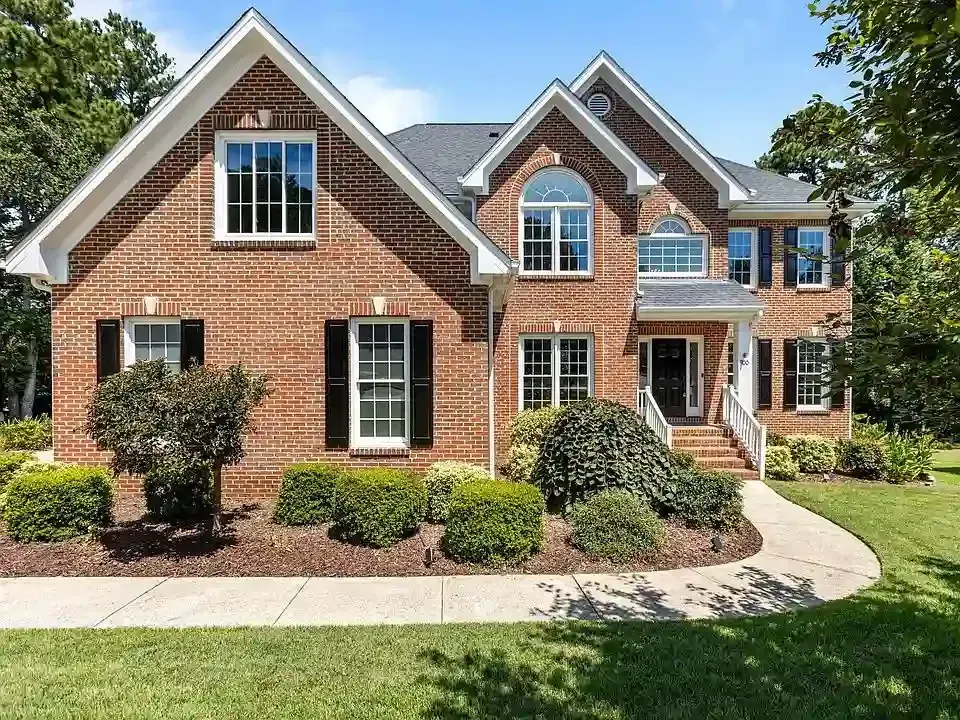
Haddon Hall
The Vibe: Central, convenient, and timeless
The 2026 Profile: One of Apex's most established communities. One of the few neighborhoods where residents can walk to Beaver Creek Crossings, Harris Teeter, and multiple retail centers. Positioned at the US-1 and NC-55 interchange — the most commute-efficient address in Apex for households with destinations in both Raleigh and Cary.
Home Prices: $750,000+ single-family; $450,000–$550,000 townhomes
Home Style: Traditional two-story and transitional single family — established build quality with mature landscaping throughout
Lot Sizes: Moderate — 0.2 to 0.4 acres with established tree canopy in older sections
Commute: 15–20 min to RTP via NC-540 or NC-55, 20–30 min to Downtown Raleigh via US-1, 10–15 min to Downtown Cary via NC-55
Walkability: Moderate — Beaver Creek Crossings and Harris Teeter walkable from many sections; greenway access available
Best For: Buyers who prioritize commute efficiency above all else — the US-1/NC-55 interchange positioning gives Haddon Hall the strongest multi-destination commute flexibility of any established Apex neighborhood
The Honest Note: Haddon Hall is an established community — budget for age-typical updates on homes built in the late 1990s and early 2000s. HVAC, roofing, and kitchen modernization are common at the lower end of the price range. Verify school assignments directly — this corridor has seen boundary adjustments with recent high school openings.
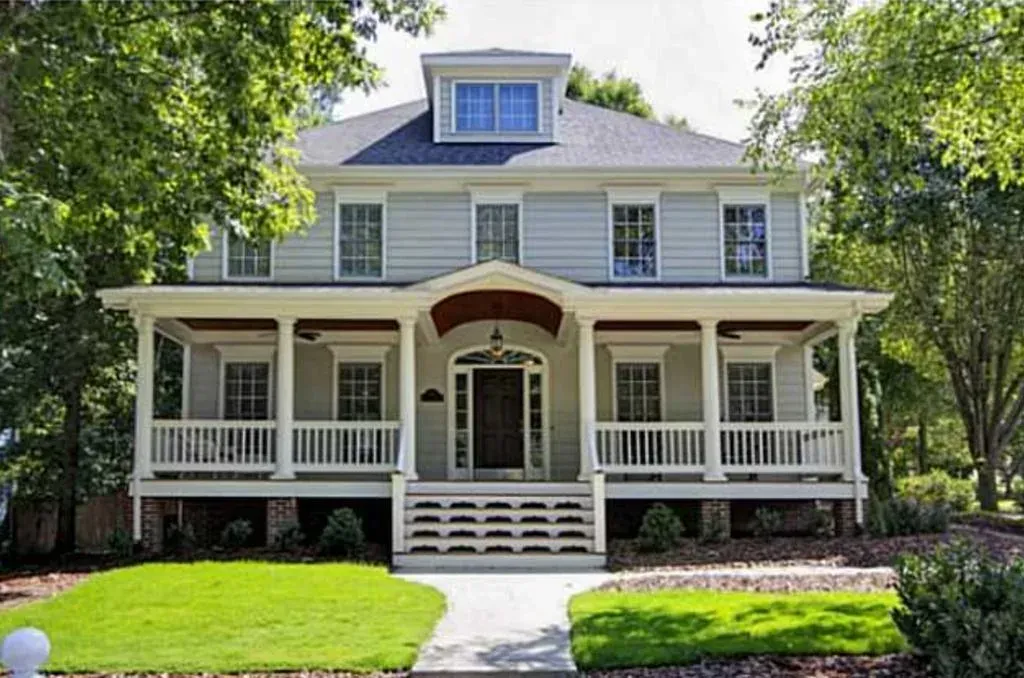
Scotts Mill
The Vibe: Character-rich, walkable, and colorful
The 2026 Profile: Known for Charleston-style double front porches and alley-load garages. Still regarded as one of the most socially active neighborhoods in the Triangle — the kind of community where neighbors know each other by name and front porch culture is genuine rather than aspirational.
Home Prices: $450,000–$850,000+
Home Style: Charleston-style single family with double front porches, alley-load garages, and architectural detail that no production builder community can replicate
Lot Sizes: Moderate — smaller urban-style lots that prioritize front porch living and community interaction over backyard privacy
Commute: 5 min to Downtown Apex on foot, 15–25 min to RTP via NC-540 or US-1, 20–30 min to Downtown Raleigh
Walkability: High for Apex — Salem Street, the Halle Cultural Arts Center, and downtown dining all accessible on foot
Best For: Buyers who want the most walkable address in Apex and the strongest connection to Salem Street's social energy — and who value architectural character and community cohesion over lot size and privacy
The Honest Note: Scotts Mill is largely built out — inventory is limited and homes move quickly when priced correctly. The smaller lot sizes are a deliberate design choice that supports walkability; buyers who want a large backyard should evaluate other neighborhoods. Verify current school assignments as the downtown corridor has multiple assignment options.
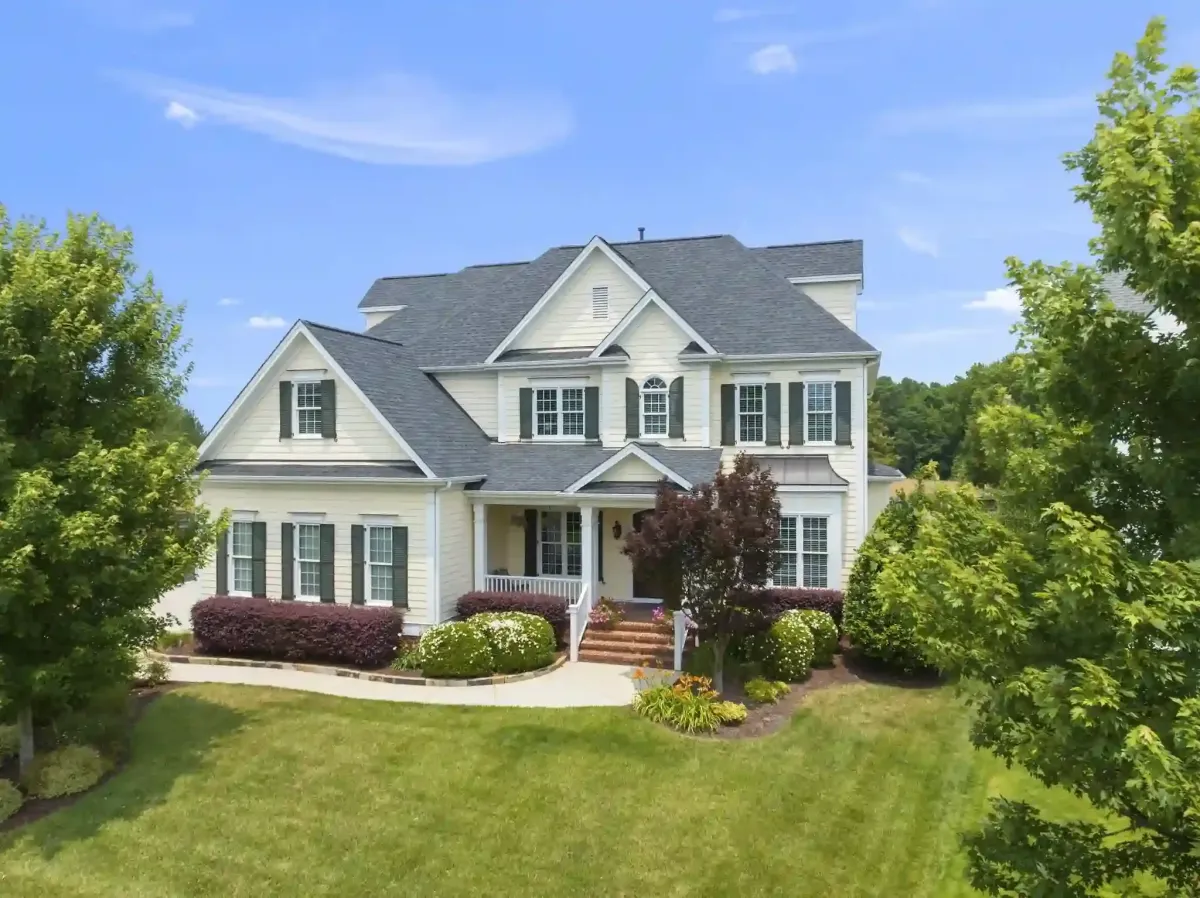
West Lake
The Vibe: Nature-focused and community-centric
The 2026 Profile: A large established subdivision known for its namesake lake and walking trails. West Lake Elementary and Middle Schools are located within the community — one of the few Apex neighborhoods where school proximity aligns closely with assignment, though verification remains essential.
Home Prices: $500,000–$900,000+
Home Style: Traditional two-story and transitional single family — established build quality across multiple phases from the early 2000s through mid-2010s
Lot Sizes: Moderate to large — 0.25 to 0.5+ acres with mature landscaping and established tree canopy throughout older sections
Commute: 20–30 min to RTP via NC-540, 25–40 min to Downtown Raleigh via US-1
Walkability: Low to moderate — internal trail network and lake access walkable within the community, car dependent for retail and dining
Best For: Families who want mature established character, direct community access to recreational water features, and the convenience of having elementary and middle schools within neighborhood boundaries
The Honest Note: Always verify school assignments at wcpss.net — proximity to campus does not guarantee assignment even in West Lake. Homes vary significantly in condition and update level across the community's multiple build phases. Inspect carefully and verify the specific section and build year before making an offer.
The 2026 Trending Spotlights: New Construction & Luxury
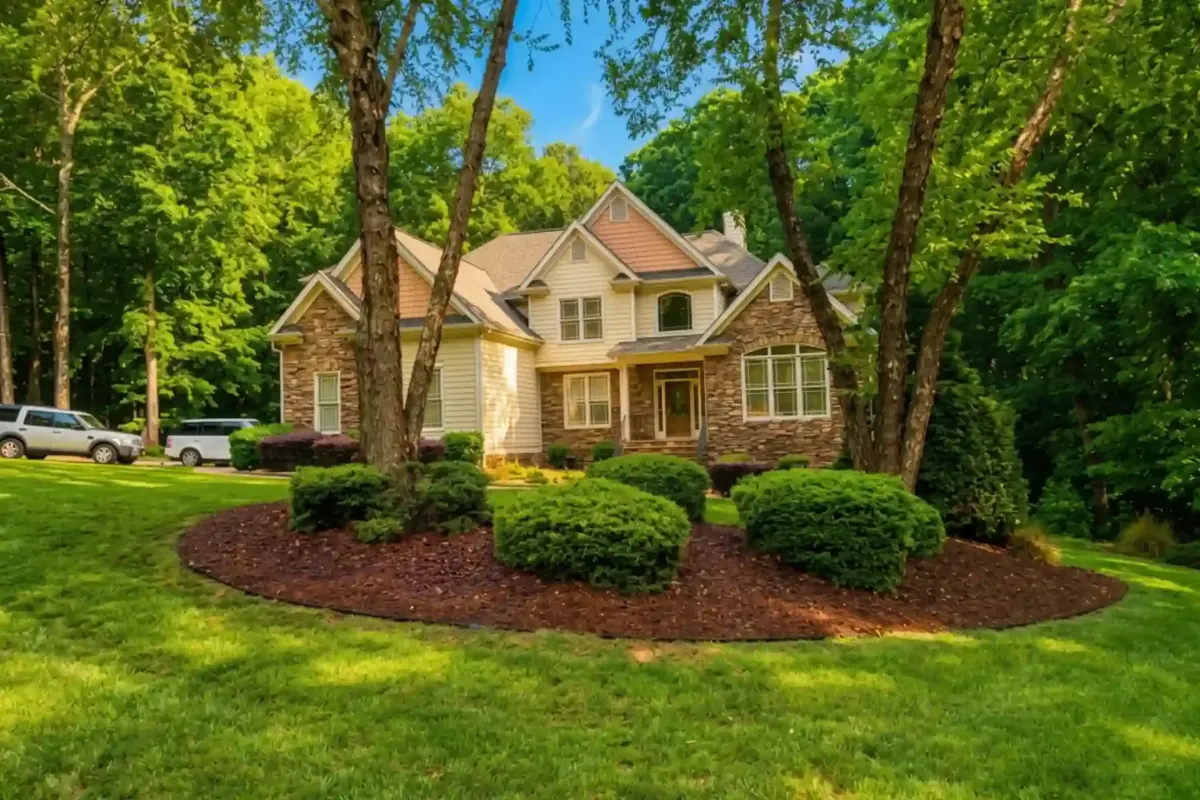
Ivory Hills
The Vibe: Secluded estate living — Apex's best kept secret
The 2026 Profile: Apex's premier address for custom craftsmanship featuring builds from elite firms including Rufty Homes, Loyd Builders, and McNeill Burbank. Wooded lots and a deliberate absence of HOA density give Ivory Hills a private estate character that is increasingly rare in active Wake County growth corridors.
Home Prices: $900,000–$2M+
Home Style: Custom and semi-custom estates — distinctive architecture, premium finishes, and bespoke design across every home. No two homes in Ivory Hills look alike.
Lot Sizes: Large — 0.75 to 2+ acres with mature wooded buffers and significant privacy between homes
Commute: 15–20 min to RTP via NC-540 or NC-55, 25–35 min to Downtown Raleigh
Walkability: Low — car dependent, private estate character throughout
Best For: High-end buyers seeking true custom craftsmanship, wooded privacy, and a luxury address at a price point well below comparable North Raleigh or Chapel Hill estate markets
The Honest Note: Ivory Hills may fall outside Apex town limits — verify tax jurisdiction before making an offer. The difference between town limits and county-only rate is approximately $2,100 annually on a $900,000 home. Inventory is extremely limited and the best homes rarely generate extended market time — buyers should be pre-approved and ready to act.
Sweetwater
The Vibe: A mixed-use city-within-a-suburb
The 2026 Profile: Sweetwater has matured into Apex's western lifestyle anchor with its own Town Center featuring Southern Peak Brewery, Foxtail Coffee, boutique fitness, and walkable Beaver Creek Greenway access. For buyers in the western NC-540 corridor, Sweetwater delivers Cary-level amenity density with a distinct Apex identity.
Home Prices: $550,000–$1.2M+
Home Style: Modern Craftsman and Transitional — newer construction with premium finishes, open floor plans, and community-facing architecture oriented around the Town Center
Lot Sizes: Moderate — 0.15 to 0.3 acres; walkable Town Center access compensates for smaller lot sizes
Commute: 15–20 min to RTP via NC-540, 25–35 min to Downtown Raleigh via US-64 or US-1
Walkability: Moderate to high for Apex — Town Center, Southern Peak Brewery, and Beaver Creek Greenway all accessible on foot from most sections
Best For: Buyers who want walkable community energy, modern floor plans, and western Apex's proximity to the NC-540 corridor — without driving downtown for a Friday night out
The Honest Note: HOA fees in Sweetwater run $1,200–$3,600+ annually depending on phase and amenity package. Some sections remain in active construction phases near the Veridea footprint — drive the specific streets at different times of day before committing.
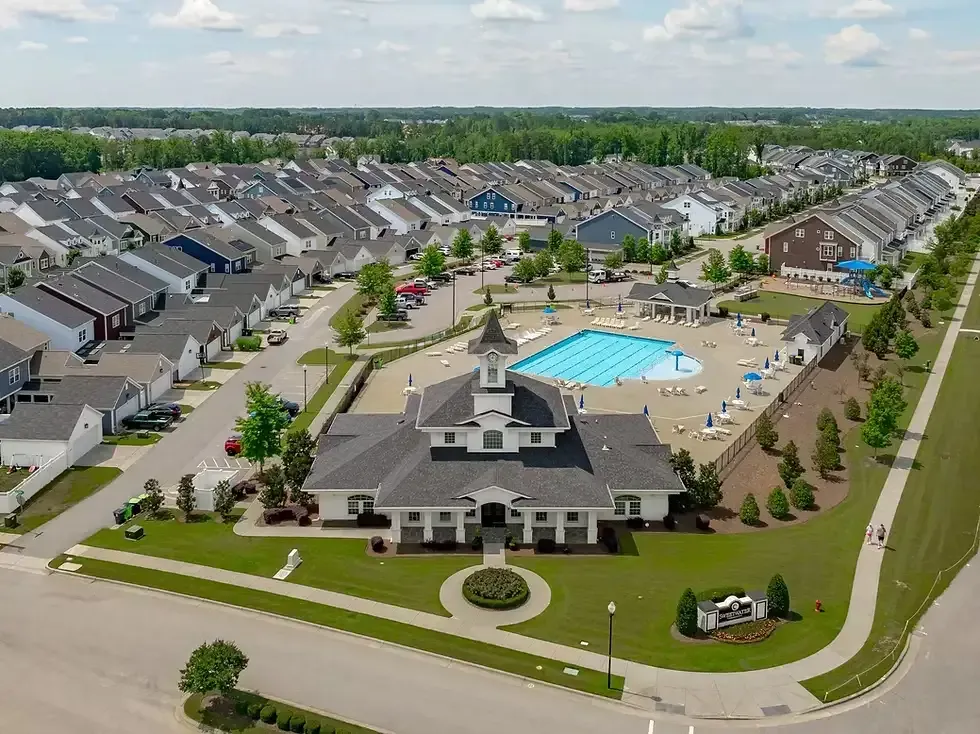
Huxley
The Vibe: Modern hub for the active professional
The 2026 Profile: A high-end Pulte Homes development at the corner of Olive Chapel and Richardson Road featuring a resort-style pool, yoga studio, and community butterfly garden. One of the most amenity-dense new construction communities in western Apex with a strong young professional buyer profile.
Home Prices: $650,000–$950,000+
Home Style: Modern Craftsman and Transitional — Pulte's premium floor plan lineup with smart home integration and energy-efficient systems
Lot Sizes: Moderate — 0.15 to 0.25 acres; community amenities and greenway access offset the smaller lots
Commute: 15–20 min to RTP via NC-540, 20–30 min to Downtown Raleigh, steps from Publix Pointe shopping
Walkability: Low to moderate — Publix Pointe retail walkable from some sections, Beaver Creek Greenway access nearby
Best For: Active professional buyers who want modern floor plans, resort-style community amenities, and western Apex's direct NC-540 access at a price point below Sweetwater's upper range
The Honest Note: Verify current school assignments directly with WCPSS — western Apex corridor assignments have shifted with Felton Grove High School's 2025 opening. Always confirm your specific address before making an offer based on school proximity.
Jamison Park
The Vibe: Quiet, wooded luxury
The 2026 Profile: Tucked away on the southern edge near Holly Springs, Jamison Park offers larger lots and more seclusion than the denser master-planned communities. Direct neighborhood access to Middle Creek Park provides miles of walking trails, disc golf, and athletic fields.
Home Prices: $850,000–$1.5M+
Home Style: Traditional and transitional luxury single family — larger floor plans on generous wooded lots with more architectural variety than typical production communities
Lot Sizes: Large — 0.4 to 0.75+ acres with mature natural screening and established tree canopy
Commute: 20–30 min to RTP via NC-540, 30–40 min to Downtown Raleigh
Walkability: Low — car dependent, but direct trail access to Middle Creek Park from within the neighborhood
Best For: Buyers who want larger lots, wooded privacy, and direct park trail access — and who are comfortable with the slightly longer commute that the southern Apex positioning requires
The Honest Note: Jamison Park may fall outside Apex town limits — verify tax jurisdiction before making an offer. The county-only rate versus the combined rate represents a meaningful annual difference at this price point. Verify school assignments — southern corridor assignments include Middle Creek High School for some addresses.
Note: Jamison Park may fall outside Apex town limits — verify tax status with your agent.
Green Level Trail
The Vibe: Gateway to the outdoors
The 2026 Profile: A newer M/I Homes community near the Green Level West corridor with immediate access to the American Tobacco Trail and approximately 10 minutes from Jordan Lake. One of Apex's quietest and least congested new construction corridors — a meaningful lifestyle advantage for buyers who want to avoid the peak-hour traffic of central Apex while maintaining Triangle access.
Home Prices: $550,000–$1.1M+
Home Style: Modern Craftsman and Transitional — M/I Homes' energy-efficient lineup with smart home integration and larger floor plans than central Apex new construction
Lot Sizes: Moderate to large — 0.2 to 0.4+ acres; larger than comparable new construction in central Apex corridors
Commute: 20–30 min to RTP via NC-540, 30–40 min to Downtown Raleigh; less congested than central Apex peak-hour routes
Walkability: Low — car dependent, but American Tobacco Trail access on foot and Jordan Lake 10 minutes west
Best For: Buyers who want new construction quality, larger lots, and direct outdoor recreation access — and who prefer a quieter corridor over central Apex's denser activity
The Honest Note: Green Level Trail falls outside Apex town limits — the lower Wake County-only tax rate applies here, which is a meaningful financial advantage at this price point. Verify the exact tax jurisdiction for your specific lot before closing.
Note: Green Level Trail may fall outside Apex town limits — the lower Wake County-only tax rate applies here.
Also Worth Knowing
Friendship Station (mid-$500s–$750,000+) An active new construction community in western Apex near Apex Friendship High School featuring modern floor plans, community amenities, and strong builder incentive availability in 2026. A consistent choice for families prioritizing school proximity to Apex Friendship and western corridor commute access. Verify current phase availability and builder incentives directly — inventory changes weekly in active phases.
Abbington ($500,000–$750,000+) A well-established community popular with families for its central Apex positioning, mature tree canopy, and consistent resale demand across multiple market cycles. Homes from the early 2000s offer strong value per square foot relative to new construction — budget for age-typical updates on older sections.
Scots Laurel ($550,000–$850,000+) An established community near central Apex offering mature lots, established neighborhood character, and proximity to the US-1 and NC-55 corridor. Popular with buyers who want established character at a price point below Haddon Hall's upper range.
🏘️ Neighborhood Selection Tips from Phil
Three things I tell every Apex buyer before they start touring:
Drive your specific commute route at 7:45 AM on a Tuesday — not Google Maps at noon. NC-540 and NC-55 behave very differently during peak hours than any map suggests. A home in Green Level Trail has a fundamentally different morning experience than a home in Scotts Mill. The corridor you live in matters more than the town limits you live within. I will not let a buyer go under contract without having driven their actual route at peak hours first.
Verify school assignments before you fall in love with a street. Western Apex corridor assignments have shifted significantly with Felton Grove High School's 2025 opening. Proximity to a school building does not guarantee assignment — and in some western corridors, the assignment has changed between the time a buyer started searching and the time they went under contract. Use the WCPSS Address Lookup Tool at wcpss.net for every address, every time.
Verify tax jurisdiction before you calculate your carrying cost. Several Apex neighborhoods including Ivory Hills, Jamison Park, and Green Level Trail fall outside Apex town limits and pay only the Wake County rate of $0.5171 per $100 — not the combined rate of $0.8731. On a $900,000 home that difference is approximately $1,800 per year. Know which rate applies to your specific address before you build your monthly budget.
Verify current school assignments directly with Wake County Public Schools before making any purchase decision based on a specific school. Properties outside Apex town limits may be subject to different tax rates — confirm applicable tax rates with your agent before making an offer.
Cost of Living in Apex, NC
Understanding the real numbers of Apex requires looking beyond the home price. In 2026, budget adjustments in Wake County and the Town of Apex have finalized new rates that directly impact your monthly carry.
Property Taxes (2026 Rates)
Wake County and its municipalities operate on a per $100 of assessed value model.
Wake County Rate: $0.5171 (Adopted FY2026)
Town of Apex Municipal Rate: $0.3560 (FY2026)
Combined Total: Properties within Apex town limits pay a combined rate of approximately $0.8731 per $100 of assessed value.
| Home Value | Annual Tax Bill | Monthly Equivalent |
|---|---|---|
| $450,000 | $3,929 | ~$327/mo |
| $550,000 | $4,802 | ~$400/mo |
| $623,500 Median ⭐ | $5,443 | ~$454/mo |
| $750,000 | $6,548 | ~$546/mo |
| $1,000,000 | $8,731 | ~$728/mo |
| $1,500,000 | $13,097 | ~$1,091/mo |
*Based on combined Wake County ($0.5171) + Town of Apex ($0.3560) rate of $0.8731 per $100 assessed value for FY2026. Properties outside Apex town limits pay only the Wake County rate of $0.5171 per $100 — this includes Ivory Hills, Jamison Park, and Green Level Trail. Always verify the complete tax picture for any specific address at wakegov.com and apexnc.org before closing.
The Town Limits Difference
On a $623,500 home, being inside Apex town limits costs approximately $5,443 per year in property taxes. A property in an unincorporated pocket of Apex paying Wake County tax only would be approximately $3,361 per year—a difference of over $2,300 annually on the same assessed value.
Important Note: Always verify the tax jurisdiction of any property with your agent before submitting an offer. Rates reflect officially adopted FY2026 figures. Verify current rates at wakegov.com and apexnc.org before closing.
North Carolina's Due Diligence Process
If you are relocating from out of state, the Due Diligence Fee is the biggest culture shock in NC real estate.
The Fee: A non-refundable payment made directly to the seller upon going under contract. It is not held in escrow and is not refundable under most circumstances.
The 2026 Market Standard: For competitive Apex homes in the $600K–$900K range, due diligence fees generally range from 1% to 2% of the purchase price. These figures reflect general market patterns—your agent can advise based on specific house-level demand.
The Risk: This money is typically lost if you back out for any reason (inspection issues, appraisal gaps, or a change of plans). Unlike earnest money, there is no contingency that returns it.
HOA Fees & Amenities
HOA costs in Apex vary significantly by community type:
Master-Planned (e.g., Bella Casa, Sweetwater): Approximately $80–$150 per month, covering resort-style pools, clubhouses, and common area maintenance.
Established Subdivisions (e.g., Scotts Mill, Haddon Hall): Typically $400–$700 per year with more limited common amenity obligations.
Townhomes: Often $200+ per month, but fees typically include exterior maintenance and landscaping—significantly reducing your personal "long-term upkeep" budget.
Utilities & Infrastructure
Apex is distinctive among Triangle suburbs because it operates its own municipal electric utility, giving the town direct control over residential rates and infrastructure investment.
Electricity: Residential rates are approximately $0.1178 per kWh.
Water, Sewer & Trash: Most residents within town limits receive a single combined bill from the Town of Apex. Budget for a 4% increase in water and sewer rates in 2026 as the town invests in infrastructure to support continued NC-540 corridor growth.
Schools in Apex, NC: What Buyers Should Know
Apex is part of the Wake County Public School System (WCPSS), the largest district in North Carolina and consistently ranked among the strongest public school systems in the Southeast. For many relocating buyers the school system is a primary factor in choosing Apex over Johnston County alternatives to the south or Durham Public Schools to the north — and it is a meaningful quality-of-life advantage that Apex's price point doesn't always get enough credit for.
This is the most important thing I tell every buyer considering Apex — and it is more nuanced than most buyers expect:
School assignments in Apex are address-specific and subject to change annually. WCPSS uses an enrollment plan that adjusts boundaries as new schools and capacity additions come online. The 2025 opening of Felton Grove High School has already shifted legacy assignments in western and southern Apex corridors that buyers had relied on for years. Proximity to a school building does not guarantee assignment — and in a town growing at Apex's pace, the address you verify today may have a different assignment by the time your child enrolls.
Three rules every Apex buyer must follow:
Use the WCPSS Address Lookup Tool at wcpss.net for your specific property address before making an offer — not after going under contract.
Never purchase a home based on proximity to a school building without verifying the current assignment for that exact address. This applies to every Apex corridor, including established neighborhoods that buyers assume have stable assignments.
If a specific school is central to your family's decision, verify current enrollment status and boundary stability directly with WCPSS before committing to a neighborhood — and monitor the Board of Education agenda for boundary discussions that could affect your target address.
The 2026 Public School Landscape
Apex's school landscape is actively evolving alongside the town's rapid residential growth. Felton Grove High School's 2025 opening has been the most significant assignment shift in western Apex in years — and additional capacity additions are in the pipeline as Veridea's residential buildout accelerates through the late 2020s.
High Schools Serving Apex
Apex High School — Recently rebuilt with updated facilities near the downtown core. Serves established central Apex neighborhoods and carries one of the strongest athletics and academic traditions in Wake County.
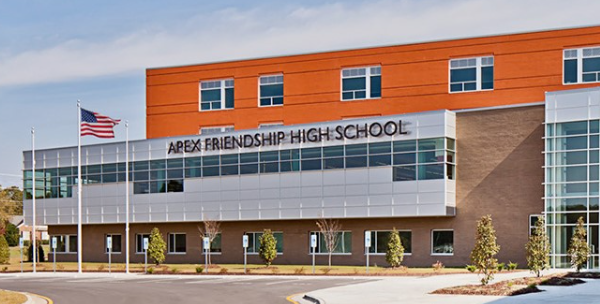
Apex Friendship High School — Located in the high-growth western corridor near the NC-540 interchange. Features a large modern campus with specialized academy programs in STEM, health sciences, and engineering. The primary high school for most western Apex master-planned communities.
Felton Grove High School — Opened 2025, the district's most modern campus serving the Galaxy community and surrounding southern and western Apex corridors. Features technology integration and flexible learning environments designed for the district's next decade of growth. Verify whether your specific address falls in the Felton Grove zone — many buyers are surprised by the assignment shift.
Middle Creek High School — Serves the southeastern edge of Apex near the Holly Springs border. Relevant for buyers in Jamison Park and southern corridor neighborhoods specifically.
Middle & Elementary Highlights
West Lake Elementary and Middle School — Unique campus configuration with elementary and middle schools sharing a single site within the West Lake neighborhood — one of the most convenient school access situations in Apex for families in that community. Verify current assignment.
Apex Elementary School — Serves established central Apex neighborhoods near the historic downtown core.
Baucom Elementary, Salem Elementary, Olive Chapel Elementary — Serve various Apex corridors. Verify your specific address — catchment boundaries between these campuses shift regularly as enrollment is managed across the western growth corridors.
Pleasant Plains Elementary — New for 2026, relieving enrollment pressure on Apex and Olive Chapel Elementary schools. If your address has recently been reassigned to Pleasant Plains, confirm directly with WCPSS before making a decision based on a previous assignment.
⚠️ Critical Assignment Note
WCPSS utilizes an annual Enrollment Plan that can change each school year. As of the 2026–27 Enrollment Plan, several stability transfer rules are in place for residents affected by Felton Grove's opening — but these protections are time-limited and address-specific. Never assume a school assignment based on a listing's proximity to a school building. Always verify using the WCPSS Address Lookup Tool at wcpss.net before making a purchase decision.
Charter & Private Education Options
Peak Charter Academy — A competitive, tuition-free public charter school with a college-prep focus. Admission is lottery-based with applications typically opening in January for the following school year. One of the most sought-after charter seats in the Triangle — verify current waitlist status before committing to a neighborhood based on charter enrollment.
TMSA Apex — The Math and Science Academy — A strong STEM-focused charter option with an expanded campus for 2026. Lottery-based admission — verify enrollment timelines directly.
Thales Academy Apex — A private classical education model with separate campuses for K–5 (Ambergate Station) and 6–12 (Salem Street). Known for a year-round calendar and accessible tuition relative to other private options in the Triangle.
St. Mary Magdalene Catholic School — An established K–8 Catholic private school located near the center of town with a college-preparatory curriculum.
💡 Phil's School Advisory
"The number one mistake I see Apex buyers make — particularly buyers coming from markets where school proximity reliably predicts assignment — is assuming that living near Apex Friendship High School means their kids go to Apex Friendship High School. Felton Grove's 2025 opening changed assignments in corridors that buyers had relied on for years, and more boundary shifts are coming as Veridea's residential buildout adds thousands of households to western Apex over the next decade.
My advice: use the WCPSS Address Lookup Tool before you fall in love with the house. Then call WCPSS directly and confirm. It takes 15 minutes and it can save you from a decision you'll spend years second-guessing. If a specific school is the primary driver of your neighborhood decision in Apex, work with an agent who monitors boundary discussions at the Board of Education level — because in a growth corridor like western Apex, the lines here change more frequently than buyers expect."
Verify current school assignments directly with Wake County Public Schools before making any purchase decision based on a specific school.
Parks & Outdoor Living in Apex, NC
Apex has built the premier park system in Wake County — and that is not marketing language. It is the consistent finding of buyers who tour multiple Triangle suburbs before making a decision. The town's outdoor infrastructure is finished, well-maintained, and anchored by destination-level facilities that most Wake County municipalities are still planning. For active families evaluating Apex against Holly Springs, Fuquay-Varina, or Cary, the park system is frequently the deciding factor — and it should be understood as a genuine competitive advantage rather than a standard suburban amenity.
Pleasant Park — The 2026 Flagship
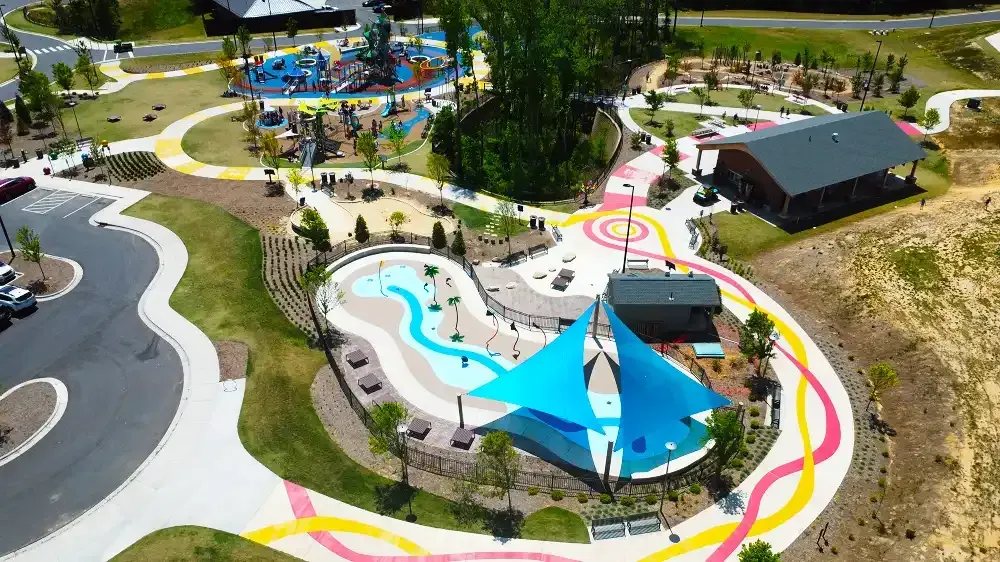
The crown jewel of Apex's park system and one of the most distinctive destination parks in North Carolina. Pleasant Park's 92 acres deliver the Enchanted Forest inclusive play villages — a universally accessible playground complex designed so that children of all abilities can play together on the same structures — alongside Splashlantis, one of the largest municipal splash pads in the Triangle, and six multi-use athletic fields serving youth leagues across southern Wake County.
For buyers with young children, Pleasant Park is the kind of park that makes a town feel like a community rather than a collection of subdivisions. The weekend energy here — families from across southwest Wake County, organized league play on the athletic fields, and the Enchanted Forest packed with children — is a more honest representation of Apex's quality of life than any market data point. I always take buyers here before they make a final decision. It has closed more deals than any listing I've shown.
Apex Nature Park & Seymour Athletic Fields
The second anchor of Apex's park system and the primary outdoor destination for the Bella Casa and western Apex corridor. Apex Nature Park's signature feature is the Emerald City — a 35-foot slide structure that no other Wake County municipal park can match for pure fun factor — alongside a tiered disc golf course, skate plaza, dog park, and outdoor amphitheater that hosts community events throughout the year.
Seymour Athletic Fields, adjacent to Nature Park, serves as one of the most active youth athletics hubs in southern Wake County — anchoring weekend tournament schedules that draw teams from across the Triangle. For families with children in organized sports, the Nature Park and Seymour complex is as important to daily life as the school assignment.
The established centerpiece of Apex's original park system, built around a 50-acre lake with walking trails, fishing piers, tennis and basketball courts, and open picnic space. Apex Community Park is the quiet counterpart to Pleasant Park's destination energy — the place residents go on a Tuesday evening walk or a Sunday morning without the weekend tournament crowds. For buyers evaluating the daily outdoor lifestyle rather than the flagship destination, Community Park is the more accurate representation of what outdoor living in central Apex actually feels like.
Located near Downtown Apex, Hunter Street Park houses the town's track and field facilities and the Apex Skate Park — a popular weekend destination for older children and teenagers whose interests have moved past the playground structures at Pleasant Park. The proximity to Salem Street makes Hunter Street Park a natural extension of the downtown social scene on weekend afternoons, with the skate park crowd and the Salem Street dining crowd often overlapping in early evening.
Known for its large wooden Kids Towne playground structure and shaded picnic shelters — a popular destination for buyers with younger children seeking a more traditional, shaded park experience than Pleasant Park's open-sun design. Kelly Road is the neighborhood-scale park that serves central Apex families as a daily destination rather than a weekend outing, and its consistent maintenance reflects the town's commitment to park quality at every scale, not just the flagship facilities.
Trails & Regional Outdoor Access
The Apex Greenway System serves as the connective tissue of the town — allowing residents to navigate between neighborhoods, parks, and retail corridors on foot or by bike, bypassing major roads like NC-55 entirely in several corridors. In a town where peak-hour traffic is a genuine quality-of-life consideration, greenway access from your specific neighborhood is worth evaluating as carefully as the home itself.
Beaver Creek Greenway — The critical east-west corridor connecting Downtown Apex to the American Tobacco Trail. Features iconic boardwalk sections over wetlands and a prefabricated metal pedestrian bridge — one of the most scenic trail segments in the Triangle. Residents in Sweetwater, Haddon Hall, and central Apex corridors have direct access.
Middle Creek Greenway — A scenic north-south connection linking southern Apex neighborhoods toward the Holly Springs border and the Middle Creek High School area. Relevant for buyers in Jamison Park and southern corridor neighborhoods who want trail access without driving.
American Tobacco Trail — A 22-mile rails-to-trails corridor bordering western Apex, connecting residents directly to Durham and Jordan Lake. One of the Triangle's most heavily used multi-use trails and a genuine quality-of-life asset for buyers in Green Level Trail and western Apex neighborhoods with direct access points.
Jordan Lake State Recreation Area — Approximately 10–15 minutes west of central Apex, Jordan Lake offers 14,000 acres of reservoir with boating, swimming, fishing, camping, and eagle watching that draws residents from across the Triangle. For Apex buyers who want serious outdoor recreation within a short drive — not just a greenway walk — Jordan Lake is the asset that no northern Wake County suburb can match for proximity.
Outdoor Access as a Buyer Consideration
Park and trail proximity varies significantly across Apex neighborhoods and is worth evaluating with the same rigor as school assignments and commute routes. Bella Casa sits directly adjacent to Apex Nature Park and Seymour Athletic Fields — families with children in organized sports should factor this in as a meaningful daily lifestyle asset. Sweetwater and Green Level Trail offer direct Beaver Creek Greenway access. Scotts Mill and Haddon Hall provide walkable access to Downtown Apex green space and Hunter Street Park. West Lake's internal trail network connects to the community lake without leaving the neighborhood.
For buyers whose outdoor lifestyle is central to daily quality of life — not just weekend recreation — I always recommend mapping the specific trail connections from any address you are seriously considering before going under contract. The difference between a neighborhood with a direct greenway access point and one that requires a drive to a trailhead is a meaningful daily reality that doesn't show up in listing photos.
💡 Phil's Perspective: "I have watched Apex's park system become the single most underrated competitive advantage the town has over every other Wake County suburb. Buyers come in focused on the commute numbers and the school assignments — and they should. But then we go to Pleasant Park on a Saturday morning and something shifts. The Enchanted Forest, the Splashlantis crowd, the athletic fields running full tournament schedules — it stops feeling like a suburb and starts feeling like a community that has invested in itself at a level that compounds for the families who live here. That's what finished park infrastructure does. Holly Springs and Fuquay-Varina are still building toward it. Apex already has it."
Park hours, facility availability, and greenway completion timelines are subject to change — verify current status at apexnc.org before making neighborhood decisions based on specific park access.
Amenities & Community Services in Apex, NC
Apex has built the most complete suburban amenity infrastructure in Wake County — and in 2026 that statement is harder to argue against than at any point in the town's history. The combination of Beaver Creek Commons' regional retail power, Salem Street's authentic historic Social District, Sweetwater Town Center's walkable western hub, and WakeMed Apex Healthplex's 24/7 emergency access means Apex residents are not driving to Cary or Raleigh for daily essentials, healthcare, or a Friday night out. That self-contained quality of life is what the "Complete Package" label actually means in practice — and it is what justifies Apex's price premium over every other Wake County suburb south of the NC-540 corridor.
Shopping & Retail Hubs
Beaver Creek Commons & Crossings is the regional power center at the intersection of US-64 and NC-55. Anchored by Super Target, Lowe's Home Improvement, and Dick's Sporting Goods, it is the primary destination for daily essentials and national dining brands in Apex — and the most convenient retail hub for central and eastern Apex neighborhoods. For buyers in Haddon Hall, central Apex, and the US-1 corridor, Beaver Creek handles the weekly errand run without getting on a highway.
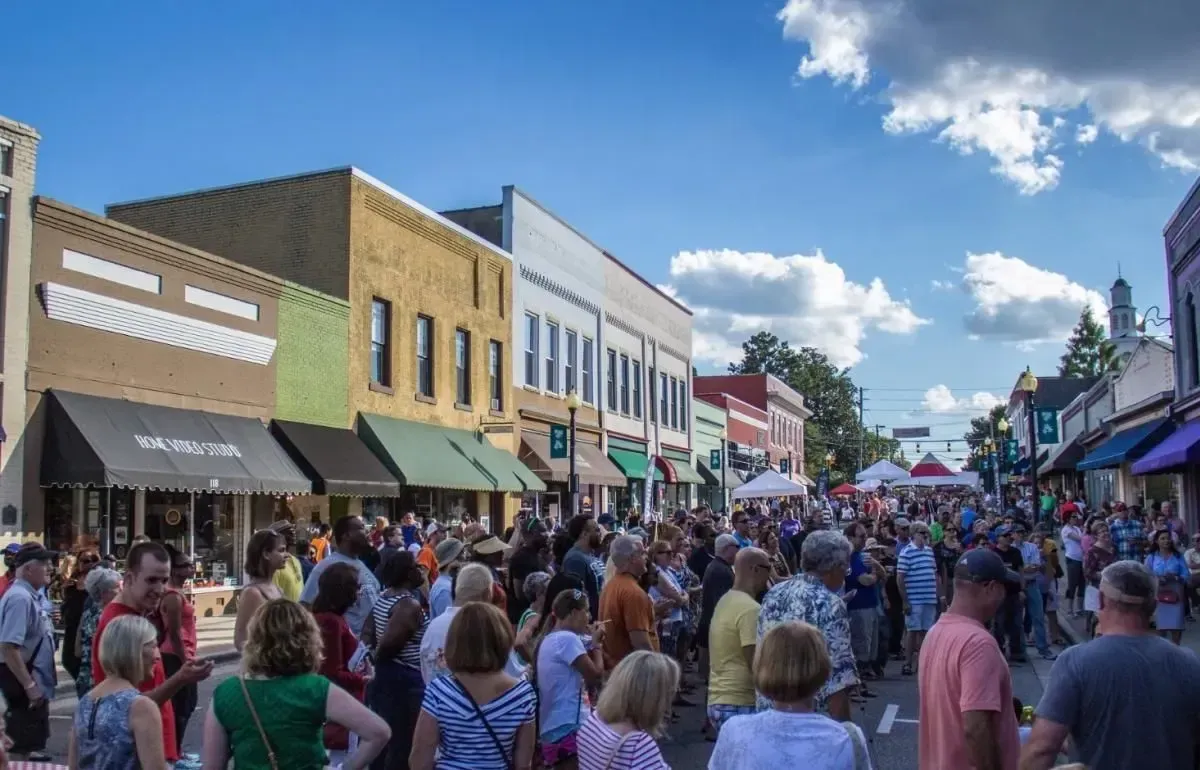
Historic Downtown Apex — Salem Street is the heart of Apex's small-business community and local culture — and the amenity that no other Wake County suburb can replicate on any timeline. In 2026 it holds Social District status, now branded as The Local Spot, allowing visitors to enjoy beverages from participating businesses while exploring local boutiques and galleries along Salem Street daily from 11:00 AM to 10:00 PM. The Salem Streetscape Project currently underway will further enhance the pedestrian experience — making an already authentic downtown genuinely better when construction completes in late 2026.
Sweetwater Town Center is a 45-acre walkable entertainment complex in West Apex that has become the primary social hub for the NC-540 western corridor. Southern Peak Brewery, Foxtail Coffee, and boutique fitness anchor a tenant mix that delivers neighborhood-scale community energy without requiring a drive downtown. For buyers in Bella Casa, Huxley, and western Apex growth corridors, Sweetwater is the daily social infrastructure that makes western Apex feel like a complete community rather than a bedroom corridor.
Healthcare & Public Facilities
WakeMed Apex Healthplex is one of Apex's most significant quality-of-life advantages over other southwest Wake County suburbs. Located on Apex Peakway, the Healthplex offers 24/7 full-service emergency care, outpatient surgery, and specialized pediatric emergency services — backed by WakeMed's regional Level 1 Trauma Center network. For buyers relocating from markets with strong hospital access, having genuine emergency care within town limits rather than a 25-minute drive to Raleigh is a meaningful daily comfort that Fuquay-Varina and Holly Springs cannot yet match.
Apex Community Center is the hub for fitness programming, senior services, and youth athletics serving residents across all Apex corridors — one of the most actively used municipal facilities in Wake County and a reflection of the town's sustained investment in community infrastructure at every age level.
Apex Public Library is a recently modernized facility near the Town Hall campus serving as a quiet workspace, digital resource center, and community event space — part of the Wake County library system with digital resources available across all branches.
The Apex Event Calendar (2026)
Apex is known for town-wide festivals that draw tens of thousands of visitors annually and anchor the community's calendar in a way that reflects the town's investment in its own identity.
Apex PeakFest — The town's largest annual arts and crafts festival. In 2026 it has relocated to the Town Hall Campus at 73 Hunter Street to accommodate the Salem Streetscape improvement project. Verify current details at apexnc.org before attending.
Christmas on Salem Street — A beloved holiday celebration featuring carriage rides and the official town tree lighting. One of the most distinctive holiday traditions in Wake County and a consistent draw for residents and visitors from across the Triangle.
Apex Music Festival — A high-energy autumn event showcasing local and regional artists across multiple downtown stages — anchoring the fall social calendar for residents throughout the southwest Wake corridor.
Amenities as a Buyer Consideration
Retail and healthcare access varies meaningfully by neighborhood and is worth mapping as carefully as your commute route. Haddon Hall and central Apex neighborhoods offer the shortest drive to Beaver Creek Commons and WakeMed Apex Healthplex — the strongest daily convenience positioning in the town. West Apex communities including Bella Casa and Huxley are better served by Sweetwater Town Center and Publix Pointe, with Beaver Creek Commons a slightly longer drive via NC-55. Downtown walkability is most relevant for Scotts Mill and neighborhoods within a half-mile of Salem Street — buyers who want to walk to dinner on a Tuesday evening should evaluate those corridors specifically. Green Level Trail and Ivory Hills buyers should map their specific retail routes carefully — the western positioning delivers quieter streets and larger lots but requires a longer drive for daily errands than central Apex addresses.
💡 Phil's Perspective: "The amenity question in Apex always comes back to the same point — this is the only Wake County suburb where you don't have to make a meaningful lifestyle compromise. WakeMed is in town. A 100-year-old walkable historic downtown is in town. A western lifestyle hub at Sweetwater is in town. The regional retail power of Beaver Creek is in town. Buyers coming from markets where you have to drive 20 minutes for a decent dinner or a real emergency room understand immediately what it means to have all of that inside a single address. And then we factor in that Fuquay-Varina is still waiting on the WakeMed Healthplex to open and Holly Springs is still developing its downtown scene — and the conversation usually ends with the same question: how quickly can we get under contract?"
Dining & Entertainment in Apex, NC
Apex's dining scene is defined by something most suburban markets never develop — authentic local character that grew organically alongside the community rather than arriving pre-packaged from a developer's tenant roster. Salem Street's Social District is the rarest thing in Wake County suburban dining: a century-old working historic district where the businesses are locally owned, the buildings are original, and the Friday night energy is genuine rather than manufactured. For buyers relocating from coastal cities who assumed they were giving up real dining culture when they left, the Salem Street scene is consistently the most persuasive thing I show them — before they've even looked at a house.
The Downtown Dining Scene — Salem Street
Downtown Apex holds Social District status, where visitors can grab a beverage in a designated cup and walk freely between boutiques and local eateries along Salem Street daily from 11:00 AM to 10:00 PM.
Scratch Kitchen & Taproom — A premier destination for southern-inspired comfort food made from scratch, known for rotating specials and vibrant outdoor seating. If you make one dinner reservation before your home search is over, make it here. The kind of restaurant that anchors a downtown rather than just occupying it.
The Provincial — A contemporary, chef-driven experience with a menu focused on fresh seasonal ingredients and sophisticated craft cocktails. The go-to for buyers who want to see what Apex's dining scene has quietly become in 2026 — and the restaurant that most surprises buyers who came in expecting suburban chain food.
Tap Station — Housed in a beautifully restored historic service station with a two-story brewery and restaurant featuring a rooftop patio and a fully fenced playground and giant sandbox below. The definitive community nightlife spot in Apex in 2026 — and one of the most distinctive venue concepts in the entire Triangle. Buyers consistently tell me this is the moment Apex stopped feeling like a suburb.
Salem Street Pub — The quintessential local hangout, known for their burgers and no-frills community atmosphere. The kind of place where regulars know your name and the energy is genuinely local rather than curated. Every downtown worth living near has one of these — Apex's has been here for decades.
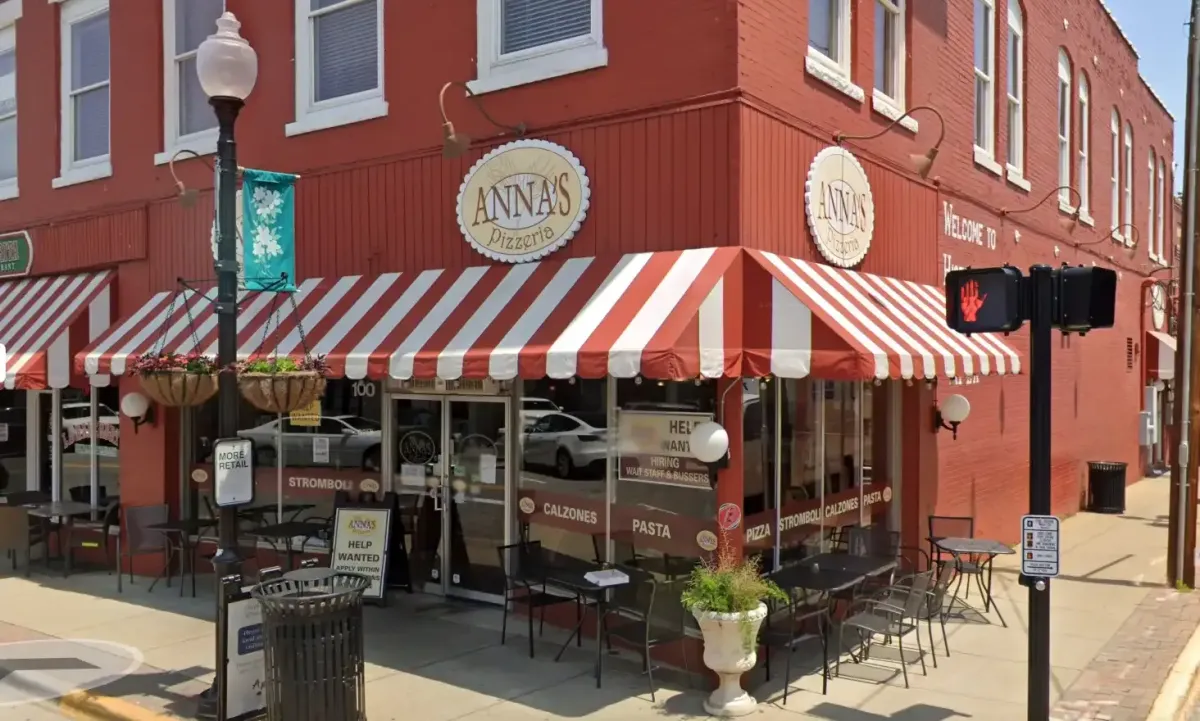
Anna's Pizzeria — A Salem Street staple consistently recognized as one of the Triangle's most reliable spots for authentic NY-style pizza and Italian favorites. A neighborhood institution that has outlasted a lot of trends — and a consistent top recommendation for buyers moving families into Apex for the first time.
Fine Dining in Apex
Apex's dining identity is built around community gathering rather than white-tablecloth formality — but the town has developed genuine special-occasion options that buyers from coastal markets recognize immediately.
Serafina Ristorante — An intimate Italian dining experience on the Peakway with the kind of consistent quality and warm atmosphere that makes it the go-to for date nights and celebrations across southwest Wake County. One of the most reliable special-occasion restaurants in the Triangle that most buyers outside Apex have never heard of.
Daniel's Restaurant & Catering — A long-standing Apex institution with an extensive Italian menu featuring dishes like Veal Cannelloni and Lobster Ravioli. The go-to for Sunday family dinners and celebratory meals — the kind of restaurant that tells you how long a community has been here and how seriously it takes its traditions.
For the Triangle's highest-end fine dining, Herons at The Umstead Hotel and Spa in Cary is 15–20 minutes from most Apex neighborhoods — Forbes Five-Star and AAA Five Diamond, and genuinely worth the short drive for occasions that call for it.
Casual Local Favorites
Common Grounds Coffee House — More than a coffee shop. This downtown anchor features live music, rotating art displays, and a cozy atmosphere that serves as the town's unofficial community office. Buyers relocating from cities consistently cite it as the moment Apex stopped feeling like a suburb and started feeling like home. I have had more clients make their final decision to buy in Apex after a Saturday morning at Common Grounds than after any listing tour.
Abbey Road Tavern & Grill — A Beatles-themed pub known for live music, outdoor dining, and an expansive American menu. A genuine community gathering spot that draws a loyal regular crowd from across the western Apex corridors — and consistently delivers the kind of unpretentious neighborhood energy that makes a town feel inhabited rather than just populated.
Arts, Culture & Community Events
The Halle Cultural Arts Center — Located in the heart of Downtown, the Halle hosts theater productions, gallery exhibitions, and film screenings year-round — giving Apex a genuine arts identity that most suburbs its size never develop. For buyers relocating from markets with strong arts communities, the Halle is the institution that signals Apex takes its cultural identity seriously.
The Local Spot Social District — Allows visitors to enjoy the walkable historic district with a drink in hand daily from 11:00 AM to 10:00 PM. A designation that creates the kind of connected walkable evening energy that most Triangle suburbs are still trying to manufacture — and that Salem Street delivers authentically because the bones were already there.
PeakFest 2026 — The town's largest annual arts and crafts festival, relocated to the Town Hall Campus at 73 Hunter Street for the 2026 season to accommodate the Salem Streetscape improvement project. Verify current event details at apexnc.org before attending.
Peak City Pig Fest — The Triangle's only Kansas City Barbecue Society sanctioned BBQ competition, hosted annually by the Apex Sunrise Rotary Club in Historic Downtown Apex. Chefs compete for over $10,000 in prize money while the public enjoys free admission, live music, a beer garden, food trucks, a kids area, and a Police vs. Fire rib eating contest on Friday night. Held at the Town Hall Campus at 73 Hunter Street — Friday 5–10 PM, Saturday 11 AM–9 PM. One of the most authentically community-rooted events in Wake County and a perfect first introduction to what Apex's social culture actually feels like on the ground. Verify current dates at peakcitypigfest.com before attending.
📍 Expert Tip: For the best Apex evening, start with dinner at Scratch Kitchen or grab a drink on Tap Station's rooftop patio, then walk the Social District and finish at Common Grounds for live music. It is an evening that genuinely surprises buyers who came in expecting suburban chain restaurants — because Salem Street stopped being just a suburb's main street several years ago.
💡 Phil's Perspective: "I have toured every downtown in the Triangle with relocating buyers and the conversation always changes when we hit Salem Street. Buyers from Raleigh, DC, New York — they recognize it immediately. It is not a lifestyle center that opened five years ago. It is a century-old working historic district with locally owned businesses and a social energy that no master-planned community can replicate on any timeline. Scratch Kitchen, Tap Station's rooftop, Common Grounds — these aren't chains filling a developer's retail plan. They are the kind of places that make a town feel like a town. And in 2026 with the streetscape renovation completing and The Provincial adding a genuinely chef-driven dining experience to the mix, the Salem Street scene is better than it has ever been."
Where Apex Is Located in the Triangle
Apex is situated in southwest Wake County, approximately 12–18 miles southwest of Research Triangle Park and 15–22 miles west of Downtown Raleigh. With a 2026 population of approximately 85,000 and the most commute-flexible highway positioning of any Wake County suburb, Apex has evolved from a historic railroad town into the Triangle's premier complete-package suburban address — equidistant from the region's major employment corridors in a way that no other single Wake County zip code can claim.
The Quad-Corridor Advantage
Apex's geographic position is its defining competitive advantage — and the primary reason buyers whose careers may shift across the Triangle over time consistently choose it over more price-efficient alternatives to the south. The intersection of NC-540, US-1, US-64, and NC-55 gives Apex residents four independent route options to every major Triangle employment destination. That is not a marketing distinction. It is a daily operational reality that compounds in value every time a career change, employer relocation, or household employment shift would otherwise require a move.
The NC-540 Triangle Expressway completion has been the defining infrastructure story of 2026 for Apex residents. The full loop now connects western Apex directly to I-40, US-401, and I-42 — meaningfully reducing surface street congestion on Ten-Ten Road and NC-55 that defined peak-hour travel for the past decade. As of January 1, 2026, NC QuickPass toll rates run approximately $4.17 for the original NC-55 to I-40 Durham stretch and $4.33 for the new NC-55 to I-40 Garner extension — Bill by Mail rates run $8.10 and $8.38 respectively. Buyers commuting daily should factor toll costs into their monthly carrying cost calculation before finalizing a budget.
The one honest caveat: if your specific address lacks direct NC-540 access, NC-55 and Ten-Ten Road still carry significant peak-hour weight. Corridor matters more than town limits in Apex — and buyers who don't test their specific route at 7:45 AM on a Tuesday before going under contract are the ones who come back to me with regrets.
Distance & Drive Times from Apex (2026)
Off-peak estimates. Peak-hour times on NC-540, US-1, NC-55, and Ten-Ten Road add 10–20+ minutes depending on time of day and origin neighborhood.
| Destination | Distance | Off-Peak Drive | Peak-Hour Note |
|---|---|---|---|
| 🏢 Research Triangle Park (RTP) | ~12–18 miles | 20–30 min | 25–35 min peak via NC-540 or NC-55 |
| 🏙️ Downtown Raleigh | ~15–22 miles | 25–35 min | 35–45 min peak via US-1 North |
| ✈️ RDU International Airport | ~14–18 miles | 15–22 min | 20–30 min peak via NC-540 or I-40 |
| 🏙️ Downtown Cary | ~6–10 miles | 12–18 min | 15–25 min peak via NC-55 or Lake Pine Drive |
| 🏙️ Downtown Durham | ~22–28 miles | 30–40 min | 40–50 min peak via NC-540 to I-40 West |
| 🎓 Chapel Hill / UNC | ~18–24 miles | 25–35 min | 35–45 min peak via US-64 or NC-540 to I-40 |
| 🏘️ Holly Springs | ~10–15 miles | 15–22 min | 20–30 min peak via NC-55 |
| 🏘️ Fuquay-Varina | ~10–15 miles | 18–25 min | 25–35 min peak via NC-55 |
| 🏘️ Morrisville / RTP Core | ~10–14 miles | 15–22 min | 20–30 min peak via NC-540 |
| 🌊 Jordan Lake State Recreation Area | ~10–15 miles | 12–20 min | 20–30 min peak via US-64 West or NC-55 |
| 🌊 Harris Lake County Park | ~15–20 miles | 18–25 min | 25–35 min peak via NC-55 South |
| 🛍️ Streets at Southpoint Mall | ~16–20 miles | 22–30 min | 30–40 min peak via NC-540 to I-40 |
| 🛍️ Beaver Creek Commons | ~2–5 miles | 5–10 min | 10–18 min peak via US-64 or NC-55 |
| 🏖️ NC Coast (Wilmington) | ~130 miles | ~2 hrs | 2.5–3 hrs peak/summer via US-1 to I-40 |
| ⛰️ Blue Ridge Mountains (Asheville) | ~230 miles | ~3.5 hrs | 4+ hrs peak season via I-40 West |
What Surrounds Apex in the Triangle
One of the questions buyers from out of state consistently ask is what lies beyond Apex's borders — and the honest answer is that no Wake County suburb is better surrounded by accessible destinations.
Cary — Immediately to the northeast via NC-55 or Lake Pine Drive, Cary is 12–20 minutes from most Apex neighborhoods and provides the additional retail density, greenway infrastructure, and WakeMed hospital access that complements Apex's own amenity base. For Apex residents, Cary functions as an extension of daily convenience rather than a competing destination.
Holly Springs — To the southeast via NC-55, Holly Springs is 15–22 minutes away and delivers the US-1 South biotech employment corridor — Fujifilm, Genentech, and the life sciences cluster — that gives dual-income households with one biotech career and one RTP career genuine route flexibility from an Apex address.
Fuquay-Varina — To the south via NC-55, Fuquay-Varina is 18–25 minutes away and represents southern Wake County's most active new construction market. For buyers who discover Apex is above their budget, understanding Fuquay-Varina's positioning relative to Apex is the most important comparative conversation to have.
Chatham County — To the west, Chatham County offers Jordan Lake State Recreation Area 10–15 minutes from western Apex neighborhoods, larger rural parcels, and the Chatham Park development in Pittsboro — one of the largest master-planned communities in North Carolina history — for buyers who want acreage within reasonable Triangle commute distance.
Johnston County — To the southeast beyond Holly Springs, Johnston County represents the transition out of Wake County's suburban market into more rural North Carolina — with Clayton and Smithfield as the primary markets for buyers who want significantly lower price points with Triangle access.
The Triangle Context — Where Apex Fits
In the broader Triangle hierarchy of southwest Wake County:
Most commute-flexible address: Apex (quad-corridor access to RTP, Downtown Raleigh, RDU, and Cary from a single zip code)
Most authentic historic downtown: Apex (Salem Street Social District — century-old working historic core)
Strongest long-term appreciation signal: Apex ($3 billion Veridea + NC Children's Hospital ~8,000 jobs)
Most value per dollar: Fuquay-Varina ($479,000 median, $206/sq ft vs. Apex's $623,500)
Most active new construction: Fuquay-Varina (47%+ of inventory vs. Apex's ~37%)
Most mature infrastructure: Cary (100+ miles of greenways, all three Triangle health systems, shortest RTP commute)
Apex's position in this hierarchy is clear — it is the complete-package leader of southwest Wake County, delivering historic downtown character, quad-corridor commute access, premier park infrastructure, and the Veridea appreciation signal in a single address. No other Triangle suburb combines all four simultaneously. That combination is what justifies the $623,500 median — and what makes it a genuinely difficult comparison to win on any dimension other than raw price per square foot.
The Commute Reality in Geographic Context
Apex's geographic position creates its primary advantage — and its primary nuance.
The advantage: Research Triangle Park is 20–30 minutes from most Apex neighborhoods via NC-540. RDU Airport is 15–22 minutes via NC-540 or I-40. Downtown Cary is 12–18 minutes via NC-55. No other Wake County suburb delivers this combination of proximity to the region's three most important daily destinations simultaneously — and when a career change shifts your employment destination from RTP to downtown Raleigh, your Apex address still works.
The nuance: NC-540 toll access is not equal across all Apex neighborhoods. Buyers in central Apex and western corridors with direct interchange access experience a fundamentally different peak-hour reality than buyers in neighborhoods dependent on NC-55 or Ten-Ten Road. The difference can be 15–20 minutes daily — and it compounds into hundreds of hours annually. Corridor-level evaluation before purchasing is not optional in Apex. It is the single most important variable I help buyers assess before we write an offer.
💡 Phil's Geographic Perspective: "I tell Apex buyers to think of their address as a hub rather than a suburb — because that is what the quad-corridor positioning actually delivers. Your office can be at RTP today, downtown Raleigh tomorrow, or the Veridea campus when the NC Children's Hospital opens — and your commute remains manageable from the same street. I have had clients stay in their Apex home through three different job changes because the geography kept working for them every time. That kind of optionality has real financial value that does not show up in the price-per-square-foot comparison. It shows up in the fact that you never have to move because your job moved."
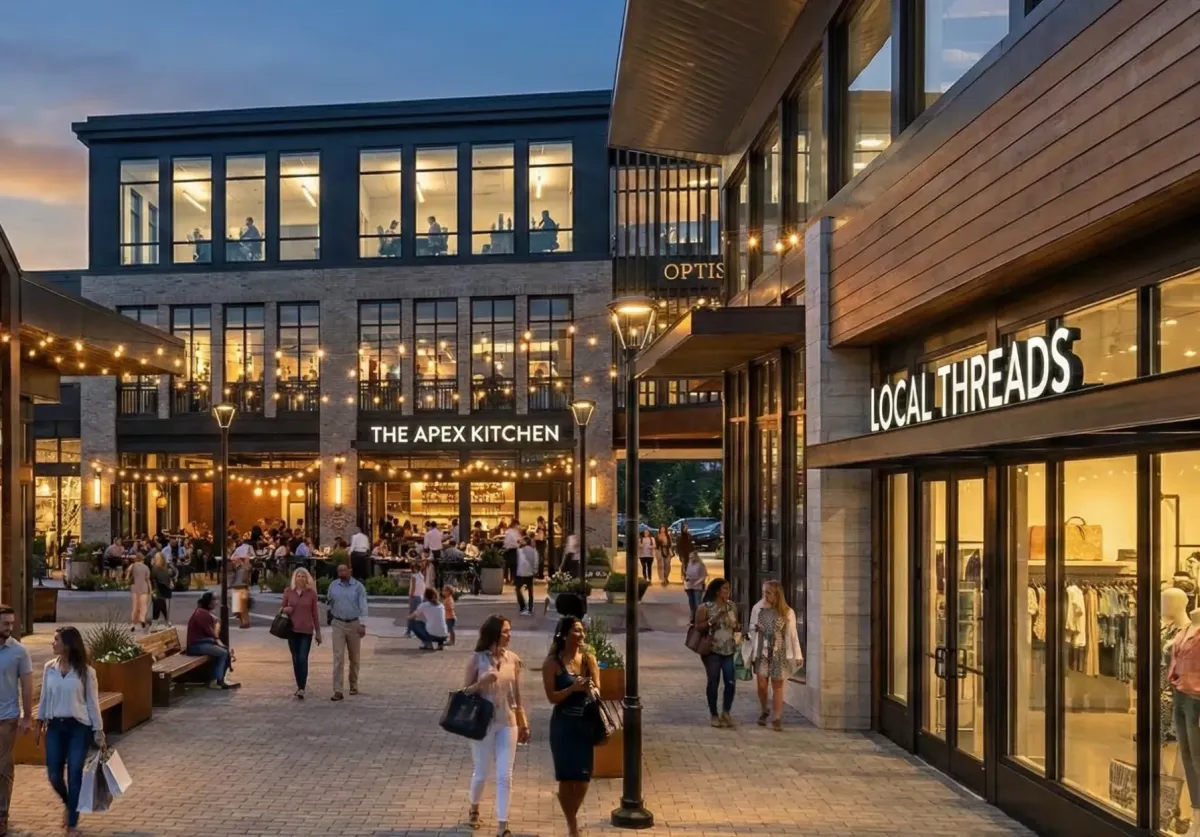
Future Growth & Development in Apex, NC
Apex doesn't have a single development project driving its growth story. What it has is more powerful for long-term residential appreciation — a convergence of employment investment, healthcare infrastructure, downtown revitalization, and sustained population inflow that is reshaping the town's identity and economic base simultaneously. In 2026 the signals are converging faster than at any point in Apex's post-railroad history — and buyers who understand where the town is in that cycle are the ones positioning themselves correctly before the story is fully priced in.
Veridea — The Project Redefining the Region
The centerpiece of Apex's growth story is Veridea, a $3 billion, 1,100-acre mixed-use development located along the Old US-1 corridor. This is not just a subdivision — it is a self-contained urban district that will anchor the southwest Triangle for decades. When complete, Veridea will feature 8,000 residential units and 12 million square feet of commercial, research, and retail space. A dedicated 34-acre Wake Technical Community College campus is integrated into the plan, providing a local workforce pipeline for the tech and healthcare industries that no comparable Triangle development can match. Full buildout is projected for 2032–2034, with infrastructure and early-phase commercial development already influencing property values in the surrounding 27502 and 27539 zip codes.
Buyer Implication: Veridea is the strongest long-term appreciation signal of any active development project in the Triangle. Buyers evaluating neighborhoods like Bella Casa, Ivory Hills, and Sweetwater should view the Veridea footprint as a value anchor supporting property stability for the next 10–15 years — not as a construction zone inconvenience to be tolerated. The buyers who get positioned in the right western Apex corridors before the NC Children's Hospital opens are the ones who will look back on 2026 as the year they made their best real estate decision.
The NC Children's Hospital — The Employment Anchor
Located within the Veridea footprint, the NC Children's Hospital represents a generational healthcare investment for the Triangle. This partnership between Duke Health and UNC Health is expected to bring approximately 8,000 jobs to Apex across healthcare, research, and administrative roles — positioning Apex as a major regional healthcare destination and creating a substantial long-term demand signal for nearby housing and the broader southwest Wake County corridor.
Buyer Implication: Healthcare employment is recession-resistant, does not offshore, and does not relocate — the same characteristics that have made Durham's Duke University Health System employment base a housing market stabilizer for decades. For buyers evaluating western Apex neighborhoods, the NC Children's Hospital is the employment anchor that makes the Veridea appreciation thesis concrete rather than speculative. An 8,000-job healthcare campus drives sustained housing demand across multiple price bands — from entry-level workforce housing to executive relocation — and that demand compounds every year the campus operates.
Downtown Salem Street Renovation (2026)
From January 2026 through October 2026, Downtown Apex is undergoing a major streetscape overhaul through the Salem Streetscape Project. The goal is to create a more pedestrian-centric experience with wider sidewalks, improved lighting, and removable bollards enabling seamless transition into pedestrian-only zones during festivals. Business access remains open throughout construction but parking patterns have shifted — check apexnc.org for current construction maps before visiting.
Buyer Implication: When complete this investment will make an already exceptional historic downtown meaningfully better — and set the physical standard for Salem Street's next chapter as Veridea brings thousands of new households into the Apex market over the next decade. Buyers purchasing in 2026 are getting the last window before the finished streetscape reprices the Salem Street corridor. The construction inconvenience is temporary. The infrastructure investment is permanent.
Sweetwater Town Center Expansion
West Apex continues gaining momentum with new tenants arriving at Sweetwater Town Center including Southern Peak Brewery and Foxtail Coffee. The center has solidified its position as the primary social hub for the western NC-540 corridor — and continues to add tenants that reinforce its role as Apex's second major retail and dining destination alongside Salem Street.
Buyer Implication: For buyers in Bella Casa, Huxley, and the western growth corridors, Sweetwater's continued tenant expansion directly improves the daily quality-of-life infrastructure that surrounds their investment. A western Apex lifestyle hub that keeps getting better is a direct value signal for the neighborhoods that surround it.
Key Infrastructure Milestones
NC-55 Corridor Upgrades — Active roadway improvements currently managing traffic flow ahead of the Veridea residential buildout — an investment that will meaningfully improve surface street congestion for western Apex residents over the next several years. For buyers frustrated by current NC-55 peak-hour congestion, this investment is the long-term answer the Veridea corridor requires.
US-1 & Ten-Ten Road Interchange — A full interchange reconstruction is scheduled for approximately 2030 to handle increased capacity from southern Wake County growth. For buyers in the Veridea corridor, this infrastructure investment is a direct long-term quality-of-life signal — the town is building roads ahead of the rooftops, not behind them. Verify current project timelines at apexnc.org and the Town of Apex Planning Department.
Population Growth Momentum
Apex's growth fundamentals in 2026 are among the strongest of any Wake County municipality:
Population: ~85,000 — third-largest municipality in Wake County and among the fastest-growing towns in the United States for over a decade
Growth rate: Sustained expansion driven by RTP employment, NC-540 completion, and the early-stage Veridea demand signal already beginning to pull high-income healthcare professionals toward southwest Wake County
In-migration profile: Predominantly dual-income professional households from Northern Virginia, New York, California, and Florida — drawn by RTP employment, Salem Street's authentic character, and the Veridea appreciation story that national media is beginning to cover
Cost advantage: At $237 per square foot Apex sits below Chapel Hill ($310/sq ft) and well below Northern Virginia and Bay Area comparable suburban markets — a gap that continues driving in-migration from buyers who want comparable lifestyle at a fraction of the cost
The Development Summary — What It Means for Buyers
Apex's growth story in 2026 is driven by the convergence of four simultaneous signals:
Veridea — $3 billion, 1,100-acre mixed-use development actively delivering infrastructure and early commercial phases
NC Children's Hospital — Duke Health and UNC Health partnership bringing ~8,000 jobs directly to Apex
Salem Street Streetscape — active downtown investment completing late 2026, setting the physical standard for Salem Street's next decade
Sweetwater Town Center expansion — western corridor lifestyle hub continuing to add tenants and density
No single one of these signals alone would justify the appreciation thesis. All four converging simultaneously — on top of a century-old working historic downtown, quad-corridor commute access, and the premier park system in Wake County — is exactly what historically precedes a market's transition from regional complete-package play to nationally recognized address. The window between those two states is where the best real estate decisions get made.
💡 Phil's Growth Perspective: "I've watched a lot of Triangle markets get called transformational over 20 years. What separates Veridea from the rest is that the infrastructure is already being built — not just announced. The NC Children's Hospital partnership is real. The Wake Tech campus is in the plan. The Salem Street streetscape is under construction right now. When I show buyers the Veridea site map and explain what 12 million square feet of commercial space and 8,000 healthcare jobs does to surrounding residential values, the conversation usually shifts pretty quickly from 'is this real' to 'how do we get positioned before it is fully priced in.' The buyers who wait for the NC Children's Hospital to open before they buy in Apex will pay for the privilege of certainty — and the buyers who moved in 2026 will be the ones who understood that certainty was already priced into the fundamentals long before the ribbon cutting."
Important Disclosure
The development projects, infrastructure timelines, and employment projections referenced in this section are based on publicly available information as of Q2 2026. All development plans, timelines, and projections are subject to change, delay, modification, or cancellation without notice. Phil Slezak and LPT Realty make no representations or warranties regarding the completion, timing, or impact of any development project referenced herein. Buyers should conduct independent due diligence and verify current project status directly with the Town of Apex, Wake County, and relevant developers before making any purchase decision based on future development expectations.
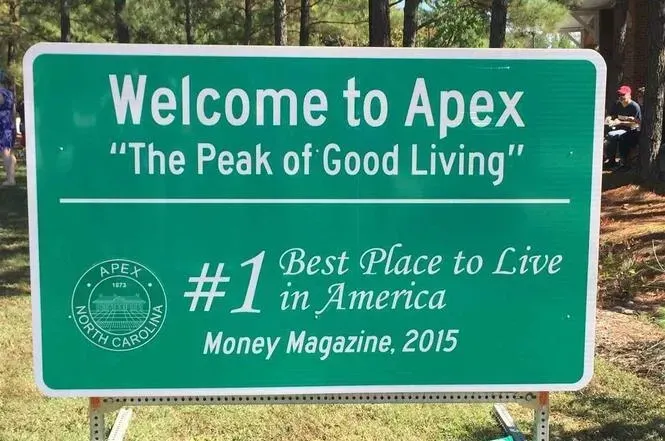
Awards & Recognition for Apex, NC
Apex has earned national recognition across multiple categories — safety, economic health, quality of life, and overall desirability — that reflects both the town's remarkable growth trajectory and its standing as one of the most strategically positioned suburban markets in the United States. That recognition is increasingly driving relocation interest from buyers in high-cost markets who are discovering what Triangle residents have known for years. Awards and recognition matter in real estate for one practical reason: they drive buyer awareness, awareness drives demand, and demand drives appreciation. Every recognition listed below has expanded the pool of informed buyers considering Apex — and an expanding buyer pool on a constrained housing supply means one thing for long-term values. Apex is consistently cited as one of the most desirable suburbs in the Southeast, earning top-10 placement from both WalletHub and U.S. News & World Report — a distinction shared by only a handful of communities in the entire country.
WalletHub — #3 Best Small City in America (2025–2026)
WalletHub ranked Apex the #3 Best Small City in America for 2025–2026, comparing over 1,300 cities based on 45 key indicators across economic health, education, quality of life, and safety. Apex ranked in the Top 1% nationally and earned the #1 position for Economic Health — a designation that reflects the convergence of Veridea, the NC Children's Hospital, and sustained RTP employment demand in a single address.
For buyers, the #1 Economic Health ranking is the most practically significant recognition on this list. Economic health drives job creation, job creation drives housing demand, and housing demand drives long-term appreciation. WalletHub's methodology validates what the Veridea investment thesis already suggests — Apex's economic foundation is as strong as any small city in the country heading into the late 2020s. When that foundation is recognized at a national level, the pool of informed buyers considering Apex expands — and that expanding pool is what drives sustained residential appreciation.
U.S. News & World Report — #7 Best Place to Live in the U.S. (2025–2026)
U.S. News & World Report ranked Apex #7 Best Place to Live in the U.S. for 2025–2026, analyzing the top 150 metro areas for quality of life and value. Apex and Cary were the only North Carolina communities to secure spots in the national Top 10 — a distinction that has driven sustained inbound relocation interest from high-cost metros across the country.
For buyers already in the market, that national Top 10 recognition is a direct tailwind. When U.S. News puts Apex in the Top 10, the pool of informed buyers considering the town expands immediately — and that expansion in buyer awareness is what historically precedes meaningful appreciation in markets that were previously known only regionally. The buyers who act before that awareness is fully priced in are the ones who capture the most upside.
The News & Observer — #1 Boomtown in North Carolina
The News & Observer recognized Apex as the #1 Boomtown in North Carolina, citing the town's leadership in sustainable residential and commercial growth patterns — a recognition that reflects years of intentional corridor planning, transportation investment, and historic preservation rather than reactive sprawl.
For buyers, a municipality recognized for sustainable growth rather than reactive sprawl is one that protects the infrastructure quality and community character they are paying for. The same planning philosophy that earned this recognition produced Salem Street's preserved historic core, the premier park system in Wake County, and the deliberate Veridea corridor planning that is setting western Apex up for a decade of managed appreciation rather than uncontrolled density.
U.S. News — #10 Among America's Most Desirable Cities to Move To (2026)
U.S. News also ranked Apex #10 Among America's Most Desirable Cities to Move To in 2026, specifically highlighting its proximity to RTP and its modernized downtown as primary drivers for out-of-state relocators — exactly the buyer demographic that continues to fuel Apex's sustained demand.
This recognition directly tracks the in-migration wave arriving in Apex from Northern Virginia, New York, California, and Florida — and signals that the national audience discovering Apex is still growing rather than plateaued. For buyers already in the market, a desirability ranking that continues attracting new buyers from high-cost metros is exactly the sustained demand signal that supports long-term residential values.
Safety & Financial Stability
Apex consistently ranks among the safest municipalities in North Carolina, with a 2026 crime rate of approximately 0.73 per 1,000 residents — well below state and national averages. Verify current figures at apexnc.org or the FBI Crime Data Explorer before referencing in purchase decisions.
For buyers, sustained safety performance in a fast-growing municipality is a meaningful signal. Many fast-growing towns see public safety metrics deteriorate as population outpaces staffing — Apex's track record indicates deliberate investment in maintaining the community quality that drove growth in the first place.
Apex also maintains a AAA bond rating from all three major agencies — S&P, Moody's, and Fitch. For buyers, this matters for one practical reason: a municipality that finances its parks, roads, and infrastructure at the lowest possible interest rates because of financial discipline tends to deliver better public services for the same tax dollar. The AAA rating is not a marketing distinction — it is a signal that Apex manages public money the way you would want your own finances managed. Municipalities with this level of financial discipline tend to maintain and improve the infrastructure that makes them desirable rather than allowing it to deteriorate under fiscal pressure — a meaningful long-term quality-of-life signal for buyers with a 7–10 year ownership horizon.
Legacy Recognition
TIME/Money Magazine named Apex the #1 Best Place to Live in America in 2015 — a landmark recognition that brought sustained national attention to the town and contributed to the residential demand wave that has compounded ever since. Over a decade later the fundamentals that earned that recognition have only strengthened — and the Veridea development and NC Children's Hospital represent the next chapter of the same story that TIME/Money recognized first.
The Recognition Summary — What It Means for Buyers
Apex's recognition portfolio is the deepest of any Wake County suburb — and that depth is not coincidental. It reflects a town that has consistently delivered on the fundamentals that national ranking methodologies measure: economic health, safety, quality of life, educational access, and infrastructure investment. For buyers already in the market, that recognition is a compounding tailwind. The national audience discovering Apex is still growing — and every new recognition expands the buyer pool that ultimately supports long-term appreciation. Buyers who act before that awareness is fully reflected in residential pricing are the ones who capture the most upside.
💡 Phil's Perspective on Recognition: "Recognition is a lagging indicator — it confirms what people who have been paying attention already knew. Apex's historic downtown, its park system, its economic positioning relative to Veridea and RTP — these were compelling before WalletHub made it official. What the national recognition does is expand the buyer pool. And an expanded buyer pool on a constrained housing supply means one thing for prices. I have watched this play out in every market I have worked in over 20 years. The buyers who wait for the recognition to be fully priced in always pay more for the same opportunity. Apex is still in the early innings of that repricing — and the NC Children's Hospital and Veridea haven't even opened yet."
Rankings and recognitions are subject to change annually. Verify current status directly with the issuing organizations before referencing in purchase decisions.
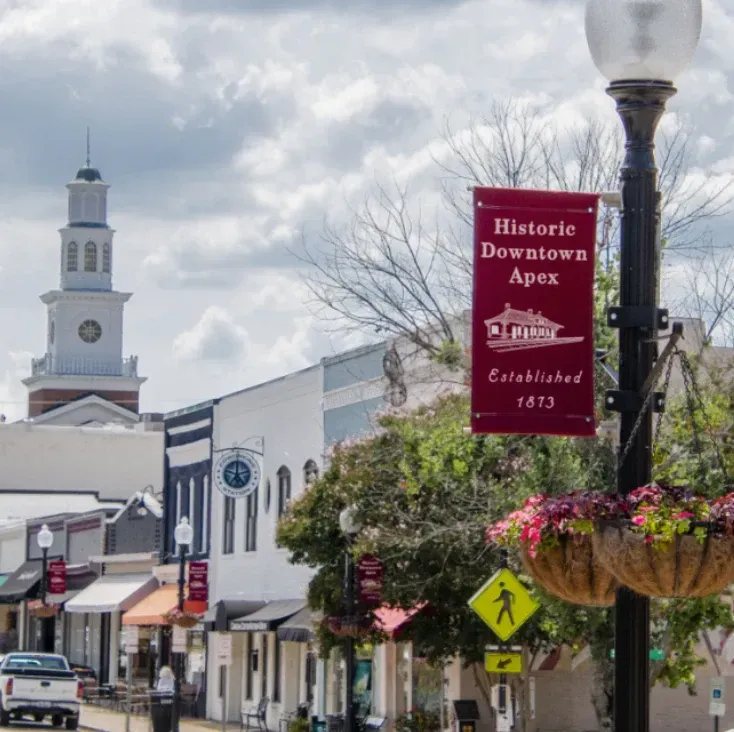
The Bottom Line: Pros & Cons of Living in Apex, NC (2026)
Every market has trade-offs. Apex's are more transparent than most — which is exactly why buyers who understand them make better decisions and stay longer. Here is the honest 2026 assessment from someone who has walked every neighborhood in this town.
✅ Why Buyers Choose Apex (The Pros)
1. The Strongest Long-Term Appreciation Signal in Wake County No other suburb in the Triangle has a demand driver of the scale currently active in Apex. The $3 billion Veridea mixed-use development on Old US-1 — anchored by the NC Children's Hospital, a Duke Health and UNC Health partnership bringing approximately 8,000 jobs directly to Apex — is the kind of generational infrastructure investment that reshapes residential values for decades. I have watched what the RTP expansion did to Cary in the 1990s and what the NC-540 completion did to Morrisville in the 2000s. Veridea is that same signal — and buyers can still get ahead of it. The buyers I am putting into Apex's western corridors today are buying before that story is fully priced in.
2. Quad-Corridor Commute Flexibility That No Other Wake County Suburb Can Match I tell every Apex buyer the same thing on day one: your address here works whether your job is in RTP today, Downtown Raleigh tomorrow, or the Veridea campus when the NC Children's Hospital opens. NC-540, US-1, US-64, and NC-55 radiate outward from Apex like spokes — and that geographic flexibility has real financial value for households whose careers may shift across the Triangle over time. I have had clients stay in their Apex home through three different job changes because the commute remained manageable from the same address every time. That kind of optionality is genuinely rare.
3. A Downtown That Actually Exists and Cannot Be Manufactured I have toured every downtown in the Triangle with relocating buyers and the conversation always shifts when we hit Salem Street. It is not a lifestyle center that opened five years ago. It is a century-old working historic district with locally owned businesses, the Halle Cultural Arts Center, and a Social District designation that lets you move between venues with a drink in hand on a Friday night. Scratch Kitchen, Tap Station's rooftop patio, Common Grounds — these are not chains filling a developer's retail plan. They are the kind of places that make a town feel like a town. Most suburbs are still trying to manufacture what Apex already has.
4. The Premier Park System in Wake County Pleasant Park alone would be enough. A 92-acre destination park with the Enchanted Forest inclusive playground, Splashlantis splash pad, and six multi-use athletic fields — finished and open today. Add Apex Nature Park's 35-foot slide structure, disc golf, and skate plaza, direct American Tobacco Trail access from multiple neighborhoods, Jordan Lake 15 minutes west, and the Beaver Creek Greenway connecting neighborhoods to retail without getting in a car — and Apex delivers an outdoor lifestyle package that active families consistently rank as the deciding factor in their move. I have watched this park system become a genuine competitive advantage over every other Wake County suburb in the last five years.
5. WakeMed Apex Healthplex — Emergency Care Without Driving to Raleigh For buyers relocating from markets with strong hospital access, having 24/7 full-service emergency care within town limits rather than a 25-minute drive to Raleigh is a meaningful daily quality-of-life advantage that Fuquay-Varina and Holly Springs cannot yet match. The WakeMed Apex Healthplex on Apex Peakway — backed by WakeMed's regional Level 1 Trauma Center network — is the kind of infrastructure that older buyers, families with young children, and anyone with complex healthcare needs weigh carefully. Apex has it. Most comparable-priced suburbs don't.
6. Complete Suburban Infrastructure Already Delivered Beaver Creek Commons for daily retail. Sweetwater Town Center for western corridor lifestyle. Salem Street Social District for authentic historic dining and entertainment. WakeMed Healthplex for emergency care. Pleasant Park for flagship outdoor recreation. Apex Community Center for fitness and programming. The Halle for arts. All of it is finished, open, and operating today — not on a rendering board, not in a developer's pipeline. For buyers who want the complete package without waiting for the infrastructure to arrive, Apex is the only southwest Wake County suburb that delivers it right now.
7. Municipal Electric Utility — A Genuine Financial Advantage Apex operates its own municipal electric utility — giving the town direct control over residential rates and infrastructure investment in a way that Duke Energy-served suburbs cannot match. Residential rates of approximately $0.1178 per kWh are among the most competitive in the region, and the town's ability to invest in infrastructure ahead of growth rather than behind it reflects the same financial discipline that earned Apex a AAA bond rating from all three major agencies.
⚠️ What Buyers Need to Weigh Honestly (The Cons)
1. Surface Road Congestion Is Real and Corridor-Dependent The NC-540 completion changed the game for western Apex — but it has not fixed NC-55 or Ten-Ten Road. I make every Apex buyer drive their actual commute route between 7:30 AM and 8:30 AM before we go under contract. A home without direct toll access can add 15–20 minutes to a morning commute that looks reasonable on a map at noon on a Sunday. Corridor matters more than town limits in Apex — and I will not let a buyer skip that test drive. The difference between a home with direct NC-540 access and one dependent on NC-55 is not a minor inconvenience. It is 15–20 minutes of your day, compounding across every working year you live there.
2. The Price of Entry Has Moved At a median of $623,500, Apex is not where it was five years ago — and it is not an entry-level market anymore. Buyers relocating from high-cost metros still feel the value, but buyers coming from other Triangle suburbs looking for more house per dollar should take an honest look at Fuquay-Varina before committing to Apex at this price point. I would rather tell you that upfront than watch you stretch into a payment that does not work for your actual life.
3. HOA Costs Are a Real Line Item In master-planned communities like Bella Casa and Sweetwater, annual HOA fees run $1,200 to $3,600+ depending on amenity tier. I always run the full monthly carrying cost — mortgage, taxes, insurance, and HOA — for every buyer before we tour a single home. In Apex that number can surprise buyers who budgeted only on the purchase price. A $750,000 home in Bella Casa with a $250/month HOA is a meaningfully different financial commitment than the purchase price alone suggests. Know your full number before you fall in love with a resort pool.
4. Western Apex Is Still an Active Construction Zone Veridea won't reach buildout until the early 2030s. If you want a quiet street with a mature tree canopy and established neighbors today, I will steer you toward central Apex — Haddon Hall, Scotts Mill, or neighborhoods within walking distance of Salem Street. If you want to buy ahead of the appreciation curve and can handle construction activity and land clearing for several years, the western corridors are where I would put my own money right now. Both are valid decisions — they just serve different buyers with different priorities.
5. School Assignments Require Address-Specific Verification Every Time Felton Grove High School's 2025 opening shifted assignments in western and southern Apex corridors that buyers had relied on for years — and more boundary changes are coming as Veridea's residential buildout adds thousands of households through the late 2020s. Proximity to a school building does not guarantee assignment in Apex. Buyers who make a neighborhood decision based on which high school is closest — without verifying the current WCPSS assignment at wcpss.net for their specific address — are making one of the most expensive assumptions in Triangle real estate.
6. NC-540 Toll Costs Add Up for Daily Commuters NC QuickPass rates run $4.17 for the original NC-55 to I-40 Durham stretch and $4.33 for the new NC-55 to I-40 Garner extension — Bill by Mail rates are $8.10 and $8.38 respectively. For buyers commuting five days a week via NC-540, annual toll costs can run $1,000–$2,000+ depending on route and frequency. Factor this into your monthly carrying cost before finalizing your budget — it is a real number that compounds across a multi-year ownership period.
The Honest Summary
Apex is the RIGHT market if you:
✅ Want a historic walkable downtown Social District that no other Wake County suburb can replicate — and want it finished and operating today
✅ Need quad-corridor commute flexibility because your career may shift between RTP, downtown Raleigh, Cary, and Chapel Hill over a 5–10 year horizon
✅ Are relocating from a coastal metro and want a comparable lifestyle at a fraction of the cost — with a long-term appreciation signal from Veridea that no other Triangle suburb can match
✅ Have a family that will use Pleasant Park, the Beaver Creek Greenway, and the Apex park system as primary daily infrastructure — not occasional weekend destinations
✅ Want the complete suburban package delivered today — retail, healthcare, parks, downtown, and entertainment — without waiting for infrastructure to arrive
✅ Want to buy ahead of the NC Children's Hospital opening and Veridea reaching full commercial density
Apex is the WRONG market if you:
❌ Need maximum home per dollar — Fuquay-Varina delivers $144,500 more purchasing power at the same dollar and Garner delivers even more. Apex is not the value play of southwest Wake County.
❌ Want quiet established streets with no construction activity today — western Apex near the Veridea footprint will remain an active construction zone through the early 2030s
❌ Are not positioned near NC-540 and cannot absorb 15–20 additional peak-hour minutes on NC-55 or Ten-Ten Road — corridor evaluation before purchase is non-negotiable
❌ Expect school assignments to be stable based on neighborhood proximity — Felton Grove's opening reshuffled western Apex assignments and more changes are coming as Veridea delivers residential phases
❌ Are budgeting only on purchase price without factoring HOA, NC-540 tolls, and town-limit tax rates into your full monthly carrying cost
💡 Phil's Perspective: "Apex is the only town in the Triangle where I genuinely cannot find a weak argument against buying — if the price works for you and you have done the corridor homework. Salem Street has been here for a century and it is not going anywhere. Veridea and the NC Children's Hospital are just getting started. Pleasant Park is finished and it is extraordinary. The quad-corridor access works whether your office is in RTP today or downtown Raleigh next year. When you buy in Apex at $623,500 in 2026, you are buying into all of those realities simultaneously — historic character plus future upside in a single address. I have been in this market for over 20 years and that combination at this price point will not last forever."
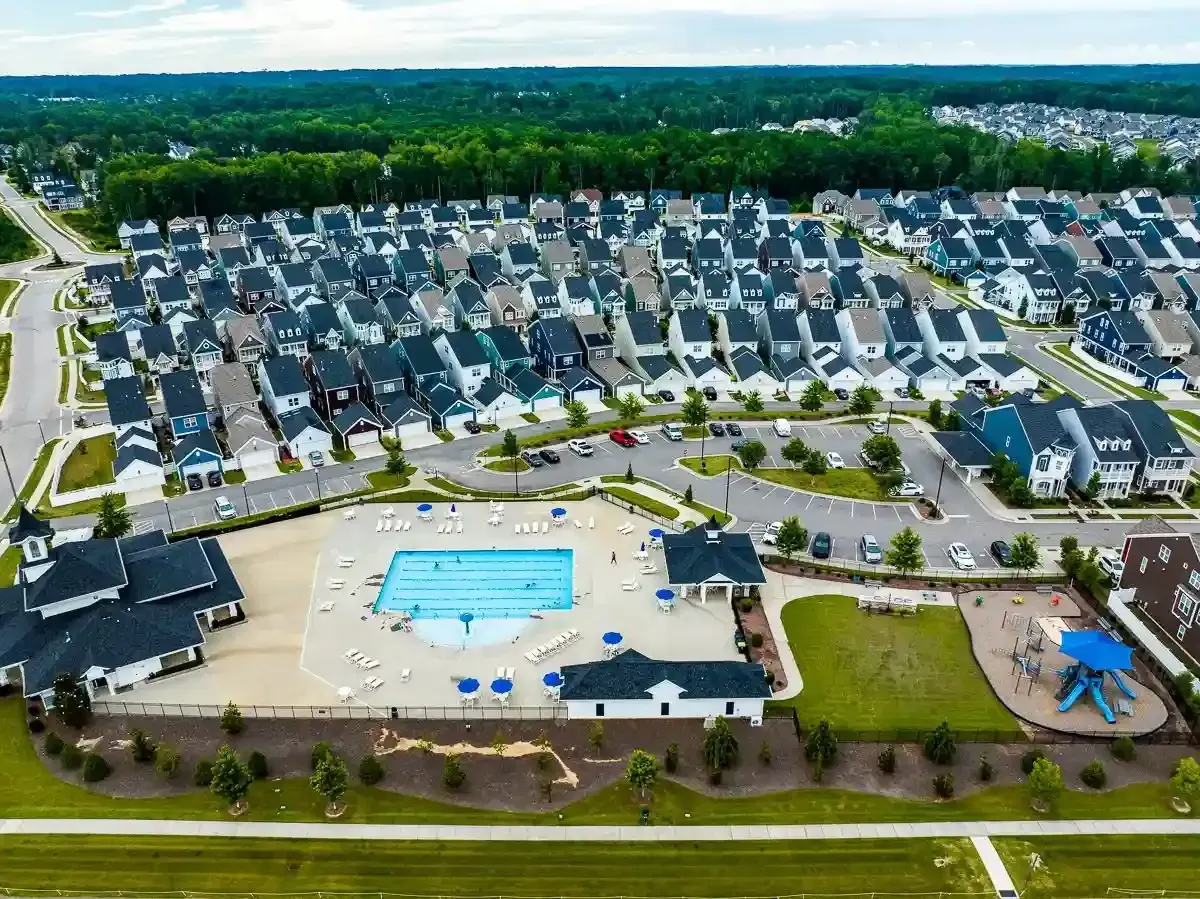
Is Apex, NC Safe?
For most buyers asking this question, Apex answers it before the research even starts. As a master-planned suburban community of approximately 85,000 residents in southwest Wake County, Apex consistently ranks among the lowest crime rate municipalities in North Carolina — a distinction backed by data, not marketing. The town maintains a 2026 crime rate of approximately 0.73 per 1,000 residents, well below both state and national averages. That number reflects decades of intentional municipal investment in public safety infrastructure, community programming, and the kind of neighborhood cohesion that comes from a town that takes the "Peak of Good Living" identity seriously.
In over 20 years of working with buyers across the Triangle, I have never had a client come back to me with safety concerns after moving to Apex. What I hear instead is that they didn't expect to know their neighbors this quickly, or that their kids are outside more than they ever were in the city they left. That's the Apex experience in practice.
That said, no community of 85,000 people is without nuance, and buyers should always conduct address-specific research rather than relying on town-level averages.
How to Research Safety for Any Apex Address
Three resources give buyers the most accurate, address-specific picture:
NeighborhoodScout — block-level crime data and trend analysis for any specific address in Apex or surrounding corridors.
Niche.com — aggregated safety grades by neighborhood based on FBI crime data, with resident reviews that reflect lived experience rather than statistics alone. Apex consistently earns an A or A+ safety grade.
Town of Apex — official town resources including public safety reporting and community services.
Your real estate agent can help you access and interpret current data for any specific address during your due diligence period — and can provide neighborhood-level context that no online tool fully captures.
💡 Phil's Perspective: "When buyers ask me about safety in Apex I give them the same answer every time — look at the data and then come walk the streets. Apex earned a AAA municipal bond rating from all three major agencies, which tells you something about how this town is managed at every level. A municipality that finances its infrastructure at the lowest possible interest rate because of financial discipline tends to invest in public safety the same way. The numbers back it up — but honestly, one Saturday morning on Salem Street or an afternoon at Pleasant Park tells you more than any statistic."
Safety data varies by specific address and changes over time. Always conduct independent research using current sources and consult your agent for neighborhood-specific context before making a purchase decision. Crime rate figure reflects approximate 2026 data — verify current figures at apexnc.org.
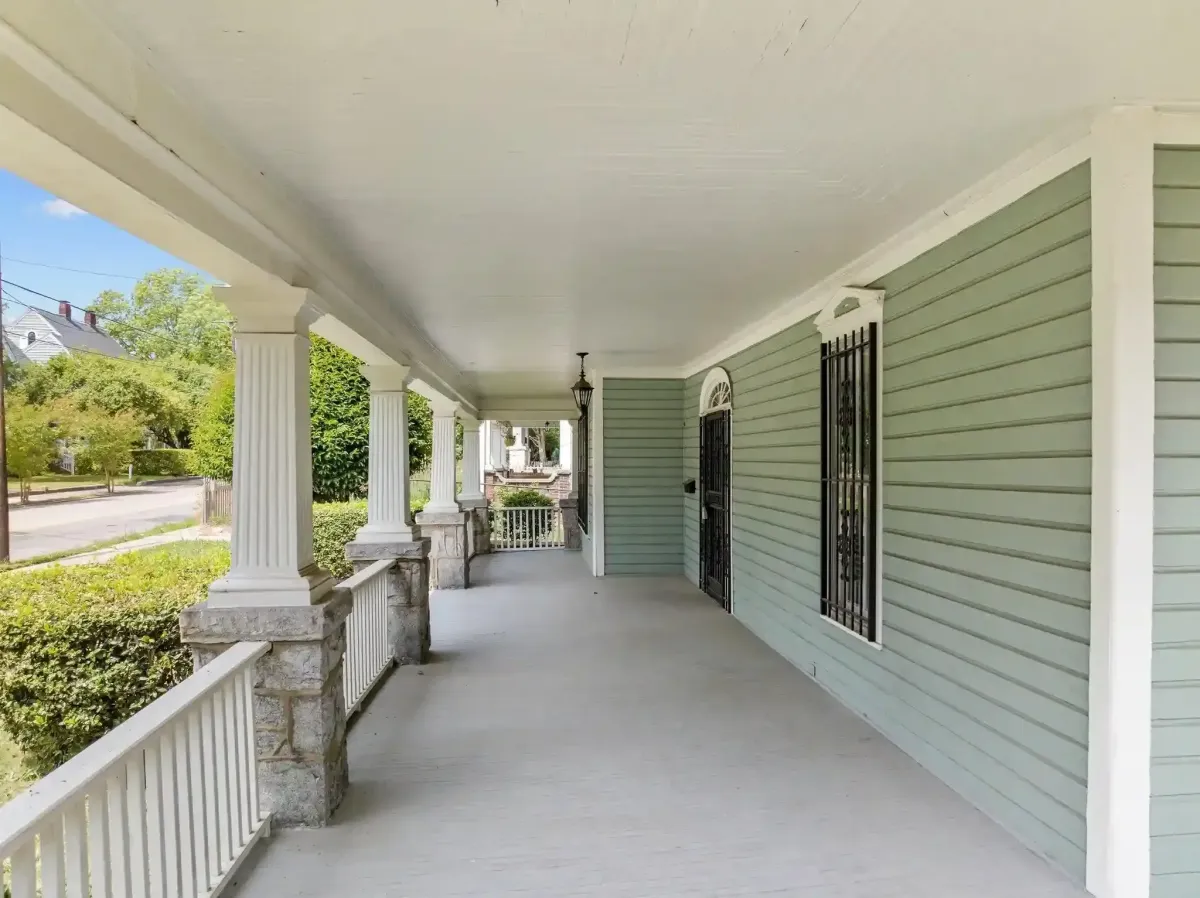
What Salary Do You Need to Live in Apex, NC (2026)?
One of the most searched questions from buyers relocating from New York, California, DC, and Florida — and the answer is more accessible than most buyers expect for a market of this quality.
To comfortably purchase a median-priced home in Apex ($623,500) with a 20% down payment, most financial advisors recommend a household income of approximately $145,000–$165,000 per year. With a 10% down payment, that range rises to approximately $160,000–$180,000.
For buyers coming from high-cost metros, the value equation is immediate — Apex delivers a historic downtown Social District, quad-corridor commute access, premier parks, and the Veridea appreciation signal at $237 per square foot — a fraction of what comparable suburban quality costs in Northern Virginia, the Bay Area, or the New York metro.
Monthly Cost Breakdown — $623,500 Home
| Cost | Monthly Estimate |
|---|---|
| Mortgage (20% down, 6.8% rate, 30yr) | ~$3,247/mo |
| Property Taxes ($5,443/yr combined rate) | ~$454/mo |
| Homeowner's Insurance | ~$160/mo |
| HOA (varies by community) | $100–$300/mo |
| Total Housing Cost | ~$3,961–$4,161/mo |
Monthly Cost of Living Beyond Housing
| Category | Monthly Estimate |
|---|---|
| Groceries (2-person household) | ~$400–$600 |
| Utilities (Town of Apex electric, avg.) | ~$150–$300 |
| Transportation (gas, insurance, 540 tolls) | ~$350–$550 |
| Dining & Entertainment | ~$400–$700 |
| Healthcare (employer-supplemented) | ~$200–$400 |
| Total Non-Housing | ~$1,500–$2,550/mo |
Varies depending on lifestyle, family size, HOA community, NC-540 toll usage, and down payment amount.
How Apex Compares to the Cities Buyers Are Leaving
| City | Median Home Price | Income Needed to Buy |
|---|---|---|
| San Francisco, CA | ~$1,300,000 | ~$320,000+/yr |
| New York City, NY | ~$780,000 | ~$190,000+/yr |
| Washington, DC | ~$650,000 | ~$160,000+/yr |
| Austin, TX | ~$525,000 | ~$130,000+/yr |
| Atlanta, GA | ~$420,000 | ~$105,000+/yr |
| Fuquay-Varina, NC | ~$479,000 | ~$110,000–$125,000/yr |
| Holly Springs, NC | ~$607,500 | ~$140,000–$155,000/yr |
| Apex, NC ⭐ | ~$623,500 | ~$145,000–$165,000/yr |
A household earning $175,000 per year in Washington, DC is stretched thin. That same household in Apex is comfortably upper-middle class — able to own a newer home near a historic downtown Social District, walk to dinner on a Friday night, save aggressively, and still be 20 minutes from Research Triangle Park.
That gap — and the realization that quad-corridor commute flexibility and the Veridea appreciation signal come with it — is what converts most out-of-state buyers from "let's see what's available" to "we need to move fast before this window closes."
Interactive Salary Calculator
Adjust the sliders to match your specific situation.
| Estimated Monthly Mortgage (P&I) | $-- |
| Property Tax (est. $0.8731/$100) | $-- |
| Homeowner's Insurance (est.) | $-- |
| Total Monthly Housing Payment | $-- |
"The income question I get most from relocating buyers is 'can we actually afford Apex?' — and the answer almost always surprises them. A dual-income household with one RTP salary and one remote income can live exceptionally well here. You're getting a historic downtown you can walk to, a park system that rivals anything in the Southeast, and a long-term appreciation signal from Veridea that no other Triangle suburb can match right now — for a monthly payment that would get you a two-bedroom condo in Northern Virginia. That realization is usually the moment the conversation shifts from 'is Apex worth it' to 'how quickly can we get under contract.'"
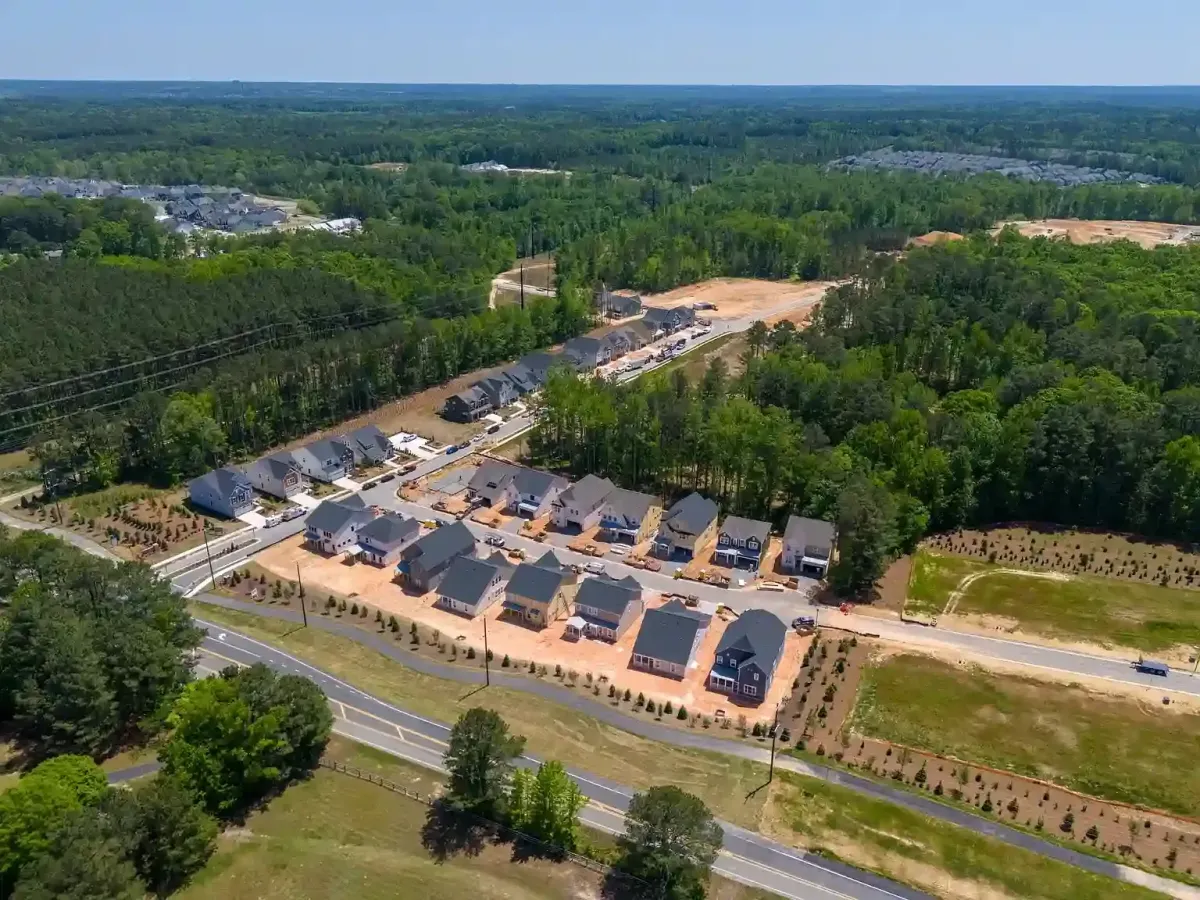
Why Are So Many People Moving to Apex, NC in 2026?
Apex is experiencing one of the most sustained in-migration waves of any municipality in North Carolina — and after 20 years of watching this market, I can tell you it is not a coincidence. WalletHub ranked it the #3 Best Small City in America. U.S. News ranked it #7 Best Place to Live in the country. And buyers from Northern Virginia, New York, California, and Florida are arriving every week with the same realization: the lifestyle they assumed they would have to give up when they left their city is sitting right here on Salem Street — at a fraction of the cost. There are five reasons that keeps happening.
1. The Jobs Are Here — and They're Getting Bigger
Research Triangle Park is 20–30 minutes from most Apex neighborhoods. But the more significant story for 2026 is what's coming to Apex itself. The NC Children's Hospital — a Duke Health and UNC Health partnership located within the Veridea footprint — is projected to bring approximately 8,000 jobs directly to Apex across healthcare, research, and administrative roles. The $3 billion Veridea development adds 12 million square feet of commercial and research space on top of that. Buyers are not moving to Apex despite the job market. They are moving because of where that job market is heading — and they want to be positioned before it arrives.
2. The Complete Package at a Price That Still Makes Sense
Buyers relocating from Northern Virginia, the Bay Area, or the New York metro consistently have the same reaction when I show them the math on Apex. A dual-income household that was stretched thin in DC is comfortably upper-middle class here — owning a newer home near a historic downtown Social District, walking to dinner on Salem Street on a Friday night, saving aggressively, and still being 20 minutes from RTP. At $237 per square foot, Apex is not the cheapest market in the Triangle. But it delivers a level of finished infrastructure, historic character, and long-term appreciation signal that no cheaper market in the region can replicate.
3. A Downtown That Cannot Be Manufactured
I have toured every downtown in the Triangle with relocating buyers. The conversation always changes when we hit Salem Street. It is not a lifestyle center built five years ago by a developer trying to create community. It is a century-old working historic district with locally owned restaurants, the Halle Cultural Arts Center, and a Social District designation that makes Friday nights feel like a small city rather than a suburb. Scratch Kitchen, Tap Station's rooftop patio, Common Grounds — buyers from coastal cities recognize immediately that this is the real thing. And once they recognize it, the conversation shifts from "is Apex worth the price" to "how do we get under contract before someone else does."
4. The Park System Is Finished
This matters more than most buyers realize before they move here. Pleasant Park — 92 acres with the Enchanted Forest inclusive playground, Splashlantis splash pad, and six multi-use athletic fields — is complete and open today. Apex Nature Park, the Beaver Creek Greenway, and direct American Tobacco Trail access from multiple neighborhoods are finished. Jordan Lake is 15 minutes west. Buyers relocating from suburban markets where the flagship park is still a rendering on a sign at a construction site consistently cite Apex's finished outdoor infrastructure as one of the biggest quality-of-life surprises of the move. I've watched it become the deciding factor for active families more times than I can count.
5. The Appreciation Story Has Real Legs
In 20 years of Triangle real estate I have watched a lot of markets get called the "next big thing." Veridea is different — and I say that because the infrastructure investment is already happening, not just planned. The NC Children's Hospital partnership between Duke Health and UNC Health is real. The Wake Technical Community College campus integrated into the Veridea footprint is real. The Salem Street streetscape renovation underway right now is real. Buyers who understand where Apex is in its development cycle — historic character already established, major employment and commercial infrastructure still arriving — are the ones positioning themselves ahead of a repricing that is already underway. That is not a pitch. It is the same pattern I have watched play out in every Triangle market that transitioned from regional value play to nationally recognized address over the past two decades.
💡 Phil's Perspective: "The buyers who hesitate on Apex in 2026 are usually waiting for one of two things — either for the price to come down, or for Veridea to be finished so they can see exactly what they're buying. Neither of those things is going to happen in that order. The price reflects the demand, and Veridea won't be finished until the early 2030s. The window to buy ahead of that story is open right now. I've had this conversation enough times to know that the buyers who act on it look back grateful — and the ones who waited look back frustrated. My job is to make sure you're in the first group."
Buyers researching Apex often compare it with other Wake County and Triangle communities. Explore the full guide library below.

Experience Meets Innovation
I'm Phil Slezak, a Triangle-based real estate agent with more than 20 years of experience helping buyers, sellers, and relocating clients evaluate communities across Wake County and the greater Raleigh–Durham area.
This Apex, North Carolina guide is built to provide clear, objective local market insight — including home pricing trends, neighborhood differences, commute patterns to RTP, and long-term development considerations.
As one of the first AI-Certified Real Estate Agents in the country, this means more than a credential. In a market moving at the pace of Apex, I use AI-assisted analysis to evaluate neighborhood-level pricing trends, inventory shifts, builder incentive cycles, and school assignment stability — giving you a faster, more defensible picture of what a specific home is actually worth before you write a check. That analytical layer, combined with two decades of local boots-on-the-ground experience, is what separates a confident move from an expensive mistake.
For many clients, a move to the Triangle isn't just a transaction — it's a major life transition. To provide more security and flexibility, I offer qualified clients access to several unique programs:
Quick Summary for Buyers
Apex, NC is best suited for buyers who want a historic walkable downtown, quad-corridor commute access to RTP and Raleigh, and a market with both established character and significant long-term appreciation upside through the Veridea development — at a median price of $623,500 that reflects the town's Complete Package positioning in Wake County.
People Also Ask About Apex, NC
What is Apex, NC known for?
Apex is known for four things that define its 2026 identity: Salem Street's historic Social District — a century-old walkable downtown that no other Triangle suburb can replicate — the $3 billion Veridea mixed-use development and NC Children's Hospital bringing approximately 8,000 jobs to the southwest Wake County corridor, the quad-corridor commute advantage placing residents within 20–35 minutes of every major Triangle employment hub, and the premier park system anchored by Pleasant Park's 92-acre Enchanted Forest destination. WalletHub ranked it the #3 Best Small City in America for 2025–2026 and U.S. News ranked it #7 Best Place to Live in the country — recognition that has accelerated national buyer awareness without yet being fully reflected in home prices.
How far is Apex from downtown Raleigh?
Downtown Raleigh is 15–22 miles from most Apex neighborhoods — approximately 25–35 minutes off-peak via US-1 North. During peak morning hours expect 35–50 minutes depending on your specific neighborhood and departure time. Buyers in the western Apex corridors with direct NC-540 access have more route flexibility than those dependent on US-1 or NC-55 during peak hours. The quad-corridor advantage means most Apex residents have at least two viable route options to downtown Raleigh regardless of where they live within town limits. Always drive your specific route at 7:45 AM on a Tuesday before committing to a neighborhood.
What is Veridea and how does it affect Apex buyers?
Veridea is a $3 billion, 1,100-acre mixed-use development located along the Old US-1 corridor in Apex — the largest single development project in southwest Wake County's history. When complete by 2032–2034, it will deliver 8,000 residential units, 12 million square feet of commercial and research space, a 34-acre Wake Technical Community College campus, and the NC Children's Hospital — a Duke Health and UNC Health partnership projected to bring approximately 8,000 jobs directly to Apex. For buyers, Veridea represents the strongest long-term appreciation signal of any active development project in the Triangle. Buyers purchasing in Apex's western corridors today are positioning themselves ahead of that employment and commercial infrastructure — which historically drives meaningful residential price appreciation as it comes online. Verify current project status at apexnc.org.
Is Apex, NC more expensive than Cary?
At a median of $623,500 versus Cary's $625,000, Apex and Cary are essentially at price parity in 2026 — but the two markets serve different buyer priorities. Cary delivers the shortest RTP commute of any Wake County suburb and the most mature greenway infrastructure in the region. Apex delivers a more distinctive century-old historic downtown Social District, active new construction availability, and the Veridea appreciation signal — the $3 billion mixed-use development anchored by the NC Children's Hospital that has no Cary equivalent. For buyers choosing between the two at the same price point, the decision comes down to whether you prioritize commute efficiency and finished infrastructure (Cary) or historic character and long-term appreciation upside (Apex).
What neighborhoods in Apex have strong community amenities and park access?
Neighborhood character and amenity access in Apex varies significantly by location. Scotts Mill offers the most walkable access to Salem Street and Downtown Apex for buyers who prioritize historic district proximity. West Lake delivers elementary and middle schools within the neighborhood footprint alongside community lake access. Bella Casa provides direct adjacency to Apex Nature Park and Seymour Athletic Fields for buyers who prioritize organized athletics and outdoor recreation. Haddon Hall offers the strongest multi-destination commute positioning for dual-income households with different employment destinations. Sweetwater serves western corridor buyers who want walkable Town Center access without driving downtown. Always verify school assignments using the WCPSS Address Lookup Tool at wcpss.net before making any neighborhood decision — western Apex corridor assignments shifted with Felton Grove High School's 2025 opening.
How does Apex compare to Holly Springs?
Apex and Holly Springs are the two most frequently compared suburbs in southwest Wake County — and they serve genuinely different buyer profiles. Holly Springs offers an emerging biotech employment corridor anchored by Fujifilm and Genentech, abundant master-planned new construction, and a median of $607,500 — approximately $16,000 below Apex. Apex delivers a century-old working historic Social District, quad-corridor commute flexibility, the Veridea appreciation signal, and the premier park system in Wake County — at a median only $16,000 higher. For buyers whose careers are anchored to the biotech corridor or who want maximum new construction at the lowest price point in southern Wake County, Holly Springs is the stronger choice. For buyers who prioritize a finished historic downtown, commute flexibility, and the long-term employment anchor of the NC Children's Hospital campus, Apex wins the comparison at the $16,000 premium.
Want a list of the best Apex neighborhoods for your budget + commute?
👉 Text APEX to 984-789-4554 for a custom neighborhood short list.
Frequently Asked Questions About Living in Apex, NC
Is Apex, NC a good place to live?
Apex consistently ranks as one of the top suburban markets in the country, earning the #1 position for Economic Health in WalletHub's 2026 rankings and #3 Best Small City in America overall. Buyers choose Apex for direct commuter access to RTP, Wake County Public Schools, and the unique balance of a historic Social District with modern growth projects like the $3 billion Veridea development. Whether it's the right fit depends on commute corridor, budget, and neighborhood preference.
How much do homes cost in Apex, NC 2026?
The current median in Apex, NC is $623,500. The market range runs from approximately $450K for resale townhomes in established neighborhoods to $800K–$1.2M+ in newer master-planned communities and luxury corridors. New construction single-family homes typically start in the high $600s, while custom estates in Ivory Hills range from $900K to $2M+. Pricing varies significantly based on proximity to the NC-540 corridor, neighborhood maturity, and HOA structure.
What zip codes are in Apex, NC?
Apex is primarily served by three zip codes. 27502 covers central and downtown Apex. 27523 covers the southern and rural outskirts including custom estate corridors. 27539 covers portions of the southern growth areas near the Veridea footprint. Tax jurisdiction and school assignments vary by address — always verify with your agent and Wake County before purchasing.
What is the property tax rate in Apex, NC in 2026?
Properties inside Apex town limits pay a combined Wake County and municipal rate of approximately $0.8731 per $100 of assessed value as of FY2026. On a $623,500 home that equals approximately $5,443 annually. Properties outside town limits pay only the Wake County rate of $0.5171 per $100 — approximately $3,232 annually on the same assessed value. Some neighborhoods including Green Level Trail fall outside town limits. Always verify tax jurisdiction before closing at wakegov.com and apexnc.org.
How do school assignments work in Apex, NC?
Apex is served by Wake County Public Schools, the largest district in North Carolina. Assignments are address-specific and some schools in high-growth western corridors have enrollment caps. For the 2026–27 school year, the transfer application window occurred in March. The town effectively has two high school corridors — established central neighborhoods typically feed Apex High School while newer western communities feed Apex Friendship High School. Felton Grove High School opened in 2025 and now serves portions of southern and western Apex. Always verify your specific address using the WCPSS Address Lookup Tool at wcpss.net before making an offer.
What is the commute like from Apex to RTP and Raleigh?
Commute times depend heavily on proximity to the NC-540 loop and whether you use the toll road.
To RTP: 20–35 minutes via NC-540 toll or NC-55
To Downtown Raleigh: 25–45 minutes via US-1
To Cary: 15–20 minutes via NC-55 or Lake Pine Drive
To RDU Airport: 15–25 minutes via NC-540 or I-40
To Durham: 30–50 minutes via NC-540 to I-40
As of January 1, 2026, the NC QuickPass toll rate for the 18-mile Triangle Expressway trip is approximately $4.17. Surface roads including NC-55 and Ten-Ten Road experience significant peak-hour congestion — evaluate specific neighborhood corridor access before purchasing.
Is Apex, NC still growing?
Yes — significantly. While central Apex is mature, the Old US-1 and West Apex corridors are in an active transformation phase. The $3 billion Veridea mixed-use development will add 8,000 residential units and 12 million square feet of commercial space by 2032–2034. The NC Children's Hospital — a Duke Health and UNC Health partnership — is projected to bring approximately 8,000 jobs to the area. Apex is not a market in plateau.
Are there new construction homes for sale in Apex, NC?
Yes, but inventory is concentrated in specific active communities including Friendship Station, Huxley, and Green Level Trail. In 2026, new build townhomes start in the mid-$400s while single-family new construction typically begins in the high $600s. Builders currently active in Apex include M/I Homes, Lennar, and Pulte. Custom home options are available through firms including Rufty Homes, Loyd Builders, and McNeill Burbank. Availability and builder incentives vary by phase — verify directly with builders or your agent.
How does Apex compare to Cary, NC?
Apex and Cary are the two most competitive suburban markets in Wake County. Cary offers a shorter average RTP commute and the most mature infrastructure in the Triangle but typically prices 10–15% higher than Apex for comparable square footage with more limited new construction availability. Apex offers a more distinct historic downtown anchored by the Social District, active new construction corridors, and stronger long-term appreciation signals through Veridea. For split-commute households or buyers seeking newer construction options, Apex frequently wins the comparison.
Next Steps: Talk to Phil About Apex
Ready to Make Your Move to Apex?
You've done the research. You know the Veridea story, the quad-corridor commute advantage, the school assignment realities, and why Salem Street is the most authentic downtown in Wake County. The next step is a conversation with someone who understands how these 2026 market dynamics impact your specific bottom line..
I can help you:
Pinpoint the Right Corridor: Identify whether the historic walkability of Scotts Mill, the resort lifestyle of Bella Casa, or the appreciation upside of the Veridea corridor fits your 5-year plan.
Navigate the School Cap Reality: Get a real-time assessment of WCPSS enrollment status for your specific target address before you fall in love with a street.
Analyze the Growth Signals: Evaluate how Veridea, the NC Children's Hospital, and the Salem Street Streetscape project will specifically affect appreciation in the neighborhoods you're targeting.
Master the NC Process: If you're relocating from out of state, I'll walk you through the Due Diligence culture shock so you don't leave money on the table.
Exclusive Programs: Determine if you qualify for the Buyer Home Guarantee or the Sold Zero Commission Program to maximize your equity.
Whether you are in the "just curious" phase or need to be under contract within 30 days, getting a local strategy in place now is the most important move you can make.
Three ways to connect:
📅 Schedule a 15-Minute Strategy Call — Book directly here
📱 Text APEX to 984-789-4554 — Get instant market updates, coming soon alerts, and neighborhood comparisons.
🏠 Get Your Custom Apex Home Search — Tell us what you're looking for
📍 Phil's Final Perspective: Apex is a 'Strike While the Iron Is Hot' market. Veridea is the most significant long-term demand driver currently active in the Triangle — and the buyers who position themselves in the right corridors before the NC Children's Hospital opens will look back on this window as the moment they got ahead of the curve. My job is to make sure you're one of them.
DISCLAIMER: All stats, data, house pricing, and local project timelines mentioned on this page are subject to change and are provided merely as information at the time of publication (Q1 2026). This guide is updated regularly using Wake County MLS data and local market reporting, but buyers should independently verify all information — especially school assignments and tax jurisdictions — before making a purchase decision.
Sources & Further Reading
For official town information, visit the Town of Apex website
For background on the town's history and demographics, see the Apex, NC Wikipedia entry
For neighborhood ratings and resident reviews, see Apex on Niche
For property tax rate verification, visit Wake County Tax Administration
For school assignment verification, visit Wake County Public Schools
For park and greenway information, visit Town of Apex Parks & Recreation
For Veridea development updates, visit Town of Apex Planning
For NC Children's Hospital updates, visit Duke Health
For WalletHub rankings, visit WalletHub Best Small Cities
For U.S. News rankings, visit U.S. News Best Places to Live
PHIL SLEZAK REAL ESTATE
PHIL SLEZAK REAL ESTATE
CONNECT
OUR PROGRAMS
LEGAL
Explore more Triangle relocation guides including Cary, Holly Springs, Fuquay-Varina, Wake Forest, and Raleigh.
Phil Slezak Real Estate
421 Fayetteville Street, Suite 1100
Raleigh, NC 27601
(984)-789-4554


© Copyright 2026. Phil Slezak Real Estate. All Rights Reserved.