Living in Raleigh, NC (2026 Guide)
Is Raleigh the Smartest Move Or Should You Be in the Suburbs?
Thinking about moving to Raleigh? This guide uses current Wake County MLS data to break down home prices, neighborhoods, and the 2026 urban reality. Whether you're comparing Raleigh to Cary, Apex, or Wake Forest — here's what serious buyers need to know before they decide.
Updated May 14, 2026
Living in Raleigh, NC: The Urban Core That Makes the Triangle Run
Thinking about moving to Raleigh? The 2026 real estate market here tells a story that surprises most out-of-state buyers. With a median home price of $470,000, a population surpassing 511,000, and one of the most diverse job markets in the Southeast, Raleigh has evolved from a sleepy state capital into the economic engine driving the entire Triangle region.
The market here is defined by one word: energy. Downtown Raleigh is in the middle of a $4+ billion development boom. The food and arts scene has arrived. NC State's footprint is expanding. And for buyers who want walkability, urban density, and the shortest commute to everything the Triangle offers — Raleigh is the answer.
Morning: The Commute Advantage
The day in Raleigh starts with something the suburbs can't offer: proximity.
The RTP Run: From most Raleigh neighborhoods, Research Triangle Park runs 15–25 minutes off-peak — the second-shortest commute of any major Triangle address. For buyers whose careers are anchored at Cisco, Lenovo, IBM, or one of the dozens of RTP employers, Raleigh's central position is a daily quality-of-life advantage that compounds over time.
The Local Reality: For buyers working downtown — at the State of NC, WakeMed, Duke Health, or one of the dozens of downtown employers — the commute can be a 10-minute drive or a 20-minute bike ride along Raleigh's greenway network. No suburb can replicate that. The commute that used to make people choose Cary is the same commute that's now making people choose Raleigh.
Afternoon: The Urban Payoff
By midday, the reasons people choose the city over the suburbs become obvious.
The Neighborhoods: Whether it's walking Five Points for lunch, catching a game at PNC Arena, browsing the Village District's boutique retail, or cycling the Neuse River Greenway trail, Raleigh delivers a lifestyle density that no suburb in the Triangle can match. The trees are tall, the neighborhoods are established, and the walkability is real in a way that most Triangle suburbs are still working toward.
The North Hills Corridor: Anchored by Kane Realty's $3 billion Midtown Raleigh redevelopment, the North Hills corridor has become one of the Southeast's most ambitious urban mixed-use projects — adding residences, Class A office, luxury retail, and hotel capacity to a corridor that was already one of Raleigh's most coveted addresses.
Evening: A Food Scene That's Finally Arrived
As the sun sets, Raleigh delivers what bedroom suburbs cannot: a genuine urban evening.
The Downtown Core: Fayetteville Street, Glenwood South, and the Warehouse District have collectively built one of the South's most celebrated restaurant and nightlife scenes. Death & Taxes, Second Empire, Angus Barn, and Sullivan's anchor the fine dining market. The Morgan Street Food Hall brings the energy of a market hall to downtown's historic core.
The Neighborhood Scene: Five Points and the Village District give Raleigh something rare — neighborhood-scale dining and retail that feels like a city, not a lifestyle center. The RH Rooftop Restaurant atop the North Hills Kane complex has become one of the most distinctive dining experiences in the entire Triangle.
💡 Phil's Perspective "I tell clients that Raleigh is the market where you buy the lifestyle first and the square footage second. If your priority is a three-car garage and a half-acre lot, Apex or Wake Forest will serve you better at a lower price per square foot. But if your priority is walking to dinner, a 15-minute commute to RTP, and being in the center of everything the Triangle is becoming — Raleigh is the only address that delivers all three. The buyers who choose Raleigh tend to stay the longest, because the city keeps getting better around them."
The Honest Trade-Off
Raleigh's urban lifestyle comes with real trade-offs. At $211.03 per square foot, you're paying more per square foot than Wake Forest ($195.77) — but significantly less than Cary ($310) or Apex ($295). The combined tax rate of $0.8721 is lower than Wake Forest but higher than Cary. What you're trading is space and lot size for walkability, commute efficiency, and urban energy.
For buyers comparing Raleigh to the suburbs, the question isn't whether Raleigh is better — it's whether the urban lifestyle is worth the trade-off in square footage and lot size. For young professionals, downsizers, and buyers who genuinely use what a city offers, Raleigh is the most defensible long-term decision in the Triangle. For families who want space, top-rated suburban schools, and a backyard, Cary, Apex, or Wake Forest will serve them better.
That's not a knock on Raleigh. It's just the honest read of the market in 2026.
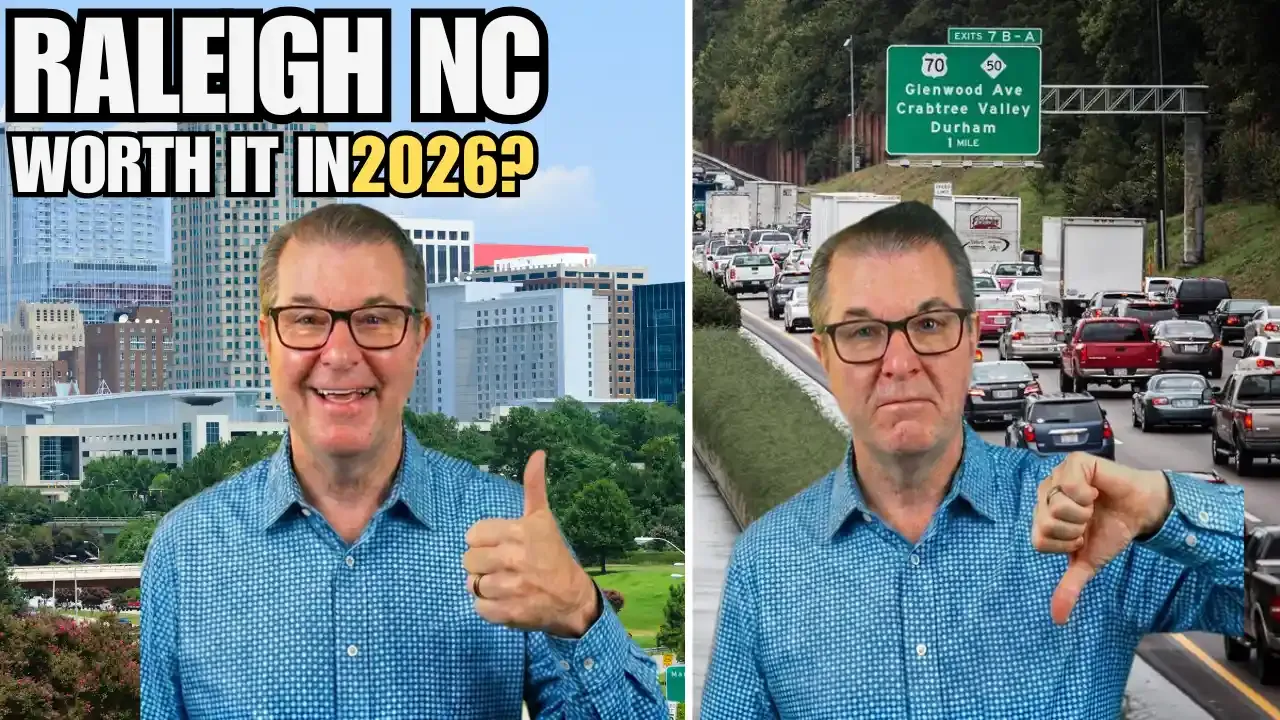
Watch: Living in Raleigh, NC
Raleigh, NC Population & Demographics
Population: ~511,606 — Raleigh is the second-largest city in North Carolina and the anchor of the Research Triangle metropolitan area, which is home to more than 1.5 million people. It is one of the fastest-growing major cities in the United States, consistently ranking in the top 10 for net in-migration from high-cost coastal markets.
County: Wake County, North Carolina.
Region: Raleigh–Durham–Chapel Hill Triangle.
Median Household Income: ~$92,105 — Reflecting a workforce concentrated in government, technology, healthcare, research, and professional services. Within the broader Wake County market, households in North Raleigh and the Brier Creek corridor routinely exceed $120,000 median income.
Median Age: ~34.1 — The youngest median age of any major Triangle municipality, reflecting Raleigh's appeal to young professionals, recent university graduates from NC State, Duke, and UNC, and early-career relocators from high-cost coastal markets.
Educational Attainment: Over 50% of Raleigh residents hold a bachelor's degree or higher — anchored by NC State University's 36,000-student campus in the heart of the city and supported by proximity to Duke and UNC-Chapel Hill, which together conduct more than $3.5 billion in research annually.
The Evolution of Raleigh — From State Capital to National City
Raleigh has undergone a fundamental transformation over the past decade. The city that was once dismissed as a government town — where state employees punched in at 8 and punched out at 5 — has become a genuine urban destination attracting talent, capital, and national recognition at a pace that has surprised even long-time residents.
The city's evolution is now defined by what real estate observers call the "Urban Arrival" — best exemplified by:
The Kane North Hills Redevelopment: A $3+ billion mixed-use transformation of the North Hills corridor along Six Forks Road — one of the largest urban infill developments in the Southeast — adding Class A office towers, luxury residential, hotel capacity, and destination retail to a corridor that is redefining what Raleigh's urban core looks like north of the Beltline.
The Downtown Development Boom: More than $4 billion in active and planned downtown development including residential towers, hotel projects, the expanded Convention Center, and continued Warehouse District buildout — fundamentally changing Raleigh's skyline and downtown density.
The Food and Culture Arrival: Raleigh's restaurant scene, craft brewery culture, arts infrastructure, and event calendar have reached a critical mass that national media — from Bon Appétit to Travel + Leisure — have recognized as genuinely competitive with much larger cities.
Jump to:
• Raleigh Population & Demographics – Understanding Raleigh's growth to 511,000+ residents, median income, and what the demographics mean for buyers.
• Raleigh Market Report – Real-time 2026 data on median prices, days on market, new construction share, and what buyers should expect.
• Raleigh Homes For Sale – Active inventory in the Wake County MLS updated daily.
• Raleigh New Construction vs Resale – Urban infill, production builders, and downtown residential towers — the 2026 new construction landscape.
• How Raleigh compares to other Triangle suburbs – Raleigh vs. Cary vs. Apex vs. Wake Forest vs. Holly Springs — the ultimate comparison for Triangle relocators.
• Raleigh Neighborhoods – From historic Oakwood and Five Points to North Hills, Brier Creek, North Ridge, Wakefield, and Bedford at Falls River.
• Cost of Living in Raleigh – Property taxes, HOA fees, utilities, and the honest tax math buyers need before deciding.
• Schools in Raleigh, NC - WCPSS assignments, enrollment caps, Heritage High uncapping July 2026, and private school options.
• Parks and Outdoor Living – Umstead State Park, Dorothea Dix Park, Lake Wheeler, Shelley Lake, Pullen Park, and 120+ miles of greenways.
• Amenities and Community Services – North Hills Innovation District, Lenovo Center, NC Museum of Art, and Raleigh's healthcare trifecta.
• Dining and Entertainment in Raleigh – Death & Taxes, Angus Barn, Second Empire, Morgan Street Food Hall, and the MICHELIN-recognized dining scene.
• Where is Raleigh Located – Highway access, commute matrix, ITB vs. OTB geography, and Raleigh's position as the Triangle hub.
• Raleigh Future Growth – Lenovo Center district, Dorothea Dix Park, North Hills Innovation District, S-Line rail, and the $4B+ downtown pipeline.
• Awards, Recognition, and Reputation – #1 Best Place to Live in NC, #1 U.S. City for Job Opportunities, MICHELIN recognition, and James Beard nominations.
The Bottom Line: Pros & Cons of Living in Raleigh — Honest 2026 assessment of who Raleigh is right for and who should look at the suburbs instead.
• About Phil Slezak — Your Raleigh Real Estate Guide – How Phil Slezak uses AI-assisted analysis and 20+ years of local experience to protect your move.
• FAQs About Raleigh, NC – Quick answers to the most common relocation questions buyers ask before moving to Raleigh.
• Sources & Further Reading — Official resources for due diligence including city data, school assignments, tax verification, development projects, and safety mapping.
Raleigh, NC Real Estate Market Snapshot (2026)
📊 Current Market Overview
| Metric | Value (2026) |
|---|---|
| Median Home Price | $470,000 |
| Average Price per Sq. Ft. | $211.03 |
| Average Days on Market | 31 Days |
| Sale-to-List Price Ratio | 98.8% |
| Active Listings (SF + Townhomes) | 1,564 |
| New Construction Active | 378 listings |
| New Construction Share | ~24.1% of active |
| Inventory Trend | Stable |
| Wake County Tax Rate | $0.5371 per $100 assessed value |
| City of Raleigh Tax Rate | $0.3720 per $100 assessed value |
| Combined Tax Rate | $0.9091 per $100 assessed value |
| Typical Commute to RTP | 15–25 min off-peak / 25–40 min peak |
| Typical Commute to Downtown | 5–15 min depending on neighborhood |
| Typical Commute to RDU | 15–20 min |
The 24.1% new construction share — 378 of 1,564 active listings — reflects Raleigh's ongoing infill and urban development activity. Unlike the suburban new construction corridors of Wake Forest or Holly Springs, Raleigh's new construction tends to be concentrated in urban infill communities, downtown residential towers, and townhome developments inside and near the Beltline.
At $211.03 per square foot, Raleigh sits below Cary (~$310/sq ft) and Apex (~$295/sq ft) but above Wake Forest ($195.77/sq ft). Buyers consistently report that the per-square-foot premium over Wake Forest is justified by the commute savings, walkability, and lifestyle access that only the urban core delivers.
*Note: Some Raleigh properties may be subject to additional municipal service districts or special assessments. Always verify the complete tax picture for any specific property with your agent and Wake County tax records at wakegov.com before closing.
Raleigh, NC Homes for Sale - View Current Listings
Raleigh, NC Homes for Sale
Browse current listings including new construction, resale homes, and luxury properties across all Raleigh neighborhoods.
👇 View Current Raleigh Listings 👇Listings open in a new tab — no login required
Housing in Raleigh, NC: New Construction vs. Resale
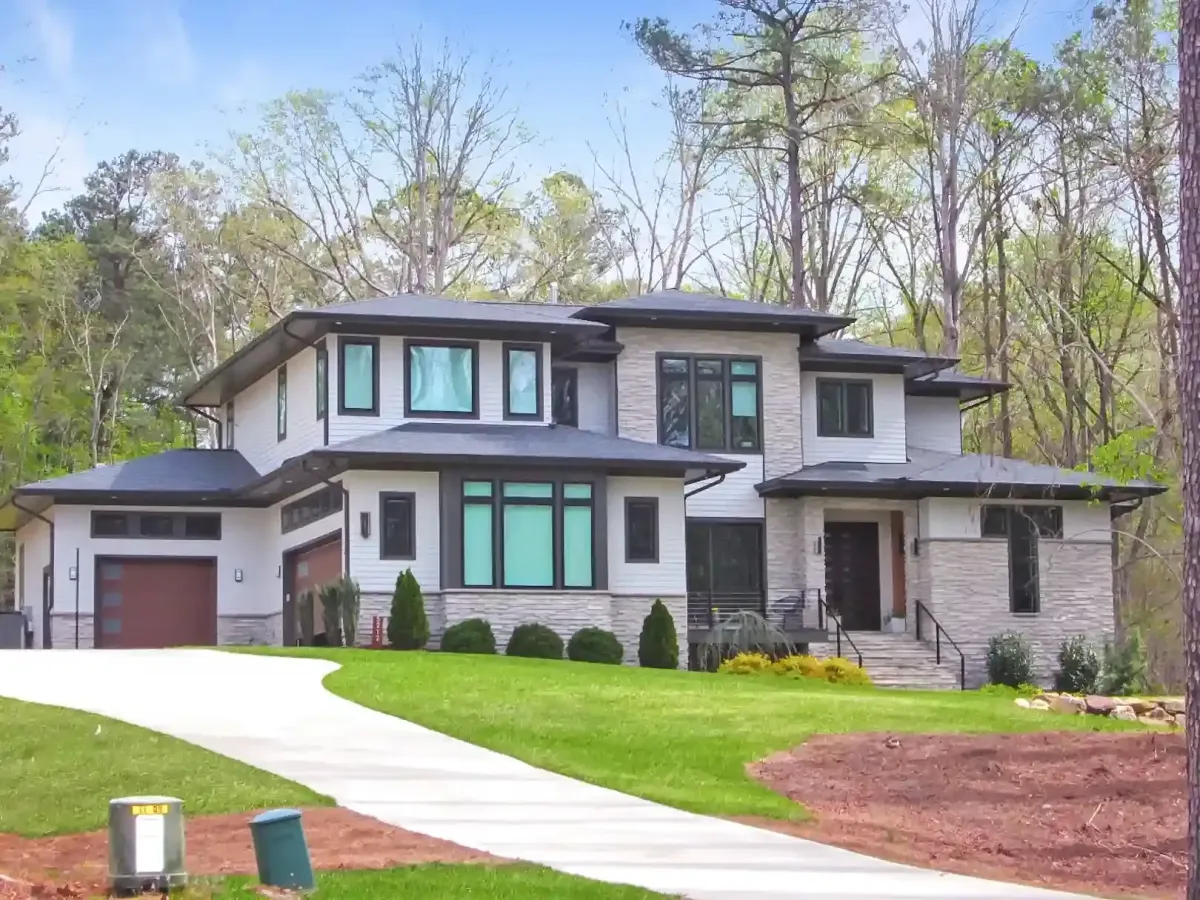
Raleigh's housing landscape is more diverse than any other Triangle market — from century-old bungalows inside the Beltline to brand-new luxury towers downtown and sprawling executive homes in North Raleigh. For most buyers, the choice comes down to urban character and walkability versus space and lot size. With 24.1% of active listings being new construction — 378 of 1,564 active homes — Raleigh gives buyers meaningful options on both sides of that decision, particularly in the townhome and attached product category.
New Construction: Urban Infill & Townhome Pipeline
New development in Raleigh is concentrated in urban infill sites, downtown residential towers, and master-planned townhome communities near the Beltline and major employment corridors.
The Profile: Modern urban designs with rooftop terraces, open floor plans, energy-efficient systems, and walkable locations. Townhomes dominate the new construction mix inside the Beltline, with detached single-family new construction more common in North Raleigh and Brier Creek corridors.
The 2026 Advantage: Entry-level new construction townhomes start in the mid-$300s in emerging corridors. Luxury downtown residential product starts in the high $400s and runs to $1M+ for penthouse units. Builder incentives including mortgage rate buydowns and closing cost credits are available in select communities.
The Trade-off: Urban new construction typically delivers less square footage and smaller or no private outdoor space compared to suburban alternatives. Buyers prioritizing lot size and garage space will find better value in Wake Forest or Holly Springs.
Top Builders Active in Raleigh (2026)
Custom & Semi-Custom:
Rufty Homes — Premium custom construction serving North Raleigh and Brier Creek corridors
Copper Builders — Boutique custom builder specializing in infill lots inside the Beltline
Homes by Dickerson — NC-based semi-custom builder active in North Raleigh communities
Garman Homes — Energy-efficient design-forward construction in urban and near-urban locations
Production Builders:
Toll Brothers — Luxury attached and detached product in North Raleigh and Brier Creek
Stanley Martin — Active in townhome and urban infill communities throughout Raleigh
D.R. Horton — Accessible price points in North Raleigh and outer Brier Creek communities
Lennar — Active in master-planned communities on Raleigh's northern and western edges
Meritage Homes — Energy-efficient production homes in North Raleigh growth corridors
Resale Homes: Character, History, and Established Neighborhoods
Raleigh's resale market is its most distinctive asset — no other Triangle city offers the character, tree canopy, and neighborhood identity found inside the Beltline.
The Profile: Historic bungalows, ranch homes, and Craftsman-style houses on established lots in Five Points, Oakwood, Cameron Park, and Hayes Barton. North Raleigh resale offers traditional two-story homes on generous lots in mature subdivisions.
The 2026 Advantage: Inside-the-Beltline resale homes offer irreplaceable location, walkability, and neighborhood character that new construction cannot replicate. North Raleigh resale delivers more square footage per dollar than comparable new construction.
The Trade-off: Older homes may require updates — roofs, HVAC, electrical panels, and kitchen modernization are common age-typical needs in 1960s–1990s construction.
Raleigh Housing Style Comparison
Historic Bungalow / Craftsman:
Common Locations: Five Points, Oakwood Historic District, Cameron Park, Hayes Barton
Best For: Buyers who want historic character, walkability, and established neighborhood identity inside the Beltline.
Ranch / Mid-Century:
Common Locations: Established North Raleigh subdivisions, Bedford at Falls River older sections
Best For: Buyers wanting single-story living, larger lots, and suburban privacy at accessible price points.
Modern Urban Townhome:
Common Locations: Glenwood South, downtown-adjacent infill, Village District corridor
Best For: Young professionals, downsizers, and buyers prioritizing walkability and low maintenance over square footage.
Luxury Executive:
Common Locations: North Hills, North Ridge, Brier Creek Country Club
Best For: High-end buyers seeking prestige addresses, club amenities, and proximity to North Raleigh's employment corridor.
Downtown Condo / Tower:
Common Locations: Downtown Raleigh, Glenwood South, Warehouse District
Best For: Urban lifestyle buyers who want walkability, dining access, and zero exterior maintenance.
Suburban Single-Family:
Common Locations: Wakefield, Brier Creek, Bedford at Falls River
Best For: Families seeking more space, newer construction, and suburban school environments while maintaining Raleigh addresses.
* Rate buydown availability and terms vary by builder, phase, and market conditions — verify directly with the builder's preferred lender.
*Rate buydown availability and terms vary by builder, phase, and market conditions — verify directly with the builder's preferred lender. Age-qualified communities are governed by federal HOPA guidelines — buyers interested in this housing type should verify eligibility and availability directly.
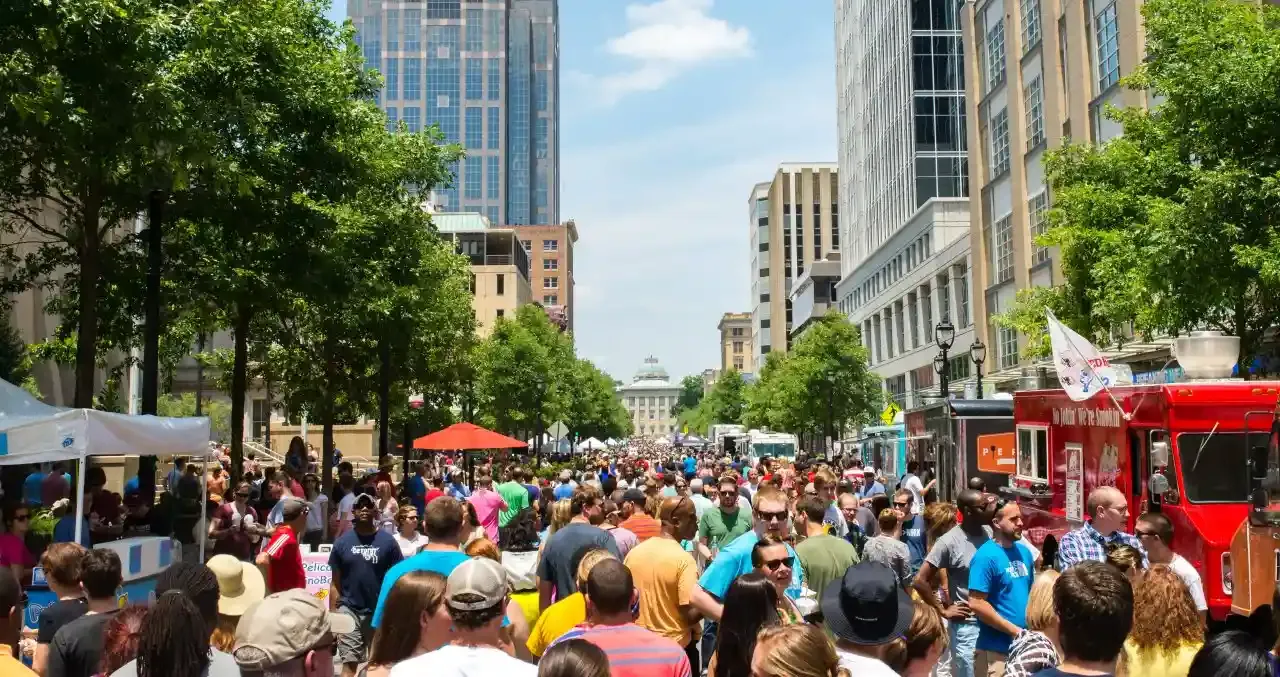
How Raleigh Compares to Other Triangle Suburbs
Buyers considering Raleigh often also evaluate Cary, Apex, Wake Forest, and Holly Springs. While all five offer strong quality of life and access to the Triangle's employment base, they serve very different priorities — particularly around urban lifestyle versus suburban space, commute efficiency, lot size, and price per square foot.
At-a-Glance Comparison (2026 Data)
How Raleigh Compares to Other Triangle Suburbs (2026)
| Raleigh | Cary | Apex | Wake Forest | Holly Springs | |
|---|---|---|---|---|---|
| Median Home Price | ~$470,000 | ~$625,000 | ~$623,500 | ~$500,000 | ~$607,500 |
| Municipal Tax Rate | $0.3720 | $0.3400 | $0.3560 | $0.4200 | $0.3435 |
| Combined Tax Rate | $0.9091 | $0.8571 | $0.8731 | $0.9371 | $0.8606 |
| Price Per Sq Ft | $211.03 | ~$310 | ~$295 | ~$196 | ~$260 |
| Market Character | Urban core & diverse | Mature & prestigious | Historic charm & growth | Value & momentum | New construction & biotech |
| New Construction | Active (24%) | Limited | Active | Abundant (35%) | Abundant |
| RTP Commute | 15–25 min | 10–20 min | 20–35 min | 50–75 min peak | 25–40 min |
| RDU Airport | 15–20 min | 10–15 min | 20–30 min | 35–50 min | 22–30 min |
| Walkability | Highest in Triangle | Moderate | Low–Moderate | Low | Low |
| Downtown Scene | Vibrant urban core | Revitalized & walkable | Historic Social District | Historic & revitalizing | Still developing |
| Lot Sizes | Smaller — urban density | Moderate to large | Moderate | Generous 0.25–1+ acres | Moderate |
| Best For | Urban lifestyle & commute efficiency | Commuters, families, prestige | Community & new construction | Value, space & community | Value & new construction |
Nearby Triangle Relocation Guides
Buyers researching Raleigh often compare it with other Wake County and Triangle communities. Explore the full guide library below.
Cary: The Established Prestige Option
⚖️ The Trade-off: Cary offers a slightly shorter RTP commute (10–20 minutes vs. 15–25), the lowest municipal tax rate in Wake County at $0.3400, and 100+ miles of finished greenways. At ~$625,000 median and ~$310 per square foot, buyers pay a significant premium for that certainty — and new construction options are limited.
✅ Why Choose Raleigh: Raleigh delivers the urban lifestyle, walkability, and dining access that Cary's suburban framework cannot replicate. At $211.03 per square foot versus Cary's $310, Raleigh buyers get meaningfully more home per dollar. For buyers who want to walk to dinner, bike to work, or live in a genuinely urban environment — Raleigh is the only Triangle address that delivers.
Apex: The Southern Growth Market
⚖️ The Trade-off: Apex offers a historic Social District downtown, the $3 billion Veridea development as a long-term appreciation anchor, and a comparable RTP commute at 20–35 minutes. At ~$623,500 median and ~$295 per square foot, buyers pay a premium for Apex's complete package of suburban infrastructure and community character.
✅ Why Choose Raleigh: Raleigh wins on walkability, urban energy, dining depth, and median price point. At $470,000 median versus Apex's $623,500, Raleigh buyers enter at a meaningfully lower price point with shorter commutes to downtown employers and RDU. For buyers who don't need a half-acre lot, Raleigh's value proposition over Apex is hard to ignore.
Wake Forest: The Value Play
⚖️ The Trade-off: Wake Forest delivers the most home per square foot of any major Triangle suburb at $195.77 — and the S-Line rail appreciation signal gives it the strongest long-term growth thesis of any northern Wake County market. The trade-off is a peak-hour RTP commute of 50–75 minutes and the highest combined tax rate in Wake County at $0.9371.
✅ Why Choose Raleigh: Raleigh wins decisively on commute efficiency, walkability, and urban lifestyle access. The RTP commute from Raleigh is 15–25 minutes versus 50–75 from Wake Forest — a difference of roughly 30–50 minutes each way that translates to 5–8 hours per week of life returned to the buyer. For buyers who commute daily to RTP or downtown employers, Raleigh's commute advantage over Wake Forest is the most significant quality-of-life variable in the Triangle decision.
Holly Springs: The Biotech Corridor
⚖️ The Trade-off: Holly Springs offers the Triangle's strongest biotech employment anchor — Fujifilm and Genentech — and strong new construction availability at a median of ~$607,500. The RTP commute runs 25–40 minutes and walkability is limited.
✅ Why Choose Raleigh: Raleigh wins on walkability, commute efficiency, dining depth, and median price. For buyers not employed in the US-1 South biotech corridor, Holly Springs' employment anchor is irrelevant — and Raleigh's $137,500 lower median price delivers significantly more purchasing power in a genuinely urban environment.
💡 Phil's Perspective: Every week I work with buyers who start with the suburbs on their shortlist and end up in Raleigh — not because they couldn't afford Cary or Apex, but because they did the math on the commute and realized what 8–10 hours a week in a car actually costs over five years. The buyers who choose Raleigh tend to be the ones who've lived in a suburb before and know what they're missing. The first-time Triangle buyers choose the suburbs. The second-time Triangle buyers often choose Raleigh.
Best Neighborhoods in Raleigh, NC (2026)
Raleigh offers the most diverse neighborhood lineup of any Triangle market — from century-old historic districts inside the Beltline to luxury golf communities in the northern corridors. Here is the 2026 breakdown.
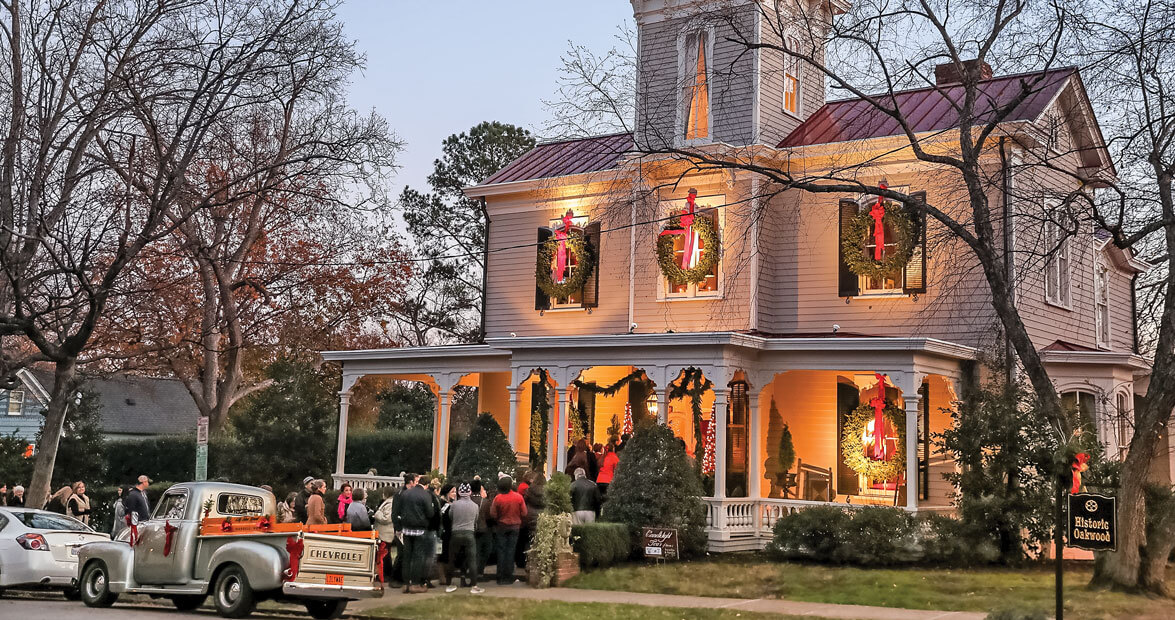
Oakwood Historic District — $550,000 (Condos) to $1,800,000+ (Restored Estates)
Raleigh's first neighborhood and a meticulously preserved collection of 19th-century Victorian, Queen Anne, and Second Empire homes. Living in Oakwood is like living in a vibrant, outdoor museum that remains incredibly social and active. Median sale price in 2026 is approximately $865,000.
The Vibe: Grand, community-obsessed, and distinctively Historic Downtown.
The Architecture: A stunning display of Victorian-era craftsmanship — detailed millwork, turreted rooflines, and wraparound porches — mixed with modern award-winning infill like the "Oakwood Modern" project.
The Local Read: Famous for its front-porch culture and the annual Candlelight Tour. It's for the buyer who values history and soulful character over a two-car garage. One of the most irreplaceable addresses in the entire Triangle — nothing in any suburb comes close to replicating what Oakwood delivers.
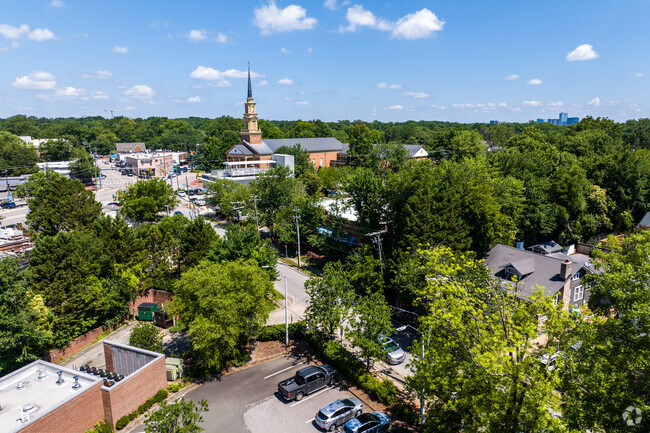
Five Points — $450,000 (Condos/Townhomes) to $2,500,000+ (Estate Homes)
Raleigh's most beloved neighborhood-scale destination. Five Points is anchored by the star-shaped intersection of Glenwood Avenue, Whitaker Mill, and Fairview roads — creating a walkable hub of local restaurants, boutiques, and community energy within minutes of downtown. It is actually a cluster of five distinct subdivisions: Hayes Barton, Bloomsbury, Georgetown, Vanguard Park, and Roanoke Park. Median sale price in 2026 is approximately $985,000.
The Vibe: Walkable, historic, and authentically Raleigh. It feels like a small village that accidentally got dropped into the middle of a capital city.
The Architecture: A best-of gallery of 20th-century styles — Tudor Revivals, Craftsman bungalows, and French Revivals alongside high-end modern infill.
The Local Read: Buyers who choose Five Points tend to stay for decades. The neighborhood is anchored by icons like Lilly's Pizza, NOFO @ the Pig, and The Rialto Theatre. It offers the highest "community density" inside the Beltline — where you aren't just buying a house, you're buying a social network that centers around the neighborhood's walkable core.
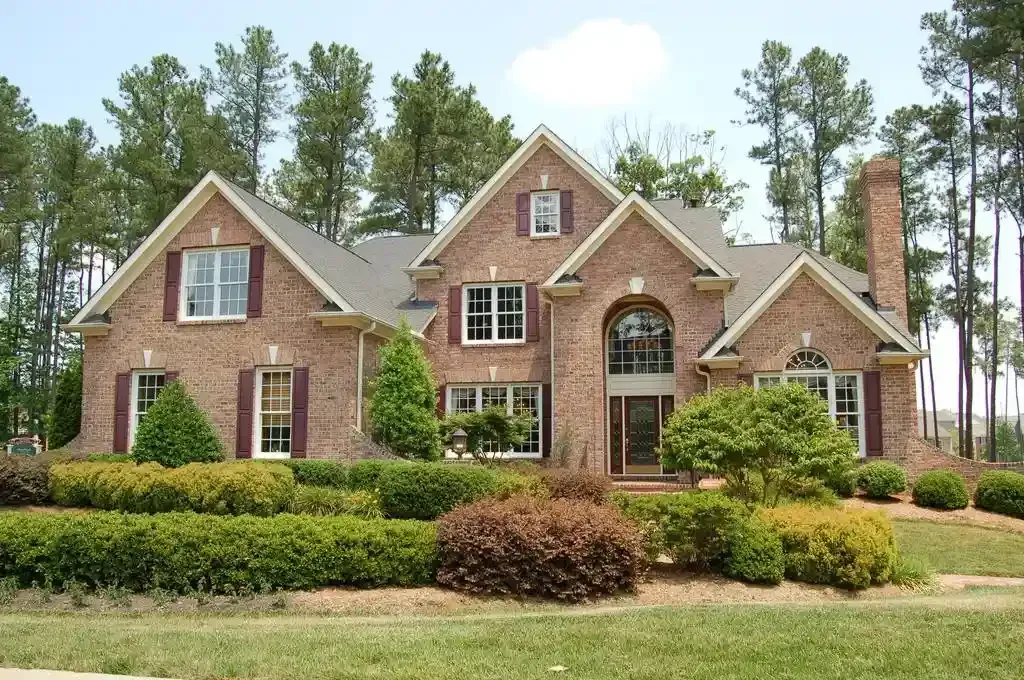
North Hills (Midtown) — $650,000 to $3,000,000+
The epicenter of Raleigh's Midtown. While original 1960s ranch homes still line the quiet side streets, the area is dominated by high-end modern estates and a thriving urban retail core that rivals downtown for energy. Median sale price in 2026 is approximately $744,000.
The Vibe: High-energy, luxury-focused, and exceptionally convenient.
The Architecture: A mix of original mid-century brick ranches and massive, modern luxury box new construction on generously sized lots.
The Local Read: The top choice for relocating executives. If you want to walk to Wegmans, upscale fitness studios, and fine dining — North Hills is the only Triangle address that delivers it all within one walkable corridor. The Kane Realty redevelopment has transformed this from a shopping district into one of the Southeast's most dynamic mixed-use urban neighborhoods, and the appreciation trajectory reflects it.
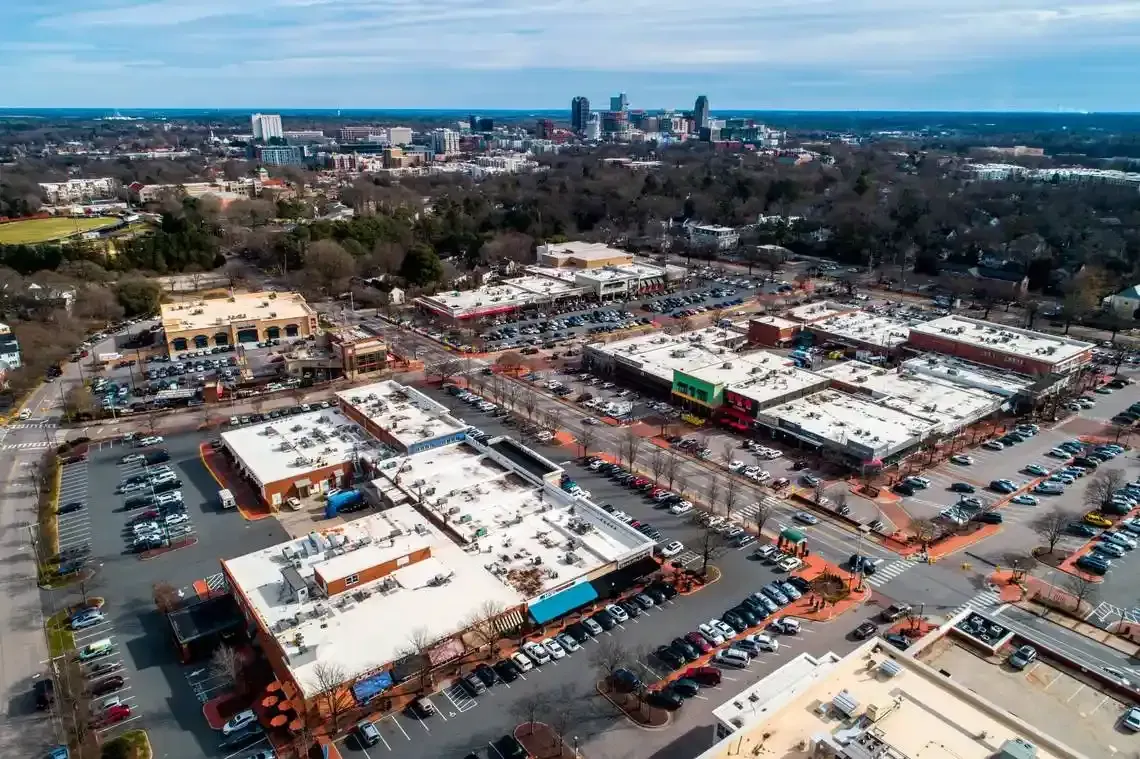
Village District — $450,000 (Condos) to $1,500,000+ (Single Family)
Situated just west of NC State, this is Raleigh's original lifestyle center. It offers a rare, high-demand mix of vintage garden apartments, mid-century condos, and stately Georgian homes on deep-wooded lots. Median sale price in 2026 is approximately $575,000.
The Vibe: Classic Raleigh with an upscale, collegiate, and intellectual tilt.
The Architecture: Georgian Revivals and sprawling Colonial estates mixed with high-density modern luxury apartments near the shopping district.
The Local Read: A 15-minute city within a neighborhood. Locals love being able to walk to the library, the grocer, and boutique shops without ever touching a highway. The rebranding from Cameron Village reflects what it has always been — not a shopping center, but a genuine urban neighborhood that happens to have exceptional retail at its core.
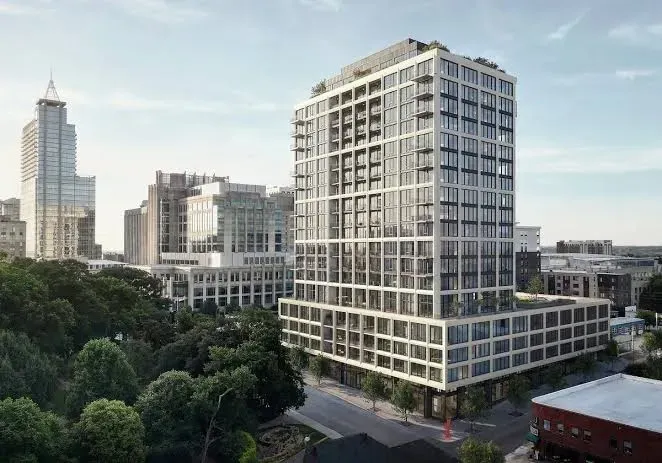
Downtown Raleigh — $400,000 (Condos) to $1,200,000+ (Luxury Townhomes)
The heartbeat of the Triangle's culinary and nightlife scene. Downtown is no longer just for work — with the completion of several new high-rise residential towers in 2026, it has become a full-time residential hub. Median sale price in 2026 is approximately $522,000.
The Vibe: Urban, fast-paced, and socially connected.
The Architecture: Primarily modern high-rise condos in glass and steel alongside luxury industrial-style townhomes in the Warehouse District.
The Local Read: Perfect for buyers who want to ditch the lawnmower for a skyline view and have the city's best James Beard-nominated restaurants as their local kitchen. The 2026 residential tower completions have fundamentally changed the downtown supply picture — buyers who get in now are positioned ahead of the next wave of demand that follows when new residents discover what living downtown actually feels like.
Brier Creek — $350,000 (Townhomes) to $850,000+ (Estate Homes)
The strategic choice for frequent travelers and RTP professionals. Located at the intersection of I-540 and US-70, Brier Creek is a master-planned country club community that prioritizes convenience and lock-and-leave living. Median sale price in 2026 is approximately $409,000.
The Vibe: Suburban, efficient, and retail-heavy.
The Architecture: Traditional brick-front suburbia and modern multi-story townhomes centered around a Tom Fazio-designed golf course.
The Local Read: The go-to for buyers who need to be 10 minutes from RDU or RTP but still want the amenities of a private country club lifestyle. Brier Creek Country Club, the Brier Creek Commons retail corridor, and direct I-540 access make this the most logistically efficient neighborhood in Raleigh — the choice for buyers who optimize for time over character.
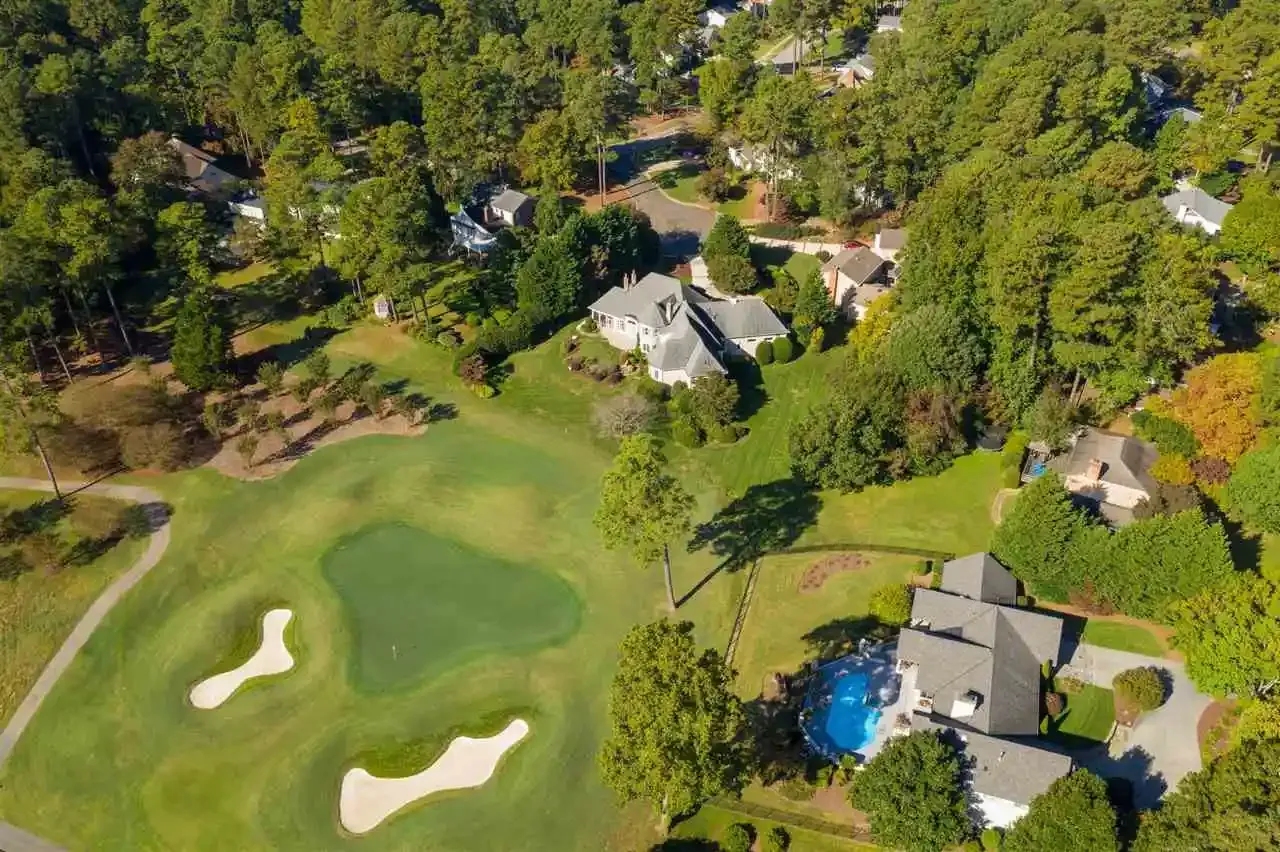
North Ridge — $600,000 to $3,500,000+
The quintessential North Raleigh country club community. Centered around 36 holes of championship golf, this neighborhood is defined by sprawling lots and a mature, heavy tree canopy that provides rare privacy. Median sale price in 2026 is approximately $638,000 — highly variable by lot size.
The Vibe: Prestigious, quiet, and established.
The Architecture: Grand traditional styles including French Provincial, Colonial, and massive custom 1980s-era builds that are being heavily renovated in 2026.
The Local Read: North Ridge saw a major value surge in 2026 as buyers sought out the large, private lots that newer developments simply cannot replicate. The 36-hole championship golf facility, the established tree canopy, and the neighborhood's decades-long prestige track record make this Old Raleigh at its finest — and one of the few addresses in the city where buyers consistently get more than they expected at the price point.
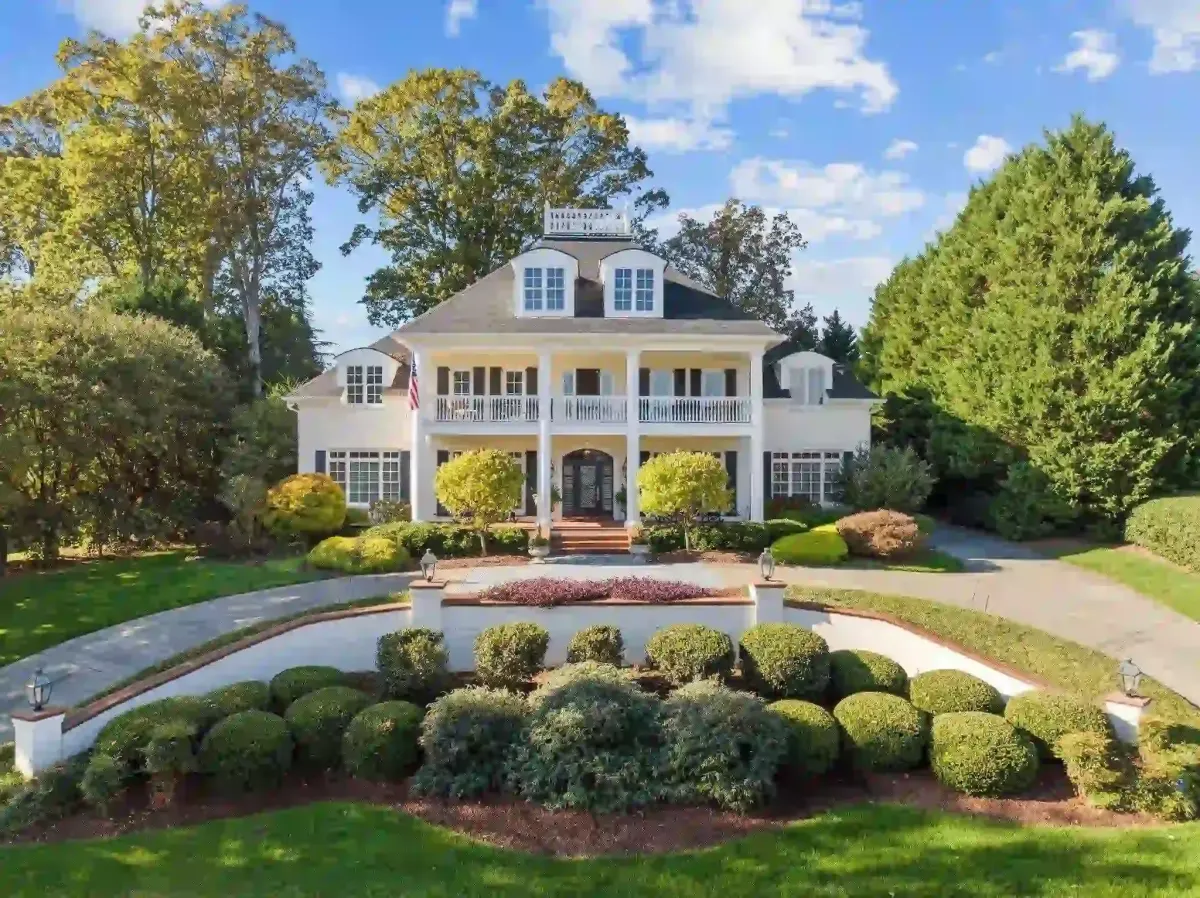
Wakefield — $450,000 to $1,800,000+
A massive master-planned destination on the northern edge of Raleigh. Wakefield offers a complete lifestyle with on-site schools, shopping, and the TPC Wakefield Plantation golf course. Median sale price in 2026 is approximately $485,000.
The Vibe: Family-oriented, active, and suburban-complete.
The Architecture: Classic 1990s and 2000s suburban architecture with an emphasis on large footprints, brick exteriors, and cul-de-sac living.
The Local Read: Wakefield bridges the gap between Raleigh and Wake Forest. It's for the buyer who wants Cary-style amenities with a North Raleigh address and top-tier Heritage-area schools. The TPC course, the on-site retail, and the self-contained community infrastructure make Wakefield one of the few North Raleigh neighborhoods that functions as a complete suburb within city limits — without ever requiring a Raleigh address to feel like one.
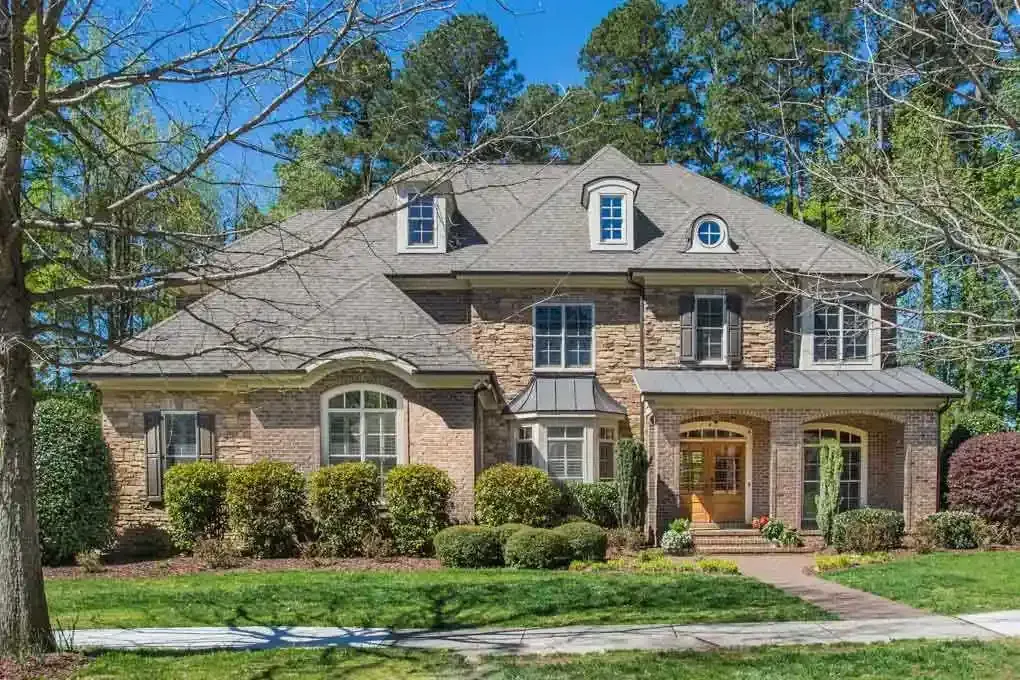
Bedford at Falls River — $500,000 to $950,000
A Neo-Traditional masterpiece known for its storybook aesthetic — front porches, alley-loaded garages, and a network of pocket parks that encourage neighborly interaction. Median sale price in 2026 is approximately $530,000.
The Vibe: Wholesome, walkable, and visually cohesive.
The Architecture: Colorful Charleston-style homes, Craftsman bungalows, and townhomes with a unified, small-town look that feels deliberately designed rather than organically sprawled.
The Local Read: One of the most stable markets in the city. Bedford remains the top choice for families who want a tight-knit community feel while staying inside Raleigh city limits. The alley-loaded garages keep the streetscape clean and pedestrian-friendly, the pocket parks create natural gathering points, and the HOA governance is consistently cited by residents as one of the best-managed in North Raleigh. Buyers who tour Bedford tend to stop looking elsewhere.
🏘️ Neighborhood Selection Tips from Phil
Three things I tell every Raleigh buyer before they start touring:
1. The Beltline Divide is Your Defining Decision Inside the Beltline (ITB) means walkability, historic character, and smaller, high-value lots. Outside the Beltline (OTB) means more square footage, newer construction, and North Raleigh privacy. Know which one you actually want before you start touring — they serve completely different lifestyles and price-per-square-foot realities.
2. Drive Your Commute at 8:00 AM A home in Brier Creek has a very different morning experience than a home in Five Points. In 2026, with the completion of major I-440 and I-540 improvements, distance" doesn't always equal time. Test the reality of the commute before you sign.
3. Watch for the "Tax Extras Understand the Municipal Service District (MSD) question. Some properties in the Downtown and Midtown/North Hills corridors carry additional MSD assessments on top of standard city and county tax rates to fund enhanced services. Verify the complete tax picture — including any 2026 property revaluations — at wakegov.com before making an offer.
⚠️ Critical Step: Always verify current school assignments directly with Wake County Public Schools (WCPSS) using the specific property address. Raleigh's rapid growth means school caps and base-school shifts can happen annually. Never rely on an MLS printout for school data — verify it yourself before the due diligence period ends.
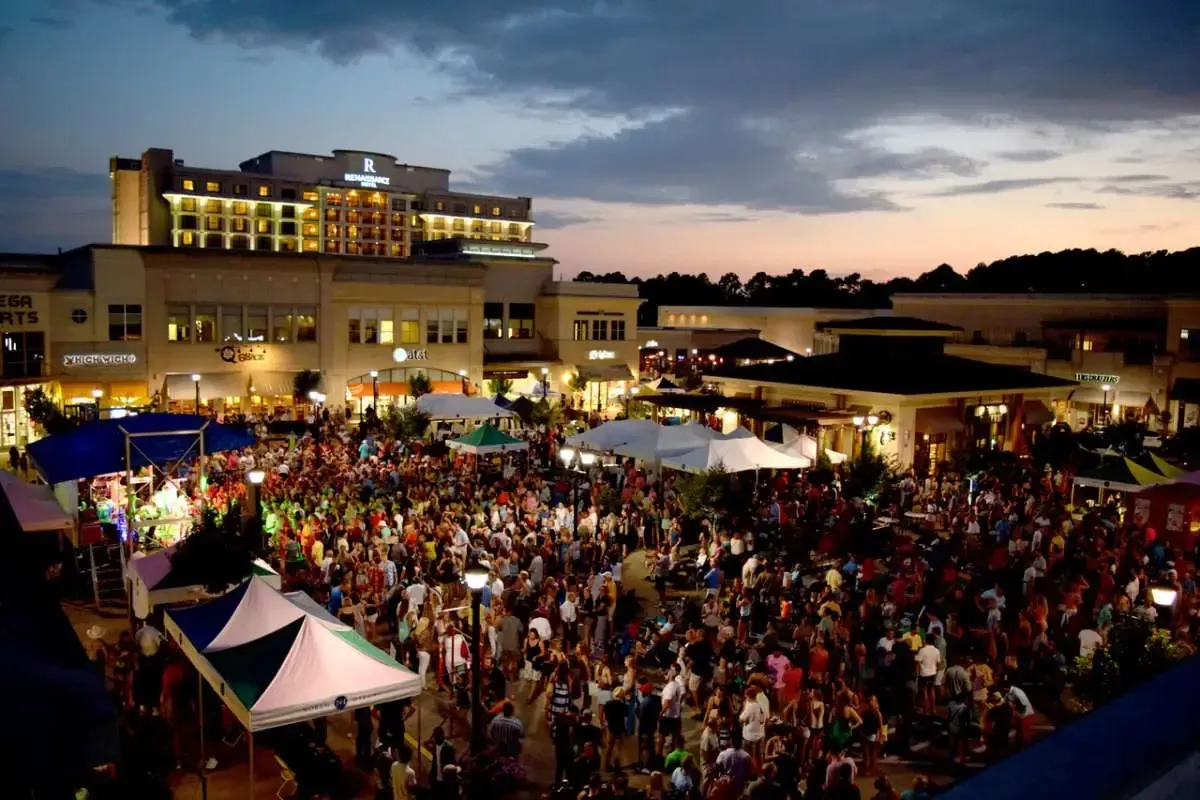
Cost of Living & Taxes in Raleigh, NC (2026)
Raleigh delivers one of the most compelling cost propositions in the Triangle — lower median home prices than Cary, Apex, or Holly Springs, with the urban lifestyle that no suburb can replicate. The trade-off is smaller lots and less square footage per dollar than the outer suburbs.
Property Taxes
Raleigh property owners pay a combined Wake County and City of Raleigh tax rate of $0.8721 per $100 of assessed value for FY2026:
Wake County rate: $0.5371 per $100
City of Raleigh municipal rate: $0.3720 per $100
Combined rate: $0.9091 per $100
Note: Some Raleigh properties — particularly downtown and midtown — may be subject to additional Municipal Service District (MSD) assessments. Always verify the complete tax picture for any specific address at wakegov.com before closing.
Raleigh, NC Property Tax Estimates (2026)
| Home Value | Annual Tax Bill | Monthly Equivalent |
|---|---|---|
| $350,000 | $3,052 | ~$254/mo |
| $470,000 Median | $4,099 | ~$342/mo |
| $600,000 | $5,233 | ~$436/mo |
| $750,000 | $6,541 | ~$545/mo |
| $1,000,000 | $8,721 | ~$727/mo |
Raleigh's combined rate of $0.9091 is the second-lowest of the major Triangle suburbs — better than Apex ($0.8731), Holly Springs ($0.8606 inside town limits), and significantly better than Wake Forest ($0.9371). Only Cary ($0.8571) offers a lower combined rate among the major municipalities.
Home Value and What You Get
At a median of $470,000 and $211.03 per square foot, Raleigh sits in the middle of the Triangle price range:
vs. Cary (~$310/sq ft) — 32% more home per dollar
vs. Apex (~$295/sq ft) — 28% more home per dollar
vs. Holly Springs (~$260/sq ft) — 19% more home per dollar
vs. Wake Forest (~$196/sq ft) — Wake Forest wins on sq ft value
A $500,000 budget in Raleigh buys a 2,000–2,500 sq ft home in an established neighborhood, a newer townhome in an urban infill location, or a well-positioned resale in North Raleigh or Brier Creek. That same budget in Cary is more likely to be a smaller resale or a townhome.
Everyday Cost of Living
Beyond housing, Raleigh's cost of living is broadly competitive with the Triangle market:
Groceries: Whole Foods (Village District), Harris Teeter, Publix, Trader Joe's, Wegmans (North Hills), and multiple Food Lion locations give Raleigh residents the Triangle's best grocery access, with options at every price point within convenient reach.
Healthcare: Duke Health, WakeMed, UNC Rex Healthcare, and multiple specialty systems give Raleigh residents access to world-class healthcare without leaving the city — a distinct advantage over outer suburbs where specialist access requires a Raleigh drive.
Dining: Raleigh's restaurant scene is the Triangle's strongest. Death & Taxes, Second Empire, Angus Barn, Sullivan's, and the Morgan Street Food Hall anchor a dining landscape that extends across dozens of independent restaurants in Five Points, Glenwood South, the Warehouse District, and the Village District.
Utilities: Duke Energy serves most of Raleigh's residential market. Average monthly utility costs for a 2,000 sq ft home run approximately $130–$175 in moderate months and $220–$300 in peak summer and winter months — slightly lower than suburban averages due to smaller average footprints.
HOA Fees: Master-planned communities in North Raleigh carry HOA fees ranging from $400–$900 annually. Brier Creek Country Club carries higher fees reflecting club infrastructure. Downtown and urban condos carry monthly condo fees ranging from $300–$700+ depending on building amenities and services.
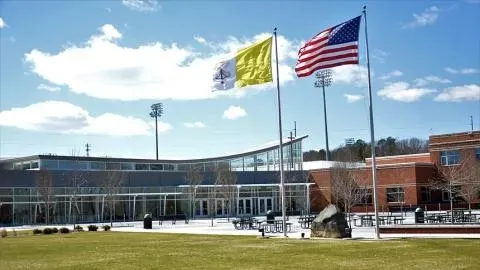
Raleigh, NC Schools — What Buyers Need to Know
Raleigh is served by the Wake County Public School System (WCPSS), the largest and one of the most decorated districts in the Southeast. For 2026, WCPSS reports a 90.6% four-year graduation rate, giving Raleigh buyers access to the same elite district quality as any suburb — with the unique benefit of being at the epicenter of the magnet school ecosystem.
Key High Schools Serving Raleigh
Enloe Magnet High School — Consistently ranked in the top 10 college-prep public schools in NC for 2026. Enloe is a powerhouse for STEM and the arts, offering a globally recognized IB program.
Broughton High School — The historic flagship of "Inside the Beltline" Raleigh. Known for its iconic castle-like architecture and a 2026 academic profile that remains one of the most well-rounded in the district.
Leesville Road High School — Serving the Brier Creek and Northwest corridors, Leesville is a top choice for families seeking a "suburban-style" campus feel within Raleigh city limits.
Wakefield High School — Anchoring the northernmost part of the city, Wakefield offers modern facilities and a heavy emphasis on competitive athletics and college readiness.
The 2026 Magnet School Advantage
One meaningful advantage Raleigh buyers have is geographic proximity to the district's magnet ecosystem. While a suburban buyer in Fuquay-Varina or Wake Forest may face long bus rides for magnet programs, Raleigh families often live within 10–15 minutes of the district's most competitive programs — including Enloe (IB), Southeast Raleigh (STEM), and Moore Square (Gifted & Talented).
Charter and Private School Options
Raleigh Charter High School — Ranked as the #1 Best Charter High School in the Raleigh Area for 2026. Admission is lottery-based and remains highly competitive.
Ravenscroft School — Raleigh's premier independent K–12 option. Tuition for 2025–2026 ranges from approximately $24,000 to $33,000, offering a world-class student-to-teacher ratio of typically 11:1.
Cardinal Gibbons — The primary Catholic college-preparatory option for Raleigh families, known for its massive 2026 campus expansion and athletics.
Thales Academy — Offers a classical education model at a more accessible private price point, with several locations serving the Raleigh and North Raleigh corridors.
💡 Phil's Perspective on School Assignments
"In Raleigh, your address is your destiny — until it isn't. The most common mistake I see buyers make is assuming that because they can see the school from their front porch, their kids will attend it.
Three non-negotiable rules for 2026:
1. Check the Cap — Several Raleigh schools are under Enrollment Caps for 2026. This means even if you move into the neighborhood, your child could be overflowed to a different school if the current one is full.
2. Verify, Don't Assume — Use the WCPSS Address Lookup Tool at wcpss.net before you even schedule a showing.
3. The Stability Transfer — If you are moving mid-year, ask about stability transfer requests. In some cases, if the previous owner had students in a specific program, there may be unique pathways available to you — but you have to ask the right questions early."
Always verify school assignments using the WCPSS Address Lookup Tool at wcpss.net before making any purchase decision.
*Always verify using the WCPSS Address Lookup Tool at wcpss.net/addresslookup before making a purchase decision.
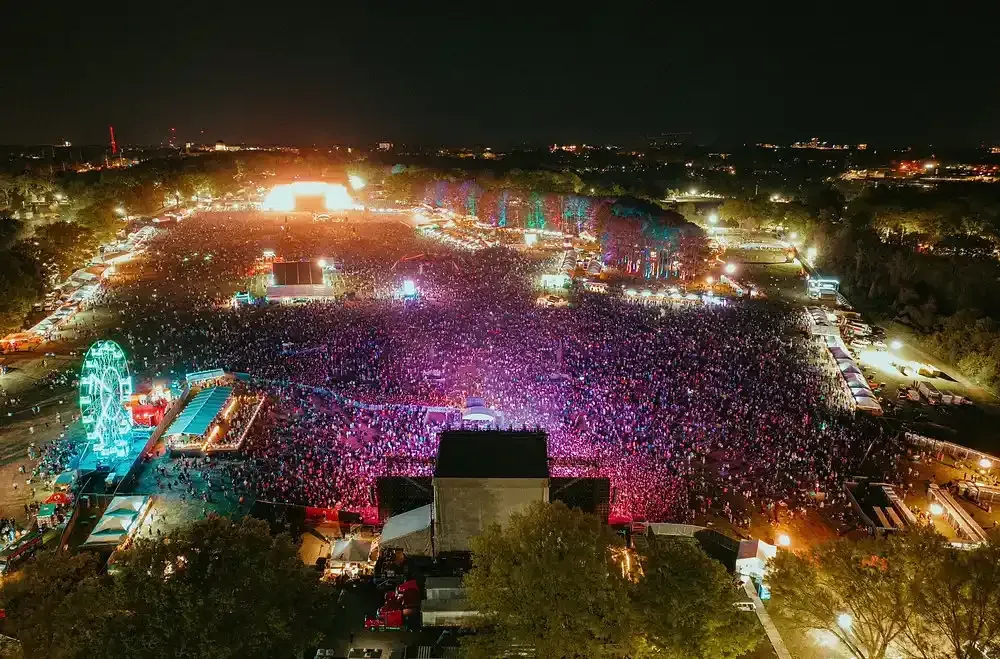
Parks & Outdoor Living in Raleigh, NC (2026)
Raleigh's park system is the Triangle's most extensive — anchored by a 5,000-acre wilderness preserve inside city limits and supported by 120+ miles of greenway trails.
William B. Umstead State Park — 5,000 Acres Inside City Limits
One of the most remarkable urban assets in the U.S., Umstead sits within Raleigh's city limits — bordered by I-40 and I-540. It provides a genuine wilderness escape just 15 minutes from the State Capitol.
The Reality: 34.5 miles of hiking trails and 13 miles of multi-use trails for biking and equestrian use.
2026 Update: The Crabtree Creek Family Campground has officially reopened following a total renovation, featuring a new bathhouse and modernized campsites. Note: The Bridge Replacement Project for the South Turkey Creek trail is ongoing through late 2026 — check the visitor center for active detours.
Dorothea Dix Park — Raleigh's Central Park
The most ambitious green space investment in Raleigh's history. This 308-acre site on a hilltop just south of downtown offers the city's most iconic skyline views.
What's New for 2026: The Gipson Play Plaza is now fully operational. This 18.5-acre "park within a park" includes massive playgrounds, a splash pad, the "House of Many Porches" market, and public art installations.
The Buyer's Calculus: For those considering Downtown or South Raleigh, Dix Park is no longer a "future plan" — it is a daily-use amenity that is fundamentally driving property values in the surrounding neighborhoods.
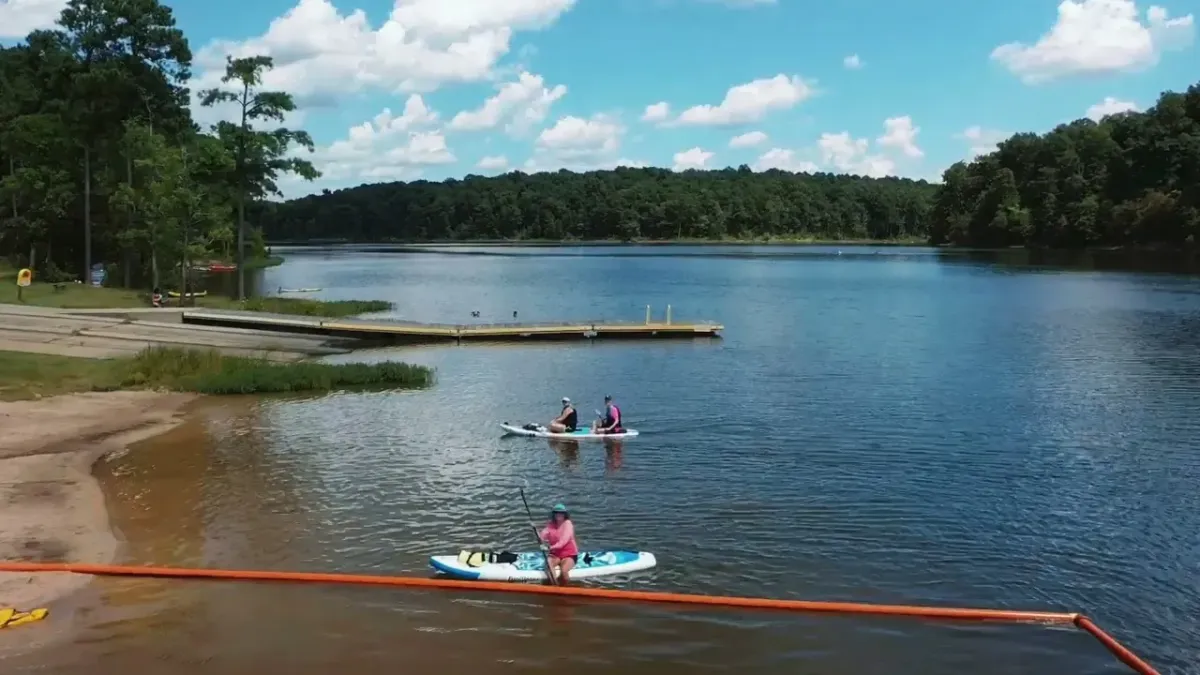
Lake Wheeler Park — The Waterfront Lifestyle Anchor
A 650-acre reservoir on Raleigh's southern edge that feels worlds away from the city.
The Vibe: The primary freshwater sailing venue for the Triangle, hosting major regional events including the 2026 ACC Women's Rowing Championships held here this May.
Activities: Sailing, kayaking, and fishing. Unlike many suburban lakes, Lake Wheeler allows larger boat access and public ramps — making it a unique waterfront lifestyle play for Raleigh residents.
Shelley Lake & Pullen Park
Shelley Lake (North Raleigh) — Centered around a 56-acre lake with a 2-mile paved loop. A key quality-of-life anchor for the North Raleigh residential market.
Pullen Park (University District) — Established in 1887, this is one of the oldest operating amusement parks in the U.S. Featuring an antique carousel and a miniature train, it remains the heart of Raleigh for families living near NC State and the Village District.
Raleigh Greenway Network — 120+ Miles
Raleigh's greenway system is a legitimate alternative transportation network, connecting residential neighborhoods to employment hubs.
Neuse River Greenway — 30+ miles of uninterrupted trail from Falls Lake down to Johnston County.
Crabtree Creek Trail — In 2026, the city is testing glow-in-the-dark centerline stripes on high-traffic sections to improve safety for evening bike commuters.
💡 Phil's Perspective
When people move here from DC, Boston, or Atlanta, they expect the 'trees,' but they don't expect the 'wild.' I always tell my clients to spend a Saturday morning at Umstead and a Saturday afternoon at Dix Park.
In the morning, you're in a deep forest where you can't hear a single car. In the afternoon, you're at a world-class play plaza with a skyline view. That duality is why Raleigh wins the quality-of-life argument every single time. If outdoor access is your #1 priority, look at homes within a 2-mile radius of the Crabtree Creek Greenway — it is the super-highway for Raleigh's active lifestyle.
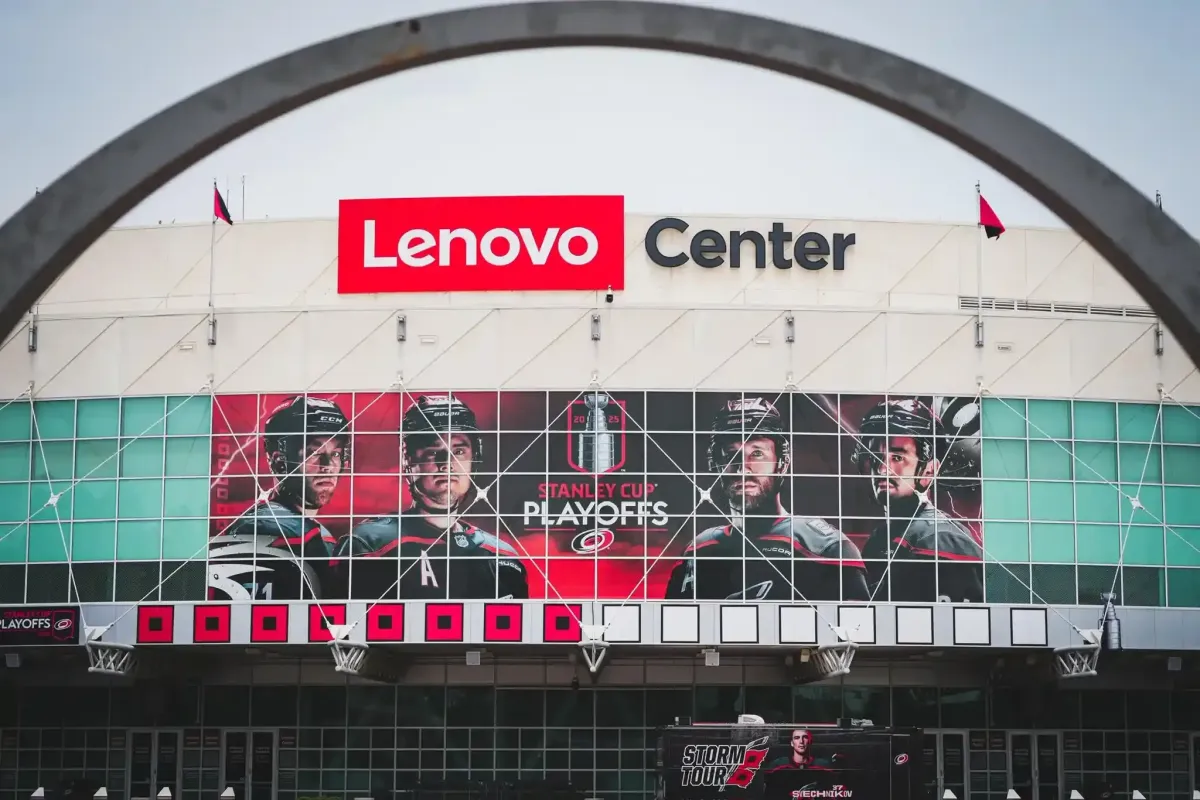
Amenities & Community Services: The Raleigh Standard
Raleigh is the Triangle's commercial, cultural, and healthcare hub. Residents here don't "drive to Raleigh" for amenities — they live amongst them.
North Hills — The Urban Mixed-Use Destination
The Kane Realty North Hills redevelopment has delivered a genuine urban mixed-use district that rivals major national metros. In 2026, the focus has shifted to the Innovation District, adding high-tech workspace alongside luxury living.
Key Anchors: RH Gallery (Restoration Hardware) & Rooftop Restaurant, Whole Foods, Apple, Equinox, and SoulCycle.
New for 2026: Standard Beer + Food has opened its massive second location in the Innovation District, and Mia's Bakery has become the Main District's premier dessert destination.
The Buyer's Benefit: Residents in North Hills or nearby Midtown neighborhoods have a 5-minute radius for every high-end need — from organic groceries to boutique fitness.
The Downtown Core
Raleigh's downtown has reached critical mass, evolving from a business district into a 24/7 destination.
Lenovo Center (Formerly PNC Arena) — Rebranded in late 2024, the Lenovo Center is the heart of Raleigh sports. In 2026, construction is officially underway on the multi-phase mixed-use district surrounding the arena, which will eventually include 200,000 sq ft of new retail and a 4,300-seat ballroom.
NC Museum of Art (NCMA) — Recently expanded, the NCMA is a world-class institution with a 164-acre Museum Park that connects directly to the city's greenway system.
The Warehouse District — Anchored by The Dillon and Morgan Street Food Hall, this is Raleigh's most industrial-chic hub. 2026 sees the opening of Botiwalla at the nearby Iron Works, bringing James Beard-nominated Indian street food to the district's edge.
The Raleigh Healthcare Network
Raleigh is the Triangle's medical anchor — giving residents access to three world-class systems without leaving city limits.
UNC Health Rex — Ranked #3 hospital in North Carolina for 2026 and named to Money's "Best Hospitals" list. The primary choice for surgical and specialized cardiac care in the Triangle.
WakeMed Raleigh Campus — The region's primary Level I Trauma Center and home to a dedicated Children's Hospital and Rehabilitation Hospital.
Duke Raleigh Hospital — A campus of Duke University Health System — the #1 ranked system in NC — offering specialized oncology through the Duke Cancer Institute.
💡 Phil's Perspective
"I tell my clients that Raleigh is a '15-minute city' before that was even a buzzword. You can live in a quiet, tree-lined neighborhood like North Ridge and be at a Carolina Hurricanes game at the Lenovo Center or a world-class surgery center like UNC Rex in less than 15 minutes.
If you are moving from a city like Atlanta or DC where 'going to dinner' is a 45-minute tactical mission, the Raleigh lifestyle will feel like a massive upgrade. My advice for 2026? Keep an eye on the Seaboard Station expansion — with Pizzeria Toro opening its first Raleigh location there this summer, that corridor is becoming the next big 'walkable' residential play."
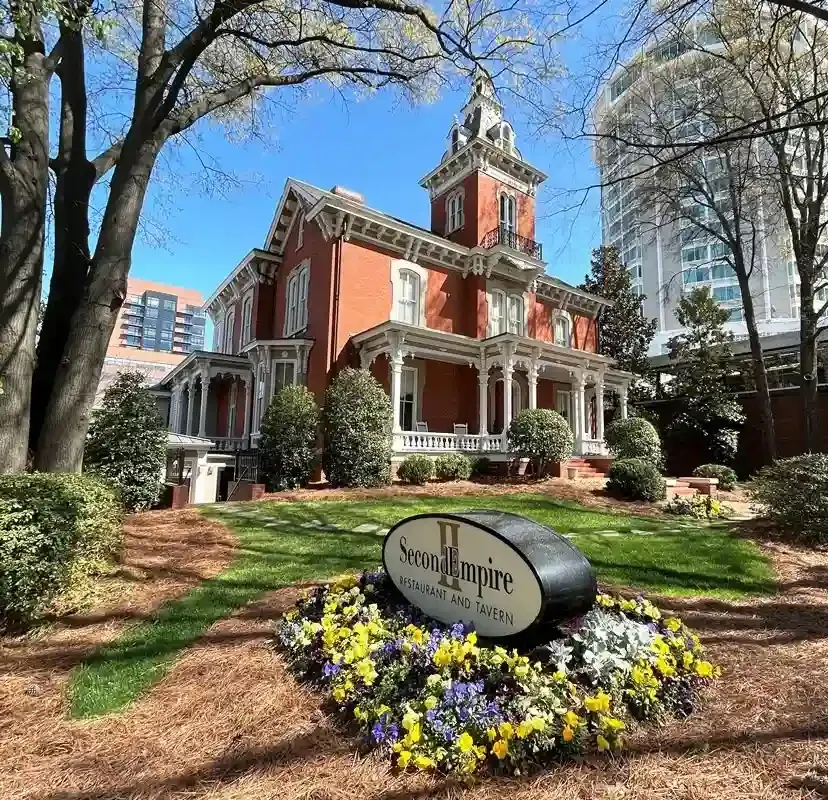
The Raleigh Dining Scene — Where to Eat in 2026
Raleigh's restaurant scene has officially arrived. In 2026, the city was awarded several spots in the inaugural MICHELIN Guide American South, and the James Beard Foundation has made the City of Oaks a permanent fixture on its shortlist.
The Landmark Restaurants
Angus Barn — The Definitive Legend For over 60 years, "The Barn" has been Raleigh's definitive steakhouse — a sprawling, iron-chef-worthy destination on US-70.
The Experience: Known for its massive wine cellar (35,000+ bottles), aged steaks, and legendary chocolate chess pie.
2026 Reality: It remains the highest-grossing independent restaurant in the state. If you are moving here, booking a table in the Wild Turkey Lounge for a casual steak sandwich is the local "pro move.
Death & Taxes — The Wood-Fired Masterpiece Chef Ashley Christensen (a multi-time James Beard winner) created this wood-fired destination in a converted 1907 bank building.
The Vibe: Everything — from the NC oysters to the dry-aged Delmonico — is touched by fire.
2026 Status: Recently earned a 2026 James Beard nomination for Outstanding Wine Program, proving its beverage game is now as sharp as its hearth.
Second Empire — The Special Occasion Standard Raleigh's most elegant dining room, set inside a meticulously restored Victorian mansion on Hillsborough Street. The tasting menu and wine program are among the most accomplished in the Southeast.
The Experience: White tablecloth service, a sommelier-driven cellar, and a kitchen that has maintained its standard of excellence for decades.
2026 Reality: The restaurant locals return to for every milestone — anniversaries, promotions, out-of-town guests they want to impress. There is no more gracious dining room in the Triangle.
Sullivan's Steakhouse — The Glenwood South Power Spot Located in the historic Creamery Building, Sullivan's is the social and business anchor of the Glenwood South district.
The Scene: Known for live jazz and a high-energy bar scene — the primary destination for the power lunch and professional happy hour crowd.
RH Rooftop Restaurant — The Midtown Showstopper Perched atop the RH Gallery in North Hills, this is Raleigh's most visually ambitious dining room.
The Setting: A glass-walled garden filled with trickling fountains and crystal chandeliers, offering panoramic views of Midtown.
The Move: Go for the Truffle Fries and Lobster Rolls. The quintessential "see and be seen" spot for 2026.
Morgan Street Food Hall — The Culinary Incubator Located in the Warehouse District, this 22,000 sq ft hall is the heartbeat of downtown dining.
2026 Favorites: Gym Tacos (local cult favorite) and Aunty Betty's Gin & Absinthe Bar offer a sophisticated twist on the food hall experience.
The Neighborhood Dining Ecosystem
Five Points / Village District — The heart of Old Raleigh charm. In 2026, Ajja (by Chef Cheetie Kumar) has become the neighborhood's crown jewel, earning a 2026 James Beard nomination for Best Chef: Southeast.
The Warehouse District — Raleigh's most creatively dynamic neighborhood. Home to Heirloom (coffee and tea), The Dillon, and the city's best independent galleries — all walkable from the food hall.
Oakwood / Downtown East — The neighborhood anchor is Gravy, a beloved Italian-American institution that has been making fresh pasta and slow-cooked Sunday sauce from NC farms since 2009. For a Saturday morning tradition, most locals pair a trip to Gravy with a visit to the adjacent Sitti for authentic Lebanese food that rivals anything you'd find in a major metro.
📍 Phil's 2026 "Perfect Saturday" Itinerary
"If you want to feel like a Raleigh local in a single day, here is the roadmap:
Morning: Biscuits at Beasley's Chicken + Honey downtown.
Afternoon: A walk through Dix Park to work it off.
Happy Hour: Drinks at High Rail — the new rooftop at Seaboard Station — for the best skyline sunset in the city.
Dinner: Crawford and Son in Oakwood. Scott Crawford is arguably the best chef in the South right now, and his 2026 menu is flawless.
Late Night: A cocktail at Bittersweet, our 2024 James Beard-recognized dessert bar."
Where Raleigh is Located in the Triangle
Raleigh is the geographic, economic, and cultural center of the Research Triangle — positioned at the eastern anchor of the Raleigh-Durham-Chapel Hill triangle, approximately 30 minutes from Durham and 45 minutes from Chapel Hill. As the state capital and largest city in the Triangle, Raleigh is the hub from which everything else radiates.
🗺️ Distance & Drive Times from Raleigh (2026)
Off-peak estimates. Peak-hour times add 10–20+ minutes depending on time of day and route.
| Destination | Distance | Off-Peak Drive | Peak-Hour Note |
|---|---|---|---|
| 🏢 Research Triangle Park (RTP) | ~12–18 miles | 15–25 min | 25–40 min peak |
| ✈️ RDU International Airport | ~10–14 miles | 15–20 min | 20–30 min peak |
| 🏙️ Durham | ~20–25 miles | 25–35 min | 35–50 min peak |
| 🎓 Chapel Hill / UNC | ~28–32 miles | 35–45 min | 45–60 min peak |
| 🏘️ Cary | ~8–12 miles | 12–20 min | 20–30 min peak |
| 🏘️ Apex | ~15–20 miles | 20–30 min | 30–45 min peak |
| 🏘️ Holly Springs | ~18–22 miles | 22–30 min | 30–45 min peak |
| 🏘️ Wake Forest | ~18–22 miles | 25–35 min | 35–50 min peak |
| 🏘️ Morrisville | ~10–14 miles | 12–18 min | 18–28 min peak |
| 🌊 Falls Lake | ~15–20 miles | 20–25 min | 25–35 min peak |
| 🏖️ Wrightsville Beach | ~120 miles | ~2 hours | ~2.5 hours peak |
| 🏔️ Asheville | ~240 miles | ~3.5 hours | ~4 hours peak |
Quick Summary for Buyers
Raleigh, NC is best suited for buyers who want the Triangle's urban core — walkable neighborhoods, the shortest RTP and RDU commutes in Wake County, and a lifestyle anchored by world-class dining and culture. Most importantly, Raleigh allows you to capture this urban lifestyle while entering at the lowest median price point of any major Triangle market.
Ready to find your fit?
Want a list of the best Raleigh neighborhoods for your specific budget and lifestyle?
👉 Text RALEIGH to 984-789-4554 for a custom neighborhood shortlist.
Frequently Asked Questions About Raleigh, NC
Is Raleigh, NC a good place to live?
Yes. Raleigh consistently ranks among the top cities in the U.S. for quality of life. In 2026, it was named the #1 Best Place to Live in North Carolina (Niche) and the #1 U.S. City for Job Opportunities (ADP). With a 5,000-acre wilderness preserve at Umstead State Park, a MICHELIN-recognized dining scene, and a median home price significantly lower than peer tech hubs like Austin or Denver, Raleigh offers a balanced lifestyle that is hard to beat.
How much do homes cost in Raleigh, NC 2026?
As of Q2 2026, the median listing price in Raleigh is $470,000, with an average price per square foot of $211.03 — making Raleigh the most affordable major market in Wake County.
Entry-level: Townhomes and condos start in the mid-$300s.
Inside the Beltline: Historic and luxury homes range from $550,000 to $2,500,000+.
North Raleigh/Midtown: Executive homes in North Hills and North Ridge range from $650,000 to $3,500,000+.
What is the property tax rate in Raleigh, NC in 2026?
The combined tax rate for most Raleigh properties is $0.8721 per $100 of assessed value — City of Raleigh at $0.3550 plus Wake County at $0.5171. On a $470,000 home, annual taxes are approximately $4,099.
Note: Some downtown and midtown properties carry additional Municipal Service District (MSD) assessments. Always verify the total tax bill at wakegov.com.
What are the best neighborhoods in Raleigh, NC?
According to the 2026 Niche.com "Best Places to Live in Raleigh" rankings — which aggregate data on public schools, crime rates, housing trends, and amenities — the following areas consistently receive "A+" grades. Your specific choice should depend on your personal lifestyle priorities:
- Historic Oakwood — Ranked as a top choice for "Historic Character & Walkability." Raleigh's oldest neighborhood, prized for high community engagement and historic preservation.
- North Hills (Midtown) — Ranked #1 for "Executive Lifestyle & Convenience." The premier destination for those who want a modern, high-density mixed-use environment.
- Five Points — Consistently earns top marks for "Community Soul & Architecture." Widely considered one of the city's most stable and established residential enclaves.
- Village District — A top-ranked "15-Minute City" neighborhood, preferred by those seeking a collegiate, upscale, and highly walkable retail-centric lifestyle.
-Brier Creek — Cited as the #1 neighborhood for "Regional Connectivity & Professionals," specifically for its maintenance-free living options and immediate RDU/RTP access.
💡 Phil's Perspective: "I always tell clients: 'Best' is subjective. What Niche considers the best neighborhood might not be the best for you if it doesn't match your commute or your need for a three-car garage. I recommend using third-party sites like Niche.com or GreatSchools.org for raw data, and then spending a Saturday afternoon in each of these areas to see which one actually feels like home."
What schools serve Raleigh, NC?
Raleigh is served by Wake County Public School System (WCPSS). For 2026, the district reported a 90.6% four-year graduation rate and a record 93.1% five-year rate. Top-rated options include Enloe Magnet High School (consistently ranked in the top 10 in NC) and Raleigh Charter High School (#2 in the area).
Always verify your specific address at wcpss.net, as school assignments change annually.
What is the commute from Raleigh to RTP?
Off-peak, the drive to Research Triangle Park is 15–25 minutes — the shortest commute of any major Wake County city except Cary and Morrisville. During the 8:00 AM rush, expect 30–45 minutes. RDU International Airport is a convenient 15–20 minute drive for most Raleigh residents.
Is Raleigh, NC safe?
Raleigh is consistently recognized as one of the safest major cities in the Southeast, earning its "Best Place to Live" status based in part on safety and security metrics. Like any major city, crime statistics vary block by block across different areas. We recommend using objective third-party data sources to evaluate any specific address you are considering:
- raleighnc.gov — Official City of Raleigh crime mapping tool
- NeighborhoodScout.com — Block-level crime data and trend analysis
- Niche.com — Aggregated safety grades by neighborhood based on FBI crime data
Your real estate agent can also help you access current data for any specific address during your due diligence period.
How does Raleigh compare to Apex and Cary?
- Raleigh Wins On: Price (median ~$150,000 lower), urban nightlife, James Beard dining, and airport proximity.
- Cary/Apex Win On: Larger lot sizes, quiet cul-de-sacs, and more abundant new construction.
- The Bottom Line: If you want more home for your dollar and a vibrant social life, Raleigh is the play. If you want a finished suburban feel and more yard space, look at Cary or Apex.
Are there new construction homes available in Raleigh, NC?
Yes. Approximately 24% of active listings in 2026 are new construction. This inventory is concentrated in downtown urban infill townhomes and condos, the North Hills Innovation District, and large-scale master-planned communities in Brier Creek.
Is Raleigh, NC a good place to raise a family?
According to Niche.com's 2026 rankings, Raleigh earns an "A" overall grade for families — scoring particularly high for public schools, outdoor activities, and diversity. The combination of Wake County Public Schools (90.6% graduation rate, strong magnet programs), 120+ miles of greenways, Umstead State Park, and Dorothea Dix Park's award-winning Gipson Play Plaza gives families access to recreational and educational infrastructure that rivals markets twice Raleigh's size.
For families evaluating specific neighborhoods, we recommend using Niche.com, GreatSchools.org, and the WCPSS Address Lookup Tool at wcpss.net to evaluate schools, safety, and community fit for any specific address you are considering. Your agent can help you interpret that data during the due diligence period.
💡 Phil's Perspective: "The most common mistake I see out-of-state buyers make in Raleigh is assuming that because a neighborhood has a great reputation, the school assignment will match. In a market where enrollment caps and overflow assignments are more common than in any other Wake County city, proximity to a school means nothing without verification. Get the address lookup done before you fall in love with a street — not after.
Verify current school assignments at wcpss.net, tax rates including any Municipal Service District assessments at wakegov.com, and market data with your agent before making any purchase decision."
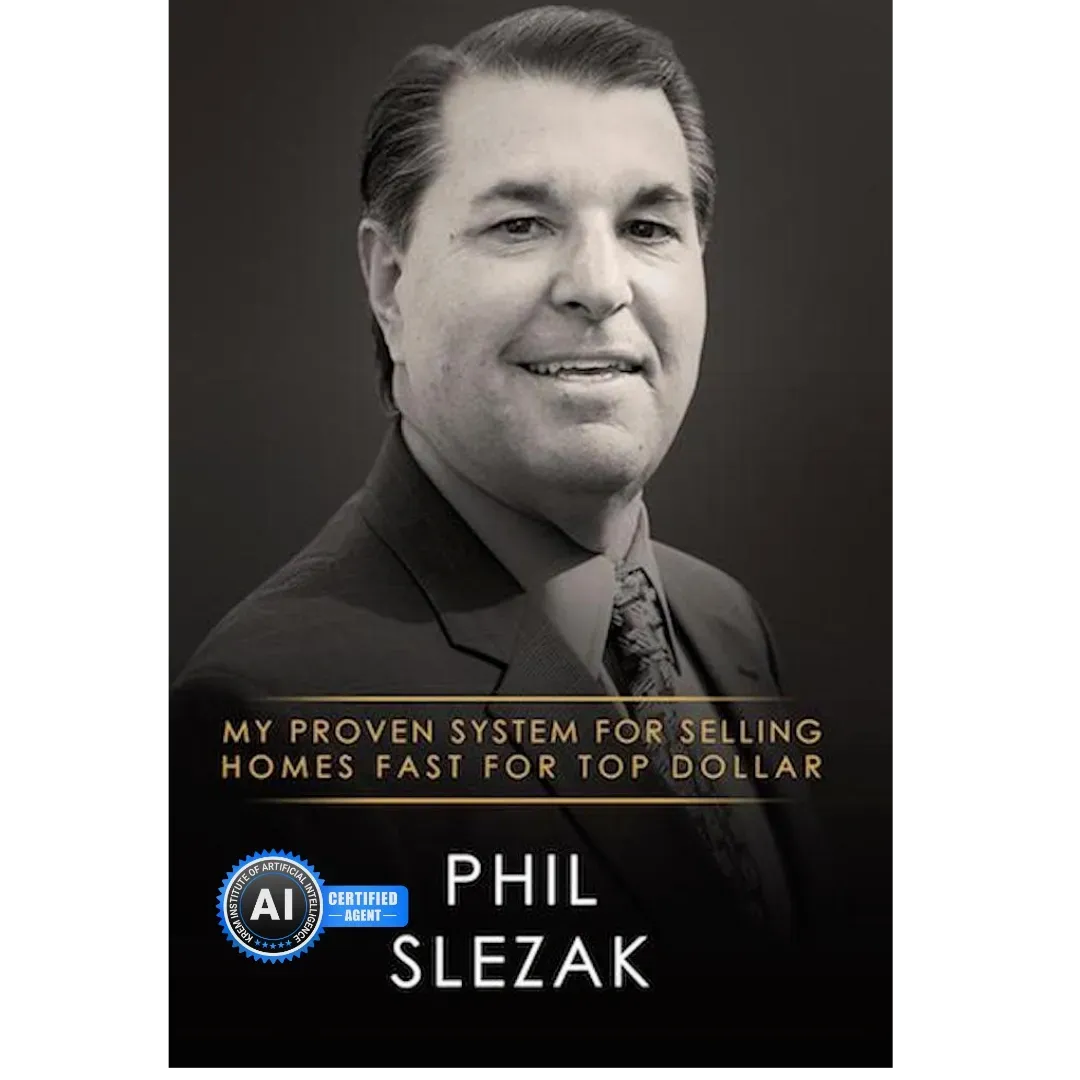
Next Steps: Talk to Phil About Raleigh
If you're seriously considering a move to the City of Oaks, the next step isn't more research — it's a strategy. The data on this page gives you the framework; a 15-minute call gives you the address-specific answers that no guide can provide.
"Raleigh in 2026 is no longer a 'best-kept secret' — it's a verified national powerhouse. With Dix Park becoming a global destination, the Lenovo Center transforming into a billion-dollar entertainment hub, and the S-Line rail under construction, we are seeing a level of urban maturity that is rare in the Southeast. You aren't just buying into a city — you're buying into the engine of the Triangle. My job is to make sure you navigate the density and the growth to find the one spot that actually feels like home."
Sources & Further Reading
To help you perform your own due diligence and stay updated on the projects mentioned in this guide, please refer to the following official resources:
PHIL SLEZAK REAL ESTATE
PHIL SLEZAK REAL ESTATE
CONNECT
OUR PROGRAMS
LEGAL
Explore more Triangle relocation guides including Cary, Holly Springs, Fuquay-Varina, Wake Forest, and Raleigh.
Phil Slezak Real Estate
421 Fayetteville Street, Suite 1100
Raleigh, NC 27601
(984)-789-4554


© Copyright 2026. Phil Slezak Real Estate. All Rights Reserved.