Living in Clayton, NC (2026 Guide)
Clayton, NC delivers more home per dollar than any other Triangle suburb — $379,990 median price, 33% new construction, and a $4.1 billion Novo Nordisk expansion anchoring long-term appreciation in Johnston County. Whether you're comparing eastern corridor real estate to Garner, Fuquay-Varina, or Knightdale — or weighing Johnston County's lower tax rate against its employment and new construction advantages — here's what serious Triangle buyers need to know."
Last updated: May 26, 2026 | Data: Triangle MLS, Johnston County Tax Administration
Living in Clayton, NC: The Eastern Corridor's Value Advantage
Clayton, NC is the Triangle's strongest value play in 2026 — delivering more home per dollar than any other major Raleigh suburb at a median sold price of $379,990. With Johnston County's lower property tax rate and a $4.1 billion Novo Nordisk expansion reshaping the eastern corridor, the buyers who recognize it first are the ones who benefit most. Whether you're comparing eastern corridor real estate to Garner, Fuquay-Varina, or Knightdale — or weighing Johnston County's employment and new construction advantages against Wake County's school district — here's what serious Triangle buyers need to know.
The market here is defined by one word: momentum. Flowers Plantation and Riverwood Athletic Club set the lifestyle standard a decade ago. The Novo Nordisk announcement rewrote the employment story. And now, with 33% of active listings being new construction — the highest share of any major Triangle suburb at this price point — Clayton is no longer the market buyers settle for. It's the market they choose.
Morning: The Local Employment Advantage
The day in Clayton starts with a commute reality that most buyers research online and then discover is better than expected — or, for a growing number of residents, no commute at all.
The Novo Nordisk Run: For employees at Novo Nordisk's Johnston County campus — one of the largest pharmaceutical manufacturing operations in the Southeast — Clayton's residential neighborhoods are 5 to 15 minutes from the facility gate. No I-40. No belt-loop traffic. The $4.1 billion expansion adds 1,000+ new positions through 2027–2029, and the professionals filling those roles are buying homes in Flowers Plantation and Riverwood Athletic Club right now, before that demand wave fully crests.
The Remote Work Factor: A substantial and growing share of Clayton residents work fully remote — and the value proposition for that cohort is essentially unanswerable. The same household income that covers a modest townhome in Cary or a small resale in Garner buys a 2,400 square foot home in Flowers Plantation with 20 miles of trails outside the door, a YMCA across the street, and a front porch on a lot that Wake County buyers stopped being able to afford two years ago.
Afternoon: The Master-Planned Difference
By midday, the reasons people choose Clayton over other suburbs become tangible in ways that a listing photo can't capture.
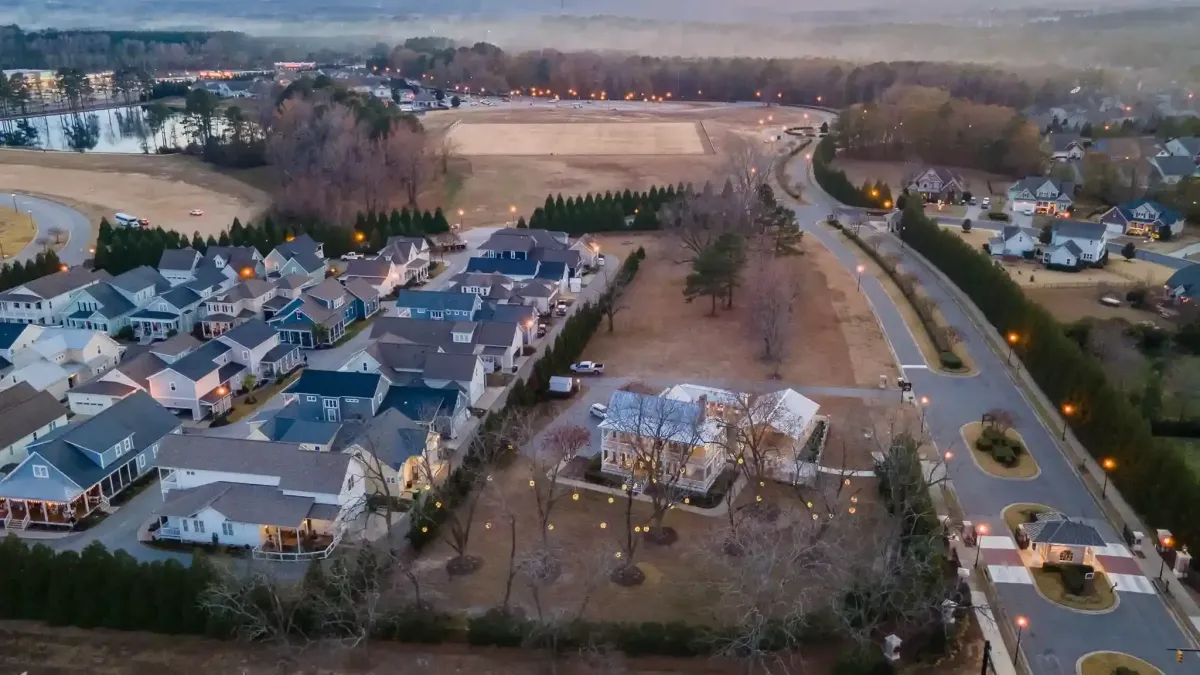
The Community Infrastructure: Clayton's best neighborhoods were designed from the ground up around daily life — not retrofitted with amenities after the fact. Flowers Plantation wraps 3,000 acres of residential phases around 20 miles of paved trails, a full-service YMCA, and a developing waterfront district along the Neuse River. Riverwood Athletic Club goes further: four pools, fitness center, tennis courts, and two schools — Riverwood Elementary and Riverwood Middle — located within the community itself, so children walk to school without leaving the neighborhood. This is the kind of suburban infrastructure that typically requires a $550,000+ entry point in Wake County. In Clayton, it starts at $230,000.
The Value Math: At $186 per square foot and a median sold price of $379,990, Clayton delivers more home per dollar than any other major Triangle suburb. Garner runs approximately $220 per square foot. Fuquay-Varina runs $210. Cary runs $310. For buyers doing honest price-per-foot comparisons rather than zip code shopping, Clayton's position is decisive.
Evening: A Downtown That's Finding Its Voice
As the day winds down, Clayton's small but accelerating downtown offers something that planned suburban town centers can't manufacture: an identity that grew from the town itself.
The Core: Deep River Brewing Company anchors Main Street with a taproom, beer garden, and rotating tap list that has built a regional following. Revival 1869 — a vintage jazz cocktail lounge pouring 300+ spirits in a restored historic building — is the kind of venue that makes transplants stop comparing Clayton to what they left. InStill Distilling Co. shares the block, producing whiskeys and gins that win awards well outside Johnston County. The self-guided sculpture trail runs through all of it.
The Venue: The Clayton Center — a 720-seat performing arts venue in a beautifully restored historic school — presents live theater, concerts, and community events year-round. It's the kind of cultural institution that most Triangle suburbs twice Clayton's size have never built. On performance nights, the walk back from the Center to a Glen Laurel home or a Riverwood resale is the walk that makes buyers stop asking whether Clayton is good enough and start asking why they waited this long to look.
💡 Phil's Perspective
"I tell clients that Clayton is the market where the story is still being written — and right now you're deciding whether to get in before Novo Nordisk's campus opens at full capacity and the I-540 eastern extension changes the commute math permanently. The $4.1 billion expansion, the Copper District development near downtown, and the ongoing master-planned community buildout are the kinds of converging signals that historically precede a meaningful repricing of surrounding residential markets. Clayton's price point does not yet reflect what's coming. The buyers who recognize that gap and move before it closes make the best long-term decisions in the Triangle."
The Honest Trade-Off
Clayton's commute is real. At 35–45 minutes to Research Triangle Park in peak traffic — before the I-540 eastern extension — buyers whose primary employer sits on the western Triangle are accepting a meaningful daily drive. That's a legitimate cost that honest buyers need to calculate before committing.
Johnston County schools require more due diligence than Wake County's system. The district is improving — graduation rates have risen more than 13% in four years — but school quality varies more by campus than in Wake County, and attendance zone assignments require address-specific verification before committing to any neighborhood.
For buyers comparing Clayton to Garner or Fuquay-Varina, the question isn't whether Clayton is better — it's whether the value advantage, new construction supply, master-planned amenities, and long-term appreciation thesis justify the longer commute and school zone complexity. For buyers who work locally, work remotely, or have done the math and decided more house for less money is worth the drive — the answer in 2026 is a clear yes. For buyers who commute daily to downtown Raleigh on a strict schedule and need Wake County schools without compromise, Garner or Knightdale may fit better.
Watch: Living in Clayton, NC
Clayton, NC Population & Demographics (2026)
Population: ~35,240 (Town Proper) / ~235,000+ (Johnston County) — Clayton is officially one of the fastest-growing municipalities in North Carolina, consistently outpacing Triangle-wide averages by adding residents at a 3.82% annual clip. It delivers the community infrastructure of a mature suburb with the entry-level pricing of a market that hasn't yet caught up to its economic fundamentals.
County: Johnston County ("JoCo"), North Carolina — and for buyers researching living in Johnston County NC, a critical legal and financial distinction. Johnston County's property tax rate is meaningfully lower than Wake County, where most of Clayton's suburban competitors sit. This tax differential represents real, recurring monthly savings that compound over the duration of homeownership.
Region: Raleigh–Durham–Chapel Hill Triangle (Eastern Biopharma Corridor) — Clayton sits approximately 20 miles southeast of downtown Raleigh along the US-70 / I-40 interchange, making it the Triangle's easternmost major hub and the primary residential anchor for Johnston County's expanding life sciences sector.
Median Household Income: ~$78,822 (Town Proper) / ~$82,450 (Johnston County) — reflecting a highly stable workforce mix of biopharma manufacturing engineers, healthcare professionals, regional educators, and a rapidly growing share of remote tech workers. As Novo Nordisk's historic production expansions scale upward through 2027–2029, this income profile is projected to continue its upward trajectory.
Median Age: ~34.5 — Clayton skews notably younger than the national average, heavily dominated by millennial first-time buyers, young families, and move-up professionals. The master-planned communities' family-oriented design and local affordability allow dual-income households to own significantly larger homes and lots at an earlier life stage than Wake County parameters permit.
Educational Attainment: ~38% hold a Bachelor's Degree or higher — Johnston County Public Schools' graduation rate has surged to 92.5%, signaling an improving educational trajectory that is fundamentally reshaping how out-of-state buyers evaluate the district. Local technical talent is further supported by Johnston Community College's specialized workforce pipeline programs aligned directly with the county's biopharma employers.
The Growth Story — From Agricultural Core to Life Sciences Powerhouse
Clayton's transformation is not a sudden accident. It has been building through a series of deliberate, multi-billion-dollar corporate investments that are now converging simultaneously — making 2026 a genuine inflection point for buyers positioning themselves ahead of the curve.
Unlike the organic urban revitalization that defined Durham's warehouse district renaissance, or the master-planned suburban buildout that shaped western Cary, Clayton's evolution is driven by a massive employer footprint paired with intentional, large-scale community planning — a combination that has historically produced sustained residential appreciation in the markets where it occurs.
In 2026, Clayton's appreciation runway is anchored by four major catalysts:
The $4.1 Billion Novo Nordisk Expansion: The largest single private life sciences investment in North Carolina history, this massive facility expansion is actively scaling up production and adding 1,000+ high-wage jobs on top of the thousands already operating in Johnston County. The corporate professionals relocating for these roles are absorbing inventory in Flowers Plantation and Riverwood Athletic Club right now — before the campus hits full operational capacity. Buyers who understand what a $4.1 billion employer commitment does to surrounding residential values over a five-year horizon are not waiting for that story to become obvious.
The Master-Planned Infrastructure Advantage: Communities like Flowers Plantation didn't just build subdivisions — they built self-contained ecosystems. With 20+ miles of paved trails, on-site public schools, resort-style fitness centers, and a developing retail waterfront district along the Neuse River, Clayton offers a lifestyle standard that typically requires a $600,000+ entry point in Wake County. In Clayton, that infrastructure is already mature and accessible under $400,000.
The Copper District and Downtown Vibrancy: The Copper District mixed-use development near the historic town center — alongside the expansion of Deep River Brewing, Revival 1869, InStill Distilling, and The Clayton Center performing arts venue — has given Clayton a fiercely independent cultural identity. The downtown revitalization is early enough to still offer an accessible entry point, but mature enough to drive genuine localized demand and community pride.
The I-540 Eastern Extension (Complete 540): With Phase 1 of the I-540 extension — also known as the Complete 540 — officially connecting Holly Springs and Apex to I-40, and the remaining eastern phases continuing construction, Clayton's primary historical objection — commute isolation — is evaporating. Buyers purchasing Clayton real estate in 2026 are buying before the final eastern loops permanently integrate the town into North Raleigh and RDU airport drive times, capturing prime equity before the final infrastructure repricing hits.
This calculated convergence of employer investment, community infrastructure, and pending highway connectivity has created a real estate landscape viewed by savvy buyers as a premier strategic play — a market where the appreciation story is well underway, but has not yet fully priced in the long-term regional infrastructure coming down the pipeline.
Clayton, NC — Key Facts (2026)
Population: ~35,240 (Town) / ~235,000+ (Johnston County)
Median Sold Price: $379,990 (Jan–Apr 2026)
Median Price Per Sq Ft: $186.32
Combined Tax Rate (Town limits): $1.01 per $100
New Construction Share: 33% of active listings
Commute to Downtown Raleigh: 20–30 min off-peak
Commute to RTP: 35–45 min off-peak
Largest Employer: Novo Nordisk ($4.1B expansion)
School District: Johnston County Public Schools (92.5% graduation rate)
Annual Growth Rate: 3.82%
Jump to:
Clayton Population & Demographics — Understanding Clayton's 35,000+ residents, median income, Johnston County growth rate, and the life sciences transformation story.
Clayton Market Report — Jan–Apr 2026 MLS data on median prices, sale-to-list ratio, new construction share, and what buyers should expect in Johnston County.
Clayton Homes For Sale — Active inventory in the Triangle MLS updated daily across all Clayton zip codes.
Clayton New Construction vs Resale — Master-planned phases, eastern corridor builders, spec home incentives, and the custom vs. production decision.
How Clayton Compares to Other Triangle Towns — Clayton vs. Garner vs. Fuquay-Varina vs. Knightdale vs. Raleigh — the complete comparison for eastern Triangle buyers.
Nearby Triangle Relocation Guides — Explore all Triangle and Johnston County community guides.
Clayton Neighborhoods Guide — From Flowers Plantation and Riverwood Athletic Club to Glen Laurel, Portofino, East Village, and the Pine Hollow corridor.
Cost of Living in Clayton — Johnston County property taxes, HOA fees, utilities, and the honest monthly payment math buyers need before deciding.
Schools in Clayton, NC — JCPS address-specific assignments, Clayton High School, Cleveland High School, on-site Riverwood schools, and Johnston Community College.
Parks and Outdoor Living — Clayton River Walk, Sam's Branch Greenway, 70-mile trail connection, Clemmons Forest, and regional recreation access.
Amenities and Community Services — UNC Health Johnston, The Clayton Center, downtown dining corridor, Copper District development, and the 2026 event calendar.
Clayton Dining and Entertainment — Crawford Cookshop, Deep River Brewing, Revival 1869, InStill Distilling, Manning's, Venero's, and the full downtown scene.
Where Clayton Is Located — Highway access, I-540 extension timeline, commute matrix, what surrounds Clayton, and the eastern Triangle geographic advantage.
Clayton Future Growth — Novo Nordisk $4.1B campus, Copper District, Grifols $210M expansion, I-540 Phase 2, and Flowers Waterfront District.
Awards and Recognition — NC Department of Commerce recognition, fastest-growing county designation, Crawford Cookshop culinary signal, and the 2026 investment profile.
Pros and Cons of Living in Clayton — The honest 2026 assessment of Clayton's value advantages and real trade-offs.
Is Clayton Safe? — Neighborhood-level safety reality, most searched communities, and how to research any specific address.
What Salary Do You Need in Clayton? — Monthly cost breakdown, coastal city comparison, and the Johnston County value proposition.
Why Are People Moving to Clayton? — The five pull factors driving Clayton's sustained in-migration wave from coastal metros and Wake County.
About Phil Slezak — How Phil uses AI-assisted analysis and 20+ years of Triangle experience — including calling Clayton a goldmine in 2007 — to protect your move.
FAQs About Clayton, NC — Quick answers to the most common relocation questions buyers ask before moving to Johnston County.
Next Steps — Talk to Phil about Clayton, request current listings, or text CLAYTON to 984-789-4554.
Clayton, NC Real Estate Market Snapshot (2026)
📊 Current Market Overview
| Metric | Value (Jan–Apr 2026) |
|---|---|
| Median Sold Price | $379,990 |
| Median Price Per Sq. Ft. | $186.32 |
| Sale-to-List Price Ratio | 98.7% |
| Closed Sales (Jan 1–Apr 30, 2026) | 377 |
| Active Listings | 439 |
| New Construction Share | 33% (145 of 439 listings) |
| Johnston County Tax Rate | $0.52 per $100 assessed value |
| Town of Clayton Municipal Rate | $0.49 per $100 assessed value |
| Combined Tax Rate (Town Limits) | $1.01 per $100 assessed value |
| Typical Commute to Downtown Raleigh | 20–30 min off-peak via US-70 / I-40 |
| Typical Commute to Research Triangle Park | 35–45 min via I-40 (improving w/ I-540) |
| Typical Commute to Novo Nordisk Campus | 5–15 min via US-70 Business |
| Typical Commute to RDU Airport | 30–40 min via I-40 |
| Typical Commute to Garner / South Raleigh | 15–20 min via US-70 West |
The median sold price of $379,990 and $186.32 per square foot represent the strongest value-per-dollar entry point of any major Triangle suburb — delivering 15–20% more home per dollar than Garner, and 60%+ more than Cary at comparable quality levels. With 33% of active listings being new construction (145 of 439 homes), Clayton buyers have genuine options on both sides of the resale vs. new construction decision — a broader pipeline than most Triangle towns at this price point.
The most important number for buyers comparing Clayton to Wake County towns is not the tax rate — it is the purchase price. Clayton's combined rate of $1.01 per $100 is higher than some Wake County competitors on paper, but on a $380,000 Clayton home versus a $420,000 Garner home, the Clayton buyer saves approximately $2,116 per year in combined mortgage and tax payments. Versus Cary at $625,000+, the annual savings exceed $12,000. The tax rate is not the math that hurts Clayton buyers — the purchase price difference is the math that helps them. Properties in Johnston County but outside Town of Clayton limits carry the county-only rate of $0.52 per $100 — approximately $1,976 annually on a $380,000 home. Always verify the applicable tax jurisdiction for any specific address at johnstoncountync.org before closing.
Clayton, NC Homes for Sale - View Current Listings
Clayton, NC Homes for Sale
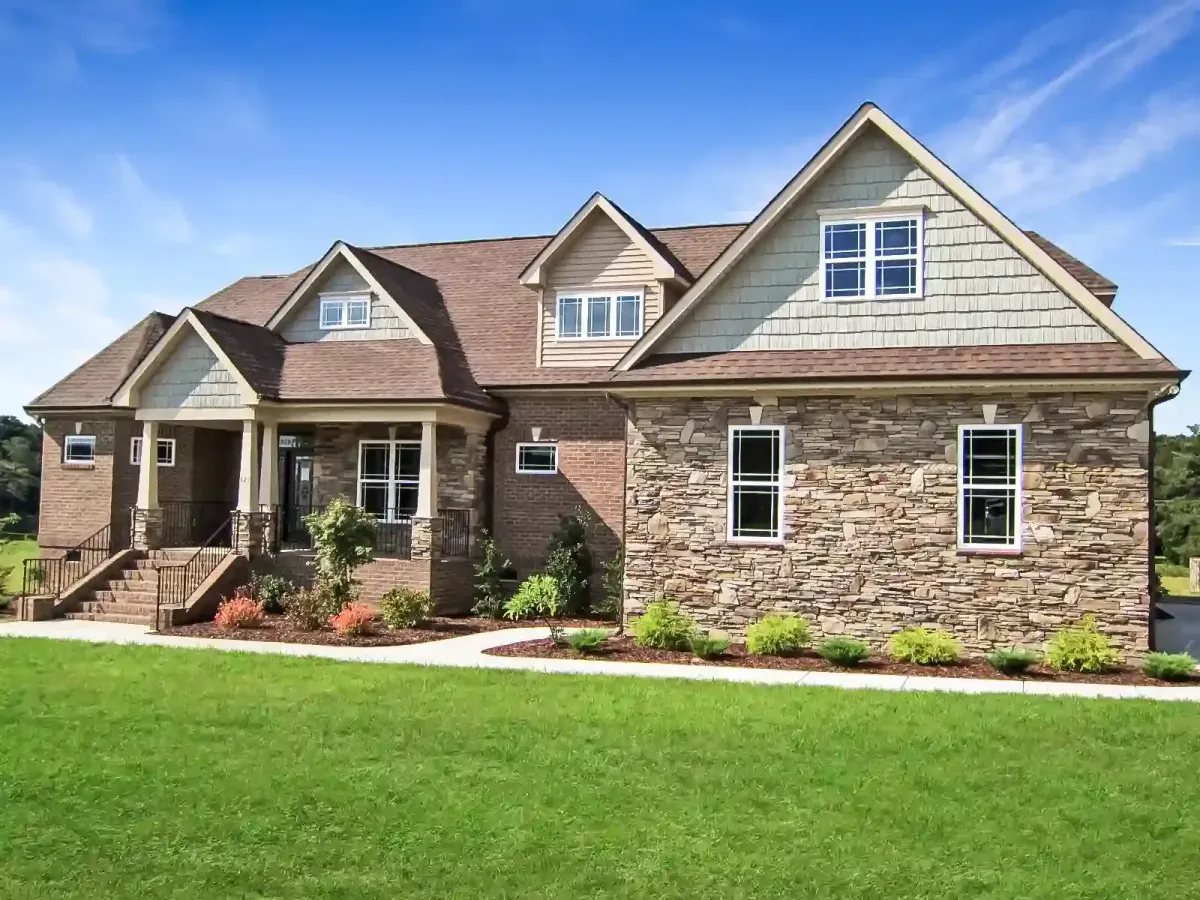
Browse current listings including new construction, resale homes, and luxury properties across all Clayton neighborhoods.
👇 View Current Clayton Listings 👇Listings open in a new tab — no login required
*Rate buydown availability and terms vary by builder, phase, and market conditions — verify directly with the builder's preferred lender. Age-qualified communities are governed by federal HOPA guidelines — buyers interested in this housing type should verify eligibility and availability directly.
Housing in Clayton, NC: New Construction vs. Resale (2026)
Clayton's housing landscape is a dynamic mix of expansive master-planned infrastructure and country-club luxury. For buyers comparing Johnston County to Wake County, the choice comes down to a clear question: Do you buy a brand-new home with builder incentives in an expanding phase, or do you opt for the deeper lots and mature landscaping of an established neighborhood?
Unlike the land-locked, infill-heavy nature of Raleigh or Cary, Clayton boasts a highly active pipeline of new homes. With 33% of the active market consisting of new construction, Clayton gives buyers a level of volume and negotiating power that is unmatched elsewhere in the Triangle.
New Construction: Master-Planned Phases & Eastern Corridor Builders
New development in Clayton is concentrated in two major patterns: master-planned community expansion phases within Flowers Plantation, East Village, and Riverwood — and standalone suburban subdivisions flanking the US-70 Business and NC-42 corridors.
The Profile: Clayton new construction favors classic Craftsman and Transitional single-family styles, alongside clean, modern attached designs in townhome sectors like East Village. Because developers have access to larger land tracts, Clayton new builds feature significantly more amenity infrastructure — resort pools, miles of greenways, fitness complexes — than Wake County product at the exact same price point.
The 2026 Advantage: With Clayton's median sold price tracking at $379,990, entry-level new builds start in the low-to-mid $300s. To maintain velocity against current interest rates, active Clayton builders are offering highly aggressive mortgage rate buydowns — often down into the 5% range on spec homes — alongside closing cost credits and design center incentives.
The Trade-off: Buying into a brand-new phase means navigating construction traffic, incomplete streetscapes, and neighborhood turnover as sections fill in over the next 12 to 24 months. Prime lots within master plans move rapidly as phases release — requiring buyers to engage early in the release cycle to secure the best topography and privacy.
Top Builders Active in Clayton, NC
Production & Semi-Custom: D.R. Horton (most accessible entry pricing), Lennar (popular for energy-efficient builds and strong closing cost programs), Meritage Homes (smart home integration), and Ryan Homes (heavily active in the expanding phases of Flowers Plantation).
Custom & Luxury: Custom builders serving the Portofino, Tuscany, and Pine Hollow corridors — a segment directly fueled by the Novo Nordisk executive relocation wave, where a $700,000–$900,000 custom estate on an acre in Clayton competes directly with $1.2M+ comparable product in North Raleigh or Cary.
Resale Homes: Character, Maturity & Neighborhood Identity
Established Clayton neighborhoods — the older sections of Riverwood Athletic Club, Glen Laurel, Highgate, and Broadmoor — offer mature tree canopies, deep lot boundaries, and a settled community identity that new phases take nearly a decade to develop.
The Profile: Built primarily from the 1990s through the late 2010s, Clayton resales offer larger square footage footprints relative to their price, established landscaping, and traditional layouts. In communities like Riverwood, buying a resale means stepping into a home that has already been maintained, upgraded, and settled by previous owners — with amenities fully operational on day one.
The 2026 Advantage: Resale homes in Clayton offer the strongest value-per-square-foot in the Triangle market, frequently outperforming new construction on raw lot size. With healthy inventory on the resale side, buyers in 2026 have meaningful leverage to negotiate on price, home repairs, and flexible closing timelines.
The Trade-off: Properties approaching the 15 to 25-year mark carry age-typical deferred maintenance variables — roofs nearing end of life, original HVAC units, and dated aesthetic finishes are common in the $320,000–$420,000 resale bracket. Budget for these during due diligence, and factor inspection findings into your offer strategy rather than being surprised by them after going under contract.
Clayton, NC Housing Style Comparison (2026 Cheat Sheet)
🏡 Find Your Clayton Housing Style
| Style | Common Locations | Best Suited For |
|---|---|---|
| Master-Planned Townhome | East Village, Flowers Plantation | First-time buyers, young professionals, and downsizers wanting low-maintenance living under $330K with resort-level community amenities included. |
| Master-Planned Single-Family | Flowers Plantation, Riverwood Athletic Club | Growing families seeking on-site schools, resort pools, 20+ miles of trails, and a traditional two-car garage footprint — at a price point Wake County can't match. |
| Established Golf & Country Club | Glen Laurel, Riverwood Golf Club, Broadmoor | Executive buyers and golf households wanting semi-custom or custom brick resales, deep lots, mature tree canopy, and championship course frontage at Johnston County prices. |
| Acreage & Equestrian Luxury | Portofino, Tuscany, Pine Hollow Corridor | Medical and biopharma executives, high-end relocation buyers, and equestrian households seeking private acreage, fully custom architecture, and estate-scale living that would cost $1.3M+ in Cary. |
| Suburban New Construction | Buckhorn Branch, Wilson's Walk, Wellesley | Move-up buyers and relocators seeking modern floor plans, builder warranties, and energy-efficient construction in the $310K–$530K range without master-plan HOA fees. |
| Suburban Infill (No HOA) | Standalone Corridor Lots, US-70 Business, NC-42 | Buyers seeking maximum privacy, space for a boat or RV, freedom from neighborhood covenants, and the lowest possible monthly cost of ownership in the Johnston County market. |
"When clients tell me they want new construction in Clayton, the first question I ask is whether they want amenities or privacy — because those two things pull you toward completely different communities here. If you want resort pools, on-site schools, and 20 miles of trails for under $400K, Flowers Plantation or Riverwood Athletic Club is the answer. That infrastructure is already built and it's genuinely hard to beat at this price point anywhere in the Triangle.
But here's where the real opportunity is in 2026: the incentive gap. On the resale side, normalized inventory means you have room to negotiate on price and repairs. On the new construction side, you have a unique window to let the builders buy down your mortgage rate — and the best version of that deal is on spec homes. When a production builder like Lennar or Ryan Homes has a fully finished home sitting empty, their holding costs are ticking. That's exactly when we can walk in and secure a 5.5% rate buydown plus closing cost credits.
One rule I give every buyer before they set foot in a model home: don't go unrepresented. The builder's on-site agent works for the builder, not for you. Bringing your own agent ensures those tens of thousands of dollars in incentives land in your pocket — not left on the table."
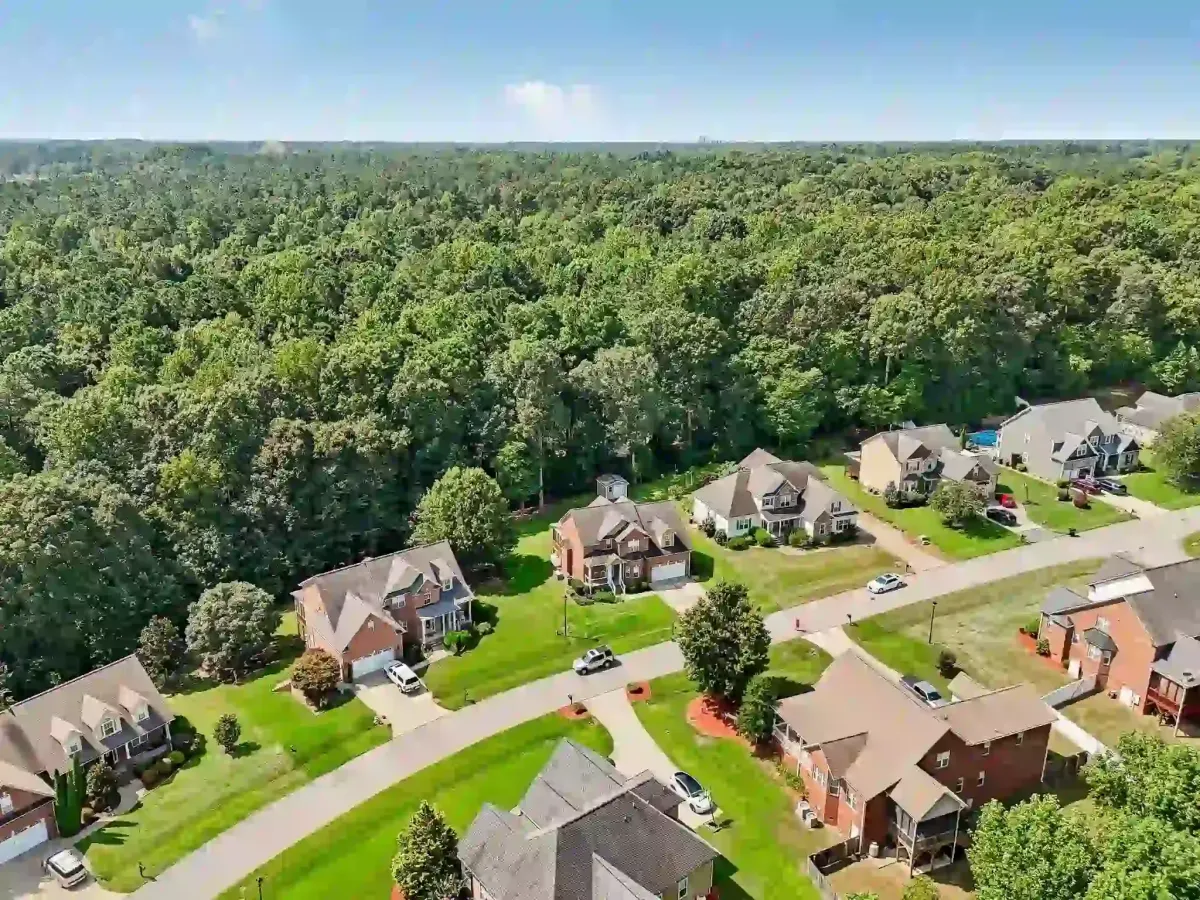
How Clayton Compares to Other Triangle Towns
Buyers comparing Clayton often also evaluate Garner, Fuquay-Varina, Knightdale, and Raleigh. While all five offer Triangle access and a suburban quality of life, they serve very different buyer profiles when it comes to commute tolerance, school district priorities, tax rate calculations, new construction supply, and how much home a given budget actually buys.
At-a-Glance Comparison (2026 Data)
How Clayton Compares to Other Triangle Towns (2026)
| Clayton | Garner | Fuquay-Varina | Knightdale | Raleigh | |
|---|---|---|---|---|---|
| Median Sold Price | ~$379,990 | ~$425,000 | ~$435,000 | ~$395,000 | ~$470,000 |
| Price Per Sq Ft | ~$186 | ~$220 | ~$210 | ~$215 | ~$265 |
| Combined Tax Rate | ~$1.01 (Johnston Co.) | ~$0.83 (Wake Co.) | ~$0.83 (Wake Co.) | ~$0.83 (Wake Co.) | ~$0.87 (Wake Co.) |
| New Construction Share | 33% (145 listings) | ~20% | ~28% | ~25% | ~10% |
| Market Character | Value play & life sciences hub | Close-in suburban value | SW corridor growth market | Eastern Wake affordability | Urban core & diverse |
| Commute to Downtown Raleigh | 20–30 min via US-70/I-40 | 15–20 min | 30–40 min | 15–20 min | 0–15 min |
| Commute to RTP | 35–45 min (I-540 improving) | 25–35 min | 30–40 min | 20–30 min | 15–25 min |
| Primary Employer Anchor | Novo Nordisk / Grifols / Johnston Health | Raleigh / RTP commuter | RTP / Tech / Health | RTP / East Raleigh | State Gov't / Tech / RTP |
| School District | Johnston County Schools | Wake County Schools | Wake County Schools | Wake County Schools | Wake County Schools |
| Master-Planned Communities | Flowers Plantation, Riverwood AC, East Village | Limited | Several active | Wendell Falls area | Limited |
| Downtown / Local Scene | Deep River, Revival 1869, Clayton Center | Growing corridor | Active town center | Developing | Vibrant urban core |
| Best For | Value buyers, local biotech workers, remote workers | Raleigh office commuters | SW Triangle families | East Wake commuters | Urban lifestyle & suburbs |
Nearby Triangle Relocation Guides
Buyers researching Clayton often compare it with other Triangle and Johnston County communities. Explore the full guide library below.
Garner: The Closest Alternative
⚖️ The Trade-off: Garner offers a shorter commute to downtown Raleigh (15–20 minutes), Wake County Public Schools, and an established suburban character with more finished infrastructure than Clayton's rapid-growth feel. At ~$425,000 median and ~$220 per square foot, buyers pay meaningfully more than Clayton for that proximity and school district access.
✅ Why Choose Clayton: Clayton delivers approximately 18% more home per dollar than Garner at current pricing, a significantly higher new construction share, lower Johnston County property taxes, and a long-term appreciation story anchored by $4B+ in employer investment that Garner cannot match. For buyers who can absorb 10–15 additional minutes of commute in exchange for a larger home, a newer build, and a lower monthly payment — Clayton wins the value comparison clearly.
Fuquay-Varina: The Southwest Corridor Alternative
⚖️ The Trade-off: Fuquay-Varina offers Wake County Public Schools, a well-developed town identity with a growing dining and retail scene, and strong new construction supply along the southwest corridor. At ~$435,000 median and ~$210 per square foot, buyers pay a Wake County premium over Clayton. Current I-540 access that Fuquay-Varina buyers enjoy today is an advantage Clayton buyers will gain when the eastern extension completes.
✅ Why Choose Clayton: Clayton delivers approximately 13% more home per dollar than Fuquay-Varina, Johnston County's lower property tax rate, and a biotech employer anchor — Novo Nordisk's $4.1 billion expansion — that Fuquay-Varina's employment base cannot match. The $50,000–$60,000 price differential on a comparable home funds a lot of patience on the I-540 timeline. For buyers who don't need Wake County schools and want to buy ahead of an infrastructure catalyst rather than after it's priced in, Clayton is the more defensible long-term position.
Knightdale: The Eastern Wake Alternative
⚖️ The Trade-off: Knightdale offers Wake County Public Schools, a 15–20 minute commute to downtown Raleigh, and reasonable RTP access at 20–30 minutes. At ~$395,000 median and ~$215 per square foot, it sits closest to Clayton in pricing — but carries Wake County tax rates and a smaller new construction inventory share than Clayton's 33%.
✅ Why Choose Clayton: Clayton delivers comparable pricing with Johnston County's lower property tax rate, a meaningfully higher new construction share, and a substantially stronger employer investment story. Buyers who are already oriented toward the eastern Triangle and are weighing Johnston versus Wake County will find that Clayton's tax savings, master-planned community depth, and Novo Nordisk growth thesis give it a clear edge over Knightdale for any buyer whose job doesn't require Wake County proximity specifically.
Raleigh: The Urban Core Alternative
⚖️ The Trade-off: Raleigh offers a larger city footprint, more suburban and urban neighborhood variety, Wake County Public Schools, and zero commute for downtown Raleigh employers. At ~$470,000 median and ~$265 per square foot, buyers pay a meaningful premium for that proximity and the Wake County address. The urban energy and cultural infrastructure of Raleigh is genuinely richer than Clayton's today.
✅ Why Choose Clayton: Clayton delivers approximately 30% more home per dollar than Raleigh at current pricing, significantly more new construction inventory, lower Johnston County taxes, and a master-planned community lifestyle that no Raleigh neighborhood at this price point replicates. For buyers who work locally at Novo Nordisk or Grifols, work remotely, or are relocating from a higher-cost market where space and value are the primary drivers — Clayton represents a categorically different value proposition that Raleigh's median simply cannot match.
💡 Phil's Perspective
"Every week I work with buyers who come into the Triangle with a budget and a shortlist that doesn't include Clayton — usually because they assume the commute is a dealbreaker or that Johnston County schools aren't good enough. What surprises them is how often Clayton wins when you run the actual numbers.
At $186 per square foot with a 98.7% sale-to-list ratio and 33% of inventory being new construction, Clayton is not a slow or discounted market. It is a competitive market that is priced below what its community infrastructure, employer base, and appreciation trajectory would suggest. Buyers who have been searching in Garner or Fuquay-Varina often discover they've been paying a $40,000–$60,000 premium for a Wake County zip code — when a larger home in Flowers Plantation or Riverwood Athletic Club would have cost them less every single month.
The buyers who win in Clayton are the ones who do the math, verify the school zones for their specific address, and move before the Novo Nordisk campus reaches full capacity and the I-540 eastern extension changes the commute story permanently. That window is open right now. It won't stay open indefinitely."
Clayton, NC Neighborhoods Guide (2026)
Neighborhood information is provided for general informational purposes only. Phil Slezak Real Estate does not endorse or recommend specific neighborhoods based on demographic composition. School ratings, rankings, and neighborhood data sourced from Niche.com, GreatSchools.org, and public MLS records. All buyers are encouraged to personally research neighborhoods, schools, and local amenities based on their own priorities. For school assignment verification, contact Johnston County Public Schools directly at johnston.k12.nc.us.
Clayton has more neighborhood variety than most Triangle buyers expect. The right fit depends on your commute, lifestyle, budget, and whether you prioritize master-planned amenities, golf, acreage, new construction, or proximity to downtown. Buyers searching for the best neighborhoods in Clayton NC consistently return to these eight communities based on MLS data and search volume.
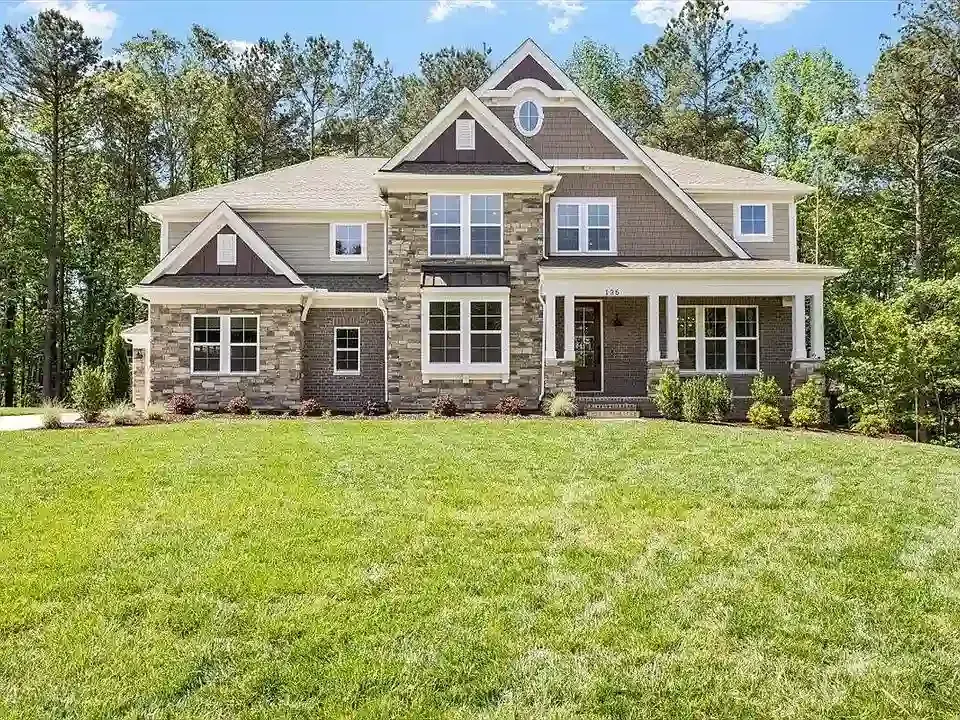
Flowers Plantation — Most Searched Master-Planned Community
Flowers Plantation is the most consistently searched Clayton neighborhood — and for good reason. Spanning 3,000 acres with 20+ miles of paved trails, an on-site YMCA, a developing waterfront district along the Neuse River, and housing options from entry townhomes to custom estate homes, it delivers the kind of self-contained community infrastructure that most Triangle suburbs at this price point simply can't offer.
Home Prices: $280,000–$700,000+
Home Style: Entry-level townhomes, Craftsman and Transitional single-family, semi-custom and custom estate sections; Charleston-influenced architectural districts in select phases
Lot Sizes: 0.1–0.5 acres in most residential phases; larger estate lots in select gated sections
Commute: 20–30 min to downtown Raleigh; 35–45 min to RTP; 5–10 min to Novo Nordisk campus
Walkability: Best in Clayton — on-site commercial district with retail, dining, and services reachable on foot or by bike from most phases
Best For: Families, move-up buyers, executive relocators, first-time buyers, and active-lifestyle households who want resort-level amenities at Johnston County prices
The Honest Note: Flowers Plantation is still actively building, which means construction traffic, incomplete streetscapes in newer phases, and CDD fees in certain sections that add $500–$1,200 per year on top of standard HOA dues. Confirm the full fee picture for any specific lot before making an offer — and walk the specific phase you're considering, not just the model home corridor.
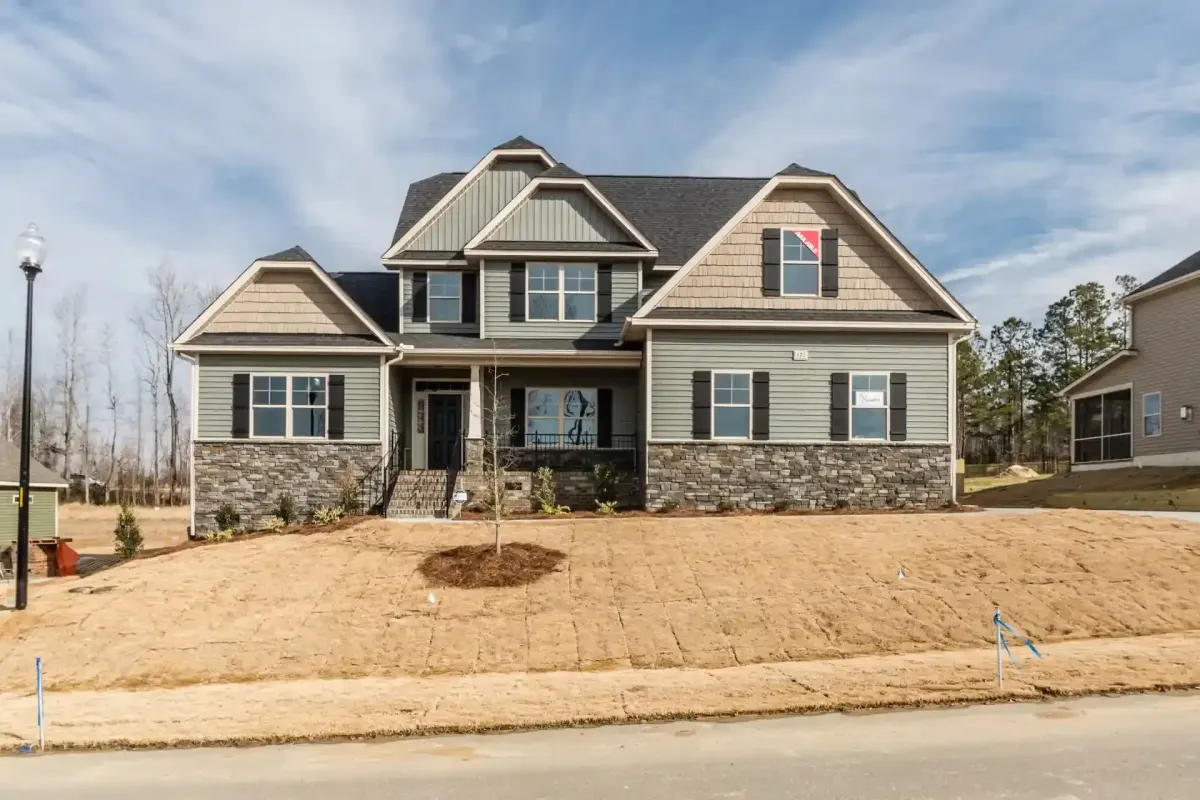
Riverwood Athletic Club — Most Searched Resort-Lifestyle Community
One of Clayton's most distinctive addresses and consistently one of the most searched neighborhoods in Johnston County. Riverwood Athletic Club sits across 1,500 acres with four pools, tennis courts, a full fitness center, and — uniquely among Triangle communities at this price point — Riverwood Elementary and Riverwood Middle School located within the neighborhood itself, so children walk to school without leaving the community.
Home Prices: $230,000–$550,000
Home Style: Mix of townhomes, traditional single-family, and larger two-story homes; multiple builders represented across phases built from the late 1990s through the 2010s
Lot Sizes: 0.2–0.5 acres; established tree cover and landscaping in older sections
Commute: 20–28 min to downtown Raleigh; 35–40 min to RTP; walkable to Village Shops retail and dining
Walkability: Best in Clayton outside Flowers Plantation — Village Shops retail strip, community amenities, and two schools all accessible without a car
Best For: Families prioritizing on-site schools and resort amenities, value-oriented buyers comparing Clayton to Garner, active-lifestyle households, and first-time move-up buyers who want the full community experience at an accessible price point
The Honest Note: HOA dues in Riverwood Athletic Club reflect the amenity package — budget $150–$250 per month depending on your section, and confirm the exact fee structure for any specific address before going under contract. The community is large and spans multiple decades of construction, so home age, condition, and lot character vary significantly between phases. Tour multiple sections rather than assuming uniformity across the neighborhood.
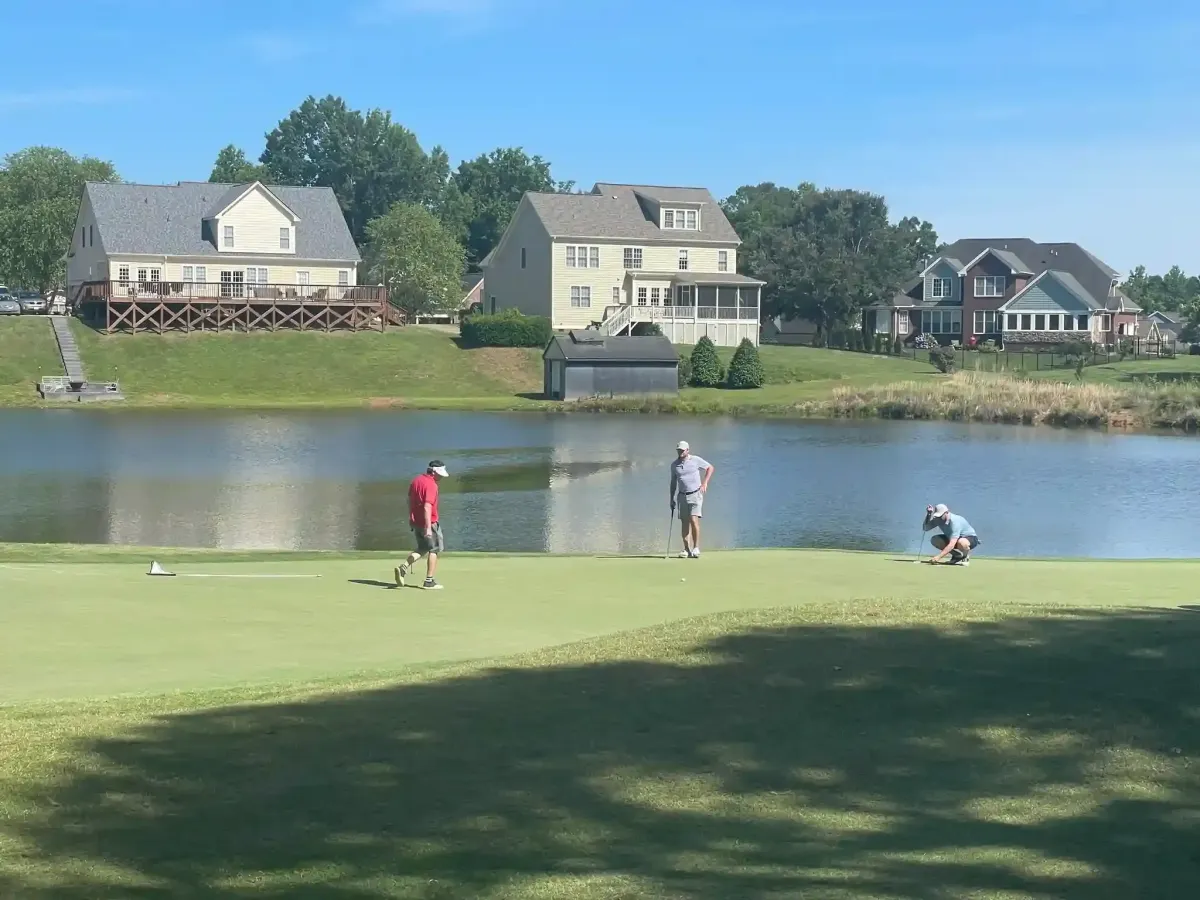
Riverwood Golf Club — Most Searched Golf Community
One of the Triangle's most underappreciated golf communities and the address that consistently surprises buyers who assumed Johnston County couldn't compete with Wake County golf product. Riverwood Golf Club wraps an 27-hole championship course through a neighborhood of generous lots, with nearly every home positioned for golf course views or direct fairway frontage.
Home Prices: $350,000–$800,000+
Home Style: Traditional single-family; classic and updated designs on large lots; nearly every home has golf course orientation or frontage
Lot Sizes: 0.7–1+ acres — among the most generous lot sizes available in the Clayton market at any price point
Commute: 20–28 min to downtown Raleigh; 35–42 min to RTP; short drive to downtown Clayton and Deep River Brewing
Walkability: Low — car-dependent, as is typical of golf course communities; short drive to downtown Clayton amenities
Best For: Golf households, luxury buyers, downsizers wanting acreage and privacy, and executive relocation buyers who want estate-scale lots and course frontage at a price point that would buy a fraction of the lot size in Cary or North Raleigh
The Honest Note: Golf course living requires an honest look at the full cost picture — club membership fees, HOA dues, and course proximity assessments vary. Confirm the complete fee structure before making an offer on any Golf Club address. Lot premiums for direct fairway frontage add meaningfully to comparables within the community, so price per square foot comparisons need to account for lot premium value.
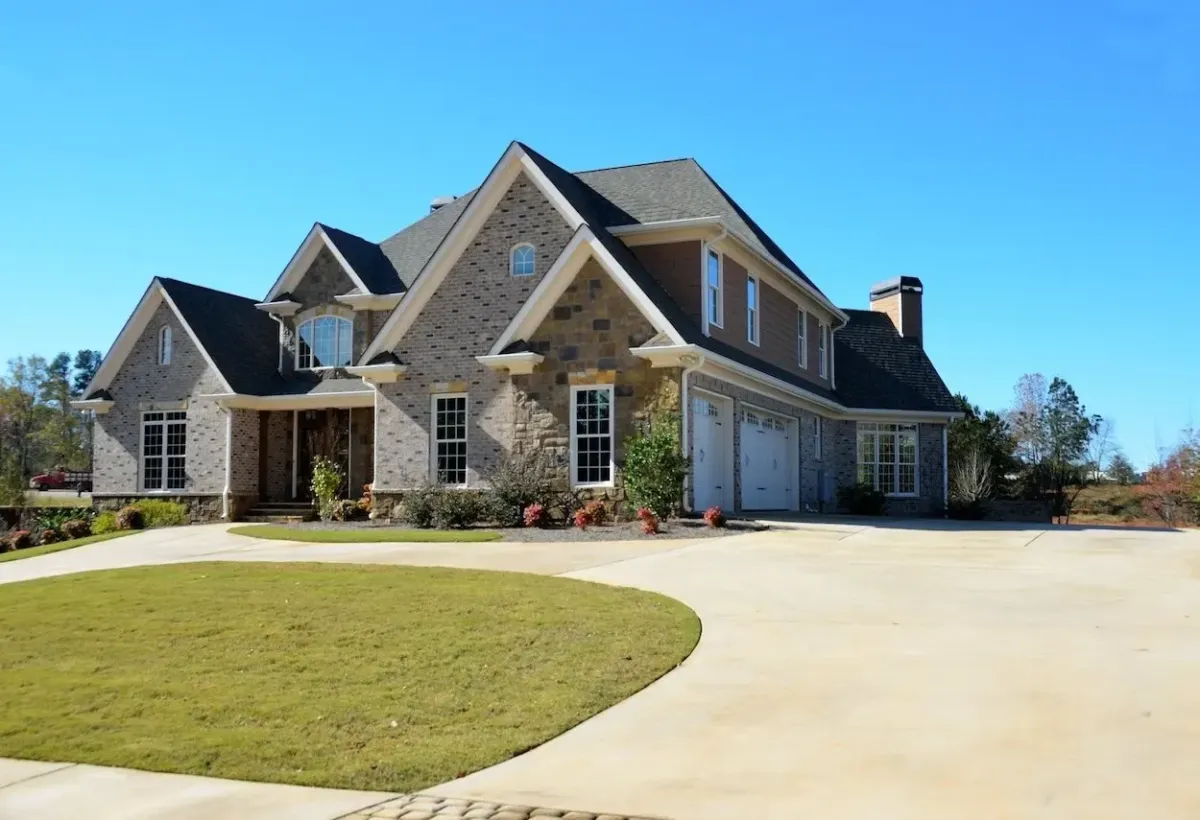
Portofino & Tuscany — Most Searched Luxury Custom Communities
Clayton's premier luxury addresses and the neighborhoods that most directly compete with executive product in North Raleigh and Cary — at a price point that consistently stops out-of-state relocation buyers in their tracks. Portofino and Tuscany attract Novo Nordisk and Grifols executives, medical professionals, and high-income remote workers who want estate-scale homes, larger lots, and custom architectural character at Johnston County tax rates.
Home Prices: $450,000–$900,000+ (Portofino established sections) / $600,000–$1.2M+ (custom estate tier)
Home Style: Custom and semi-custom single-family; brick and stone exteriors; larger footprints with three-car garages, bonus rooms, and finished basements; cul-de-sac street layouts with enhanced privacy
Lot Sizes: 0.5–2+ acres in select sections — among the largest residential lots available within reasonable Triangle commuting distance at this price tier
Commute: 22–32 min to downtown Raleigh; 38–48 min to RTP; 10–15 min to Novo Nordisk campus
Walkability: Low — car-dependent, as is appropriate for estate-scale residential living; short drive to downtown Clayton and community amenities
Best For: Executives, physicians, biopharma professionals, and out-of-state relocation buyers who want custom architecture, private acreage, and a prestige address at prices well below comparable North Raleigh, Cary, or Chapel Hill communities — and who recognize that Johnston County's lower tax rate compounds that savings advantage every year they own
The Honest Note: Resale inventory in Portofino and Tuscany is intentionally thin — these communities don't turn over frequently, and when homes do come to market they move on their own timeline rather than the broader market's. Buyers targeting this tier specifically should work with an agent who has advance notice on off-market opportunities and understands the pricing nuances between sections. Lot size, custom finish level, and proximity to community entrances drive price variation more than street address alone.
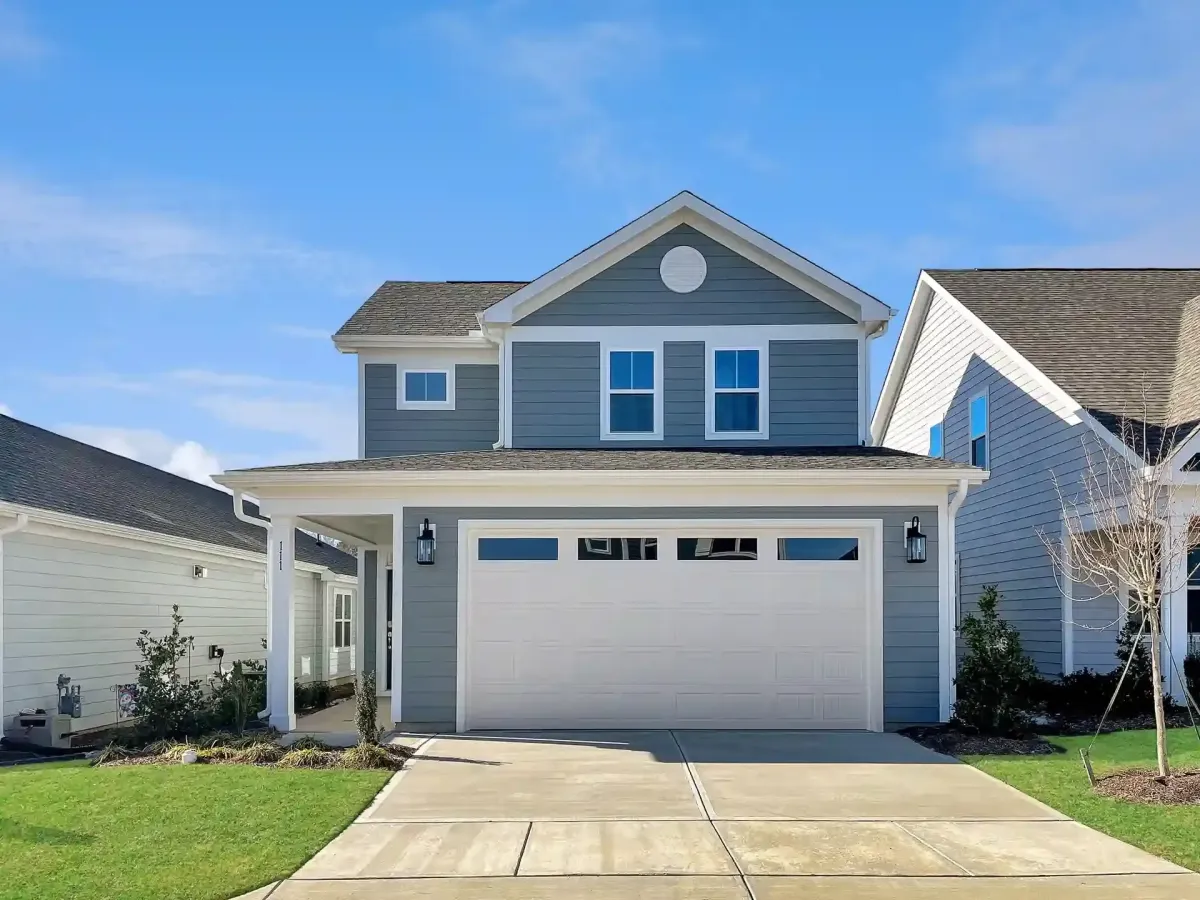
The Walk at East Village — Most Searched New Construction Lifestyle Community
Quietly one of Clayton's strongest value-plus-walkability options and the neighborhood that most consistently surprises buyers who assumed Johnston County couldn't deliver a walkable new construction experience. East Village is built around The Walk at East Village retail center — giving residents genuine on-foot access to grocery, dining, and services that most Clayton communities require a car to reach. Phil's top recommendation for buyers who want modern floor plans and builder incentives without giving up community connectivity.
Home Prices: $280,000–$520,000
Home Style: Modern attached townhomes, luxury townhomes, and detached single-family; open floor plans, contemporary finishes, and energy-efficient construction throughout
Lot Sizes: Townhome and compact single-family lots — walkability-focused planning prioritizes proximity over lot size
Commute: 20–28 min to downtown Raleigh; 35–42 min to RTP; strong access to downtown Clayton and US-70 corridor employers
Walkability: Best new construction walkability in Clayton — The Walk at East Village retail, dining, and services accessible on foot from most residential phases
Best For: First-time buyers, young professionals, remote workers, and downsizers who want new construction with modern floor plans, builder warranties, and genuine walkable amenity access — without paying Cary or North Hills prices for the privilege
The Honest Note: East Village is still actively developing, which means active construction adjacent to occupied phases, changing community character as sections fill in, and streetscapes that are still maturing in newer areas. Walk the completed sections carefully and verify what is planned for adjacent lots and parcels before committing to a specific home. "Walkable" here means walkable to a well-executed suburban retail strip — buyers comparing this to true urban walkability should calibrate expectations accordingly.
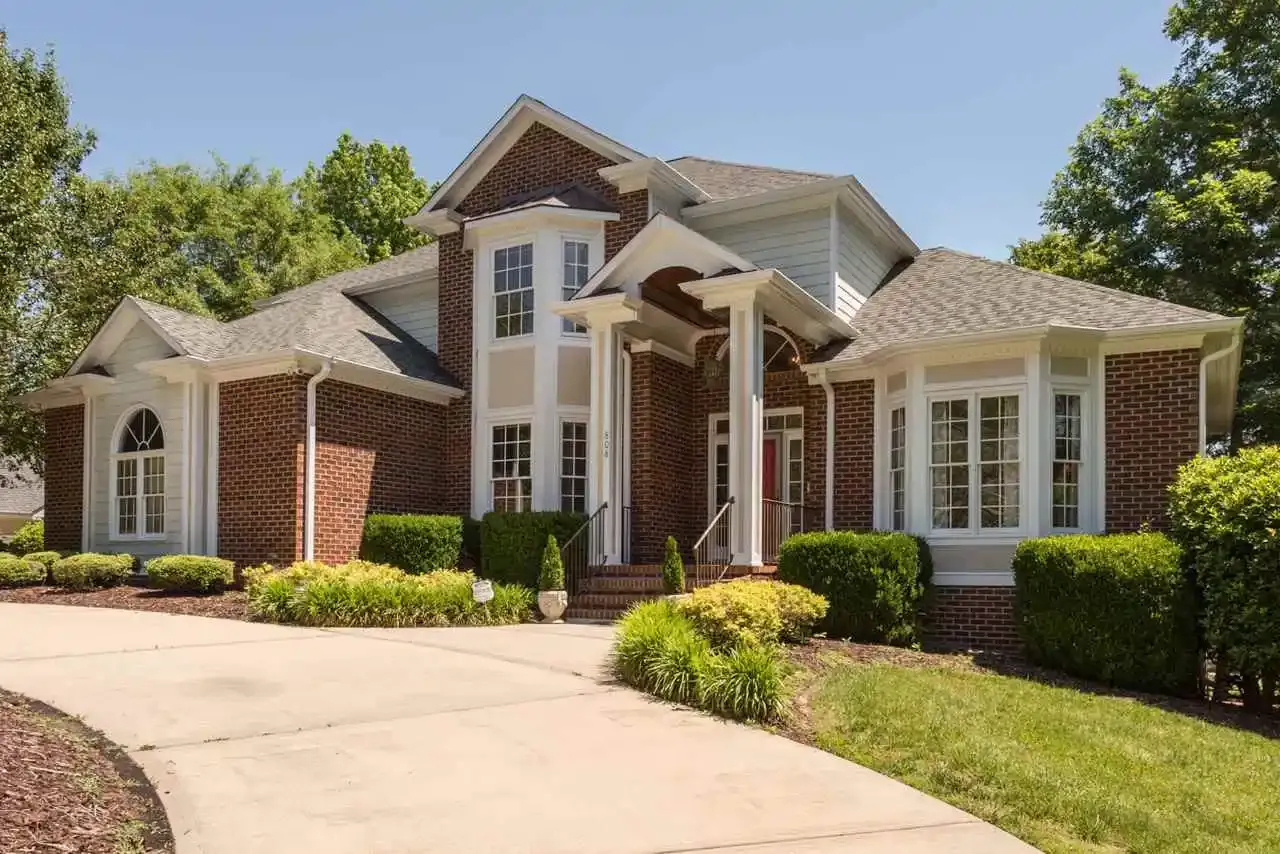
Glen Laurel — Most Searched Established Neighborhood Near Downtown
Seeing consistent search growth as Clayton's downtown corridor gains momentum. Glen Laurel sits adjacent to downtown Clayton with golf course access, mature tree canopy, and the shortest walk to Deep River Brewing, Revival 1869, and the Clayton River Walk of any residential neighborhood in the market. Less expensive than Riverwood Golf Club with a similar established character and better downtown proximity.
Home Prices: $300,000–$650,000+
Home Style: Classic and updated single-family; mix of traditional and transitional designs on generous lots; architectural variety across a community built over multiple decades
Lot Sizes: Moderate to generous — established landscaping and mature tree cover throughout; deeper lots in older sections
Commute: 18–26 min to downtown Raleigh; 35–42 min to RTP; walkable to downtown Clayton, Deep River Brewing, the Clayton River Walk, and the Sculpture Trail
Walkability: Best downtown walkability of any Clayton neighborhood — the only community where residents routinely walk to brewery, cocktail bar, performing arts venue, and river trail without driving
Best For: Move-up buyers, golf households, remote workers who value downtown access, and buyers who want an established neighborhood identity with genuine walkable evening options at a price point below Riverwood Golf Club
The Honest Note: Glen Laurel spans multiple decades of construction and price points — home condition, finishes, and lot character vary more than in a single-builder community. Walk specific streets rather than assuming uniformity across the neighborhood. Homes at the lower end of the price range may reflect deferred maintenance or dated interiors; budget for potential updates during due diligence and factor the downtown proximity premium into your evaluation of any specific listing.
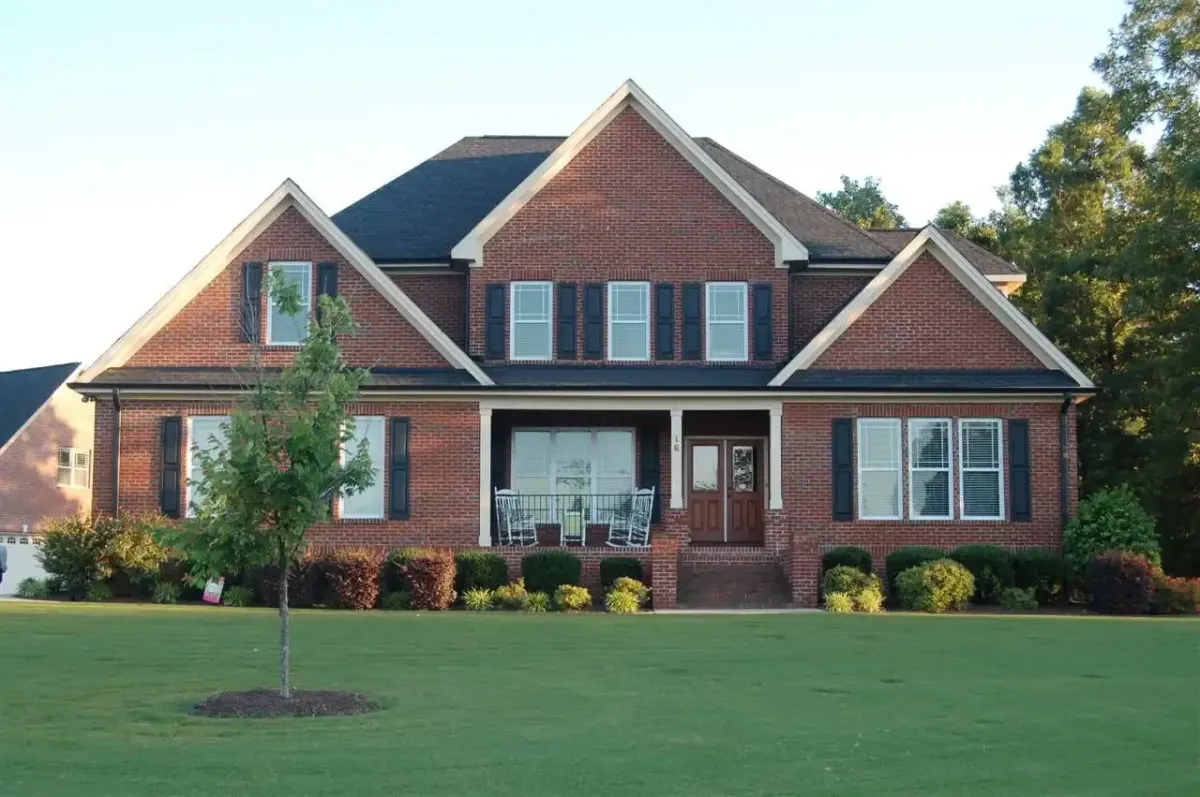
Highgate & Broadmoor — Most Searched Value Family Communities
Consistent search traffic from families and first-time buyers who have done the Johnston County math and want newer construction at the most accessible price points in the Clayton market. Highgate and Broadmoor deliver traditional suburban living — two-car garages, functional floor plans, established neighborhood feel — without the master-planned HOA fees of Flowers Plantation or the amenity dues of Riverwood Athletic Club. The most straightforward entry point into Clayton homeownership for budget-conscious buyers.
Home Prices: $290,000–$480,000
Home Style: Traditional and transitional single-family; Craftsman and colonial-influenced designs; mix of 1990s–2010s construction with some newer infill
Lot Sizes: 0.2–0.35 acres in most sections — consistent with standard suburban subdivision planning
Commute: 20–28 min to downtown Raleigh; 35–42 min to RTP; good access to Johnston County employers along the US-70 corridor
Walkability: Low to moderate — car-dependent for most errands and dining; short drive to Clayton's downtown corridor and US-70 retail
Best For: Families on a budget, first-time buyers, move-up buyers comparing Clayton to Garner who want more home for less money, and buyers who want a clean, functional suburban neighborhood without the complexity of master-planned community fees and covenants
The Honest Note: Highgate and Broadmoor trade on value rather than prestige or amenity depth — resale appeal depends more heavily on competitive pricing relative to newer inventory than it does in communities like Flowers Plantation or Riverwood, where the amenity package supports values independently. Keep this in mind when evaluating long-term resale positioning for any specific home in these communities.
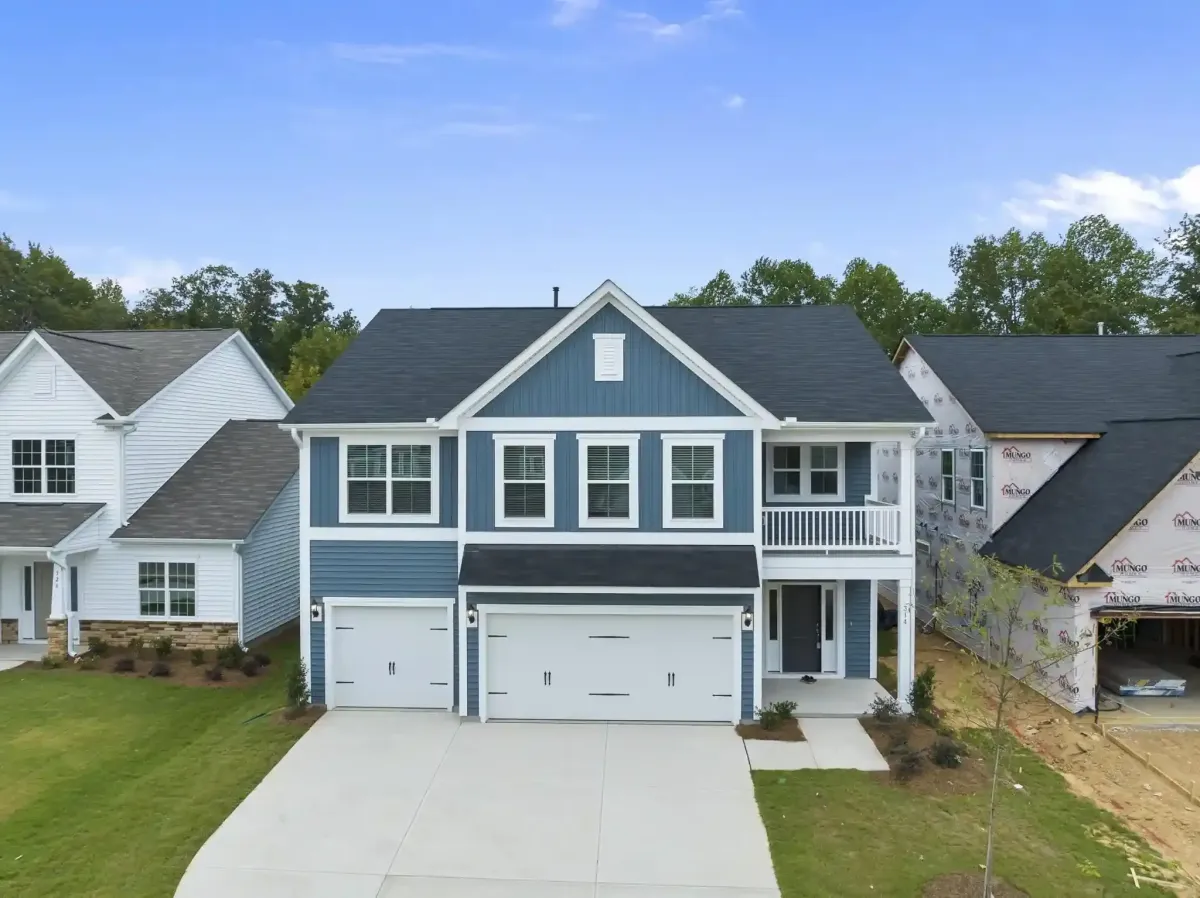
Buckhorn Branch & Wilson's Walk — Most Searched Active New Construction Communities
Clayton's most active new construction corridor for buyers who want modern floor plans and builder incentives without the CDD fees or master-plan complexity of Flowers Plantation. Buckhorn Branch and Wilson's Walk are production builder communities in the northern Clayton growth corridor — still actively building, still offering spec home incentives, and still priced at entry points that are increasingly hard to find this close to Raleigh.
Home Prices: $310,000–$530,000
Home Style: New and recent construction; Craftsman and transitional single-family; open floor plans, modern kitchens, energy-efficient mechanical systems, and smart home integration standard or available across most builder lines
Lot Sizes: 0.15–0.3 acres typical — consistent with production builder community planning; smaller than Riverwood Golf Club or Portofino but appropriate for the price point
Commute: 20–30 min to downtown Raleigh; 35–45 min to RTP; good access to Clayton employers along the US-70 Business corridor
Walkability: Low — car-dependent for all errands and dining; short drive to Clayton's downtown corridor and US-70 retail strip
Best For: New construction buyers under $500,000, relocators who want builder warranty coverage and modern floor plans, buyers who want to avoid the resale negotiation process entirely, and first-time buyers who want the newest possible product at Johnston County pricing
The Honest Note: Production builder communities have less pricing flexibility than resale homes — but more flexibility on incentives than buyers often assume. Builders negotiate on rate buydowns, closing cost credits, option credits, and lot premiums more readily than on base price. Bring your own representation to any builder community visit — the on-site sales agent works for the builder, not for you, and the incentive packages available to represented buyers frequently differ from what walk-in traffic is offered.
Also Worth Knowing
Pine Hollow & Cleveland Road Corridor ($400,000–$1.2M+) For buyers who want land, privacy, and the option for equestrian use or fully custom construction, the Pine Hollow community and broader Cleveland Road corridor deliver acreage properties and estate-scale lots that are essentially unavailable in Wake County without crossing $1.5M+. Lot sizes of 5–25 acres with custom construction are accessible at price points that consistently stop relocating buyers from higher-cost markets. The corridor is particularly popular with Novo Nordisk and Grifols executives, medical professionals, and buyers relocating from the Mid-Atlantic and Northeast who are accustomed to land but not accustomed to finding it at Johnston County prices. For buyers who want the Triangle's best acreage value within reasonable Raleigh commuting distance, this corridor is in a category of its own.
Tuscany ($450,000–$800,000+) A custom home community with Italian-inspired architectural character, larger lot sizes, and a private, established feel that distinguishes it from the higher-volume production builder communities that define much of Clayton's growth. Tuscany is particularly popular with long-tenure Johnston County residents moving into a luxury tier home and with executive relocation buyers who want custom finishes and lot privacy without going all the way to the Pine Hollow corridor. Resale inventory is active and consistently well-priced relative to comparable Cary or North Raleigh luxury addresses — the value gap at this tier is real and measurable.
Wellesley & Highgate Expansion Phases ($310,000–$470,000) Newer phases of Johnston County's family-focused new construction market serving buyers who want recently built homes at competitive price points with straightforward access to Clayton's US-70 and NC-42 corridors. Less amenity depth than Flowers Plantation or Riverwood Athletic Club, but also lower HOA fees and fewer covenant restrictions — the right trade-off for buyers who prioritize monthly cost efficiency over resort-style community programming. Consistent resale demand from families and first-time buyers keeps values stable relative to the broader Clayton market.
Flowers Plantation Waterfront District (Coming 2026–2028) Worth knowing for buyers considering any Flowers Plantation phase: the developing waterfront district along the Neuse River will add mixed-use retail, dining, and additional residential to the community's south end when complete. Early commercial tenants have begun leasing. Buyers purchasing in Flowers Plantation today are buying before this amenity is fully operational and priced into surrounding home values — a catalyst that mirrors what riverfront and mixed-use development has done to property values in comparable master-planned communities across the Southeast.
🏘️ Neighborhood Selection Tips from Phil
Three things I tell every Clayton buyer before they start touring:
Verify school assignments first. Johnston County Public Schools assignments are address-specific and can vary between phases of the same community. A home in one section of Flowers Plantation may feed to a different school than a home two streets over. Use the district's school finder at johnston.k12.nc.us before making an offer — not after. If a specific school is driving your neighborhood decision, call the district directly and confirm the assignment for that exact address.
Drive your commute at 7:45 AM on a Tuesday. US-70 at peak hour behaves very differently than Google Maps suggests at noon — and the difference between a home on the western edge of Flowers Plantation and a home in an eastern Clayton phase can add 10–15 minutes to a Raleigh commute that already requires honest math. Test the reality before you sign. If you're considering multiple communities, drive each commute on the same morning so you're comparing the same traffic conditions.
Walk the block, not just the house. Clayton's community character can shift meaningfully within a single development — especially in master-planned communities that span multiple phases and decades of construction. A home in a fully built-out Flowers Plantation section feels very different from a home on an active construction street two phases over. The house may be exactly right and the immediate streetscape may not be what you expected. Tour the surrounding blocks before you fall in love with the listing.
*Verify current school assignments directly with Johnston County Public Schools before making any purchase decision based on a specific school. School zone boundaries are address-specific and subject to change as the district manages rapid enrollment growth. Visit johnston.k12.nc.us to look up assignments for any specific address. Properties outside Town of Clayton limits may be subject to different tax rates — specifically the county-only rate versus the combined county and municipal rate. Confirm the applicable tax jurisdiction and rate for any specific property with your agent before making an offer.
Cost of Living & Taxes in Clayton, NC (2026)
Clayton delivers genuine value — more new construction, more square footage, more master-planned amenity per dollar than any other major Triangle suburb at this price point. The financial advantage is real and measurable, starting with Johnston County's property tax structure. Here is the complete financial picture buyers need before making a decision.
Property Taxes
Clayton property owners inside town limits pay a combined Johnston County and municipal tax rate for FY2025–2026. The rate breaks down as follows:
Johnston County rate: $0.52 per $100 assessed value
Town of Clayton municipal rate: $0.49 per $100 assessed value
Combined rate (inside town limits): $1.01 per $100 assessed value
Properties in Johnston County but outside Town of Clayton limits pay only the county rate of $0.52 per $100 — a meaningfully lower number that applies to rural and unincorporated addresses in the broader Clayton market area. Always confirm the applicable tax jurisdiction for any specific property before closing.
Verify current rates directly with Johnston County Tax Administration at johnstoncountync.org before making any purchase decision. Rates are subject to annual adjustment.
What that means in real dollars:
Clayton, NC Property Tax Estimates (2026)
| Home Value | Annual Tax Bill | Monthly Equivalent |
|---|---|---|
| $300,000 | $3,030 | ~$253/mo |
| $350,000 | $3,535 | ~$295/mo |
| $379,990 Median | $3,838 | ~$320/mo |
| $450,000 | $4,545 | ~$379/mo |
| $600,000 | $6,060 | ~$505/mo |
| $800,000 | $8,080 | ~$673/mo |
| $1,000,000 | $10,100 | ~$842/mo |
Clayton's combined rate of $1.01 is higher than several Wake County competitors — a fact worth naming honestly rather than glossing over. The advantage Clayton delivers is not on tax rate. It is on purchase price, square footage per dollar, lot size, and new construction supply. Here is how to think about the complete financial picture:
Properties in Johnston County but outside Town of Clayton limits pay only the county rate of $0.52 — approximately $1,976 annually on a $380,000 home. If lot size, privacy, and no municipal services restrictions are priorities, unincorporated Johnston County addresses can deliver meaningful tax savings. Always verify the tax jurisdiction for any specific property at johnstoncountync.org before closing.
Home Value and What You Get
At a median sold price of $379,990 and $186 per square foot, Clayton delivers more home per dollar than any other major Triangle suburb:
vs. Garner (~$220/sq ft) — 18% more home per dollar
vs. Fuquay-Varina (~$210/sq ft) — 13% more home per dollar
vs. Knightdale (~$215/sq ft) — 15% more home per dollar
vs. Raleigh (~$265/sq ft) — 30% more home per dollar
vs. Cary (~$310/sq ft) — 40% more home per dollar
vs. Apex (~$295/sq ft) — 37% more home per dollar
A $450,000 budget in Clayton buys a newer construction single-family home in Flowers Plantation with full master-planned amenity access, a generous lot, and modern floor plans. That same budget in Cary likely buys a smaller resale home on a tighter lot with a Wake County tax bill attached. A $380,000 budget in Clayton buys a move-in ready home in Riverwood Athletic Club with four pools, on-site schools, and a trail network. That same budget in Garner buys a comparable resale with none of that infrastructure.
New Construction Value
With 33% of active listings being new construction — 145 of 439 active homes — Clayton offers the deepest new build pipeline of any major Triangle suburb at this price point. Production builders including D.R. Horton, Lennar, Meritage Homes, and Ryan Homes are active across multiple communities with entry points starting in the low-to-mid $300s. Custom and semi-custom options in Portofino, Tuscany, and the Pine Hollow corridor serve the $600,000–$1.2M+ segment for executive relocation buyers.
New construction buyers in Clayton consistently report getting more square footage, more builder incentives — rate buydowns frequently into the 5% range on spec homes — and more lot size than comparable new builds in Wake County at the same price point.
Everyday Cost of Living
Beyond housing, Johnston County's cost of living runs consistently below Triangle averages:
Groceries: Harris Teeter, Publix, Walmart, Aldi, and Food Lion all operate in the Clayton and US-70 corridor, with full grocery access within minutes of every major residential community. Raleigh's complete specialty grocery landscape is 20–30 minutes away for residents who want it.
Healthcare: Johnston Health / UNC Health anchors Johnston County with hospital and specialty care access in Clayton and Smithfield. Duke Health System, WakeMed, and UNC Health's full networks are accessible in 25–40 minutes for specialty needs — a meaningful quality-of-life asset for a community this size.
Dining: Clayton's downtown corridor — Deep River Brewing, Revival 1869, InStill Distilling, and a growing roster of independent restaurants — delivers an increasingly credible local dining scene. The full Triangle dining ecosystem, including Durham's nationally recognized restaurant scene, is 25–40 minutes away.
Utilities: Duke Energy serves most of Clayton's residential base. Average monthly utility costs for a 2,500 sq ft home run approximately $140–$190 in moderate months and $240–$320 in peak summer and winter months — consistent with Triangle averages and slightly below Durham and Raleigh urban averages due to newer construction's energy efficiency.
HOA Fees: HOA fees vary significantly by community. Riverwood Athletic Club runs $150–$250 per month reflecting the four-pool, on-site school amenity package. Flowers Plantation base fees vary by phase, with certain sections carrying additional CDD assessments of $500–$1,200 per year. Production builder communities without resort amenities run $400–$800 annually. Always request full HOA financials including reserve fund status and any pending special assessments before making an offer.
The Honest Tax Math
Clayton's $1.01 combined rate is higher than Garner, Fuquay-Varina, Cary, and Apex. That is a real number and buyers deserve a straight answer about it. Here is how to think about it honestly:
On a $380,000 Clayton home versus a comparable $420,000 Garner home, the Clayton buyer pays approximately $380 more per year in property taxes. But they also spend $40,000 less on the purchase price — which at 6.75% on a 30-year mortgage saves approximately $2,496 per year in principal and interest. The net annual financial advantage of the Clayton purchase is approximately $2,116 per year, even after the higher tax rate is factored in. The tax rate is not the math that hurts Clayton buyers. The purchase price difference is the math that helps them.
Versus Cary, the Clayton buyer at $380,000 versus $625,000 is paying approximately $2,475 more per year in property taxes. But they are spending $245,000 less on the purchase price — saving approximately $15,288 per year in mortgage payments. The net annual financial advantage of the Clayton purchase versus Cary is approximately $12,813 per year. At that level, the tax rate conversation is essentially irrelevant.
The buyers who should think most carefully about the tax differential are those purchasing at the $800,000+ level in Clayton — where the annual dollar difference versus unincorporated Johnston County addresses (county-only rate of $0.52) approaches $3,920 per year. At that tier, confirming the tax jurisdiction for any specific address before going under contract is worth the conversation.
The Johnston County Public Schools Assignment Reality
This is the most important thing I tell every buyer considering Clayton — and it requires more address-specific diligence than most buyers expect going in:
School assignments in Johnston County are address-specific and subject to change as the district manages rapid enrollment growth. JCPS operates traditional attendance-zone schools with boundaries that do not always follow subdivision or community lines. Proximity to a school does not guarantee assignment, and a home in one phase of Flowers Plantation may feed to a different school than a home two streets over in another phase.
Three rules every Clayton buyer must follow:
Use the Johnston County Public Schools district finder at johnston.k12.nc.us for your specific property address before making an offer — not after going under contract.
Never purchase a home based on proximity to a school or the name of a community without verifying the current assignment for that exact address.
If a specific school is central to your family's decision, call the district directly and confirm the assignment — and confirm that the boundary has not changed recently due to enrollment growth redistricting.
Charter and Private School Options
Johnston County and the broader Triangle offer charter and private school options for families with specific academic priorities:
NC School of Science and Mathematics (NCSSM) — Nationally ranked residential public high school for academically gifted students located in Durham. Admission is statewide competitive and open to Johnston County students.
Johnston Community College Early College — Dual enrollment program allowing high school students to earn college credit through Johnston Community College. Highly regarded by Johnston County families as an accelerated academic pathway.
Grace Christian School — K–12 private Christian school serving the Johnston County area with a college preparatory curriculum.
Relevant charter and private options in eastern Wake County are accessible for Clayton families willing to commute — verify current enrollment availability and application timelines directly with each school.
Charter schools serving Johnston County use lottery-based or application-based enrollment systems with timelines that vary by school. If a specific program is central to your family's decision, verify enrollment timelines and availability before committing to a neighborhood.
Elementary and Middle School Feeder Patterns
Elementary and middle school assignments follow the same address-specific JCPS system. Key schools serving Clayton neighborhoods include:
Riverwood Elementary and Riverwood Middle — Located within Riverwood Athletic Club, serving residents of that community. The only Triangle neighborhood where children can walk to both elementary and middle school without leaving the subdivision.
Cleveland Elementary, Cleveland Middle — Serve portions of the western and northern Clayton growth corridors including parts of Flowers Plantation and Buckhorn Branch.
Clayton Elementary, Clayton Middle — Serve portions of the town core and established neighborhoods including Glen Laurel.
West Clayton Elementary — Serves newer western growth areas.
Middle schools feeding into Clayton High School and Cleveland High School are subject to address-specific assignment verification at johnston.k12.nc.us. Feeder patterns have shifted in recent years as the district has redistricted to manage enrollment growth — confirm current assignments directly rather than relying on community reputation or prior buyers' experience along with JCPS school ratings..
💡 Phil's School Advisory
"The number one mistake I see relocation buyers make in Clayton is assuming that because a community has a well-regarded reputation or an on-site school, their children will automatically attend that school. Johnston County doesn't always work that way — and the district's rapid enrollment growth means boundaries have shifted more than once in recent years.
I've worked with buyers who made an offer based on a school assignment that had changed in the most recent redistricting, and with families who didn't realize their specific lot was on the wrong side of a boundary line. My advice: use johnston.k12.nc.us before you fall in love with the house. Then call the district directly and confirm. It takes 15 minutes and it can save you from a decision you'll spend years second-guessing. If a specific school is the primary driver of your neighborhood decision in Clayton, work with an agent who knows which addresses feed to which schools — because in a fast-growing district, the lines matter more than the community name."
*Verify current school assignments directly with Johnston County Public Schools before making any purchase decision based on a specific school.
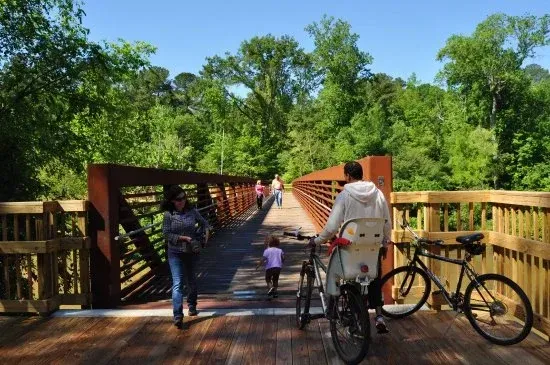
Parks & Outdoor Living in Clayton, NC (2026)
Clayton has invested millions in multi-use trail networks and river infrastructure over the past decade — and the results consistently surprise out-of-state buyers who assume a Johnston County address means sacrificing premium outdoor amenities. For buyers evaluating the Triangle, Clayton's natural footprint — anchored by the Neuse River corridor, the East Coast Greenway, and massive master-planned trail loops — is one of the most underappreciated quality-of-life advantages the eastern corridor offers.
Sam's Branch Greenway & Clayton River Walk — The 70-Mile Connection
The absolute spine of Clayton's public recreation footprint is its seamless integration into the Triangle's regional greenway grid.
The Original Artery: Sam's Branch Greenway began as a scenic 1.25-mile, 10-foot-wide paved multi-purpose path. It is famous for its vibrant outdoor public art project — featuring hand-painted installations designed by local artists and Johnston County schoolchildren.
The Downtown Extension: Thanks to the multi-mile Western Expansion project, the paved trail network now extends for over 3 miles, cutting directly through Legend Park and terminating at Clayton Municipal Park. This infrastructure extension allows hikers and cyclists to travel from the river banks straight into downtown Clayton proper without navigating main-road traffic.
The Regional Play: At the eastern trailhead, Sam's Branch connects directly with the 4-mile Clayton River Walk on the Neuse — a designated segment of the North Carolina Mountains-to-Sea Trail and the 3,000-mile East Coast Greenway stretching from Maine to Florida. As a result, Clayton residents have a front-row seat to over 70 contiguous miles of paved greenway running all the way through Raleigh, Durham, and beyond.
The Buyer's Takeaway: Thanks to these connections, Clayton residents have immediate access to 70 contiguous miles of paved greenway stretching from downtown Clayton up through Raleigh, Falls Lake, and beyond. This is elite-tier bicycle and running infrastructure that typically requires a hefty real estate premium in Wake County.
Clemmons Educational State Forest — A Managed Natural Gem
Located just minutes west of the town center off Old US-70, Clemmons Educational State Forest is one of North Carolina's most unique family outdoor destinations.
The Environment: Spanning pine stands and rolling piedmont hardwoods, it features rock formations, running streams, and a central pond.
The Features: Over 6 miles of well-marked natural terrain trails — gravel, mulch, and boardwalks — accented by interactive exhibits including the famous "Talking Trees" and "Talking Rocks" trails that teach children about forest ecology. It also features a specialized open-air Water Quality Classroom and public picnic shelters, operating as a protected seasonal asset from March through November.
East Clayton Community Park — The Youth Sports Epicenter
As Clayton's largest town-maintained athletic complex, East Clayton Community Park is the active heartbeat for Johnston County youth leagues and weekend recreational players. The assets include regulation baseball and softball diamonds, multi-use soccer and football fields, a modern playground facility, a dedicated dog park, and a targeted trailhead that feeds directly into surrounding municipal reserves. If your family is involved in local league sports, this beautifully maintained park will be a fixture of your weekly routine.
Neuse Adventures — River Outfitting on Main Street
Paddling isn't a weekend road trip in Clayton — it's a Saturday afternoon casual activity. Operating directly out of the downtown corridor, Neuse Adventures provides kayak and canoe rentals alongside staged two-hour lazy river float trips down the Neuse River. For residents in river-hugging communities like Glen Laurel and Riverwood Athletic Club, accessing a scenic afternoon water route requires less than a 5-minute drive from the driveway to the launch point.
Master-Planned Trail Integration & Golf Infrastructure
Clayton's premier private neighborhoods augment the public park infrastructure by embedding deep natural assets directly into their community layout.
Flowers Plantation: Contains over 20 miles of private, paved walking and golf-cart-friendly trails winding through its residential sectors. The trail network is a legitimate alternative transit system — connecting distinct home phases directly to the Harris Teeter commercial center, neighborhood schools, and the East Triangle YMCA.
Riverwood Athletic Club: Features its own private wooded trail loop that integrates directly into the Clayton River Walk, allowing residents to bike from their front door out onto the broader 70-mile regional greenway network.
The Johnston County Golf Advantage: Clayton stands as one of the most value-dense golf markets in the Raleigh metro. Both Riverwood Golf Club — a 27-hole championship layout — and Glen Laurel Golf Club — a pristine 18-hole course tracking the Neuse River — offer top-tier playability. For avid golfers, accessing championship courses at Johnston County membership rates versus the steep multi-thousand-dollar initiation premiums required in Cary or North Raleigh is a significant financial advantage.
Clayton Regional Outdoor Proximity (Off-Peak Drive Times)
William B. Umstead State Park — ~35 minutes northwest via I-40
Falls Lake State Recreation Area — ~35–40 minutes north via US-70
Jordan Lake State Recreation Area — ~45–50 minutes west via US-64
💡 Phil's Perspective
"When out-of-state buyers think of Johnston County, they often picture flat farmland. I love taking them down to Covered Bridge Road and showing them the Clayton River Walk. When they realize they can hop on a road bike in downtown Clayton and ride on a dedicated, paved path all the way into North Raleigh without ever seeing a car, the conversation completely shifts.
If you are trying to maximize daily outdoor access without paying the steep premiums of Cary or North Hills, Clayton is an absolute goldmine. My neighborhood recommendation for serious outdoor lovers? Look at resales in Glen Laurel or the river-facing phases of Riverwood. You get massive, mature hardwood trees on your lot, and the Neuse River is quite literally your backyard neighbor."

Amenities & Community Services: The Clayton Standard (2026)
Clayton has undergone one of the more quietly impressive community transformations of any Triangle submarket. In 2026, the convergence of a booming downtown scene, expanded healthcare networks, and massive mixed-use developments on the horizon means the "small town people settle for" narrative no longer applies. This is a community building its identity deliberately — and savvy buyers are arriving specifically to capture equity before the story is fully priced in.
Downtown Clayton — The Cultural & Commercial Core
The evolution of Clayton's historic downtown from a quiet county seat into a genuine dining and entertainment destination is a primary driver of local real estate values and long-term neighborhood appreciation.
The Vibe: An authentic, walkable main street core built around fiercely independent operators rather than generic chain retail — a curated blend of craft breweries, boutique cocktail lounges, and chef-driven dining that makes out-of-state transplants take notice.
Current Anchors: Deep River Brewing Company — Clayton's original craft brewery and community living room; Revival 1869 — an upscale historic jazz and whiskey lounge pouring 300+ spirits; InStill Distilling Co.; and Crawford Cookshop — from multi-time James Beard Award nominee Chef Scott Crawford, representing the most significant fine dining investment in Johnston County's history and a genuine signal of where Clayton's culinary identity is heading.
The Future — The Copper District: Positioned at the crossroads of NC-42 and the US-70 Bypass, early infrastructure and wastewater engineering are already underway on the Copper District — a massive, forward-looking mixed-use development that will blend medical wellness facilities, corporate offices, outdoor dining plazas, and performance landscapes into a single destination district. Buying in Clayton today means capturing residential equity before this multi-million-dollar anchor opens its doors.
The Clayton Center — Performing Arts Anchor
The most consistently underestimated municipal amenity in Johnston County. The Clayton Center is a premier 720-seat performing arts venue housed within a beautifully restored historic brick school building, regularly hosting professional live theater, Broadway touring productions, national musical acts, stand-up comedy, and community programming throughout the year.
The Signal: A civic asset of this caliber in a community this size indicates the level of municipal pride and cultural investment that historically precedes long-term property appreciation. Clayton's performing arts infrastructure is not the product of recent growth — it is the foundation that growth is building on top of.
Community Arts & Visual Identity
Clayton's creative personality is anchored by Artmosphere Arts NC — a community visual arts hub operating out of the downtown perimeter with rotating gallery exhibitions, pottery studios, adult technical workshops, and highly popular youth summer arts camps starting at age three. Artmosphere collaborates closely with the downtown business association to run seasonal art walks and community events, ensuring Clayton's identity is anchored around creative community rather than generic strip mall retail.
The Clayton Healthcare Network
Johnston County's healthcare infrastructure has expanded significantly to keep pace with the influx of biotech and pharmaceutical families relocating to the region.
UNC Health Johnston — Clayton Campus: Located along the booming NC-42 West corridor, this modern full-service hospital features an expansive emergency department, three-floor medical and surgical units, an ICU and Progressive Care wing, and advanced operating rooms — bringing hospital-level acute care directly into Clayton's primary growth corridor.
The UNC Connection: As an integrated affiliate of the UNC Health Care network, the Clayton campus gives residents direct, seamless access to the broader Tier-One clinical specialists at Chapel Hill — without requiring a separate referral pathway outside the system.
Regional Specialization: World-class tertiary care at Duke Health, WakeMed, and UNC Chapel Hill is accessible within 25–40 minutes from central Clayton addresses for complex oncology, cardiac, pediatric, and specialty surgical needs.
The Clayton Event Calendar (2026 Core Traditions)
Clayton Farmers Market: A staple Saturday morning tradition held downtown, connecting Flowers Plantation and Riverwood residents directly with Johnston County organic farms, artisan bakers, and local meat producers.
Deep River Taproom Programming: Functions as a weekly community hub across all neighborhoods — hosting popular trivia nights, live music series, food truck rodeos, and seasonal block parties that draw residents from every corner of the Clayton market.
Boyette Farms & Clayton Fear Farm: The area's premier agritourism destination. Pumpkin patches and hayrides by day; the Triangle's legendary Clayton Fear Farm haunted attraction every October; Christmas lights programming along the Neuse River to close the year.
The Clayton Center Season: Full performing arts calendar running fall through spring. Check theclaytoncenter.com directly for the current season schedule and ticket availability.
Artmosphere Programming: Rotating exhibitions, seasonal art walks, workshop series, and community arts events anchoring Clayton's visual arts calendar throughout the year.
💡 Phil's Perspective
"When clients look at Clayton, I tell them to ignore the old stereotypes. Spend a Friday night walking down Main Street. Grab a craft cocktail at Revival 1869, look at the outdoor sculpture trail, and see the crowd outside Crawford Cookshop. This isn't a cookie-cutter suburban shopping center — it's an authentic, soul-filled downtown that is still early enough in its trajectory for buyers to get in ahead of the curve.
With UNC Health continually expanding its medical infrastructure along NC-42 West, and the town actively investing in utility tie-ins for the upcoming Copper District, the municipal foundation here is rock solid. Buying a home within a 3-mile radius of Main Street or inside the Flowers Plantation corridor right now lets you lock in lower Johnston County taxes while living right next door to the Triangle's next major lifestyle destination."
📍 Local Insight: For the best Clayton evening, start with dinner at Crawford Cookshop or a seasonal release pour at Deep River Brewing, then walk to Revival 1869 for a craft cocktail in the jazz lounge — and check The Clayton Center calendar before you go, because an evening that ends with a live performance in that restored historic building is the one that makes buyers stop comparing Clayton to what they left and start wondering why they waited this long to look here.
Amenities as a Buyer Consideration
Glen Laurel / Riverwood Athletic Club / downtown-adjacent: Best positioned for walkable daily living — Deep River Brewing, Revival 1869, Crawford Cookshop, and the Clayton River Walk on foot or a very short drive, with The Clayton Center within easy walking distance on performance nights.
Flowers Plantation: On-site commercial district with Harris Teeter, dining, and retail accessible by trail or golf cart from most residential phases — plus the developing Waterfront District adding amenity density year over year. The strongest self-contained community infrastructure of any Clayton neighborhood.
East Village: Walkable access to The Walk at East Village retail strip — the best new construction walkability in Clayton, with grocery, dining, and services accessible without a car from most phases.
Riverwood Golf Club / Portofino / Tuscany: 5–10 minute drive to downtown Clayton's full amenity corridor, 10–15 minutes to the Flowers Plantation commercial district — the best balance of estate privacy and community access for luxury buyers who want space without true isolation.
Buckhorn Branch / Wilson's Walk / Highgate / Broadmoor: Short drive to Clayton's US-70 retail corridor and downtown; furthest from walkable amenity density but closest to the Johnston County employer corridor along US-70 Business — and the strongest value-per-square-foot of any Clayton residential tier.
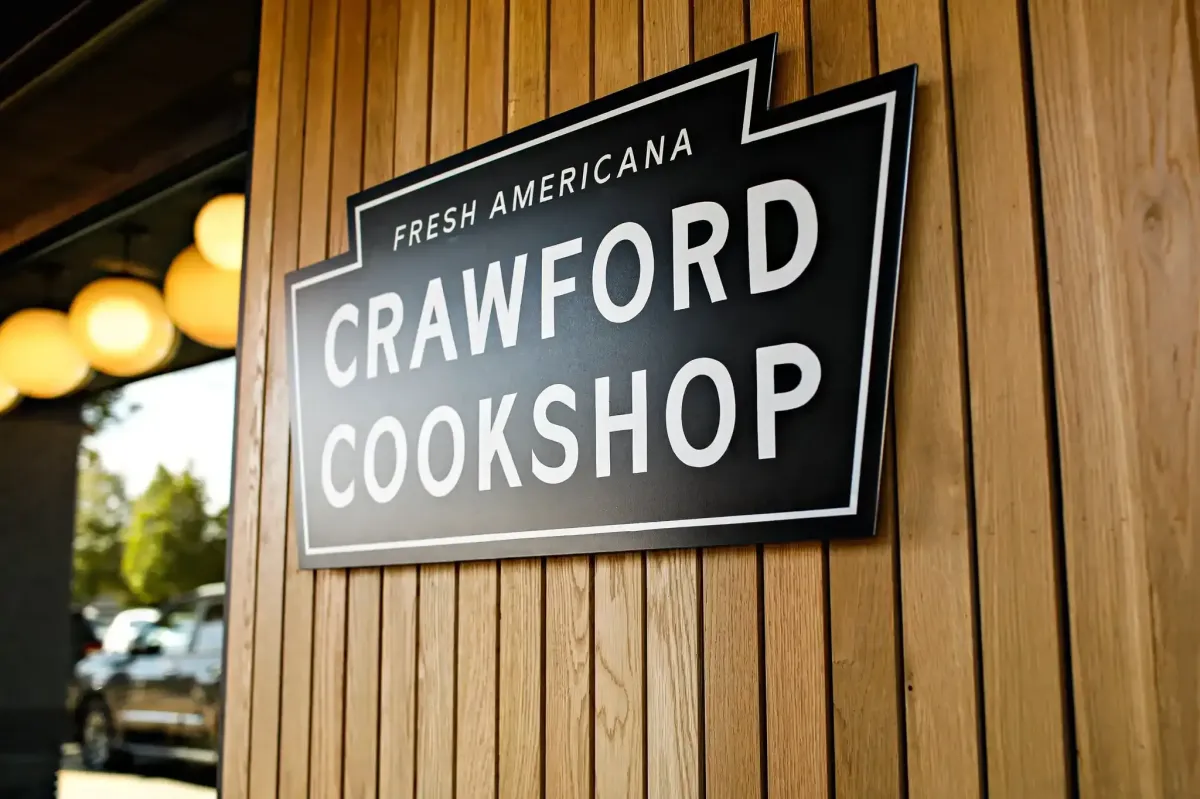
The Clayton Dining & Entertainment Scene
Clayton is not yet a nationally recognized culinary destination — and any page that claimed otherwise would lose a buyer's trust immediately. What Clayton is in 2026 is something more interesting for the right buyer: a dining scene early enough in its trajectory that the best operators are still accessible, still building their reputations, and still priced the way great independent restaurants are before the national press finds them. The buyers who discover Crawford Cookshop and Revival 1869 before they have a six-week wait are the same buyers who got into Flowers Plantation before the Novo Nordisk announcement changed the price conversation.
The Anchor — Crawford Cookshop
The most significant fine dining investment in Johnston County's history and the clearest signal yet that Clayton's culinary identity is being built by serious operators. Chef Scott Crawford — a multi-time James Beard Award nominee whose flagship Crawford and Son in Raleigh earned national recognition — chose Clayton for his second concept. Crawford Cookshop brings the same farm-forward sourcing philosophy and precise execution to a more casual, community-oriented format. It is the restaurant that makes buyers from Raleigh stop and recalibrate their assumptions about what Johnston County's dining scene has become.
Downtown Core — Independent Operators Building Something Real
Deep River Brewing Company — Johnston County's original craft brewery and the community living room of Clayton's downtown. The taproom, beer garden, and rotating tap list have built a regional following that draws buyers from Garner and Raleigh who have stopped thinking of this as a local-only destination. Trivia nights, live music, food truck rotations, and seasonal release events make it a near-weekly destination for residents across every Clayton neighborhood.
Revival 1869 — An upscale vintage jazz and whiskey lounge pouring 300+ spirits in a restored historic building. The kind of cocktail program that makes transplants from Charleston or DC feel immediately at home — and the venue Clayton residents take out-of-town guests to when they want to demonstrate that Johnston County has arrived. The bar program is exceptional and the room has the energy of a venue in a city twice Clayton's size.
InStill Distilling Co. — A craft distillery producing award-winning whiskeys and gins in the heart of downtown. Tasting room events, private distillery experiences, and a retail operation that ships beyond Johnston County. InStill has built a following outside the Triangle and represents the kind of artisan food and beverage operator that anchors downtown identities in communities that get the formula right.
First Street Tavern & The Cardinal Bar — The everyday locals' spots. The Cardinal anchors the casual end of downtown with rotating craft taps, live music, pool, and the best hot dogs in Johnston County. First Street Tavern fills the neighborhood bar role that every genuine downtown needs. Together they give Clayton's evening scene depth beyond the destination venues.
LaDiDa Wine Shop — A curated independent wine shop with a tasting program and retail selection that serves the Flowers Plantation and Riverwood professional demographic that now defines much of Clayton's buyer base.
Full-Service Dining — Clayton's Growing Restaurant Scene
Manning's Restaurant — A Clayton institution and the town's most established full-service dining anchor. Manning's has served Johnston County families for years and remains the go-to for reliable American comfort food in a welcoming, unpretentious setting. The kind of neighborhood restaurant that every genuine community needs as its foundation.
Clayton's Steakhouse — Johnston County's premier steakhouse and the destination for date nights, milestone celebrations, and the Novo Nordisk executive dinner that needs to impress. Quality cuts, a full bar, and a dining room that punches well above what buyers expect from a suburb this size.
Tavern 42 — A locally owned full-service restaurant and bar with a broad menu and comfortable neighborhood atmosphere that draws regulars from Flowers Plantation and Riverwood. One of Clayton's most consistent weeknight options for residents who want a proper sit-down meal without the formality of a special-occasion restaurant.
Aaktun Clayton — A standout addition to Clayton's dining scene bringing bold flavors and a creative menu to the downtown corridor. Aaktun has built a following among the younger professional demographic that the Novo Nordisk employment wave has brought to Johnston County and represents exactly the kind of independent operator the Copper District development is designed to attract more of.
Mezcalito Grill & Tequila Bar — Clayton's go-to for Mexican cuisine and an exceptional tequila and mezcal program. The kind of lively, well-executed casual dining concept that fills a genuine gap in the Johnston County market and draws regulars from every surrounding neighborhood. Strong margarita program. Consistent weekend crowds.
Local Legends — The Places Clayton Residents Won't Stop Talking About
Vinson's — The kind of place that doesn't need a marketing budget because Johnston County residents do all the advertising themselves. Vinson's has earned its local legend status through years of consistency and the kind of unpretentious, honest cooking that keeps regulars coming back weekly. Ask any long-tenured Clayton resident where they go when they want a meal that feels like home — Vinson's is the answer more often than not.
Venero's — Clayton's beloved Italian staple and the dinner reservation that Flowers Plantation and Riverwood families have been making for years. Venero's occupies the neighborhood Italian role that every community needs — generous portions, familiar flavors, and a dining room that feels genuinely welcoming rather than performatively casual. A consistently cited local favorite that out-of-state buyers discover within their first month in Johnston County and immediately add to the regular rotation.
Beyond Downtown — Growing Corridor Options
Clayton's US-42 and NC-70 corridors have expanded meaningfully with regional and national casual dining options serving the master-planned community residential base. Full grocery access — Harris Teeter, Publix, Walmart, Food Lion, and Aldi — is available within minutes of every major Clayton community. For buyers who want the full Triangle dining landscape, Durham's nationally recognized restaurant scene is 35–40 minutes west and Raleigh's complete dining ecosystem is 20–30 minutes via I-40.
Arts, Culture & Entertainment
The Clayton Center — A 720-seat performing arts venue in a beautifully restored historic school building presenting professional theater, Broadway touring productions, national musical acts, comedy, and community events throughout the year. The Triangle's most underrated performing arts venue per capita and a consistent anchor of Clayton's cultural calendar.
Artmosphere Arts NC — Community visual arts hub with rotating gallery exhibitions, pottery studios, adult workshops, and youth summer arts programming. Seasonal art walks and community events throughout the year.
Clayton Sculpture Trail — A self-guided public art installation threading through downtown Clayton with rotating works by regional and national artists. Free, permanent, and walkable — one of the most underrated public amenities in Johnston County.
Boyette Farms / Clayton Fear Farm — The Triangle's premier fall agritourism destination. Pumpkin patches, corn mazes, and hayrides through October; Christmas lights programming along the Neuse River through December.
Neuse Adventures — Guided river float trips, kayak and canoe rentals, and seasonal river events on the Neuse. A Saturday afternoon institution for Clayton residents and a genuine outdoor entertainment option that most Triangle suburbs at this price point can't offer.
📍 Local Insight: The best kept secret in the eastern Triangle is a Friday evening that starts with dinner at Crawford Cookshop, moves to a craft cocktail at Revival 1869, and ends with a walk along the Clayton River Walk under the sculpture trail lights. It is the kind of evening that makes buyers stop comparing Clayton to what they left and start asking why they waited this long to look here.
Where Clayton Is Located in the Triangle
Clayton sits at the eastern edge of the Research Triangle, approximately 20 miles southeast of downtown Raleigh along the US-70 / I-40 corridor and 35–40 miles east of Research Triangle Park. It is the Triangle's easternmost major suburb and the primary residential anchor for Johnston County's expanding life sciences employment base — a position that is fundamentally different from what it was five years ago, and will be different again in five more.
The Geographic Reality
Clayton is the only major Triangle suburb that sits directly adjacent to Johnston County's life sciences corridor — placing Novo Nordisk and Grifols employees within 5–15 minutes of their front door in a way that no Wake County address can replicate. For the professionals filling the 1,000+ new positions coming online through Novo Nordisk's $4.1 billion expansion, living in Clayton is not a geographic compromise. It is the obvious choice.
What that position also means: Clayton is not a bedroom community waiting to be discovered. It is a community whose employment anchor has already arrived, whose master-planned infrastructure is already built, and whose appreciation catalysts — the I-540 eastern extension, the Copper District development, the Novo Nordisk campus reaching full operational capacity — are on a known and funded timeline. Buyers aren't speculating on Clayton's future. They are purchasing ahead of a specific set of infrastructure and employer milestones whose completion dates are public record.
For buyers working at Novo Nordisk, Grifols, or Johnston Health, Clayton's geographic position effectively eliminates the commute — replacing it with 5–15 minutes of local driving that buyers in Raleigh, Garner, or Cary accept as an unavoidable daily cost. That time compounds. Over a five-year period, a Clayton resident working at Novo Nordisk recovers hundreds of hours versus a Raleigh buyer making the same drive. That is not a small number — and it is one of the most underappreciated financial arguments for Johnston County real estate in 2026.
For buyers whose primary employer is in downtown Raleigh or Research Triangle Park, the geographic calculation shifts — but does not break. Downtown Raleigh is 20–30 minutes in normal traffic, a manageable daily run. RTP is 35–45 minutes today, a number that will decrease meaningfully when the I-540 eastern extension connects Johnston County directly to the Triangle's outer belt. Buyers purchasing now are buying the current commute at Clayton's current price — and the improved commute at the same price when the infrastructure lands. That is a sequencing advantage that disappears the moment the extension opens.
Distance & Drive Times from Clayton, NC (2026)
Off-peak estimates. Peak-hour times on I-40 and US-70 corridors add 10–25+ minutes depending on time of day and origin point within Clayton.
| Destination | Distance | Off-Peak Drive | Peak-Hour Note |
|---|---|---|---|
| 🧬 Novo Nordisk Campus (Clayton) | ~3–8 miles | 5–15 min | 10–18 min via local routes |
| 🏥 Johnston Health / UNC Health (Clayton) | ~3–6 miles | 8–14 min | 10–18 min local |
| 🏙️ Downtown Raleigh | ~18–22 miles | 20–30 min | 30–42 min via US-70 / I-40 |
| 🏘️ Garner / South Raleigh | ~12–16 miles | 15–20 min | 20–28 min via US-70 West |
| 🏘️ Knightdale | ~10–14 miles | 14–20 min | 18–26 min via US-70 |
| 🏛️ Smithfield (Johnston Co. Seat) | ~12–16 miles | 15–20 min | 18–25 min via US-70 East |
| 🏢 Research Triangle Park (RTP) | ~30–36 miles | 35–45 min | 45–60 min via I-40 (improving w/ I-540) |
| ✈️ RDU International Airport | ~28–34 miles | 30–40 min | Allow 55–65 min for flights |
| 🏘️ Cary / Apex | ~28–34 miles | 30–42 min | 42–55 min via I-40 |
| 🏙️ Durham | ~38–44 miles | 42–52 min | 55–70 min via I-40 |
| 🎓 Chapel Hill / UNC | ~42–48 miles | 46–56 min | 60–75 min via I-40 |
| 🏘️ Wake Forest | ~35–42 miles | 40–52 min | 55–70 min via US-401 / I-540 |
| 🌳 Clayton River Walk (downtown) | ~1–4 miles | 4–8 min | 5–12 min local |
| 🌲 Falls Lake State Recreation Area | ~32–38 miles | 35–42 min | 42–52 min via US-70 North |
| 🌊 Jordan Lake State Recreation Area | ~42–50 miles | 46–56 min | 58–72 min via US-64 |
What Surrounds Clayton in the Triangle
One of the questions buyers from out of state consistently ask is what lies beyond Clayton's borders — and whether the town feels isolated from the broader Triangle. The honest answer is more nuanced than either extreme. Clayton is not the geographic center of the Triangle — but it is far less isolated than its eastern address suggests, and the infrastructure coming online through 2027–2030 will close that gap materially.
Wake County / Garner and Knightdale — Immediately to the west via US-70, Garner and Knightdale provide the transition zone between Johnston County and Raleigh's eastern neighborhoods. For Clayton residents, this corridor is the daily commute artery — and it is generally smooth and predictable outside of peak hours.
Eastern Johnston County / Smithfield — To the southeast, Smithfield serves as Johnston County's seat with additional retail, services, healthcare, and the county's administrative infrastructure. Clayton residents access Smithfield in 15–20 minutes for county government services and Johnston Health's main hospital campus.
Wilson County and Eastern NC — Further east along US-70 and I-95, the landscape transitions out of the Triangle's suburban market into genuine eastern North Carolina — a meaningful buffer that gives Johnston County's residential market its rural feel and large-lot availability without true geographic isolation.
Nash and Franklin Counties — To the northeast, rural land opportunity with larger parcels and equestrian properties for buyers who want acreage within Triangle commuting distance at prices that Johnston County's growth has not yet fully reached.
For buyers, this surrounding geography matters because Clayton is not hemmed in — it has the open land availability to the east and south that supports the large-lot and acreage residential product that Wake County exhausted years ago, while remaining genuinely connected to Raleigh's employment and amenity base to the west.
The Triangle Context — Where Clayton Fits
The Research Triangle region is anchored by three university cities — Raleigh, Durham, and Chapel Hill — with Research Triangle Park at the geographic center. Clayton sits at the eastern edge of this constellation, outside the traditional Triangle core but increasingly integrated into it through employment, infrastructure, and buyer demand.
In the broader Triangle hierarchy:
Lowest median price per square foot: Clayton (~$186/sq ft)
Highest new construction share: Clayton (33% of active listings)
Strongest life sciences employer anchor: Clayton (Novo Nordisk $4.1B, Grifols $210M)
Best acreage and large-lot value: Clayton and eastern Johnston County
Most master-planned community infrastructure per dollar: Clayton (Flowers Plantation, Riverwood Athletic Club)
Strongest pre-infrastructure appreciation thesis: Clayton (I-540 extension, Copper District, Novo Nordisk buildout)
Clayton's position in this hierarchy is clear — it is the value leader of the Triangle for buyers who prioritize space, new construction, and long-term appreciation potential over urban proximity, with an employer investment story that has not yet fully priced into the residential market.
The Commute Reality in Geographic Context
Clayton's geographic position creates its primary advantage — and its primary trade-off.
The advantage: Johnston County's life sciences employers — Novo Nordisk, Grifols, Johnston Health — sit 5–15 minutes from most Clayton neighborhoods. For the professionals filling those roles, no other Triangle address delivers this proximity. Downtown Raleigh is 20–30 minutes in normal traffic — a manageable daily run that most Clayton residents navigate without complaint. The future I-540 eastern extension will reduce RTP commute times by 10–20 minutes and expand the effective buyer pool for Johnston County properties significantly.
The trade-off: Research Triangle Park is 35–45 minutes today at peak hours — longer than Durham, Cary, or Morrisville deliver for the same destination. For buyers whose primary employer is deep in RTP or on the western Triangle corridor, Clayton's geographic position means a real daily commute cost that should be tested before committing to a neighborhood.
This is why employment location is the single most important variable in the Clayton decision. The same address that eliminates the commute entirely for a Novo Nordisk engineer is a 45-minute daily drive for an RTP employee on the western campus edge. Getting that variable right before choosing a community is the first conversation worth having.
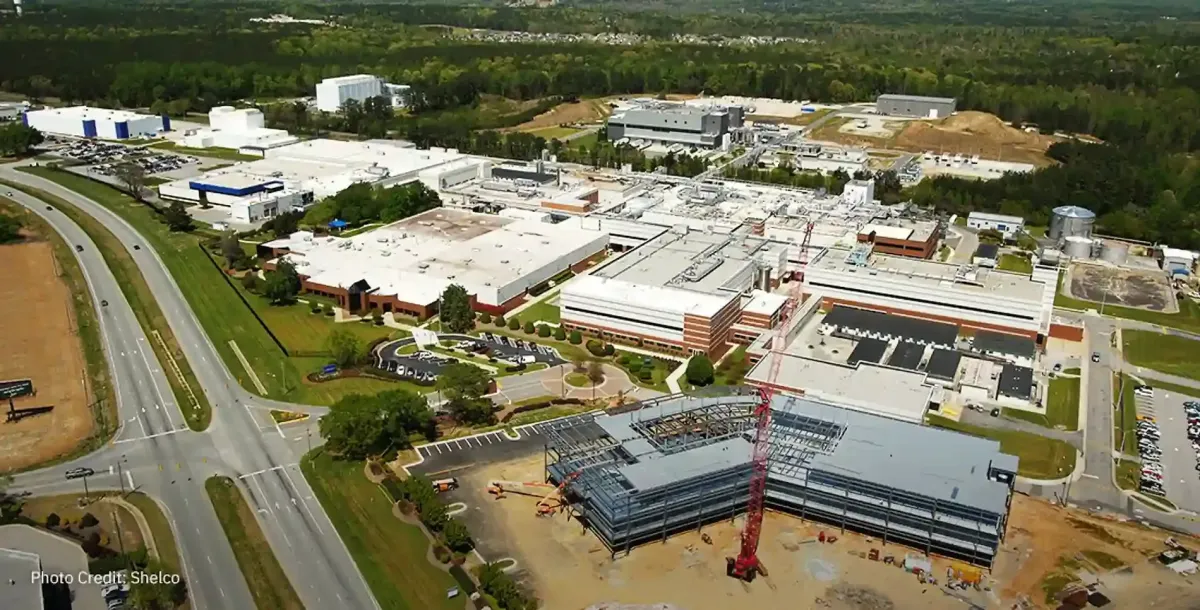
Future Growth & Development in Clayton, NC (2026)
Clayton doesn't rely on a single development project to drive its real estate trajectory. Instead, the market is powered by a multi-layered convergence of multi-billion-dollar life sciences investments, major highway infrastructure completions, and massive new mixed-use master plans. In 2026, these signals are converging simultaneously — positioning Clayton at a historic inflection point for buyers who understand where the market is in its cycle.
Novo Nordisk $4.1 Billion Expansion — The Anchor Investment
The most critical private sector driver for Clayton real estate values is Novo Nordisk's pharmaceutical manufacturing campus expansion — the largest private capital investment in North Carolina's life sciences history.
The Scope: A $4.1 billion capital expenditure to construct a new 1.4-million-square-foot production facility across approximately 56 acres
The Employment Impact: Adding 1,000+ high-wage life sciences and engineering roles to the 2,000+ personnel already operating in Johnston County
The 2026 Reality: Construction is highly active, with phased operational rollouts scheduled from 2027 through 2029
The Buyer's Play: Corporate relocation buyers are absorbing luxury custom inventory in Portofino and premium single-family homes in Flowers Plantation right now — before the facility hits full operational capacity. The professionals filling these roles represent exactly the buyer profile that historically drives residential appreciation in surrounding markets. Buyers who purchase ahead of the operational opening are buying before that demand fully surfaces.
The Copper District — The Mixed-Use Lifestyle Catalyst
Positioned at the crucial intersection of NC-42 and the US-70 Bypass, the Copper District is Johnston County's most anticipated mixed-use commercial development and the core project transforming Clayton from a traditional bedroom suburb into a self-sustaining destination.
The Vision: A walkable village blending medical wellness centers, corporate office blocks, public plazas, boutique retail corridors, and performance landscapes into a unified destination district
2026 Construction Milestone: Major progress is underway. Following a $1.7 million public-private infrastructure partnership, crews have commenced active site grading and construction on the landmark elevated water storage tank designed to support the district. The Town of Clayton also approved critical wastewater infrastructure upsizing to prepare the site for its first vertical phases through 2027
The Buyer's Play: This is a classic buy-ahead-of-the-pavement opportunity. Homes within a 3-mile radius of the NC-42 corridor stand to gain significant equity as this lifestyle anchor moves from blueprints to grand openings. The buyers who benefit most are the ones who purchase before the first tenants open their doors.
Grifols $210 Million Expansion — Deepening the Employment Base
Further stabilizing the local housing market is Grifols — an established pillar of Clayton's life sciences economy employing over 2,000 local residents — executing a $210 million capital expansion to scale up plasma medicine production at its local facility.
Because biopharma manufacturing is highly capital-intensive and recession-resistant, it creates an exceptionally stable economic foundation that keeps local home values resilient against broader market swings. Grifols' expansion deepens the employment floor that Novo Nordisk's expansion headlines — giving Clayton a pharmaceutical employment base that does not depend on a single employer's performance.
Toll NC-540 Extension — The Game-Changing Highway Connection
The expansion of the outer loop is the single most consequential transportation catalyst in the modern history of the eastern corridor — and Phase 1 is already open.
The Phase 1 Milestone: The Complete 540 Phase 1 extension is officially open to traffic, extending Toll NC-540 eighteen miles from Apex and Holly Springs straight to the I-40 / US-70 interchange at Clayton's western gate. This is not a future projection. It is operational today
The Phase 2 Timeline: Construction is aggressively moving forward on Phase 2, which will extend the expressway an additional ten miles from Clayton's border up to Knightdale, with a projected final completion date of 2028
The Commuter Transformation: Phase 1 has already meaningfully reduced off-peak drive times to southern Wake County, Cary, and RDU Airport. Once Phase 2 completes, Clayton will be seamlessly integrated into the entire regional highway loop — permanently removing the commute objection that has historically suppressed Johnston County pricing relative to its fundamentals, and opening the market to a significantly expanded buyer pool
Flowers Plantation Waterfront District — Community Anchor in Development
Infrastructure work is moving ahead on Flowers Plantation's south end along the Neuse River. This localized mixed-use project will transform the master plan's commercial footprint from a convenience shopping center into a scenic, walkable dining and retail destination through 2027–2028. Buyers purchasing in Flowers Plantation today are buying before this amenity is fully operational and priced into surrounding home values.
Steel 70 Logistics Hub — Diversifying the Employment Base
Located along the industrial US-70 corridor, this development is introducing approximately 346,400 square feet of modern industrial and logistics space in phased deliveries. Steel 70 diversifies Clayton's economy, generating steady employment positions that anchor the town's entry-level and mid-range workforce housing markets — and providing a demand floor that is independent of the life sciences cycle.
Clayton, NC Growth Metrics Summary (2026)
| Development Catalyst | Sector | Economic Scale | Local Impact Window |
|---|---|---|---|
| 🧬 Novo Nordisk Campus | Life Sciences / Biopharma | $4.1 Billion | Active Construction · 2027–2029 Operations |
| 🏙️ The Copper District | Mixed-Use / Retail / Office | Multi-Phase Destination | 2026 Site Prep · 2027–2030 Delivery |
| 🛣️ Toll NC-540 Loop | Infrastructure / Highway | $2.5 Billion Regional Loop | Phase 1 OPEN · Phase 2 Complete 2028 |
| 💊 Grifols Facility | Bio-Manufacturing | $210 Million Expansion | Operational Scale-Up Phase |
| 🌊 Flowers Waterfront District | Mixed-Use / Community Amenity | Multi-Phase Development | 2026 Infrastructure · 2027–2028 Delivery |
| 🏭 Steel 70 Corridor | Industrial / Logistics | 346,400 Sq. Ft. | Phased Deliveries Ongoing |
📍 Phil's Growth Perspective
"I have tracked Triangle real estate trends for over two decades, and the patterns of wealth generation are highly predictable. First come the employers, then the heavy highway infrastructure, and finally the high-end retail and lifestyle anchors. Every step of that cycle triggers a permanent real estate repricing.
Look at where Clayton sits right now. The employers are already locked in with Novo Nordisk's historic $4.1 billion expansion. The infrastructure is hitting the ground with Toll NC-540 Phase 1 already open. And the lifestyle anchors are breaking ground at the Copper District.
You are looking at the perfect real estate trifecta. Buyers who purchase Clayton property today are locking in Johnston County tax rates and sub-$400K pricing before these multi-billion-dollar projects fully mature. If you wait until 2028 when the 540 loop is finished and the Copper District retail plazas are open, you will be paying a premium for someone else's foresight."

Awards & Recognition for Clayton, NC (2026)
Clayton has not yet earned the national culinary awards or Michelin recognition that defines Durham's urban profile — and a real estate guide that claimed otherwise would immediately lose a buyer's trust.
What Clayton has earned is something far more valuable to a homebuyer making a long-term financial decision: a series of major economic development awards, historic private capital investments, and massive state-level infrastructure commitments. These accolades serve as the leading indicators of a market that is undergoing a major repricing cycle before the general public has fully caught on.
NC Department of Commerce — Top Economic Development Project
Novo Nordisk's historic expansion was recognized by the North Carolina Department of Commerce as one of the most consequential economic development announcements in state history.
The Significance: This designation places Clayton in the same elite tier as the state's most high-profile corporate announcements.
The Buyer's Real Estate Play: State-level recognition signals that massive public infrastructure investment — including road widening, utility grid upgrades, and specialized workforce training centers — will follow the private capital. This explicit sequencing is exactly what drives long-term residential equity in employer-anchored suburban markets.
Johnston County — North Carolina's Fastest-Growing Submarket
Johnston County is consistently recognized in municipal data as one of the fastest-growing counties in North Carolina, with inbound migration rates that routinely outpace Triangle-wide averages. As the county's primary residential growth engine, Clayton anchors this expansion.
The 2026 Data: As of May 2026, the Town of Clayton's population has surged past 35,240 residents, while Johnston County has climbed to an estimated 256,448 residents.
The Pull Factors: This growth is not a flash in the pan — it is driven by a diversified mix of permanent economic anchors. High-paying life sciences employment, pricing pressure in Wake County, master-planned neighborhood amenities, and the newly opened Complete 540 Phase 1 toll road are drawing a steady and accelerating stream of buyers.
The Buyer's Real Estate Play: Population growth at this scale is a direct proxy for future housing demand. It creates a highly resilient market where residential development confidence remains exceptionally high.
Triangle Business Journal — Space & Scope Recognition
The local life sciences corridor has become a fixture in regional business press coverage. The Triangle Business Journal frequently highlights Clayton's biopharma manufacturing ecosystem alongside the multi-billion-dollar Research Triangle Park investments that defined West Cary's real estate boom over the past two decades. This continuous media exposure expands the pool of informed corporate relocation buyers who are actively targeting Clayton for incoming executive housing.
Flowers Plantation — Elite Master-Planned Community Recognition
Flowers Plantation has been widely recognized among the Southeast's most ambitious and successful master-planned developments — a designation that honors the scale, planning quality, and lifestyle infrastructure that sets the community apart from standard suburban subdivisions. For buyers, this recognition confirms that the community's resort-style amenities, YMCA complexes, and miles of trails are professionally managed, financially sustainable, and designed to preserve home values for the long term.
Crawford Cookshop — The Culinary Bellwether
Chef Scott Crawford's decision to open Crawford Cookshop on Main Street is its own prestigious form of market recognition. Crawford — a multi-time James Beard Award nominee whose Raleigh flagships Crawford & Son and Jolie have earned national praise from the New York Times and Bon Appétit — intentionally chose downtown Clayton for his expanded hospitality footprint, committing to the historic 1905 J.G. Barbour & Sons Hardware building.
The Insight: A culinary operator of this caliber doesn't guess on locations. He identified Clayton's rapid demographic shift early and committed serious capital to it. The homebuyers who recognize that exact same signal and act on it are the ones who capture the highest appreciation upside.
Clayton, NC Investment Profile (2026)
✓ State-Recognized $4.1B Biopharma Capital Infusion
✓ ~3.8% Annual Population Influx — Top Tier in North Carolina
✓ Direct Toll NC-540 Highway Integration — Phase 1 Open
✓ James Beard–Level Culinary Commitment to Downtown Clayton
Target Outcome: Pre-Infrastructure Equity Catch-Up Window
💡 Phil's Perspective on Recognition
"Recognition is always a lagging indicator — it simply confirms what those of us who have been paying attention already knew. Chef Scott Crawford didn't open Crawford Cookshop in downtown Clayton just because he liked the historic brick. He looked at the $4.1 billion Novo Nordisk expansion, the Copper District blueprints, and the Toll NC-540 extension, and made a calculated bet that Clayton's consumer base was about to step up in a massive way. That is exactly the same calculation I make with homebuyers every single week.
I've been making this exact calculation about Johnston County for a long time. Back in 2007, I was telling anyone who would listen that Clayton was a goldmine about to explode. Most people looked at me like I had lost my mind. 'Johnston County? Really? Is there anything out there but farms?' The buyers who trusted the thesis and purchased real estate back then have absolutely reaped the rewards. What has happened to home values, community trails, and employer investments in this market over the last 18 years is exactly what I was describing then — because the data pointed right to it if you were willing to read it honestly.
Here is what I know in 2026: the savvy investors we work with regularly — experienced, data-driven buyers who track market cycles for a living — consistently rank Clayton as one of their top target markets in the entire Triangle. They look at the massive price-per-square-foot spread between Clayton at roughly $186 per square foot and Cary at roughly $315 per square foot, they look at the corporate job creation, and they buy.
The casual buyers who wait for Clayton to land a Michelin star or a national glossy magazine cover before they feel safe purchasing here are going to pay the post-recognition price. The window to buy ahead of the curve is wide open right now. It was open in 2007 too — and the people who walked through it back then are very glad they did."
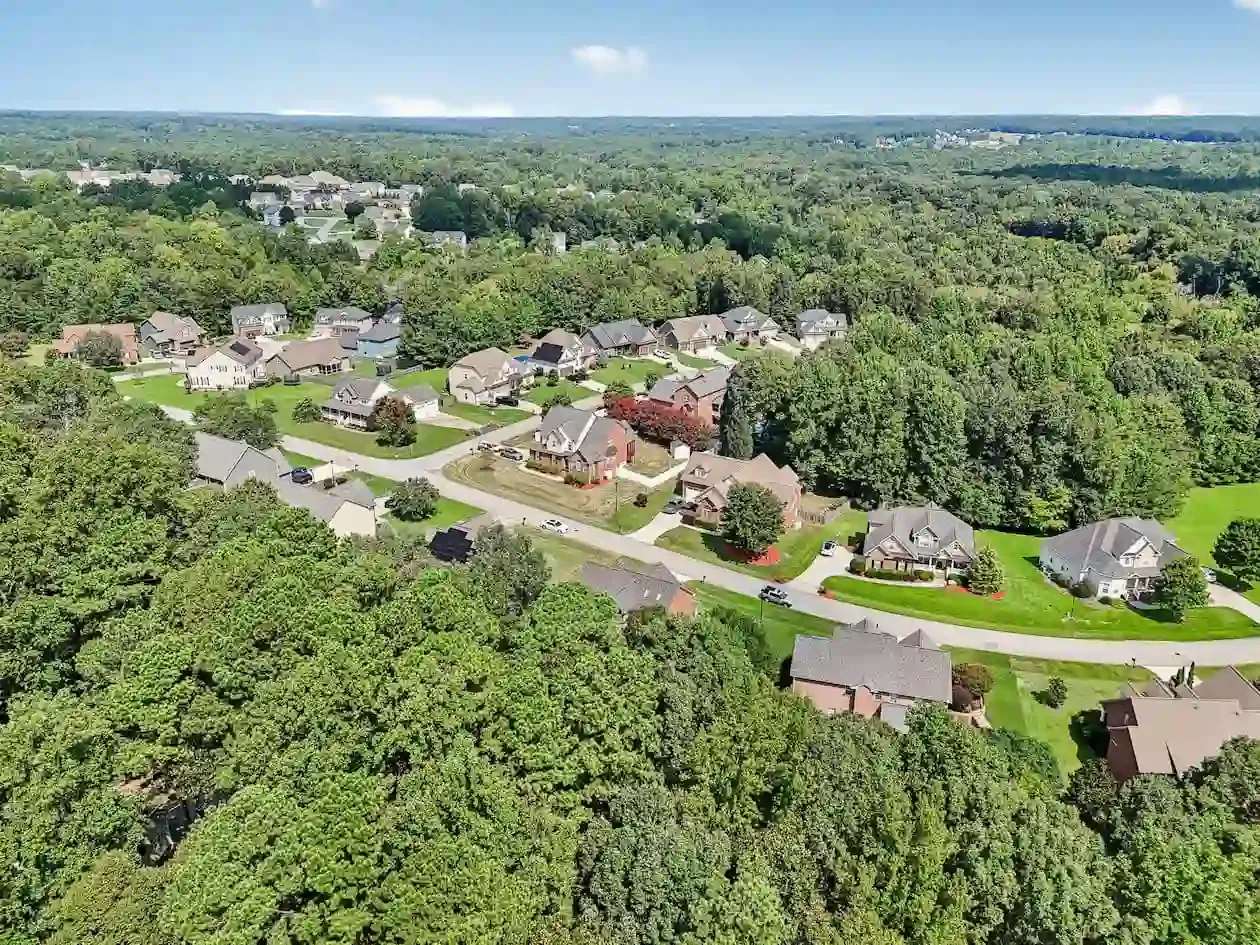
The Bottom Line: Pros & Cons of Living in Clayton, NC (2026)
Every real estate market has trade-offs. Clayton's are far more transparent than most — which is exactly why buyers who understand them make better decisions and stay longer. Here is the honest 2026 assessment.
✅ The Pros — Why Buyers Choose Clayton
1. The Triangle's Best Price Per Square Foot At approximately $186 per square foot and a median sold price of $379,990, Clayton delivers more home per dollar than any other major Triangle suburb — 30% more than Raleigh (~$265/sq ft), 40% more than Cary (~$315/sq ft), and 66% more than Chapel Hill (~$310/sq ft). For buyers relocating from high-cost coastal metros, this value gap is the ultimate purchasing power play.
2. The Strongest Life Sciences Employment Anchor in the Eastern Triangle Novo Nordisk's $4.1 billion expansion and Grifols' $210 million facility represent the most concentrated pharmaceutical manufacturing investment of any Triangle suburb. Combined with UNC Health Johnston's network and the county's school system employment base, Clayton offers a local job corridor that allows residents to live right beside their offices — bypassing the regional commute entirely.
3. Master-Planned Luxury at Johnston County Prices Flowers Plantation and Riverwood Athletic Club deliver resort-quality amenities — 20+ miles of trails, on-site schools, resort pools, championship golf, and YMCA complexes — at price points that are simply unavailable in Wake County for equivalent lifestyle infrastructure. Clayton routinely delivers a $650,000 lifestyle footprint at sub-$400K pricing.
4. 33% New Construction Share — The Highest of Any Major Triangle Suburb With one in three active listings being brand-new construction, Clayton buyers have unparalleled options for modern floor plans, builder warranties, and smart home integration. Active builder incentives — including rate buydowns frequently into the mid-5% range on spec homes and deep closing cost credits — amplify the financial case further.
5. $4.3B+ in Announced Private Investment Not Yet Fully Priced In The Novo Nordisk campus buildout, the Copper District mixed-use
development, and the Flowers Waterfront District represent the largest convergence of private capital in Johnston County's history. Buyers in 2026 are positioning themselves before these catalysts reach full operational capacity and trigger a permanent residential repricing.
6. Toll NC-540 Phase 1 Open — Phase 2 Complete 2028 Phase 1 of the Complete 540 expressway extension is officially open to traffic, linking Clayton's western gateway directly to Apex and Holly Springs. Phase 2 construction is actively progressing toward its 2028 completion, which will bridge the loop to Knightdale and permanently integrate Clayton into the regional highway grid.
7. The Monthly Cash-Flow Winner At a median price of $379,990 versus Cary's $625,000+ median, a Clayton buyer finances $245,000 less. That translates to saving over $15,000 per year in structural mortgage payments — wealth that stays in your bank account and compounds alongside your home's appreciation.
8. Elite Neuse River Corridor and 70-Mile Greenway Access The direct connection between Sam's Branch Greenway, the Clayton River Walk, and the broader 70-mile contiguous paved regional trail network gives outdoor enthusiasts world-class running and cycling access from their doorsteps — infrastructure that typically requires a meaningful real estate premium in Wake County.
⚠️ The Cons — What Buyers Must Weigh Honestly
1. The Peak RTP Commute Is Long Today Driving to the center of Research Triangle Park during the 8:00 AM rush takes 40–55 minutes. While the expanding Toll NC-540 loop will continually reduce drive times as phases complete, daily western Triangle commuters must factor this windshield time honestly into their routine before committing to a neighborhood.
2. School Assignment Fluidity Johnston County Public Schools boasts a 92.5% graduation rate and a strong upward trajectory. However, because of explosive population growth along the NC-42 and US-70 corridors, school attendance zones shift frequently to manage enrollment caps. Address-specific verification at johnston.k12.nc.us is mandatory before making an offer — never assume a community name determines a school assignment.
3. Combined Tax Rate Requires Honest Math The Town of Clayton's combined tax rate is $1.01 per $100 of assessed value — Johnston County at $0.52 plus the Town of Clayton municipal rate at $0.49. On a $380,000 home that is approximately $3,838 per year, or roughly $320 per month. This rate is higher than some Wake County towns on paper — but on Clayton's significantly lower purchase price, the complete monthly payment math consistently favors Clayton over higher-priced Wake County alternatives.
Pro Tip: Properties just outside Town of Clayton limits pay only the Johnston County rate of $0.52 per $100 — approximately $1,976 annually on a $380,000 home. For buyers considering rural or unincorporated Johnston County addresses, confirming the tax jurisdiction before making an offer is worth the conversation.
4. Urban Core Still Maturing Downtown Clayton is a thriving independent success story — but the overall density of upscale dining, mass transit, and boutique retail is still growing. Buyers looking for a fully finished, high-density urban environment today will find Clayton's commercial landscape actively in transition rather than complete.
5. Active Neighborhood Construction Clayton's status as a high-growth suburb means ongoing construction activity, earth-moving equipment, and changing streetscapes in expanding phases like East Village and the Buckhorn Branch corridor. This is a temporary trade-off that buyers in high-growth markets accept in exchange for pricing upside — but tour the specific streets before committing to any phase or lot.
6. RDU Airport Drive Time Central Clayton sits 35–45 minutes from RDU off-peak. Highly manageable via I-40 and the new 540 loop — but weekly business travelers will find it less convenient than Morrisville or Cary.
⚖️ The Honest Verdict: Is Clayton Right for You?
Clayton Is the RIGHT Market If:
✅ You work remotely, hybrid, or locally along the biopharma strip
✅ You want premium new construction incentives under $450K
✅ You want resort amenities and a large lot per dollar
✅ You want to buy ahead of major infrastructure repricing
✅ You're relocating from a high-cost market and want maximum space
✅ You understand the best decisions are made ahead of the headlines
Clayton Is the WRONG Market If:
❌ Every minute of a daily, strict RTP commute counts
❌ Wake County Public Schools are a non-negotiable requirement
❌ You need maximum urban dining density outside your door today
❌ You need 10-minute proximity to RDU for weekly flights
❌ You work at the western edge of RTP or a Durham employer daily
❌ You prefer a fully finished suburban environment over a high-growth community in formation
💡 Phil's Perspective
"Clayton is the ultimate market for buyers who understand that the best real estate decisions are made ahead of the mainstream headlines. If your lifestyle requires a fully built-out, hyper-urban environment with a 10-minute commute to deep Durham, Clayton is the wrong fit.
But if you want to protect your hard-earned equity, maximize your square footage, and watch your property value compound as the $4.1 billion Novo Nordisk expansion and the Toll NC-540 loop permanently mature the eastern corridor — Clayton is the smartest financial play in the entire Triangle right now."
Is Clayton, NC Safe?
The short answer: Clayton is widely recognized as one of the most secure, community-dense suburban footprints in the greater Raleigh metro — particularly within its master-planned developments and established country club subdivisions.
Because town-wide statistical data aggregates every type of zoning together, municipal averages rarely reflect what daily life actually feels like on a specific residential street. In a high-growth market, safety is best evaluated at the exact neighborhood block level — not at the zip code.
The Honest Neighborhood-Level Reality
Established master-planned communities — including Flowers Plantation, Riverwood Athletic Club, Riverwood Golf Club, Glen Laurel, Portofino, Tuscany, East Village, Highgate, and Broadmoor — exhibit safety and stability profiles that directly rival premier residential enclaves across Wake County.
The intentional layout of these master plans — characterized by extensive walking trail connectivity, dedicated community watches, active HOAs, and neighborhood-centric public schools — inherently fosters high community engagement. Residents consistently note that knowing their neighbors and having localized street oversight are natural products of this design philosophy rather than happy accidents.
In contrast, properties framing the older commercial stretches of the US-70 Business corridor or transitional blocks flanking the historic downtown edge experience the standard traffic, commercial activity, and property incidents common to any rapidly expanding southeastern transportation corridor. The single-family communities set back from these main arteries remain highly insulated from that activity. Because block-by-block variance is part of any fast-growing town's maturation, buyers should utilize independent data tools to analyze their exact target address rather than relying on town-wide averages.
Best Structural Layouts for Relocating Buyers
If you are moving from out of state and want neighborhoods designed with a strong emphasis on cul-de-sacs, buffered boundaries, trail connectivity, and neighborhood identity, prioritize these corridors:
Flowers Plantation — across all major active and established phases
Riverwood Athletic Club and Riverwood Golf Club
Glen Laurel — the historic golf standard near the river
Portofino and Tuscany — acreage and semi-custom enclaves
East Village and Highgate
Buckhorn Branch, Wilson's Walk, and the Pine Hollow corridor
How to Research Public Safety for Any Specific Clayton Address
To maintain a strict, evidence-based due diligence process, cross-reference specific addresses using these verified data tools
NeighborhoodScout.com — block-level property data, micro-neighborhood risk maps, and trend analytics
Niche.com — aggregated safety grades by neighborhood based on normalized FBI data
Town of Clayton Police Department — official community incident mapping, policing alerts, and safety programs within town limits
Johnston County Sheriff's Office — unincorporated county-level public safety reporting, geographic registries, and rural sector updates
Your real estate agent can help you access and interpret current data for any specific address during your due diligence period.
💡 Phil's Perspective
"When out-of-state buyers ask me about safety in Clayton, I always give them the exact same piece of advice: never use a town-level macro statistic to make a neighborhood-level lifestyle choice.
Clayton's overall public numbers include everything along the high-traffic commercial highway corridors — which completely skews the picture. They don't show you the reality that walking your dog at 9:00 PM in Flowers Plantation or Riverwood Athletic Club feels just as secure, quiet, and community-oriented as any street in Cary or North Raleigh.
My time-tested recommendation? Use NeighborhoodScout to review the raw numbers for peace of mind — then perform the ultimate test: spend a Saturday morning walking the specific sidewalk loops of the neighborhood you are considering. Talk to the residents washing their cars or walking their dogs. Clayton's master-planned communities tell you exactly who they are in person, and that organic neighborhood cohesion is the primary reason families move here and stay for the long haul."
What Salary Do You Need to Live in Clayton, NC (2026)?
One of the most searched questions from buyers relocating from Northern Virginia, New York, South Florida, and the Midwest — and the answer is more accessible than most expect.
To comfortably purchase a median-priced home in Clayton ($379,990) with a 20% down payment, most financial advisors recommend a household income of approximately $88,000–$105,000 per year. With a 10% down payment, that range rises to approximately $105,000–$120,000.
For renters or buyers at lower price points, Johnston County's cost of living — consistently below Triangle and national averages — means the income threshold is meaningfully lower than comparable suburban markets closer to Raleigh.
Monthly Cost Breakdown — $379,990 Home
| Cost | Monthly Estimate |
|---|---|
| Mortgage (20% down, 6.5% rate, 30yr) | ~$1,921/mo |
| Property Taxes ($3,838/yr at $1.01 per $100) | ~$320/mo |
| Homeowner's Insurance | ~$110/mo |
| HOA (if applicable — varies by community) | $0–$250/mo |
| Total Housing Cost | ~$2,351–$2,601/mo |
Monthly Cost of Living Beyond Housing
| Category | Monthly Estimate |
|---|---|
| Groceries (2-person household) | ~$380–$520 |
| Utilities (Duke Energy, avg.) | ~$140–$230 |
| Transportation (gas, insurance) | ~$280–$420 |
| Dining & Entertainment | ~$280–$550 |
| Healthcare (employer-supplemented) | ~$180–$380 |
| Total Non-Housing | ~$1,260–$2,100/mo |
Varies depending on lifestyle, family size, HOA community, and down payment amount.
How Clayton Compares to the Markets Buyers Are Leaving
| City | Median Home Price | Income Needed to Buy |
|---|---|---|
| San Francisco, CA | ~$1,300,000 | ~$320,000+/yr |
| New York City, NY | ~$780,000 | ~$190,000+/yr |
| Washington, DC / N. Virginia | ~$650,000 | ~$160,000+/yr |
| South Florida (Miami area) | ~$560,000 | ~$138,000+/yr |
| Austin, TX | ~$525,000 | ~$130,000+/yr |
| Charlotte, NC | ~$400,000 | ~$98,000+/yr |
| Cary, NC | ~$625,000 | ~$154,000+/yr |
| Clayton, NC ⭐ | ~$379,990 | ~$88,000–$105,000/yr |
A household earning $140,000 per year in Northern Virginia is effectively cost-burdened — stretching to afford a townhome while watching savings stagnate. That same household in Clayton is comfortably upper-middle class — owning a master-planned community home in Flowers Plantation with 20 miles of trails, a YMCA, and resort pools, saving aggressively, and watching equity compound as the Novo Nordisk campus and I-540 extension price into the surrounding market.
That gap is the single most powerful driver of Clayton's in-migration from the DC corridor, South Florida, and the Northeast — and the reason Novo Nordisk and Grifols recruiters consistently use Johnston County's cost of living as a closing argument when relocating scientific and engineering talent from higher-cost markets.
"The salary question is the one I get most from out-of-state buyers — usually framed as 'can we actually afford this, and will we be giving anything up?' My answer is almost always: you'll be giving up a commute and a zip code premium. A dual-income household with one Novo Nordisk salary and one remote income can live exceptionally well in Clayton — own a home in Flowers Plantation or Riverwood Athletic Club, use the YMCA on the way to work, eat at Crawford Cookshop and Revival 1869 on Friday nights, and still save more than they ever did in the city they left. That combination of community quality and financial breathing room is what Clayton delivers that higher-cost Triangle suburbs simply cannot replicate at this price point."
Why Are So Many People Moving to Clayton, NC in 2026?
Clayton is experiencing one of the most sustained inbound migration waves in its history — and it is not a coincidence. It is driven by the simultaneous convergence of five powerful pull factors that rarely exist in the same suburban market at the exact same time.
1. The Jobs Are Here — and They're Growing Fast
For professionals in pharmaceutical manufacturing, biotech, healthcare, and advanced education, Clayton is no longer a compromise bedroom town. It has become a premier employment anchor.
The Corporate Core: Novo Nordisk currently employs nearly 2,500 workers across its regional campus and is actively adding 1,000+ high-wage positions to staff its massive new 1.4-million-square-foot facility. Grifols anchors the second side of the bio-corridor, employing up to 2,500 personnel locally and executing a $210 million manufacturing scale-up.
The Supporting Sectors: UNC Health Johnston employs over 1,000 healthcare professionals across its expanding clinical network, while Johnston County Public Schools employs a staff of 3,000+.
The Buyer's Reality: Buyers aren't moving to Clayton despite their careers — they are moving because of them. The concentration of local Tier-One employers means you can secure an executive-level livelihood without ever touching the standard I-40 commuter rush.
2. Wake County Quality at Johnston County Prices
Homebuyers relocating to Clayton from Northern Virginia, South Florida, New York, and the Midwest consistently cite the exact same discovery: the job market is robust, the neighborhood design is elite, and the macro-math works overwhelmingly in their favor.
The calculation driving thousands of annual relocation decisions looks like this:
A $120,000 household income in a Tier-One coastal metro correlates to heavy tax strain and a cramped, entry-level townhome with a grueling commute
That exact same household income in Clayton buys a sprawling single-family home in Flowers Plantation featuring 20+ miles of paved trails, resort pools, a premier YMCA, and a monthly savings account that actually grows
Johnston County's baseline cost of living runs consistently below Triangle municipal averages. Its infrastructure — from the pristine walking layouts of Riverwood Athletic Club to the live performances at The Clayton Center — delivers the standard of premium Wake County master plans at a 40–60% discount.
3. The Master-Planned Community Experience Is the Real Deal
In Clayton, "master-planned" is not a hollow marketing buzzword. The town boasts some of the most cohesive, self-contained residential ecosystems in the southeastern United States.
Flowers Plantation spans over 3,000 acres of meticulously designed neighborhoods. Residents can jump on a golf cart or use the 20-mile paved trail loop to travel seamlessly from their front porch straight to the Harris Teeter commercial center, local medical hubs, and the community waterfront district.
Riverwood Athletic Club integrates four swimming pools, a state-of-the-art fitness complex, neighborhood tennis facilities, and two highly rated public schools — Riverwood Elementary and Riverwood Middle — completely within the subdivision borders. Children can walk to class without ever interacting with a main secondary highway.
For buyers who want the classic neighborhood experience that the suburbs originally promised — true civic identity, accessible amenities, and an environment where neighbors build long-term roots — Clayton is the definitive answer.
4. The Value Gap That Coastal Buyers Can't Unsee
With a median price point of approximately $186–$190 per square foot, Clayton provides unmatched purchasing leverage compared to built-out, high-premium Wake County submarkets:
The 2026 Triangle Value Spread — Clayton Baseline Pricing Delivers: ✓ 30% More Home and Acreage than Raleigh ✓ 40% More Home and Acreage than Cary ✓ 66% More Home and Acreage than Chapel Hill
Relocating buyers who are accustomed to markets where a $380,000 budget purchases a one-bedroom condo are consistently stunned by what that investment secures in Johnston County.
The discovery that Clayton's local social scene is fully developed is the ultimate closer. Main Street features world-class dining at Crawford Cookshop — helmed by multi-time James Beard Award nominee Chef Scott Crawford — artisanal craft cocktails at Revival 1869, craft spirits at InStill Distilling, and a deeply engaged community culture at Deep River Brewing Company. The Clayton Center presents Broadway touring productions and national musical acts in a 720-seat historic venue. It offers a sophistication that buyers arriving from coastal cities simply did not expect to find in Johnston County.
5. The Appreciation Story Is Still Early
The most compelling reason families are purchasing in Clayton in 2026 is the sequencing of infrastructure. The major catalysts driving long-term equity are still actively rolling out:
Novo Nordisk's manufacturing expansion is slated for phased operational rollouts through 2027–2029
The Copper District mixed-use center is in its initial grading and foundational utility phases
Construction crews are aggressively extending Toll NC-540 Phase 2 toward its 2028 completion date
The Flowers Plantation Waterfront District retail spaces are actively signing their first commercial leases
Crawford Cookshop opened recently — the dining scene is still building its regional profile
Sellers aren't yet pricing these finished amenities into current home values. Homebuyers who acquire property in Clayton today are locking in sub-$400K baseline pricing before these massive economic catalysts reach full maturation — capturing the maximum upswing of the local appreciation cycle.
💡 Phil's Perspective
"I sit down with relocating buyers every single week who look at me and say the exact same thing: 'Phil, we simply had no idea Clayton was this good.' They initially come to Johnston County expecting a major compromise — assuming they have to sacrifice top-tier culinary options, high-end neighborhood amenities, or trail systems just to get an affordable price tag.
And then they spend a Saturday morning walking the shaded sidewalk loops of Flowers Plantation, grab lunch at Crawford Cookshop, walk over to Revival 1869 for a cocktail, look at the actual mortgage payment comparison versus Cary or North Raleigh, and the conversation instantly shifts from 'is Clayton good enough?' to 'why didn't our relocation company tell us about this place sooner?'
That is the reality of the Clayton market in 2026. The macroeconomic signals are all flashing green, the infrastructure is hitting the ground, and the window to buy ahead of the curve is wide open. It's an incredible time to stake your claim."

Experience Meets Innovation
I'm Phil Slezak, a Triangle-based real estate agent with more than 20 years of experience helping buyers, sellers, and relocating clients evaluate communities across Johnston County and the greater Raleigh metro area.
This Clayton, North Carolina guide is built to provide clear, objective local market insight — including home pricing trends, neighborhood differences, commute patterns to Johnston County employers and Raleigh, school zone realities, and long-term development considerations including the Novo Nordisk expansion, the Copper District, and the I-540 eastern extension.
As one of the first AI-Certified Real Estate Agents in the country, this means more than a credential. In a market moving at the pace of Clayton, I use AI-assisted analysis to evaluate neighborhood-level pricing trends, inventory shifts, builder incentive cycles, and school assignment stability — giving you a faster, more defensible picture of what a specific home is actually worth before you write a check. That analytical layer, combined with two decades of local boots-on-the-ground experience, is what separates a confident move from an expensive mistake.
I've been tracking the Johnston County market since 2007 — when I was telling buyers this corridor was a goldmine before most people believed it. The investors and families who acted on that thesis have been rewarded. The same signals are converging again today, and the window is still open.
For many clients, a move to Clayton isn't just a transaction — it's a major life transition. To provide more security and flexibility, I offer qualified clients access to several unique programs:
Quick Summary for Buyers
Clayton, NC is best suited for buyers who want direct access to Johnston County's life sciences employment corridor, master-planned community amenities at a price point unavailable anywhere else in the Triangle, and genuine long-term appreciation potential anchored by $4.3B+ in announced private investment — while maintaining a manageable commute to Raleigh and positioning themselves ahead of the infrastructure improvements that will permanently reshape the eastern corridor's market value.
People Also Ask About Clayton, NC
Is Clayton NC cheaper than Garner?
Clayton's median sold price of $379,990 is meaningfully below Garner's median of approximately $425,000 — making Clayton the more affordable option by roughly $45,000 at the median. Johnston County's combined tax rate of $1.01 per $100 is higher than Wake County's rate applicable in Garner, but on Clayton's lower purchase price the complete monthly payment math consistently favors Clayton. On a median-priced home, the mortgage savings from Clayton's lower purchase price outweigh the tax rate difference by several hundred dollars per month — making Clayton the stronger financial position for buyers who can absorb the additional commute time to Raleigh.
What is Clayton NC known for?
Clayton is known for four things that define its current identity: Novo Nordisk's $4.1 billion pharmaceutical manufacturing expansion — the largest life sciences investment in North Carolina history — Flowers Plantation and Riverwood Athletic Club as two of the Southeast's most ambitious master-planned communities, the Clayton River Walk and its connection to 70 miles of regional paved greenway, and a growing downtown anchored by Deep River Brewing, Revival 1869, Crawford Cookshop, and The Clayton Center performing arts venue. The Toll NC-540 Phase 1 opening and the pending Copper District development round out a growth story that is reshaping how the broader Triangle real estate community views the eastern corridor.
How far is Clayton from Raleigh?
Downtown Raleigh is 20–30 minutes from most Clayton neighborhoods via US-70 or I-40 off-peak — a manageable daily run that most Clayton residents make without significant complaint. During the 7:45–9:00 AM morning rush, budget 30–42 minutes depending on your specific neighborhood and route. Research Triangle Park runs 35–45 minutes off-peak, improving to 25–35 minutes once Toll NC-540 Phase 2 completes in 2028. Novo Nordisk's Clayton campus is 5–15 minutes from most Clayton residential communities — no highway required.
Want a list of the best Clayton neighborhoods for your budget + commute?
👉 Text CLAYTON to 984-789-4554 for a custom neighborhood short list.
Frequently Asked Questions About Clayton, NC
Is Clayton, NC a good place to live?
Yes. Clayton consistently ranks as one of the strongest value propositions in the Raleigh metro and one of the fastest-growing communities in North Carolina.
In 2026, it anchors the largest life sciences employer investment in state history with Novo Nordisk's $4.1 billion expansion, delivers the Triangle's lowest median price per square foot at approximately $186–$190, and offers master-planned community infrastructure — like Flowers Plantation and Riverwood Athletic Club — that rivals Wake County alternatives at 40–60% less cost.
Johnston County's cost of living runs consistently below Triangle averages, and a thriving downtown featuring Crawford Cookshop, Revival 1869, Deep River Brewing, and The Clayton Center gives Clayton an authentic local identity that out-of-state transplants consistently describe as better than expected. For buyers who prioritize space, new construction quality, local employment, and long-term appreciation potential — Clayton delivers a quality of life that is genuinely difficult to match at this price point anywhere in the Triangle.
How much do homes cost in Clayton, NC 2026?
How Much Do Homes Cost in Clayton, NC in 2026?
As of May 2026, the housing market data in Clayton confirms its status as the Triangle's premier value anchor. The median list price in Clayton has settled right at $379,990, with a median price per square foot of approximately $186.
When you stack that against Cary's $625,000+ median or North Raleigh's surging price tags, Clayton delivers significantly more physical real estate, private acreage, and community infrastructure per dollar than any other major suburb in the metro area.
Here is how those numbers break down across Clayton's specific asset tiers and signature neighborhoods right now:
🏡 Clayton, NC 2026 Price Tier Breakdown
1. Entry-Level New Construction & Modern Townhomes
The Price Range: $310,000–$350,000
What You Get: Brand-new construction, low-maintenance townhomes, or smaller single-family production builds — frequently seen in the newer phases of East Village or via builders like D.R. Horton and Ryan Homes. This tier heavily benefits from builder mortgage rate buydowns, often into the mid-5% range on spec homes.
2. Established Master-Planned Resale Communities
The Price Range: $320,000–$480,000
What You Get: Established 3-to-4 bedroom single-family homes with mature landscaping and deep backyards in neighborhoods like Riverwood Athletic Club, Highgate, Broadmoor, and Glen Laurel. This tier offers the lowest average price-per-square-foot in the market and the strongest value-per-square-foot of any Clayton price band.
3. Flowers Plantation — All Phases & Product Lines
The Price Range: $280,000–$750,000+
What You Get: Because Flowers Plantation is a massive, multi-phase community, it spans the entire economic spectrum. You can secure a low-maintenance cottage in the low $300s or scale up to an executive semi-custom estate on a larger lot in the mid-$700s — all with golf-cart access to the central commercial plaza, YMCA, and developing waterfront district.
4. Championship Golf Course Neighborhoods
The Price Range: $350,000–$800,000+
What You Get: Premium traditional and transitional properties — often featuring custom brick details — lining the fairways of Glen Laurel and Riverwood Golf Club. Prices scale based on square footage and direct course frontage. This tier competes directly with golf community product in Wake County at a fraction of the price.
5. Luxury Custom Estates & Acreage Corridors
The Price Range: $500,000–$1.2M+
What You Get: High-end architectural custom builds sitting on 1 to 3+ acre tracts along the Portofino, Tuscany, and Pine Hollow corridors. This tier is heavily fueled by Novo Nordisk and Grifols executives and medical professionals who want elite privacy and estate-scale acreage at a fraction of the cost of North Raleigh or Chapel Hill equivalents.
📈 Clayton vs. the Triangle: The 2026 Purchasing Power Spread
To put Clayton's numbers into perspective, here is what a $400,000 budget secures across the Triangle market:
- In Cary: A 1,200 sq ft older attached townhome requiring cosmetic updates
-In North Raleigh: A 1,400 sq ft split-level resale with an original roof and zero community amenities
-In Clayton: A 2,200+ sq ft updated home on a private, tree-lined lot in a resort-style master plan like Flowers Plantation — with pools, fitness center, and miles of trail loops right outside your front door
What is the property tax rate in Clayton, NC in 2026?
The combined property tax rate for homes inside Town of Clayton limits is $1.01 per $100 of assessed value for FY2025–2026 — Johnston County at $0.52 per $100 plus the Town of Clayton municipal rate at $0.49 per $100. On a $399,000 home, that equals approximately $4,030 per year, or roughly $336 per month in escrow.
Homeowners outside Town of Clayton limits in unincorporated Johnston County pay only the county rate of $0.52 per $100 — approximately $2,075 annually on a $399,000 home. Several Flowers Plantation phases, acreage estates, and rural Johnston County addresses fall into this lower-rate jurisdiction, making address-level verification an important step in any Clayton purchase.
Always confirm the exact tax jurisdiction for any specific property at Johnston County Tax Administration before closing.
What Are the Most Searched Neighborhoods in Clayton, NC?
The most searched neighborhoods in Clayton NC are Flowers Plantation, Riverwood Athletic Club, Riverwood Golf Club, Glen Laurel, East Village, Portofino and Tuscany, Highgate and Broadmoor, and Buckhorn Branch and Wilson's Walk. According to Niche.com neighborhood data and local MLS trends, Clayton's most consistently searched communities vary significantly by lifestyle priority, commute need, and budget. Your specific choice should depend on where you work, how you want to spend your weekends, and what community infrastructure matters most to your household.
Flowers Plantation — Most searched master-planned community in Johnston County. Spans the full price spectrum from entry townhomes to custom estates ($280,000–$750,000+), with 20+ miles of paved trails, an on-site YMCA, a commercial district, and a developing waterfront district along the Neuse River.
Riverwood Athletic Club — Most searched for resort amenities and on-site schools. Four pools, fitness center, tennis courts, and both Riverwood Elementary and Riverwood Middle School located within the community boundary ($230,000–$550,000).
Riverwood Golf Club — Most searched for golf community living. Championship 27-hole course with generous lots of 0.7–1+ acres and course frontage from most homes ($350,000–$800,000+).
Glen Laurel — Most searched for downtown proximity. The only Clayton community where residents routinely walk to Deep River Brewing, Revival 1869, and the Clayton River Walk ($300,000–$650,000+).
East Village — Most searched for new construction walkability. Modern floor plans with direct access to The Walk at East Village retail strip ($280,000–$520,000).
Portofino and Tuscany — Most searched for luxury custom product. Estate-scale homes on larger lots serving executive relocation and biopharma professional buyers ($450,000–$1.2M+).
Highgate and Broadmoor — Most searched for entry-level value. Newer construction single-family homes at Johnston County's most accessible price points ($290,000–$480,000+).
Buckhorn Branch and Wilson's Walk — Most searched for active builder incentives. Production builder communities with rate buydowns and closing cost credits currently available on spec homes ($310,000–$530,000).
Use Niche.com and GreatSchools.org for objective community data, then spend a Saturday morning walking each neighborhood before you decide. Clayton's communities feel very different on foot than they look on a listing photo — and school assignments should always be verified at johnston.k12.nc.us for any specific address before making an offer.
What schools serve Clayton, NC?
Clayton is served by Johnston County Public Schools (JCPS) — a separate district from Wake County. For 2026, JCPS serves 36,000+ students across 48 schools with a 92.5% graduation rate and 4% annual enrollment growth driven by Johnston County's rapid residential expansion.
School assignments in JCPS are address-specific and subject to change as the district manages enrollment growth. The two primary high schools serving Clayton are Clayton High School (600 S. Fayetteville Street) and Cleveland High School (Polenta Road). A notable community advantage: Riverwood Elementary and Riverwood Middle School are located within the Riverwood Athletic Club neighborhood boundary, allowing children in that community to walk to both schools without leaving the subdivision.
For higher education, Johnston Community College operates a Clayton Workforce Center alongside its main Smithfield campus, with specialized programs aligned to the county's biopharma employment corridor.
Always verify your specific address at johnston.k12.nc.us before making any purchase decision based on a specific school — assignments are address-specific and boundary lines shift as enrollment grows. If a specific school is central to your decision, call the district directly and confirm before committing to a neighborhood.
What is the commute from Clayton to Research Triangle Park?
Off-peak, the drive from central Clayton to Research Triangle Park runs 35–45 minutes via I-40 — longer than western Triangle suburbs but improving materially as Toll NC-540 phases complete. During the 7:45–9:00 AM morning rush, budget 45–60 minutes depending on your specific neighborhood and destination within the park.
The more relevant commute for many Clayton residents is local: Novo Nordisk's Johnston County campus is 5–15 minutes from most Clayton neighborhoods via US-70 Business — no highway required. For buyers whose primary employer is in the Johnston County life sciences corridor rather than RTP, Clayton's commute advantage is decisive.
RDU International Airport is 30–40 minutes via I-40 for most Clayton residents. Downtown Raleigh is 20–30 minutes off-peak via US-70 or I-40.
The I-540 Timeline: Toll NC-540 Phase 1 is already open, connecting Clayton's western gateway to Apex and Holly Springs. Phase 2 completion in 2028 will extend the expressway toward Knightdale and reduce RTP commute times by an estimated 10–20 minutes — permanently improving the eastern corridor's highway connectivity and expanding the effective buyer pool for Johnston County properties.
Is Clayton, NC safe?
Clayton is generally considered one of the safer suburban communities in the Raleigh metro. Safety profiles vary by area — master-planned and established residential communities including Flowers Plantation, Riverwood Athletic Club, Riverwood Golf Club, Glen Laurel, Portofino, Tuscany, East Village, Highgate, and Broadmoor have safety characteristics consistent with or better than comparable suburban Wake County neighborhoods. Town-wide statistics aggregate commercial corridor activity along US-70 Business and should not be used as the primary basis for a neighborhood-level decision.
We recommend using objective third-party data sources to evaluate any specific address you are considering:
NeighborhoodScout.com — block-level crime data and trend analysis
Niche.com — aggregated safety grades by neighborhood based on FBI crime data
Town of Clayton Police Department — official incident mapping and community updates
Johnston County Sheriff's Office — county-level public safety data
Your real estate agent can help you access and interpret current data for any specific address during your due diligence period.
How does Clayton compare to Garner and Fuquay-Varina?
Clayton Wins On: Price per square foot (~$186 vs. ~$220 Garner, ~$210 Fuquay-Varina), new construction supply (33% of active listings vs. ~20% and ~28%), master-planned community depth, Johnston County's lower purchase price baseline, life sciences employer anchor with Novo Nordisk and Grifols, and long-term appreciation catalysts including the I-540 extension and Copper District development.
Garner Wins On: Shorter Raleigh commute (15–20 min vs. 20–30 min), Wake County Public Schools, more finished suburban infrastructure today, and closer RDU airport access.
Fuquay-Varina Wins On: Wake County Public Schools, existing I-540 access to the western Triangle, an active downtown identity with strong dining momentum, and a more complete suburban retail corridor.
Knightdale Wins On: Wake County Public Schools, 15–20 minute Raleigh commute, and stronger RTP access at 20–30 minutes today.
The Bottom Line: If you work locally in Johnston County or remotely and want maximum home per dollar with the Triangle's strongest long-term appreciation thesis, Clayton is the obvious choice. If Wake County Public Schools are non-negotiable, Garner or Knightdale fits better depending on your commute. If southwest Triangle access and existing I-540 connectivity matter more than purchase price, Fuquay-Varina is the stronger fit despite the premium.
Are there new construction homes available in Clayton, NC?
Yes — significantly. As of January–April 2026, 33% of active listings — 145 of 439 homes — are new construction, the highest share of any major Triangle suburb at this price point. Active builder communities include Flowers Plantation, East Village, Buckhorn Branch, Wilson's Walk, Wellesley, and Highgate expansion phases. Production builders including D.R. Horton, Lennar, Meritage Homes, and Ryan Homes are active across multiple communities with entry points starting in the low-to-mid $300s.
Builder incentive programs are currently robust — rate buydowns frequently into the mid-5% range on spec homes, closing cost credits, and design center packages are available on finished inventory. Buyers who visit builder model homes without their own representation typically leave these incentives on the table. A buyer's agent costs you nothing and fundamentally changes the negotiation.
Is Clayton, NC a good place to raise a family?
Yes — particularly for families who prioritize community infrastructure, outdoor access, and new construction quality at an accessible price point. According to Niche.com's 2026 data, Clayton and Johnston County earn strong marks for community engagement, cost of living, and housing affordability.
Families with school-age children should verify school assignments at johnston.k12.nc.us for any specific address before making an offer — JCPS boundary lines shift as enrollment grows and community name does not guarantee school assignment. The district's 92.5% graduation rate and improving academic trajectory are meaningful signals, but address-level verification remains essential.
The combination of Flowers Plantation's 20+ miles of trails and on-site YMCA, Riverwood Athletic Club's on-site elementary and middle schools, the Clayton River Walk, Clemmons Educational State Forest, and Neuse Adventures paddling access gives Johnston County families outdoor and community amenities that rival markets at significantly higher price points. For families whose children are strong candidates for NC School of Science and Mathematics — a nationally ranked residential public high school located in Durham with statewide competitive admission — Clayton provides reasonable access.
For families evaluating specific communities, we recommend using Niche.com, GreatSchools.org, and the JCPS school finder at johnston.k12.nc.us to evaluate schools, safety, and community fit for any specific address. Your agent can help you interpret that data during due diligence.
💡 Phil's Perspective: "The most common mistake I see out-of-state buyers make in Clayton is assuming that a community's name tells them which school their children will attend — or that Johnston County's tax rate makes it automatically cheaper than Wake County on a monthly basis. Neither assumption holds up when you run the actual numbers. The buyers who thrive here are the ones who verify the school assignment for their specific address before they fall in love with a house, walk the specific streets they are considering rather than just the model home corridor, and run the complete monthly payment math rather than comparing tax rates in isolation. Get the school assignment confirmed at johnston.k12.nc.us before you make an offer — not after. And confirm your tax jurisdiction at johnstoncountync.org, because the difference between inside and outside Town of Clayton limits is nearly $2,000 per year on a $399,000 home."
Verify current school assignments at johnston.k12.nc.us, tax rates at johnstoncountync.org, and market data with your agent before making any purchase decision.

Next Steps: Talk to Phil About Clayton
If you're seriously considering a move to Clayton, the next step isn't more research — it's a conversation. The data on this page gives you the framework. A 15-minute call gives you the address-specific answers that no guide can provide.
Here's what we cover in that first call:
Your commute reality — based on your specific employer location and schedule, not a generic average
Your neighborhood shortlist — based on your budget, school priorities, lifestyle, and whether you prioritize master-planned amenities, golf, acreage, new construction, or proximity to downtown
Your new construction vs. resale decision — which builders are active in Clayton communities that match your criteria right now, what incentive packages are currently available on spec homes, and whether resale in an established community makes more sense for your situation
Your timeline — whether you should be in the market now, in 90 days, or watching and waiting for a specific phase release or infrastructure milestone
Your program eligibility — whether the Buyer Home Guarantee or Sold Zero Commission Program applies to your situation
Three ways to connect:
📅 Schedule a 15-Minute Strategy Call — Book directly here
📱 Text Clayton to 984-789-4554 — Get instant market updates, coming soon alerts, and neighborhood comparisons.
🏠 Get Your Custom Clayton Home Search — Tell us what you're looking for
📍 Phil's Final Perspective: Clayton is a Buy-Ahead-of-the-Curve market. Novo Nordisk's $4.1 billion campus, the Copper District's transformation of the NC-42 corridor, Toll NC-540's integration of Johnston County into the regional highway grid, Crawford Cookshop's arrival on Main Street, and continued in-migration from higher-cost metros are the kinds of converging signals that historically produce meaningful and sustained appreciation in suburban markets that follow this investment pattern. Clayton's story has been building since I first called it a goldmine in 2007 — but the next chapter, driven by $4.3B+ in announced private investment that has not yet fully priced into the residential market, is the one that will define the next decade of eastern Triangle real estate. The buyers who position themselves correctly before those signals reach critical mass are the ones who make the best long-term decisions. My job is to make sure you're one of them.
DISCLAIMER: All stats, data, house pricing, and local project timelines mentioned on this page are subject to change and are provided merely as information at the time of publication (Q2 2026). This guide is updated regularly using Triangle MLS data and local market reporting, but buyers should independently verify all information — especially school assignments, tax jurisdictions, development project timelines, and new construction availability — before making a purchase decision. School assignment information reflects Johnston County Public Schools data as of May 2026 — verify all assignments at johnston.k12.nc.us before making an offer. Tax jurisdiction information reflects Johnston County Tax Administration data as of FY2025–2026 — verify your specific property tax rate at johnstoncountync.org before closing.
Sources & Further Reading
For official town information, visit the Town of Clayton, NC website
For background on the town's history and demographics, see the Clayton, NC Wikipedia entry
For neighborhood ratings and resident reviews, see Clayton on Niche
For Johnston County tourism, dining, and community guides, visit Johnston County Visitors Bureau
For school assignment verification, visit Johnston County Public Schools at johnston.k12.nc.us
For property tax rate verification, visit Johnston County Tax Administration at johnstoncountync.org
For Novo Nordisk Johnston County campus information, visit novonordisk.com
For Grifols Johnston County facility information, visit grifols.com
For Johnston County economic development, visit Johnston County Economic Development
For Flowers Plantation community information, visit flowersplantation.com
For Riverwood Athletic Club community information, visit riverwoodathleticclub.com
For Clayton River Walk and parks information, visit Town of Clayton Parks & Recreation
For Toll NC-540 extension updates, visit NCDOT Complete 540
For Falls Lake State Recreation Area information, visit NC State Parks — Falls Lake
For Johnston Community College information, visit johnstoncc.edu
PHIL SLEZAK REAL ESTATE
PHIL SLEZAK REAL ESTATE
CONNECT
OUR PROGRAMS
LEGAL
Explore more Triangle relocation guides including Cary, Holly Springs, Fuquay-Varina, Wake Forest, and Raleigh.
Phil Slezak Real Estate
421 Fayetteville Street, Suite 1100
Raleigh, NC 27601
(984)-789-4554


© Copyright 2026. Phil Slezak Real Estate. All Rights Reserved.