Living in Durham, NC (2026 Guide)
Is Durham the Right Move for Triangle Buyers in 2026?
Thinking about moving to Durham? This Durham NC relocation guide uses current Durham County market data to break down home prices, neighborhoods, and the 2026 commute reality. Whether you're comparing Bull City real estate to Raleigh, Chapel Hill, or weighing Durham's tax rate against its employment advantages — here's what serious buyers need to know.
May 26, 2026
Living in Durham, NC: The Bull City's Urban Advantage
Thinking about moving to Durham? The 2026 real estate market here tells a story that serious Triangle buyers need to hear. With a median sold price of $395,000, a population of 312,000 growing at 1.64% annually, and one of the most diverse employment bases in the Southeast, Durham has evolved from a post-tobacco industrial city into the Triangle's most compelling urban buy.
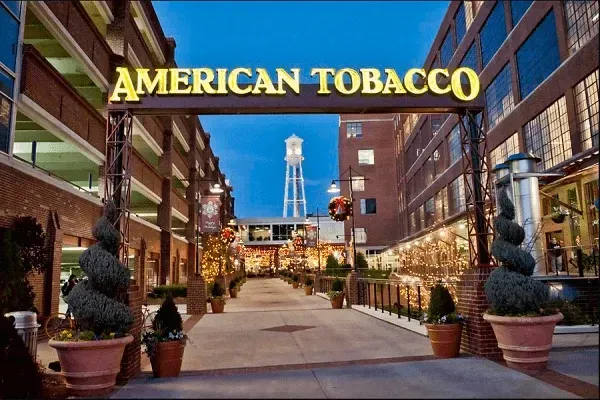
The market here is defined by one word: transformation. The American Tobacco Campus redevelopment set the template, the Hub RTP development is opening in 2026, and downtown Durham's food and arts scene now draws national attention. For buyers who want walkability, cultural depth, and genuine city energy at a price point well below comparable metros — Durham is the answer.
Morning: The Employment Proximity Advantage
The day in Durham starts with an advantage most Triangle suburbs can't offer: you're already close to where the jobs are.
The RTP Run: From most Durham neighborhoods, Research Triangle Park is 10–20 minutes via NC-147 — the most direct RTP commute of any Triangle city. For the 55,000+ people working inside the park, living in Durham eliminates the long haul that Wake Forest or Fuquay-Varina buyers accept as part of the deal.
The Duke Factor: With 43,000+ employees, Duke University and Health System is the anchor employer of the entire region. For Duke employees, living in Durham isn't just convenient — it's the obvious choice. Trinity Park, Forest Hills, and Hope Valley put you within 10 minutes of every Duke campus.
Afternoon: The Urban Payoff
By midday, the reasons people choose Durham over quieter suburbs become obvious.
The Neighborhoods: Whether it's a converted loft in Brightleaf, a Craftsman on a tree-lined Trinity Park street, or a newer build in Woodcroft with direct RTP access — Durham's neighborhood range is broader than any other Triangle city. Each district has its own identity, price point, and buyer profile.
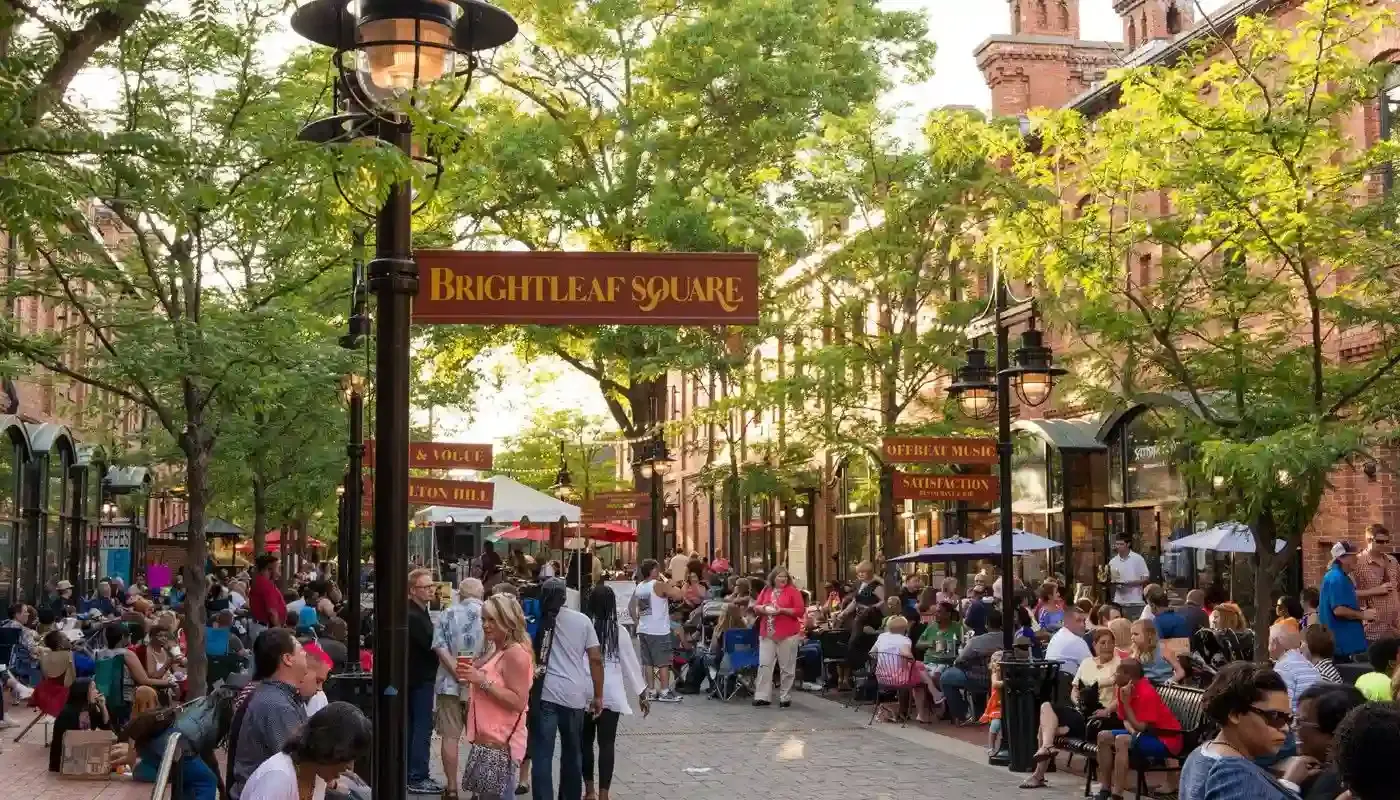
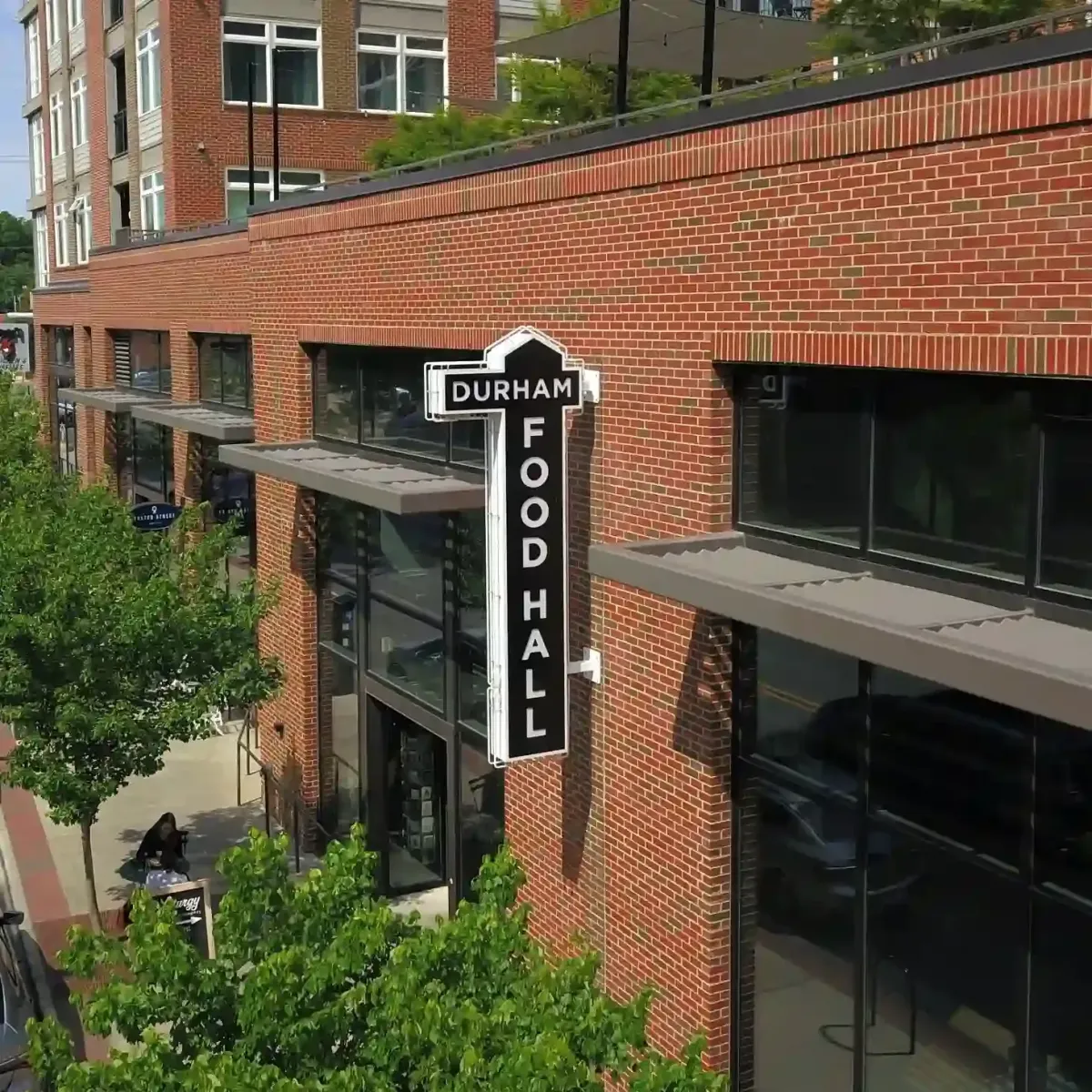
The Food Scene: Durham's dining reputation is national. The Durham Food Hall, American Tobacco Campus, and Brightleaf Square anchor a restaurant scene that Raleigh buyers regularly drive across the county line to access. It's the kind of food culture that typically requires living in a city twice Durham's size.
Evening: A Downtown That Didn't Have to Be Built
As the sun sets, Durham offers something the planned town centers of Cary and Apex can't replicate: an urban core that grew organically over a century.
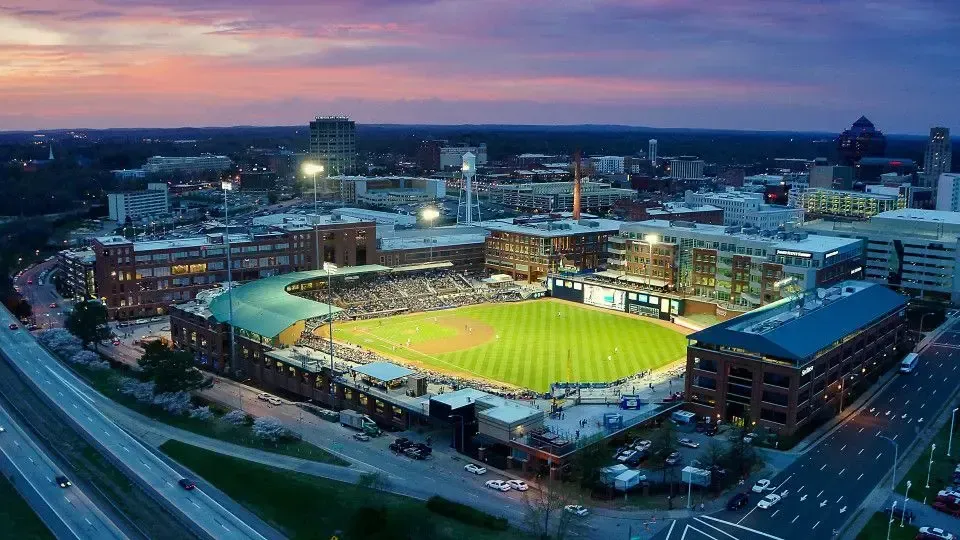
The American Tobacco District: The anchor of Durham's evening scene. DPAC, the Durham Bulls Athletic Park, Motorco Music Hall, and dozens of independent restaurants and bars create a walkable entertainment corridor that functions like a real city neighborhood — because it is one.
The Social Scene: Unlike town centers engineered last decade, downtown Durham's character developed through decades of community investment, arts funding, and independent business. On any given Friday, the energy between the breweries, music venues, and restaurants feels less like a suburb and more like a mid-sized city that figured something out.
💡 Phil's Perspective
"I tell clients that Durham is the market where the story is already written — you're just deciding whether to get in before the next chapter. The Hub RTP development opening in 2026, Apple's expanding regional campus, and continued in-migration from DC, New York, and the West Coast are all pointing the same direction. You're getting a walkable urban lifestyle at a fraction of what it costs in comparable cities — with a Duke or RTP paycheck funding it."
The Honest Trade-Off
Durham's property tax rate is real. At $0.9913 per $100 of assessed value — the highest combined city/county rate in the Triangle — a $395,000 home runs approximately $3,915 per year in taxes. That's meaningfully more than Wake County suburbs like Apex or Cary.
Durham Public Schools also require more homework than Wake County's system. School quality varies by campus more than in suburban districts, and attendance zones require verification for any specific address before committing to a neighborhood.
For buyers comparing Durham to Raleigh or Chapel Hill, the question isn't whether Durham is better — it's whether the urban energy, employment proximity, and cultural depth justify the higher tax rate and school zone complexity. For many buyers, especially those working at Duke or RTP, the answer is an easy yes. For buyers prioritizing Wake County schools or a quieter suburban setting, Apex or Wake Forest may fit better.
That's not a knock on Durham. It's just the honest read of the market in 2026.
Watch: Living in Durham, NC

Durham, NC Population & Demographics
Population: ~312,000 (City Proper) / ~352,166 (Durham County) — Durham is the fourth-largest city in North Carolina and one of the fastest-growing metros in the Southeast, adding residents at an annual clip of 1.64%. It delivers genuine urban density with distinct neighborhood identities, a highly walkable downtown core, and a civic infrastructure that has matured alongside decades of university and research investment.
County: Durham County, North Carolina.
Region: Raleigh–Durham–Chapel Hill Triangle (Western Anchor)
Median Household Income: ~$81,619 (City Proper) / ~$84,375 (Durham County) — Reflecting a highly specialized workforce heavily concentrated in healthcare, university research, biotechnology, and corporate technology. Within targeted professional bands — specifically households aged 25–44 — the median income jumps to $91,179, driving fierce competition for prime residential real estate.
Median Age: ~35.1 — One of the youngest median ages of any major North Carolina city, heavily influenced by the massive student and faculty populations at Duke University and NC Central University, young professionals relocating for RTP employment, and a booming tech-startup community anchored downtown by American Underground.
Educational Attainment: 48% hold a Bachelor's Degree or higher — Supported directly by the presence of Duke and NCCU within city limits, alongside proximity to UNC-Chapel Hill. These Tier-One institutions draw globally competitive academic, medical, and scientific talent directly into the local housing market.
The Evolution of Durham — From Tobacco Capital to Bull City Renaissance
Durham has completed one of the most remarkable urban transformations in the American South. Once defined strictly by its historic tobacco warehouses and the economic hollowing that followed the industry's mid-century decline, the Bull City has completely rebuilt its identity around healthcare, research, technology, and a fiercely independent culinary and arts culture.
Unlike the master-planned suburban expansions of Cary or Apex, Durham's evolution is organic — built district by district, block by block, over two decades of intentional public and private reinvestment.
In 2026, the city's upward trajectory is defined by four major catalysts:
The American Tobacco Campus Redevelopment: The conversion of the historic former American Tobacco Company complex into a Class-A mixed-use district set the national template for adaptive reuse. Home to tech hubs, award-winning restaurants, DPAC, and the Durham Bulls Athletic Park, it serves as the physical symbol of Durham's reinvention.
The Hub RTP Launch (2026 Milestone): Emerging right in the heart of Research Triangle Park, Hub RTP is actively transforming the park interior from a traditional car-dependent commuter campus into a walkable, urban mixed-use epicenter featuring high-density retail, residential towers, and hospitality spaces. Durham residents sit right at the western gateway of this shift and are positioned to capture the equity windfall first.
Apple's Corporate Footprint: Apple's multi-million-dollar engineering and corporate expansion in the Durham-RTP sector continues to draw a wave of high-wage tech talent into the city, dramatically accelerating inbound migration from high-cost coastal metros.
The East Durham Revitalization Corridor: Multi-year investment along the Angier Avenue and Driver Street corridors has turned East Durham into one of the Triangle's most active revitalization stories. Independent coffee shops, breweries, and public art sit alongside historic home renovations, offering a distinct urban entry point for buyers priced out of high-premium historic enclaves like Trinity Park or Forest Hills.
This calculated reinvestment has created a real estate landscape viewed by savvy buyers as a premier strategic play — a market where the appreciation story is well underway, but has not yet fully priced in the long-term regional infrastructure coming down the pipeline.
Jump to:
Durham Population & Demographics — Understanding Durham's 312,000 residents, median income, and the Bull City Renaissance story.
Durham Market Report — Q1 2026 MLS data on median prices, days on market, new construction share, and what buyers should expect.
Durham Homes For Sale — Active inventory in the Durham County MLS updated daily.
Durham New Construction vs Resale — Infill townhomes, south Durham builders, and the custom vs. production decision.
How Durham Compares to Other Triangle Cities — Durham vs. Raleigh vs. Chapel Hill vs. Cary vs. Apex — the ultimate comparison for Triangle relocators.
Nearby Triangle Relocation Guides — Explore all Triangle and Wake County community guides.
Durham Neighborhoods Guide — From Trinity Park and Forest Hills to Hope Valley, Woodcroft, East Durham, and Colvard Farms.
Cost of Living in Durham — Property taxes, HOA fees, utilities, and the honest tax math buyers need before deciding.
Schools in Durham, NC — DPS assignments, magnet programs, charter options, and private school alternatives.
Parks and Outdoor Living — Eno River State Park, Sarah P. Duke Gardens, Duke Forest, and Jordan Lake access.
Amenities and Community Services — Duke Health System, American Tobacco Campus, Hub RTP, and the 2026 event calendar.
Durham Dining and Entertainment — Michelin-recognized restaurants, DPAC, Durham Bulls, Motorco, and the Bull City food scene.
Where Durham Is Located — Highway access, commute matrix, what surrounds Durham, and the Triangle geographic advantage.
Durham Future Growth — AbbVie $1.4B campus, Hub RTP, Apple expansion, Durham Innovation District, and East Durham revitalization.
Awards and Recognition — Foodie Capital of the South, Michelin Guide recognition, City of Medicine designation.
Pros and Cons of Living in Durham — The honest 2026 assessment of Durham's trade-offs.
Is Durham Safe? — Neighborhood-level safety reality, safest areas, and how to research any specific address.
What Salary Do You Need in Durham? — Monthly cost breakdown, coastal city comparison, and the Durham value proposition.
Why Are People Moving to Durham? — The five pull factors driving Durham's sustained in-migration wave.
About Phil Slezak — How Phil uses AI-assisted analysis and 20+ years of local experience to protect your move.
FAQs About Durham, NC — Quick answers to the most common relocation questions buyers ask before moving to Durham.
Next Steps — Talk to Phil about Durham, request current listings, or text DURHAM to 984-789-4554.
Durham, NC Real Estate Market Snapshot (2026)
📊 Current Market Overview
| Metric | Value (Q1 2026) |
|---|---|
| Median Sold Price | $395,000 |
| Highest Sold Price | $2,378,000 |
| Median Price Per Sq. Ft. | $222.00 |
| Highest Price Per Sq. Ft. | $456.30 |
| Median Days on Market | 16 Days |
| Sale-to-List Price Ratio | 99.1% |
| Active Listings | 1,146 |
| New Construction Share | 27.7% (318 listings) |
| Durham City Tax Rate | $0.5363 per $100 assessed value |
| Durham County Tax Rate | $0.4550 per $100 assessed value |
| Combined Tax Rate (City) | $0.9913 per $100 assessed value |
| Typical Commute to RTP | 10–20 min off-peak via NC-147 |
| Typical Commute to Downtown Raleigh | 25–35 min via I-40 |
| Typical Commute to Chapel Hill / UNC | 20–25 min via US-15-501 |
| Typical Commute to RDU Airport | 15–20 min via I-40 |
The median sold price of $395,000 represents strong value relative to comparable urban markets in the Southeast, and at $222 per square foot, Durham delivers significantly more home than Chapel Hill (~$310/sq ft) or North Raleigh. The market ceiling tells its own story: the highest sold price of $2,378,000 confirms Durham's luxury segment is active and deep — this is not a one-price-band market.
With 27.7% of active listings being new construction (318 of 1,146 homes), buyers have genuine options on both sides of the resale vs. new construction decision — a broader range than most Triangle cities at this price point. The biggest financial consideration remains the combined city/county tax rate of $0.9913 per $100 assessed value. On a $395,000 home, that's approximately $3,915 per year in property taxes — meaningfully higher than Wake County suburbs. Factor this into your monthly payment math before comparing list prices directly. Tax rates apply to properties within Durham city limits. Properties in Durham County but outside city limits carry the county-only rate of $0.4550 per $100.
Durham, NC Homes for Sale - View Current Listings
Durham, NC Homes for Sale
Browse current listings including new construction, resale homes, and luxury properties across all Durham neighborhoods.
👇 View Current Durham Listings 👇Listings open in a new tab — no login required
*Rate buydown availability and terms vary by builder, phase, and market conditions — verify directly with the builder's preferred lender. Age-qualified communities are governed by federal HOPA guidelines — buyers interested in this housing type should verify eligibility and availability directly.
New Construction: Infill, Townhomes & South Durham Communities
New development in Durham is concentrated in two distinct zones: urban infill townhomes and condos hugging the downtown core, and master-planned communities in South Durham along the US-15-501 and NC-751 corridors.
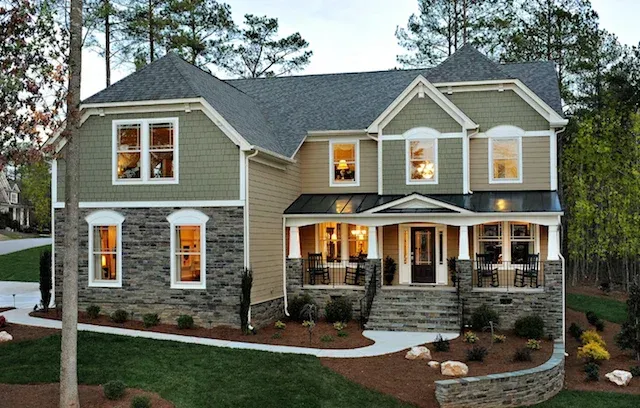
The Profile: Urban infill leans toward crisp, modern architecture — clean lines, rooftop terraces, open floor plans, and highly walkable locations. South Durham new construction favors the Craftsman and Transitional styles common across the Triangle, packaged with neighborhood pools, trails, and structured HOAs.
The 2026 Advantage: With Durham's median listing price sitting at $395,000, entry-level new construction townhomes in the southern corridors start in the low-to-mid $300s. This delivers a significant discount compared to Cary or Chapel Hill while maintaining a 10–20 minute commute to RTP. To combat current rates, several South Durham builders are aggressively offering mortgage rate buydowns and closing cost credits.
The Trade-off: True walkable, urban new construction carries a steep premium. Infill condos and townhomes in the downtown core regularly price well above $550,000. Buyers wanting new construction at a value price point must look south, trading downtown walkability for suburban convenience.
Top Builders Active in Durham, NC
Production & Semi-Custom: D.R. Horton (most accessible price points in South Durham), Lennar (highly energy-efficient, active in Southwest Durham), Meritage Homes (smart home integration), and Stanley Martin (dominating high-density infill townhomes near the city center).
Custom & Luxury: Period Architecture (historically sensitive custom builds in Trinity Park and Forest Hills) and Southern Energy Management/Green Built NC (elite, high-performance custom construction).
Resale Homes: Character, Maturity & Neighborhood Identity
Established neighborhoods like Trinity Park, Forest Hills, Hope Valley, and Woodcroft offer mature tree canopies, larger lot sizes, and a distinct community identity that new construction simply cannot replicate.
The Profile: Historic and established homes (1910s–1960s) offer genuine Craftsman bungalows, Colonial Revivals, and mid-century modern ranches. South Durham resales from the 1980s–2000s provide larger square footage footprints, two-car garages, and proven subdivision infrastructure at a highly competitive price-per-square-foot.
The 2026 Advantage: Resale homes in established Durham neighborhoods offer incredible value and architectural variance. Homes are moving at a stable pace with a median of 45 days on market, giving buyers room to breathe and negotiate compared to the frantic bidding wars of years past.
The Trade-off: Historic properties built before 1970 frequently feature deferred maintenance. When shopping the $550,000–$900,000 bracket in Trinity Park or Watts-Hillandale, buyers must budget for modernization — specifically updated electrical panels, historic plumbing lines, and localized HVAC mapping.
Durham, NC Housing Style Comparison (2026 Cheat Sheet)
🏡 Find Your Durham Housing Style
| Style | Common Locations | Best Suited For |
|---|---|---|
| Urban Loft & Condo | Downtown Durham, Brightleaf Square, American Tobacco District | Buyers prioritizing maximum walkability, nightlife, DPAC, and a zero-maintenance city lifestyle. |
| Historic Single Family | Trinity Park, Forest Hills, Watts-Hillandale | Lovers of character, Craftsman/Colonial architecture, deep lots, and proximity to Duke's East Campus. |
| Suburban (Established) | Woodcroft, Falconbridge, Parkwood | Buyers seeking a balanced price point, established neighborhood walking trails, and maximum RTP commute efficiency. |
| New Construction Townhome | South Durham Corridors, Infill Sites | First-time buyers and young professionals seeking low-maintenance living and modern floor plans under $400K. |
| Luxury Estate | Hope Valley Country Club, Southwest Durham | High-end buyers seeking private club golf amenities, large acreage, and a lower cost-per-foot than Chapel Hill or North Raleigh. |
| Emerging / Revitalization | East Durham, Walltown, Old East Durham | Value-oriented buyers looking for single-family homes with high equity upside in neighborhoods actively transitioning. |
"When clients tell me they want new construction in Durham, I always pull up a map and show them the dividing line. If you want a brand-new home with a yard under $500K, you are going to be in South Durham. It's a fantastic lifestyle — especially now that Hub RTP has launched its outdoor music series and retail spaces just minutes down the road.
But if your dream is to walk to M_Sushi or grab a drink at the Durham Hotel rooftop, you need to look at urban infill or be prepared to take on a historic renovation ITB (Inside the Bull). My advice for 2026? Don't gloss over the 1990s resales in Woodcroft. They offer the best middle ground in the market right now: mature, wooded lots, stable values, and a literal 10-minute back-road drive into Research Triangle Park."
💡 Phil's Perspective
"When clients tell me they want new construction in Durham, I always pull up a map and show them the dividing line. If you want a brand-new home with a yard under $500K, you are going to be in South Durham. It's a fantastic lifestyle — especially now that Hub RTP has launched its outdoor music series and retail spaces just minutes down the road.
But if your dream is to walk to M_Sushi or grab a drink at the Durham Hotel rooftop, you need to look at urban infill or be prepared to take on a historic renovation ITB (Inside the Bull). My advice for 2026? Don't gloss over the 1990s resales in Woodcroft. They offer the best middle ground in the market right now: mature, wooded lots, stable values, and a literal 10-minute back-road drive into Research Triangle Park."
How Durham Compares to Other Triangle Cities
Buyers comparing Durham often also evaluate Raleigh, Chapel Hill, Cary, and Apex. While all five offer strong quality of life and access to the Triangle's employment base, they serve very different priorities regarding commute tolerance, urban lifestyle preferences, school district priorities, tax rate tolerance, and neighborhood character.
At-a-Glance Comparison (2026 Data)
How Durham Compares to Other Triangle Cities (2026)
| Durham | Raleigh | Chapel Hill | Cary | Apex | |
|---|---|---|---|---|---|
| Median Sold Price | ~$395,000 | ~$435,000 | ~$575,000 | ~$625,000 | ~$623,500 |
| Price Per Sq Ft | $222 | ~$230 | ~$310 | ~$310 | ~$295 |
| Combined Tax Rate | $0.9913 | ~$0.8721 | ~$0.9400 | $0.8571 | $0.8731 |
| Median Days on Market | 16 Days | ~20 Days | ~18 Days | ~22 Days | ~18 Days |
| Market Character | Urban, cultural & innovation hub | Urban core & diverse | College town & prestige | Mature & prestigious | Historic charm & growth |
| New Construction Share | 27.7% (318 listings) | Limited | Very Limited | Limited | Active |
| RTP Commute | 10–20 min via NC-147 | 15–25 min | 20–30 min | 10–20 min | 20–35 min |
| Primary Employer | Duke / RTP / NCCU | State Gov't / Tech / RTP | UNC-Chapel Hill | SAS / RTP / Tech | RTP / Tech |
| School District | Durham Public Schools | Wake County Schools | Chapel Hill-Carrboro CSD | Wake County Schools | Wake County Schools |
| Downtown Scene | Nationally recognized | Vibrant urban core | Franklin St. college town | Revitalized & walkable | Historic Social District |
| Walkability | High — downtown core | Moderate — downtown | Moderate — Franklin St. | Moderate | Moderate |
| Best For | Urban lifestyle, Duke & RTP workers | Urban lifestyle & suburbs | UNC employees & prestige | Commuters & families | Community & new construction |
Nearby Triangle Relocation Guides
Buyers researching Durham often compare it with other Triangle and Wake County communities. Explore the full guide library below.
Raleigh: The Sister City Alternative
⚖️ The Trade-off: Raleigh offers a larger city footprint, more suburban neighborhood variety, Wake County Public Schools, and a combined tax rate of ~$0.8721 — meaningfully lower than Durham's $0.9913. The RTP commute from most Raleigh neighborhoods runs 15–25 minutes, and the state government employment base adds job diversity that Durham's Duke-and-RTP-anchored economy doesn't replicate. Median sold price is ~$435,000 — slightly higher than Durham's $395,000.
✅ Why Choose Durham: Durham wins on urban walkability, cultural depth, and employment proximity for Duke and RTP workers. No Raleigh neighborhood delivers the walkable, food-and-arts urban core that downtown Durham offers — and at $222 per square foot versus Raleigh's ~$230, Durham buyers get comparable or better value with a genuine city identity attached. For buyers working at Duke, NCCU, or the western RTP corridor, Durham eliminates 15–20 minutes of daily commute that Raleigh buyers accept as part of the deal.
Chapel Hill: The Prestige University Alternative
⚖️ The Trade-off: Chapel Hill offers UNC-Chapel Hill as an anchor employer, one of the most highly regarded school districts in North Carolina (Chapel Hill-Carrboro City Schools), and a college-town lifestyle centered on Franklin Street. At ~$575,000 median and ~$310 per square foot, buyers pay a significant premium over Durham — and inventory is consistently tight. The combined tax rate of ~$0.94 per $100 is comparable to Durham's.
✅ Why Choose Durham: Durham delivers 31% more home per dollar than Chapel Hill at current pricing, a broader neighborhood range, and an employment base that Chapel Hill can't match — Duke alone employs more people than the entire Chapel Hill economy. For buyers who need UNC proximity specifically, Chapel Hill makes sense. For everyone else, Durham provides comparable university energy, better value, and a more diverse city identity at a meaningfully lower price point. For buyers asking Durham vs Chapel Hill, the price difference is significant — $395,000 median versus $575,000 — a gap of $180,000 for comparable urban living.
Cary: The Established Prestige Option
⚖️ The Trade-off: Cary offers the most mature infrastructure of any Triangle suburb, 100+ miles of greenways, Wake County Public Schools, a 10–20 minute RTP commute, and a Blue Chip resale track record. At ~$625,000 median and ~$310 per square foot, buyers pay a substantial premium for that certainty. The combined tax rate of $0.8571 is the lowest of the five cities compared here.
✅ Why Choose Durham: Durham delivers 28% more home per dollar than Cary at current pricing. For buyers who want walkable urban energy, genuine cultural identity, and proximity to Duke or RTP's western edge — at a price point $230,000 below Cary's median — Durham is the most compelling value in the Triangle. Cary's suburban finish is unmatched. Durham's city character is unreplicable. The right choice depends entirely on which of those two things matters more to the buyer.
Apex: The Southern Corridor Alternative
⚖️ The Trade-off: Apex offers a historic Social District downtown, the $3 billion Veridea development as a long-term appreciation anchor, Wake County Public Schools, and a 20–35 minute RTP commute. At ~$623,500 median and ~$295 per square foot, Apex commands a significant premium over Durham. The combined tax rate of $0.8731 is among the lowest in the Triangle.
✅ Why Choose Durham: Durham delivers 33% more home per dollar than Apex at current pricing, plus a walkable urban core, nationally recognized food and arts scene, and the strongest employment anchor in the Triangle in Duke University. For buyers who don't need Wake County schools and want genuine city energy rather than a suburban social district — Durham is the better buy. For buyers with families prioritizing Wake County schools and a shorter RTP commute, Apex is the stronger fit.
💡 Phil's Perspective
"Every week I work with buyers who come into the Triangle with a budget and a shortlist that doesn't include Durham — usually because they assume the schools are a dealbreaker or the tax rate kills the math. What surprises them is how often Durham wins when you run the actual numbers.
At $222 per square foot with a 16-day median days on market, Durham is not a slow or discounted market. It is a competitive market that is priced below what its employment base, cultural profile, and urban infrastructure would suggest. Buyers working at Duke or RTP who have been looking in Cary or Apex often discover they've been paying a $200,000+ premium for a Wake County zip code — when their commute from Durham would be shorter and their lifestyle would be richer.
The buyers who win in Durham are the ones who do the math, verify the school zones for their specific address, and move before the Hub RTP transformation and Apple's campus expansion are fully priced into the market. That window is open right now. It won't stay open indefinitely."
Durham, NC Neighborhoods Guide (2026)
Neighborhood information is provided for general informational purposes only. Phil Slezak Real Estate does not endorse or recommend specific neighborhoods based on demographic composition. School ratings, rankings, and neighborhood data sourced from Niche.com, GreatSchools.org, and public MLS records. All buyers are encouraged to personally research neighborhoods, schools, and local amenities based on their own priorities. For school assignment verification, contact Durham Public Schools directly.
Durham has more neighborhood variety than any other Triangle city. The right fit depends on your commute, lifestyle, budget, and how much urban energy you want in your daily routine. Here's the breakdown buyers ask for most.
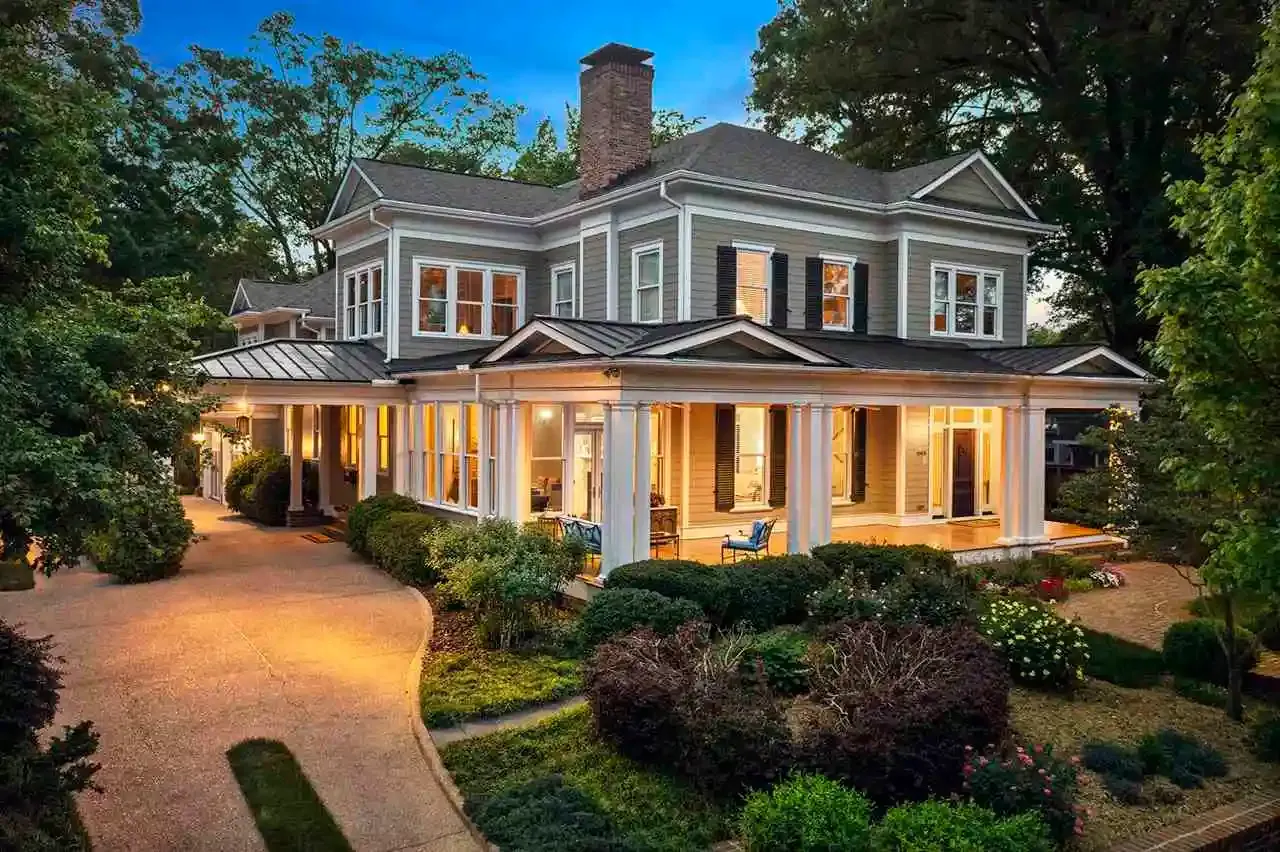
Trinity Park — Best Historic Walkable Neighborhood
Trinity Park is the most consistently searched Durham neighborhood — and for good reason. Centered around Duke's East Campus and bordered by Ninth Street's independent shops and restaurants, it combines early 20th-century Craftsman and Colonial Revival architecture with genuine walkability that most Triangle communities can't offer.
Home Prices: $550,000–$900,000+
Home Style: Craftsman bungalows, Colonial Revivals, early 20th-century single family
Lot Sizes: Deep, established lots with mature tree canopy
Commute: 5–10 min to Duke, 10–15 min to downtown, 15–25 min to RTP
Walkability: Highest in Durham — Ninth Street dining, coffee, and retail on foot
Best For: Duke employees, physicians, remote workers, and higher-income relocation buyers who want architectural character and walkable daily living
The Honest Note: Inventory is consistently tight. Homes move quickly and competition is real. Budget for historic maintenance on pre-1960 homes.
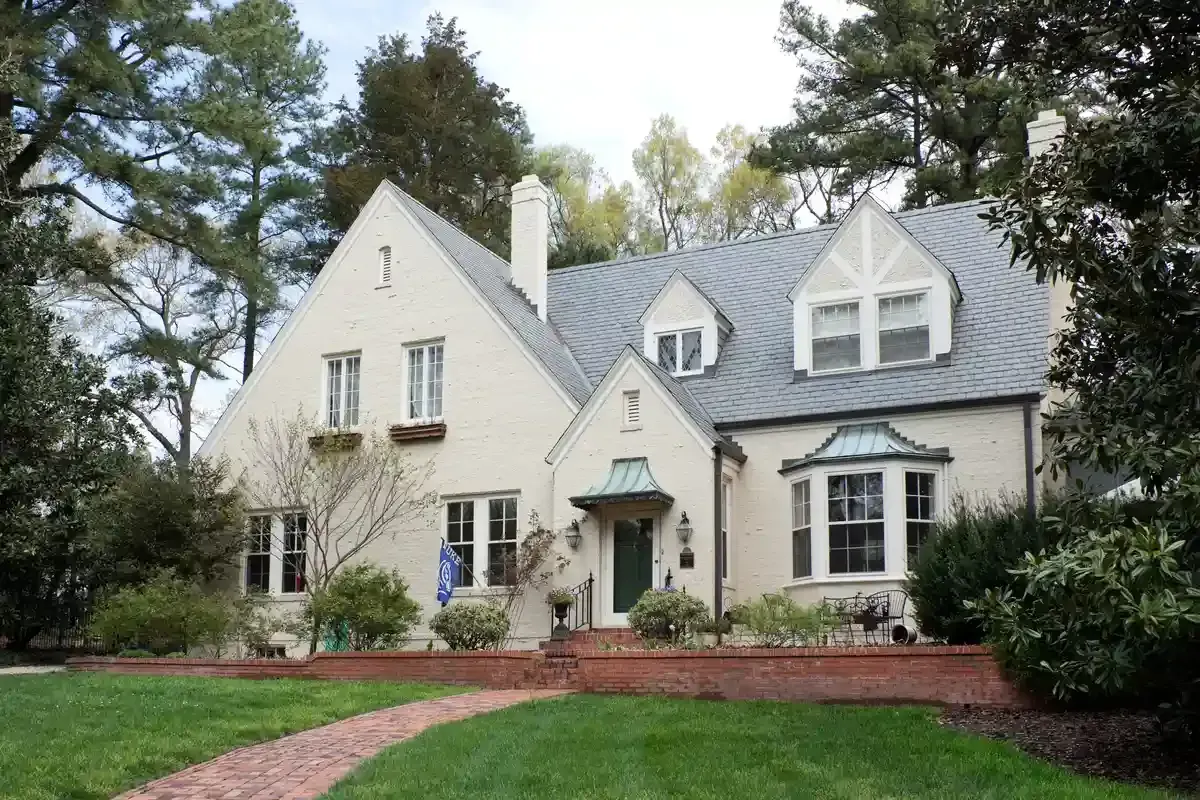
Forest Hills — Best Established Luxury Neighborhood
One of Durham's classic prestige addresses. Forest Hills sits in central Durham with beautiful period architecture, strong tree cover, and proximity to both downtown and Duke. It attracts faculty, physicians, and long-term Durham residents who want space and character without sacrificing city access.
Home Prices: $450,000–$750,000+
Home Style: Mid-century, Colonial Revival, renovated historic single family
Lot Sizes: Moderate to generous — established landscaping throughout
Commute: 10 min to Duke, 10–15 min to downtown, 20–25 min to RTP
Walkability: Moderate — walkable to Forest Hills Park, short drive to dining
Best For: Duke and NCCU professionals, luxury buyers who want established neighborhood prestige without Trinity Park price points
The Honest Note: Like Trinity Park, pre-1960 homes require budgeting for deferred maintenance. Electrical, plumbing, and HVAC updates are common at this vintage.
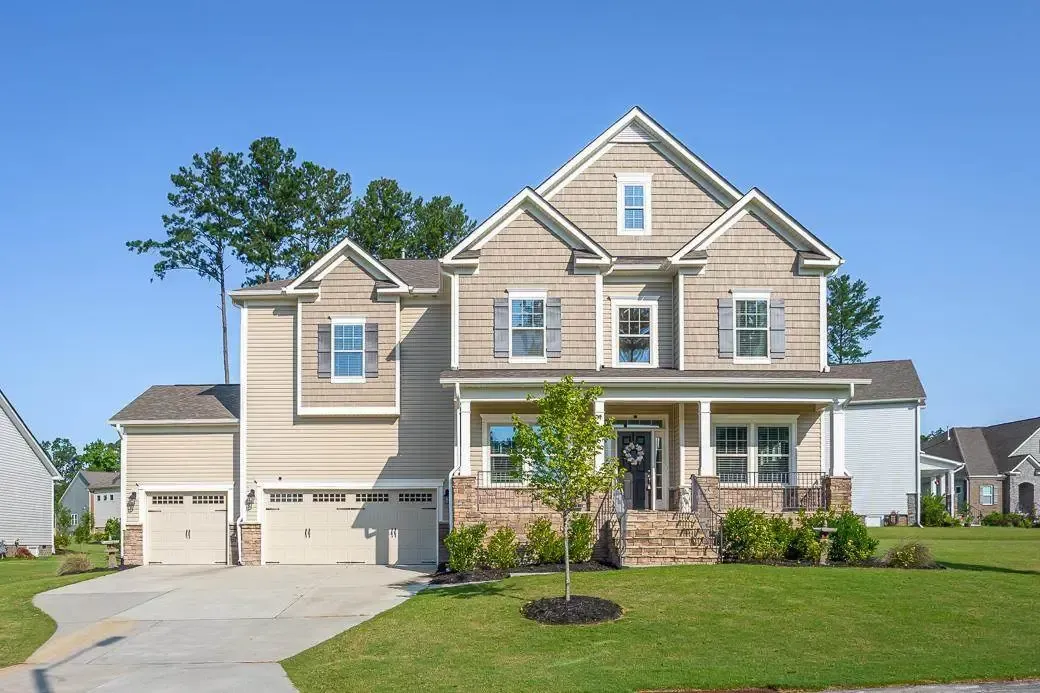
Downtown Durham & Brightleaf — Best Urban Walkable District
The fastest-growing relocation search in Durham. Downtown and the Brightleaf District deliver converted tobacco warehouse lofts, rooftop views, and walking distance to DPAC, the Durham Food Hall, American Tobacco Campus, and the Durham Bulls Athletic Park. For buyers leaving expensive coastal cities, this is the closest thing to a true urban lifestyle North Carolina offers.
Home Prices: $450,000–$700,000+ (condos and lofts)
Home Style: Converted warehouse condos, modern infill lofts, luxury high-rise units
Lot Sizes: N/A — condo and attached living
Commute: 10–20 min to RTP, 15–20 min to Duke, 25–35 min to Raleigh
Walkability: Highest in the city — entertainment, dining, and transit on foot
Best For: Millennials, tech workers, remote workers, and buyers relocating from New York, DC, California, or Chicago who want zero-maintenance city living
The Honest Note: HOA fees in converted warehouse buildings can be significant. Parking varies by building. Verify unit-specific details carefully before making an offer.
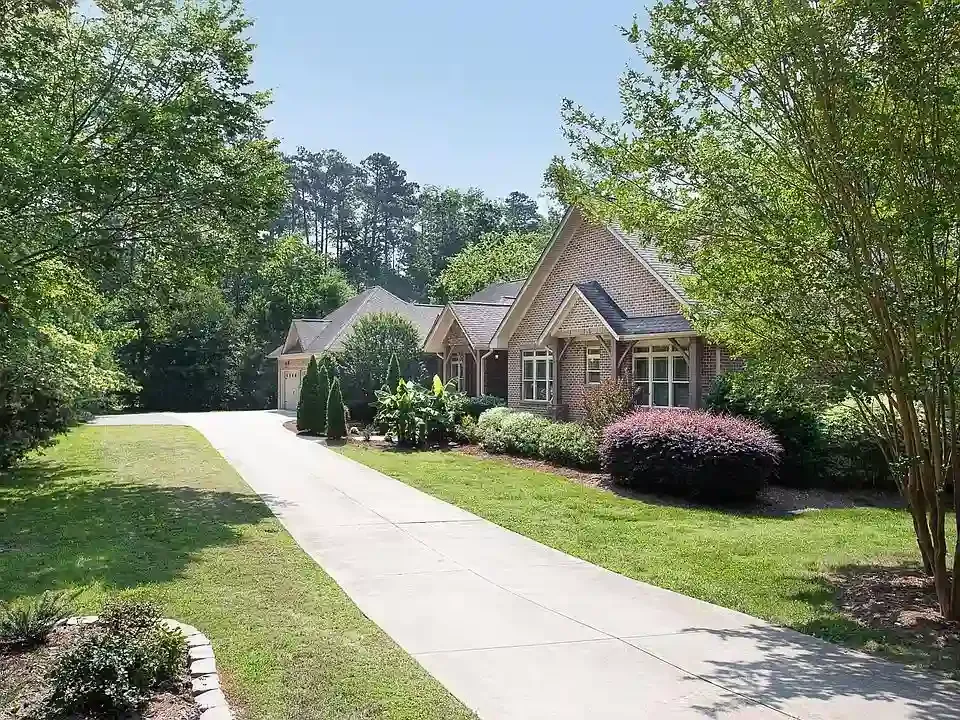
Hope Valley — Best Luxury Suburban Neighborhood
Durham's premier luxury community built around Hope Valley Country Club. Large lots, executive homes, a golf course lifestyle, and a 10-minute back-road drive to RTP make Hope Valley the choice for buyers who want suburban space and prestige without leaving Durham County.
Home Prices: $400,000–$650,000 (established sections) / $650,000–$1.2M+ (country club core)
Home Style: Traditional single family, executive estates, golf course homes
Lot Sizes: Generous — 0.4 to 1+ acres in established sections
Commute: 10–15 min to RTP, 20 min to Duke, 20–25 min to downtown Durham
Walkability: Low — car-dependent suburban living
Best For: Executives, physicians, luxury buyers, and out-of-state relocation clients who want more space and a private club lifestyle at prices well below comparable North Raleigh or Chapel Hill communities
The Honest Note: Hope Valley is a large area with significant price variation by section. Proximity to the country club and lot size drive pricing more than address alone.
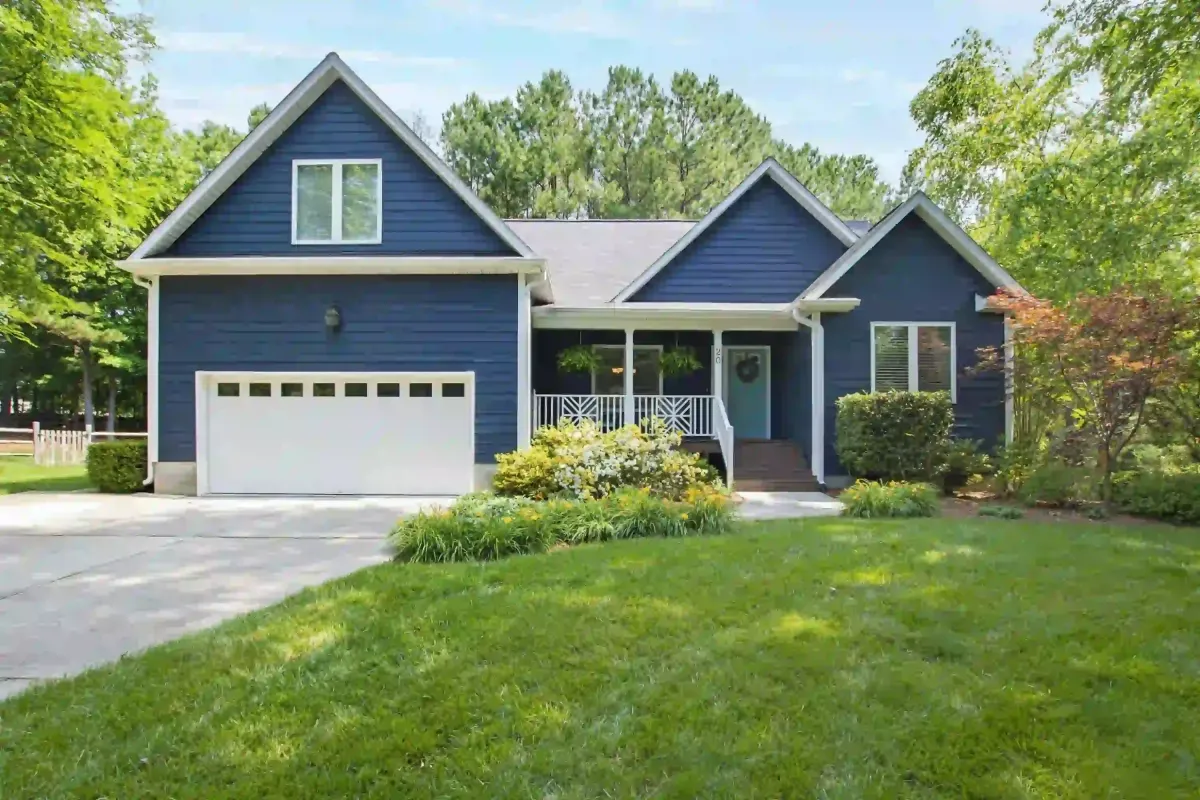
Woodcroft — Best Value Suburban Neighborhood
Quietly one of Durham's strongest value-plus-lifestyle options. A master-planned community from the 1980s–2000s in south Durham, Woodcroft offers mature wooded lots, an established trail network, and a 10-minute back-road drive directly into Research Triangle Park. Phil's top recommendation for buyers who want RTP efficiency without paying Hope Valley or Trinity Park prices.
Home Prices: $380,000–$600,000+
Home Style: Traditional two-story, transitional single family, townhomes
Lot Sizes: Moderate — 0.2 to 0.4 acres with established tree cover
Commute: 10 min to RTP, 15–20 min to Duke, 20 min to downtown Durham
Walkability: Moderate — internal trail network, short drive to Southpoint amenities
Best For: RTP employees, mid-level professionals, families, and first-time buyers who want proven neighborhood stability and maximum commute efficiency at a moderate price point
The Honest Note: Homes from the 1980s–1990s may need age-typical updates — roofs, HVAC, and kitchen modernization. Budget accordingly at the lower end of the price range.
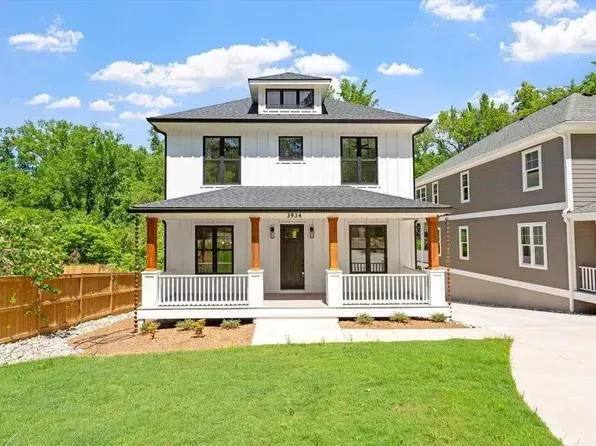
Old West Durham — Best Young Professional Neighborhood
Seeing massive search growth over the last several years. Old West Durham sits just west of Duke's East Campus with historic bungalows, local coffee shops, independent restaurants, and a young professional energy that attracts buyers looking for "authentic Durham." Less expensive than Trinity Park with a similar walkable character.
Home Prices: $350,000–$550,000+
Home Style: Historic bungalows, Craftsman cottages, some infill new construction
Lot Sizes: Smaller urban lots — established character throughout
Commute: 5–10 min to Duke, 10–15 min to downtown, 20–25 min to RTP
Walkability: High — Erwin Road dining, Ninth Street on foot
Best For: Duke grad students, young professionals, remote workers, and buyers who want Trinity Park character at a more accessible price point
The Honest Note: Neighborhood character is still transitioning in some blocks. Walk the specific streets before committing — quality varies more than in Trinity Park or Forest Hills.
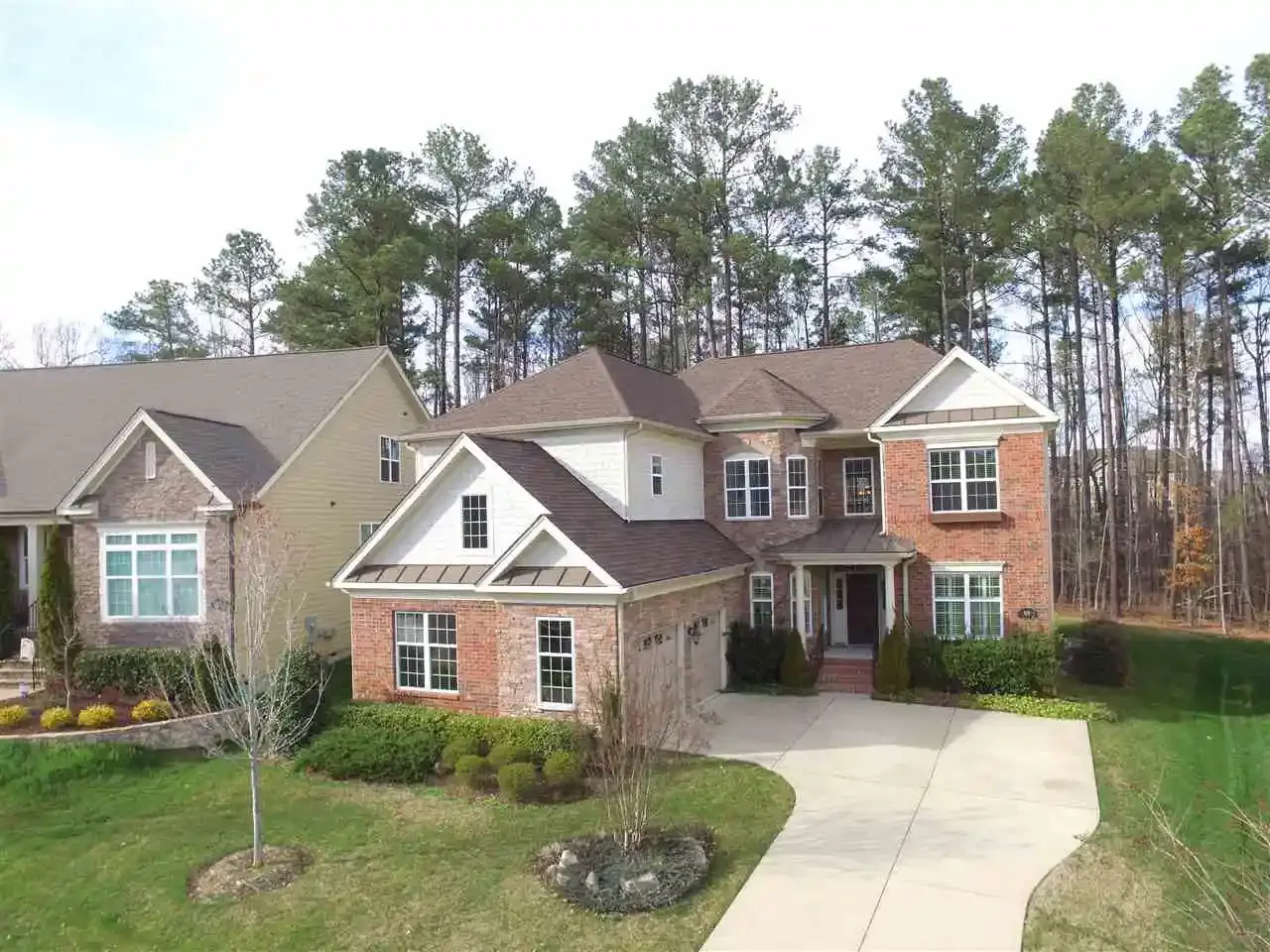
Southpoint / South Durham — Best Family Suburban Neighborhood
Massive relocation search traffic — and for good reason. South Durham along the US-15-501 corridor delivers newer homes, top-searched Southpoint Mall retail access, strong highway connections to RTP and Chapel Hill, and a family-oriented community feel. The most out-of-state-relocation-friendly part of Durham.
Home Prices: $380,000–$650,000+
Home Style: Modern Craftsman, transitional single family, townhomes, new construction
Lot Sizes: Moderate — 0.2 to 0.35 acres in most communities
Commute: 10–15 min to RTP, 20–25 min to Duke, 20 min to downtown Durham
Walkability: Low to moderate — car-dependent but Southpoint retail within minutes
Best For: Tech workers, families, RTP employees, and out-of-state buyers relocating from California, New York, or Florida who want newer construction, familiar retail, and easy highway access
The Honest Note: This is Durham's most suburban feeling area. Buyers who want urban Durham energy will need to drive to find it. Make sure the lifestyle trade-off works for your daily routine.
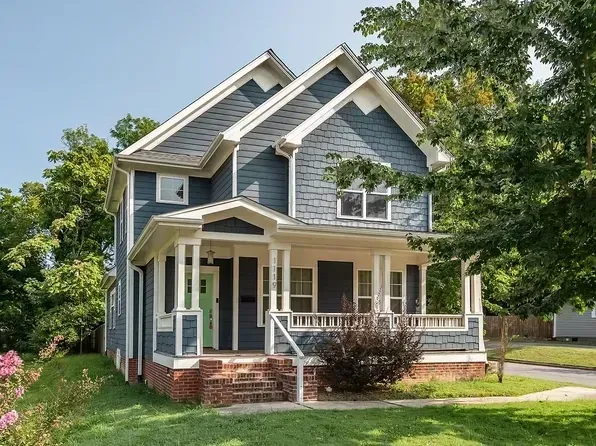
East Durham — Best Emerging Neighborhood
Durham's most active revitalization corridor and the highest upside opportunity inside city limits. Multi-year public and private investment along Angier Avenue and Driver Street has brought independent coffee shops, breweries, art studios, and new residential development to a neighborhood that was largely overlooked a decade ago.
Home Prices: $280,000–$380,000
Home Style: Historic single family, bungalows, some new construction infill
Lot Sizes: Moderate urban lots — established tree cover in most blocks
Commute: 10–15 min to downtown Durham, 20–25 min to RTP, 20 min to Duke
Walkability: Improving — Driver Street corridor walkable, broader area still car-dependent
Best For: Value-oriented buyers, first-time buyers, and investors comfortable with a neighborhood in active transition — the most accessible entry point for single-family ownership inside Durham city limits
The Honest Note: East Durham is a neighborhood in transition, which means block-by-block variation is real. Work with an agent who knows the specific streets. The City's down payment assistance program (up to $80K forgivable) aligns well with price points here for qualifying buyers.
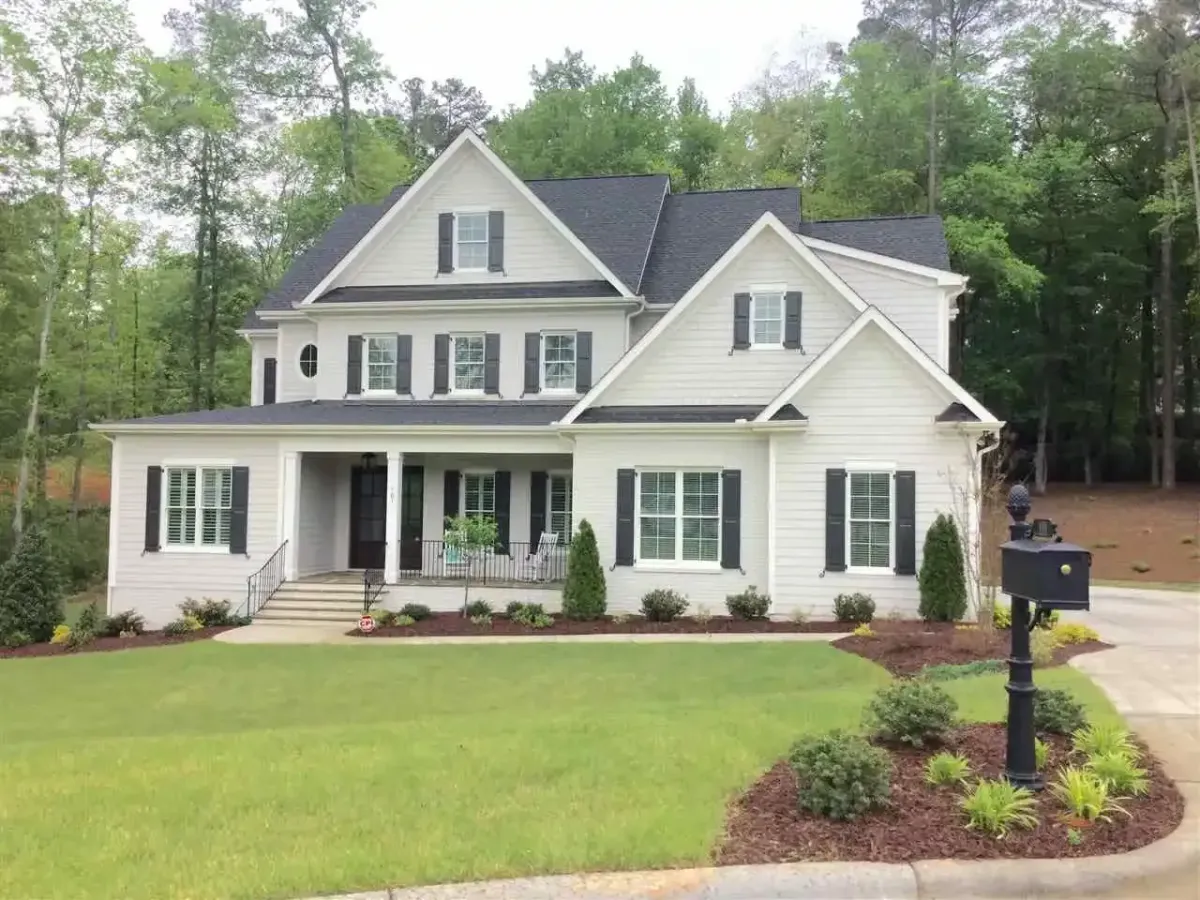
Also Worth Knowing
The Hills of Rosemont ($2,765,000+)
A peaceful, gated luxury community in Durham on the border of Chatham County, The Hills of Rosemont is among the most exclusive addresses in the Triangle. Known for its large, luxurious custom homes, private lake, walking trails, and beautifully landscaped grounds, it delivers a quiet, upscale lifestyle that is rare at any price point in the Research Triangle. For buyers seeking a true estate-level gated community with a strong sense of neighborhood identity — and who are comfortable with Chatham County's separate tax structure — Rosemont is in a category of its own.
Treyburn ($500,000–$1,200,000+)
A premier golf and country club community in north Durham built around the Treyburn Country Club course. Custom and semi-custom homes on generous wooded lots with a distinctly private, estate feel. One of the few Durham communities that competes directly with Hope Valley for luxury buyers who want a private club lifestyle — at price points that remain well below comparable North Raleigh or Chapel Hill golf communities.
Croasdaile Farms ($400,000–$1,000,000+)
One of Durham's most sought-after established neighborhoods, Croasdaile Farms is anchored by the Croasdaile Country Club — offering golf, tennis, pickleball, swimming, and dining in a highly walkable, tree-lined setting with community parks throughout. The neighborhood is particularly popular among Duke Medical Center professionals and faculty, and for good reason: Duke University, the VA Hospital, and downtown Durham are all within a 5–10 minute commute. For buyers who want country club access, walkability, and a quick Duke commute in one address, Croasdaile Farms is one of the strongest options in the market.
Colvard Farms ($1,000,000–$2,400,000+)
An upscale master-planned custom home community spanning over 400 acres on the Durham-Chatham County border near NC-751. Colvard Farms features large luxury estates on lots ranging from 0.5 to over 2.5 acres, with more than one-third of the property permanently preserved as open space — including mature trees and over 2 miles of wooded walking trails. Residents have access to a recreation center with a Junior Olympic swimming pool, fitness center, tennis courts, and playground. Despite the private, rural feel, Jordan Lake, Research Triangle Park, and The Streets at Southpoint are all within minutes. For buyers seeking custom estate living with natural surroundings and RTP commute efficiency, Colvard Farms is the most distinctive address in southwest Durham.
🏘️ Neighborhood Selection Tips from Phil
Three things I tell every Durham buyer before they start touring:
Verify school assignments first. Durham Public Schools assignments are address-specific and can change. Use the DPS school finder at dpsnc.net before making an offer — not after. If a specific school is driving your neighborhood decision, confirm the assignment directly with the district for that exact address.
Drive your commute at 8:00 AM. A home in Woodcroft has a very different commute experience than a home in Trinity Park or north Durham. NC-147 and I-40 behave differently at peak hours than Google Maps suggests at noon. Test the reality before you sign.
Walk the block, not just the house. Durham's neighborhood character can shift within a few streets — especially in transitional areas like East Durham, Old West Durham, and parts of downtown. The house may be perfect and the street may not be what you expected. Tour the surrounding blocks before you fall in love with the listing.
*Verify current school assignments directly with Durham Public Schools before making any purchase decision based on a specific school. Properties outside Durham city limits may be subject to different tax rates — specifically the county-only rate of $0.4550 per $100 versus the combined city/county rate of $0.9913 per $100. Confirm applicable tax rates with your agent before making an offer.
Cost of Living & Taxes in Durham, NC (2026)
Durham delivers genuine urban value — more walkability, more cultural depth, and more employment proximity per dollar than any other Triangle city at this price point. The trade-off is the highest combined tax rate in the Triangle and a school district that requires more due diligence than Wake County. Here is the complete financial picture buyers need before making a decision.
Property Taxes
Durham property owners inside city limits pay a combined Durham County and city tax rate of $0.9913 per $100 of assessed value for FY2025–2026:
Durham County rate: $0.4550 per $100
City of Durham municipal rate: $0.5363 per $100
Combined rate: $0.9913 per $100
What that means in real dollars:
Durham, NC Property Tax Estimates (2026)
| Home Value | Annual Tax Bill | Monthly Equivalent |
|---|---|---|
| $350,000 | $3,470 | ~$289/mo |
| $395,000 Median | $3,915 | ~$326/mo |
| $500,000 | $4,957 | ~$413/mo |
| $750,000 | $7,435 | ~$620/mo |
| $1,000,000 | $9,913 | ~$826/mo |
| $1,500,000 | $14,870 | ~$1,239/mo |
Durham's combined rate of $0.9913 is the highest of any major Triangle city — higher than Raleigh ($0.8721), Chapel Hill (~$0.94), Cary ($0.8571), and Apex ($0.8731). The differential on a $395,000 home versus Raleigh is approximately $390 per year — meaningful but manageable given Durham's significant price-per-square-foot and employment proximity advantages.
Properties in Durham County but outside city limits pay only the county rate of $0.4550 — approximately $1,797 annually on a $395,000 home. Always verify the tax jurisdiction for any specific property at dconc.gov before closing.
Home Value and What You Get
At a median sold price of $395,000 and $222 per square foot, Durham delivers strong value relative to the Triangle's other urban anchors:
vs. Chapel Hill (~$310/sq ft) — 28% more home per dollar
vs. Cary (~$310/sq ft) — 28% more home per dollar
vs. Apex (~$295/sq ft) — 25% more home per dollar
vs. Raleigh (~$230/sq ft) — 3% more home per dollar
A $500,000 budget in Durham buys a renovated historic single-family home in Forest Hills or Old West Durham, a newer build in Woodcroft with RTP commute efficiency, or a downtown loft in Brightleaf within walking distance of DPAC. That same budget in Chapel Hill is likely a smaller resale home with limited lot size and significantly less neighborhood variety.
New Construction Value
With 27.7% of active listings being new construction — 318 of 1,146 active homes — Durham offers a meaningful new build pipeline concentrated in south Durham along the US-15-501 and NC-751 corridors. Production builders including D.R. Horton, Lennar, Meritage Homes, and Stanley Martin are active with entry points starting in the low-to-mid $300s. Custom options through Period Architecture and Southern Energy Management serve the $800,000–$2.4M+ segment in communities like Colvard Farms and Treyburn.
New construction buyers in south Durham consistently report getting more square footage and stronger builder incentives than comparable new builds in Chapel Hill or Cary at the same price point — while maintaining a 10–20 minute RTP commute.
Everyday Cost of Living
Beyond housing, Durham's cost of living sits approximately 2% below the national average:
Groceries: Whole Foods, Harris Teeter, Trader Joe's, and Publix serve Durham's primary residential corridors. The Streets at Southpoint anchors south Durham's retail base with full grocery and specialty options within a short drive of most neighborhoods.
Healthcare: Duke University Health System is the anchor — one of the top-ranked health systems in the Southeast with Duke University Hospital, Duke Cancer Institute, Duke Children's Hospital, and multiple specialty centers all within Durham city limits. For Durham residents, world-class healthcare is not a commute away — it is minutes from most neighborhoods.
Dining: Durham's food scene is nationally recognized. The Durham Food Hall, American Tobacco Campus, Brightleaf Square, and the Ninth Street corridor give residents genuine options that Raleigh buyers regularly drive across the county line to access. Independent breweries, James Beard-nominated restaurants, and a live music venue ecosystem make Durham's evening options unmatched in the Triangle.
Utilities: Duke Energy serves most of Durham's residential base. Average monthly utility costs for a 2,500 sq ft home run approximately $150–$200 in moderate months and $250–$350 in peak summer and winter months — consistent with Triangle averages.
HOA Fees: HOA fees vary significantly by community and building type. Downtown condo buildings run $300–$600+ monthly depending on amenities and building age. Master-planned suburban communities like Woodcroft and Southpoint neighborhoods run $400–$900 annually. Luxury communities including Treyburn and Colvard Farms carry higher fees reflecting gate infrastructure and amenity packages. Always request full HOA financials including reserve fund status before making an offer.
The Honest Tax Math
Durham's higher combined tax rate is the most common financial objection buyers raise. Here is how to think about it honestly:
The $390 annual tax premium versus Raleigh on a $395,000 home is $33 per month. For that $33, Durham buyers get a 10–20 minute RTP commute versus Raleigh's 15–25 minutes, a walkable urban core that no Raleigh neighborhood replicates, and the strongest employment anchor in the Triangle in Duke University.
Versus Cary, the annual tax premium on a $395,000 home is approximately $534 per year — $45 per month. For that $45, Durham buyers get 28% more home per square foot, a median sold price $230,000 below Cary's, and a city identity that Cary's master-planned infrastructure was never designed to deliver.
The buyers who should weigh the tax differential most carefully are those purchasing at the $1M+ level — where the annual dollar difference between Durham and Cary exceeds $13,000 per year. At that level, the tax math is a genuine factor in long-term financial planning and worth modeling carefully before committing to a Durham city limits address versus a Durham County address outside city limits.
The Durham Public Schools Assignment Reality
This is the most important thing I tell every buyer considering Durham — and it is more complex here than in Wake County:
School assignments in Durham are address-specific and subject to change. DPS operates a combination of traditional attendance-zone schools and magnet programs with competitive or lottery-based admission. Proximity to a school does not guarantee assignment, and magnet programs require separate applications with no guarantee of placement.
Three rules every Durham buyer must follow:
Use the DPS school finder at dpsnc.net for your specific property address before making an offer — not after going under contract.
Never purchase a home based on proximity to a school or magnet program without verifying the current assignment for that exact address.
If a specific magnet program is central to your family's decision, verify application timelines, lottery status, and current waitlist conditions before committing to a neighborhood.
Charter and Private School Options
Durham has a robust charter and private school ecosystem that many DPS families utilize:
Durham Charter School — K–8 public charter with strong academic performance and a collaborative learning model. Lottery-based enrollment.
Research Triangle High School — Public charter high school with a project-based STEM focus. Serves Durham and surrounding counties.
NC School of Science and Mathematics (NCSSM) — Nationally ranked residential public high school for academically gifted students. Located in Durham, admission is statewide competitive.
Duke School — PreK–8 private school affiliated with Duke University. Strong academics and a progressive educational model.
Carolina Friends School — K–12 Quaker-affiliated private school with a progressive curriculum and strong college placement.
Montessori Community School — K–8 private Montessori option serving Durham families.
Charter schools in Durham use a lottery-based enrollment system. Applications typically open in January for the following school year. If a specific charter school is central to your family's decision, verify enrollment timelines and waitlist status before committing to a neighborhood.
Elementary and Middle School Feeder Patterns
Elementary and middle school assignments follow the same address-specific DPS system. Key elementary schools serving Durham neighborhoods include:
Parkwood Elementary — Serves Woodcroft and south Durham corridors.
Hope Valley Elementary — Serves Hope Valley and surrounding south Durham neighborhoods.
Forest View Elementary — Serves portions of central Durham.
Club Boulevard Elementary — Serves north Durham neighborhoods near Duke.
Eastway Elementary — Serves east Durham corridors.
Middle schools feeding into Durham high schools include Githens Middle, Lowe's Grove Middle, and Sherwood Githens Middle — all subject to address-specific assignment verification at dpsnc.net.
💡 Phil's School Advisory
"The number one mistake I see relocation buyers make in Durham is assuming that because a neighborhood is near a well-regarded school or magnet program, their kids will attend that school. Durham doesn't work that way — and it's more complex than Wake County. I've worked with buyers who made an offer based on a school assignment that changed before closing, and with families who didn't realize the magnet they wanted had a two-year waitlist.
My advice: use dpsnc.net before you fall in love with the house. Then call DPS directly and confirm. It takes 15 minutes and it can save you from a decision you'll spend years second-guessing. If a specific school is the primary driver of your neighborhood decision in Durham, work with an agent who knows which addresses are safely inside which zones — because the lines matter more here than anywhere else in the Triangle."
*Verify current school assignments directly with Durham Public Schools before making any purchase decision based on a specific school.
Parks & Outdoor Living in Durham, NC
Durham has invested significantly in parks, greenways, and natural recreation over the past two decades — and the results set it apart from every other Triangle city. For buyers coming from suburban Wake County, Durham's outdoor amenity package — anchored by Eno River State Park and Sarah P. Duke Gardens — is consistently one of the biggest surprises of the relocation process.
Eno River State Park — The Crown Jewel
Durham's flagship natural asset and one of the most ecologically significant parks in the Research Triangle. Eno River State Park stretches across more than 4,300 acres of piedmont river corridor with 20+ miles of hiking trails, swimming holes, kayaking and canoe access, primitive camping, and some of the best freshwater fishing in central North Carolina.
The park is a daily destination for Durham residents — trail runners, fly fishers, families, and paddlers all coexist in a natural setting that feels nothing like a suburban park. For buyers evaluating quality of life in Durham versus Wake County suburbs, Eno River is one of the strongest differentiators the city offers. No Triangle suburb has a state park of this scale within its footprint.
Sarah P. Duke Gardens — 55 Acres of World-Class Botanical Beauty
Located on Duke University's West Campus, Sarah P. Duke Gardens is one of the premier botanical gardens in the United States — free and open to the public year-round. More than 600,000 visitors annually walk its 55 acres of formal terraces, native plant collections, Japanese gardens, and woodland trails along Lonnie Poole Creek.
For Durham residents, the Gardens are a backyard amenity that buyers in Cary or Wake Forest simply don't have access to. Weekend mornings at the Gardens are a Durham institution — and a meaningful signal of the city's broader commitment to accessible public green space.
Hollow Rock Nature Park
A beloved neighborhood natural area on Durham's western edge bordering the Eno River corridor. Hollow Rock offers rugged hiking trails, river access, and some of the best rock climbing in the Triangle — all within a 10-minute drive of most central Durham neighborhoods. A genuine hidden gem that long-time Durham residents treat as a local secret.
Museum of Life + Science — Outdoor Science Park
One of the Triangle's top family destinations combines 84 acres of outdoor exhibits, nature trails, a butterfly house, dinosaur trail, and live animal encounters with indoor science programming. Located in northern Durham, it draws more than 400,000 visitors annually and serves as a primary destination for Durham families with young children year-round.
Duke Forest — 7,000 Acres of Research and Recreation
One of the largest university-managed research forests in the United States, Duke Forest spans more than 7,000 acres across Durham and Orange counties with designated hiking, cycling, and equestrian trails open to the public. For buyers who want access to vast natural open space within minutes of a city neighborhood, Duke Forest is an asset that most Triangle suburbs cannot replicate at any price point.
Durham Parks & Greenway System — Growing Fast
Durham's greenway network is expanding across the city with connections between neighborhoods, parks, schools, and downtown along the Ellerbe Creek, Little Creek, and Third Fork Creek corridors. Key greenway destinations include:
Ellerbe Creek Trail — A growing multi-use trail corridor connecting north Durham neighborhoods to parks and open space.
Third Fork Creek Trail — Connects south Durham communities including Woodcroft to Southpoint-area amenities.
American Tobacco Trail — The 22-mile rails-to-trails corridor connecting Durham to Chatham County is one of the most popular cycling and hiking assets in the Triangle, accessible from multiple Durham neighborhoods.
While not yet at Cary's 100-mile scale, Durham's greenway master plan calls for significant expansion over the next decade — with several funded corridor connections in active development as of 2026.
Outdoor Recreation Beyond the Parks
Durham's outdoor lifestyle extends well beyond the formal park system:
Jordan Lake State Recreation Area — 20 minutes southwest of Durham via NC-751, Jordan Lake offers 14,000 acres of reservoir with boating, swimming, fishing, camping, and eagle watching. One of the Triangle's premier outdoor recreation assets and a direct amenity for Woodcroft, Colvard Farms, and south Durham residents.
Falls Lake State Recreation Area — 25 minutes north via US-70, Falls Lake adds 26,000 acres of additional reservoir recreation including hiking, fishing, and primitive camping.
Lake Michie — Durham's own municipal reservoir north of the city offering fishing and shoreline access.
Duke Lemur Center — Home to more than 200 animals across 14 species on 80 acres of Duke Forest. The world's largest sanctuary for lemurs and endangered prosimians — a genuinely unique outdoor destination accessible to Durham residents year-round.
The Outdoor Living Summary
Durham's outdoor amenity package is significantly stronger than most buyers expect — anchored by Eno River State Park, Sarah P. Duke Gardens, Duke Forest, and Jordan Lake access. The gap versus Cary's 100-mile greenway system is real but narrowing. For buyers who prioritize natural river access, botanical gardens, and large-scale forest recreation over manicured suburban greenways, Durham's outdoor package is arguably the strongest in the Triangle at any price point.

Amenities & Community Services: The Durham Standard
Durham has undergone one of the most dramatic urban transformations of any American city its size over the past two decades. In 2026, the combination of the American Tobacco District, a nationally recognized food and arts scene, expanding healthcare infrastructure, and the Hub RTP development means the "post-industrial city still figuring itself out" narrative that once followed Durham no longer applies. This is a city that has figured it out — and buyers are arriving from coastal metros specifically because of it.
American Tobacco Campus — The Commercial and Cultural Anchor
The conversion of the historic American Tobacco Company complex into Durham's premier mixed-use district set the national template for adaptive reuse — and remains the physical heart of what makes Durham different from every other Triangle city.
The Vibe: A genuine urban district built inside 19th-century brick tobacco warehouses. Office tenants, James Beard-nominated restaurants, live music, DPAC, and the Durham Bulls Athletic Park all within walking distance of each other — creating an evening energy that no Triangle suburb can manufacture.
Current Tenants and Anchors: Durham Performing Arts Center (DPAC), Durham Bulls Athletic Park, Motorco Music Hall, Fullsteam Brewery, Cocoa Cinnamon, Bittersweet, and dozens of independent restaurants and bars anchoring the district.
The Future: American Tobacco continues expanding with additional office, residential, and retail development. The district is not a finished product — it is an active, evolving urban ecosystem that adds tenants and programming annually.
Downtown Durham & Brightleaf Square
The broader downtown core extends beyond American Tobacco into a walkable district of converted warehouse spaces, independent businesses, and neighborhood institutions that have defined Durham's urban identity for decades.
The Durham Food Hall: A 12-vendor food hall in the heart of downtown delivering one of the Triangle's most diverse and acclaimed dining experiences under one roof. A daily destination for downtown residents and a weekly pilgrimage for buyers living across the Triangle.
Brightleaf Square: Two restored 1904 tobacco warehouses converted into a boutique dining and retail district with independent restaurants, wine bars, and specialty shops. One of Durham's most photographed addresses and a consistent anchor of the city's evening scene.
The Pinhook and Motorco: Durham's independent live music venues anchor a music scene that punches well above the city's population size. National touring acts, local talent, and late-night culture that no Wake County suburb replicates.
Durham Hotel Rooftop: The Triangle's most visible rooftop bar and social destination — a signal of Durham's arrival as a city that takes hospitality seriously.
📍 Note on Hub RTP: The Hub RTP development opening in 2026 is transforming Research Triangle Park's interior from a car-dependent office campus into a walkable mixed-use district with retail, residential, outdoor programming, and entertainment. Durham residents — sitting at RTP's western gateway — are positioned to access this new amenity base faster than any other Triangle city.
The Durham Healthcare Network
Durham is home to one of the strongest healthcare ecosystems in the United States — anchored by Duke University Health System, one of the top-ranked health systems in the country.
Duke University Hospital: Level I trauma center and one of the Southeast's premier academic medical centers with nationally ranked specialty programs in oncology, cardiology, neurology, and transplant surgery.
Duke Cancer Institute: One of only 53 NCI-designated Comprehensive Cancer Centers in the United States — a resource Durham residents access without leaving the city.
Duke Children's Hospital: Complex pediatric care ranked among the top children's hospitals in the country.
Duke Regional Hospital: Full-service community hospital serving Durham's residential base with 24/7 emergency access.
UNC Health Duke Raleigh: Additional regional hospital access within 30 minutes for specialty overflow.
For buyers evaluating Durham against other Triangle cities, the healthcare infrastructure alone is a meaningful quality-of-life differentiator — particularly for medical professionals, older buyers, and families with complex healthcare needs.
The Durham Event Calendar (2026)
Durham Bulls Baseball: The Triple-A affiliate of the Tampa Bay Rays plays 72 home games at the Durham Bulls Athletic Park from April through September — one of the Triangle's most beloved community traditions and a near-nightly summer destination for downtown residents.
DPAC Programming: The Durham Performing Arts Center hosts 200+ performances annually including Broadway touring productions, major concert acts, and comedy — consistently ranking among the top-grossing mid-sized venues in the United States.
Full Frame Documentary Film Festival: One of the world's premier documentary film festivals, held annually in downtown Durham and drawing filmmakers and audiences from across the country.
Centerfest Arts Festival: One of the Southeast's largest outdoor arts festivals, filling downtown Durham's streets with visual artists, performers, and food vendors each fall.
American Dance Festival: A globally recognized summer dance festival based at Duke University drawing international companies and artists to Durham each June and July.
Durham Farmers Market: Year-round Saturday market at Durham Central Park connecting residents to local farms, artisan food vendors, and community programming.
💡 Local Insight: For the best Durham evening, start with dinner at Rosewater Kitchen or Zweli's on the American Tobacco Campus side of downtown, then walk to Motorco for live music or catch a Durham Bulls game on a summer night. It's a night that genuinely surprises buyers who came in expecting a mid-sized Southern city — because Durham stopped being just a mid-sized Southern city several years ago.
Amenities as a Buyer Consideration
Trinity Park / Forest Hills / Old West Durham: Best positioned for walkable daily living — Ninth Street dining, coffee, and retail on foot, American Tobacco and DPAC within a 10-minute drive.
Downtown / Brightleaf: Zero-drive access to the full downtown amenity ecosystem — the strongest walkability score of any Durham address.
Hope Valley / Woodcroft / South Durham: 10–15 minute drive to downtown Durham, 5 minutes to Southpoint Mall and the US-15-501 retail corridor — the best balance of suburban convenience and city access.
East Durham / Walltown: Closest emerging neighborhoods to downtown with improving walkable amenities along the Driver Street corridor — and the strongest price-to-proximity ratio in the city.
Treyburn / Colvard Farms / North Durham: Furthest from downtown but within 20–25 minutes — and closest to Eno River State Park, Falls Lake, and the northern outdoor recreation corridor.
The Durham Dining Scene — Bull City Food Culture
Durham is not just a good food city for its size. It is a nationally recognized culinary destination — celebrated by the New York Post as the "Foodie Capital of the South" and consistently featured in Bon Appétit, Food & Wine, and the New York Times as one of America's most compelling places to eat. The city's dining identity was built on a foundation of independent, chef-driven restaurants that grew organically alongside Durham's urban renaissance — and that authenticity is what separates it from every other Triangle city.
In 2026, the Michelin Guide's presence in North Carolina has added a new layer of national recognition to what Durham's food community already knew.
Michelin-Recognized Durham Restaurants
Seraphine — One of Durham's most celebrated fine dining destinations and a Michelin-recognized standout. A reservation-worthy experience that signals Durham's arrival in the national culinary conversation.
Nikos — Michelin-recognized Greek-inspired dining delivering precision and creativity in the heart of the Bull City.
Little Bull — A Michelin-recognized neighborhood gem with a devoted local following and a menu that exemplifies Durham's farm-forward, chef-driven approach.
Nana's — A Durham institution and Michelin-recognized landmark. Nana's has been the standard-bearer for fine Southern dining in the city for decades — the restaurant locals take out-of-town guests to when they want to show off what Durham's culinary scene has always been.
Downtown Durham — Chef-Driven Local Favorites
Mateo Bar De Tapas — Spanish tapas built on Southern ingredients. One of Durham's most consistently acclaimed dining experiences — a James Beard semi-finalist chef's flagship and a downtown institution since 2012. Alton Brown called it the best tapas bar in the country. The bar program is exceptional and the room has the energy of a restaurant in a city twice Durham's size.
M Sushi — The Triangle's first sushi restaurant dedicated solely to high-quality seasonal seafood. Named to OpenTable's Top 100 Restaurants in America. Traditional and creative omakase-style dining that draws from across the Triangle. Reservation-required — and worth every effort to secure one.
Pizzeria Toro — Wood-fired pies and seasonal Italian dishes from a kitchen that takes sourcing seriously. A downtown institution with a loyal following and perpetual weekend crowds. Ranked #2 of 573 restaurants in Durham on TripAdvisor.
Dame's Chicken & Waffles — A famous Durham original and a city landmark since 2010. The sweet-and-savory combination done right, with a line out the door on weekend mornings that has become part of the Durham experience. Featured on the Food Network and a must-visit for every relocation buyer touring the city.
Cocoa Cinnamon — Durham's most beloved independent coffee roaster with multiple locations and a community following that reflects everything authentic about Bull City culture.
The American Tobacco Campus & Brightleaf Dining Corridor
For buyers relocating from major metros, the American Tobacco Campus and Brightleaf Square deliver a curated, high-energy dining and bar scene anchored by independent concepts in architecturally significant historic spaces.
Fullsteam Brewery — The anchor of Durham's craft beer scene and one of the most community-oriented breweries in the Southeast. Fullsteam's Southern beer program — using foraged and locally grown ingredients — is as distinctly Durham as anything in the city. Now expanding to a landmark location at the American Tobacco Campus.
Durham Food Hall — 12+ independent food vendors under one roof delivering the Triangle's most diverse single-venue dining experience. A daily destination for downtown residents and a weekend draw from across the region.
Brightleaf Square — Two restored 1904 tobacco warehouses converted into a boutique dining and retail district with independent restaurants, wine bars, and specialty shops.
📍 Expert Advice: For the best Durham evening, start with dinner at Mateo or grab omakase at M Sushi, then walk to Motorco Music Hall for live music or catch a Durham Bulls game on a summer night at the Athletic Park. It is a night that genuinely surprises buyers who came in expecting a mid-sized Southern city — because Durham stopped being just a mid-sized Southern city several years ago.
Casual Gems & Local Favorites
Watts Grocery — A neighborhood bistro in the Watts-Hillandale area beloved by locals for its Southern-influenced seasonal menu and unpretentious atmosphere.
Gonza Tacos y Tequila — Durham's go-to for street-style tacos and an exceptional tequila program across multiple locations.
Dashi — A ramen and izakaya concept with one of Durham's most devoted followings among young professionals and food-obsessed regulars.
Parker & Otis — A beloved neighborhood market and cafe in the Golden Belt district with a loyal morning crowd and a curated selection of local goods.
📍 Local Tip: Durham's dining scene is evolving faster than most outsiders realize. The Michelin Guide's recognition, several independent concepts in the pipeline, and continued in-migration of culinary talent from coastal cities mean that buyers who tour Durham today will find a meaningfully richer dining landscape in 18–24 months. This is a food city still building its national profile — and that trajectory matters for long-term quality of life and home values.
Arts, Culture & Entertainment
DPAC — Durham Performing Arts Center — The Triangle's largest performing arts venue hosts 200+ performances annually including Broadway touring productions, major concert acts, and comedy. Consistently ranks among the top-grossing mid-sized venues in the United States.
Motorco Music Hall — Durham's premier independent live music venue with a national booking calendar, outdoor patio, and food truck programming that makes it a multi-hour destination on any given weekend.
Durham Bulls Athletic Park — The Triple-A affiliate of the Tampa Bay Rays plays 72 home games from April through September. One of the Triangle's most beloved community traditions and a near-nightly summer destination for downtown residents.
Carolina Theatre — A restored 1926 landmark hosting independent film, live performance, and community events in one of the most architecturally significant buildings in downtown Durham.
Full Frame Documentary Film Festival — One of the world's most respected documentary film festivals held annually in downtown Durham each April.
American Dance Festival — A globally recognized summer dance festival based at Duke University drawing international companies and artists to Durham each June and July.
Centerfest Arts Festival — One of the Southeast's largest outdoor arts festivals filling downtown Durham's streets each fall.
Duke Cameron Indoor Stadium — College basketball at its most intense. Durham residents don't drive to Cameron — it's a neighborhood institution.
📍 Local Insight: The best kept secret in the Triangle is a summer evening at the Durham Bulls Athletic Park — grass seats down the left field line, a local craft beer, and the downtown Durham skyline visible beyond the outfield wall. It is the kind of evening that makes buyers stop comparing Durham to Raleigh and start wondering why they waited so long to look here.
Where Durham Is Located in the Triangle
Durham sits at the western anchor of the Research Triangle, approximately 25–30 miles northwest of downtown Raleigh along I-40 and 10–15 miles northeast of Chapel Hill via US-15-501. It occupies the most strategically central position in the Triangle — equidistant from RTP's western entrance, Duke University, and the broader Triangle employment base in a way that no other city in the region can claim.
The Geographic Reality
Durham is the only Triangle city that sits directly adjacent to Research Triangle Park's western gateway. The NC-147 Durham Freeway connects Durham's residential neighborhoods to RTP's core in 10–20 minutes — a commute advantage that buyers in Raleigh, Wake Forest, or Holly Springs simply cannot replicate regardless of price point.
What that geographic position also means: Durham is not a bedroom community waiting to be discovered. It is an established urban anchor with a fully built-out employment base, a nationally recognized cultural identity, and infrastructure that has matured alongside two decades of intentional reinvestment. Buyers aren't buying ahead of the story in Durham — they are buying into a city whose story is already written and whose next chapter, driven by Hub RTP, Apple's campus expansion, and the AbbVie pharmaceutical investment, is well underway.
For buyers working at Duke, NCCU, or the western RTP corridor, Durham's geographic position eliminates 15–30 minutes of daily commute that buyers in every other Triangle city accept as part of the deal. That time compounds. Over a five-year period, a Durham buyer working at RTP recovers roughly 500+ hours of commute time versus a Wake Forest buyer making the same drive. That is not a small number — and it is one of the most underappreciated financial arguments for Durham real estate in 2026.
Distance & Drive Times from Durham (2026)
Off-peak estimates. Peak-hour times to RTP, Downtown Raleigh, and I-40 corridors add 10–25+ minutes depending on time of day and route.
| Destination | Distance | Off-Peak Drive | Peak-Hour Note |
|---|---|---|---|
| 🏢 Research Triangle Park (RTP) | ~8–12 miles | 10–20 min | 20–30 min peak via NC-147 |
| 🎓 Duke University / Duke Health | ~2–6 miles | 5–15 min | 10–20 min peak |
| 🏙️ Downtown Durham | ~2–5 miles | 5–10 min | 10–15 min peak |
| ✈️ RDU International Airport | ~12–16 miles | 15–20 min | 20–30 min peak via I-40 |
| 🎓 Chapel Hill / UNC | ~10–14 miles | 20–25 min | 25–35 min peak via US-15-501 |
| 🏙️ Downtown Raleigh | ~25–30 miles | 25–35 min | 35–50 min peak via I-40 |
| 🏘️ Cary | ~18–22 miles | 20–30 min | 30–45 min peak |
| 🏘️ Apex | ~22–26 miles | 25–35 min | 35–50 min peak |
| 🏘️ Holly Springs | ~28–32 miles | 30–40 min | 45–55 min peak |
| 🏘️ Wake Forest | ~35–40 miles | 45–60 min | 60–80 min peak |
| 🌊 Eno River State Park | ~5–10 miles | 10–15 min | 15–20 min peak |
| 🌊 Jordan Lake State Recreation Area | ~18–22 miles | 20–25 min | 25–35 min peak via NC-751 |
| 🛍️ Streets at Southpoint Mall | ~8–12 miles | 10–15 min | 15–25 min peak |
What Surrounds Durham in the Triangle
One of the questions buyers from out of state consistently ask is what lies beyond Durham's borders — and whether the city feels hemmed in or isolated from the broader Triangle. The honest answer is the opposite. Durham sits at the intersection of the Triangle's three major corridors, surrounded by:
Orange County / Chapel Hill — Immediately to the west via US-15-501, Chapel Hill and Carrboro offer additional dining, UNC's campus, and a college-town atmosphere that Durham residents access in 20–25 minutes.
Chatham County — To the southwest, Chatham County offers larger parcels, rural land, Jordan Lake recreation, and the Chatham Park development in Pittsboro — one of the largest master-planned communities in NC history. Colvard Farms and The Hills of Rosemont sit on Durham's Chatham County border.
Person County — To the north, rural countryside with larger parcels, equestrian properties, and land opportunity for buyers who want acreage without sacrificing Triangle access.
Granville County / Oxford — Further north along US-15, representing the transition out of the Triangle's suburban market into genuine small-town North Carolina.
For buyers, this surrounding geography matters because it means Durham is not isolated — it is the geographic center of the Triangle's most important employment and cultural corridor, with every major destination accessible in 20–35 minutes.
The Triangle Context — Where Durham Fits
The Research Triangle region is anchored by three university cities — Raleigh (NC State), Durham (Duke), and Chapel Hill (UNC) — with Research Triangle Park sitting at the geographic center of the three. Durham sits at the western anchor of this triangle, directly adjacent to RTP's western entrance and Duke University's campuses.
In the broader Triangle hierarchy:
Closest RTP access: Durham and Cary (10–20 min)
Best urban walkability: Durham (American Tobacco, Ninth Street, downtown core)
Strongest employment anchor: Durham (Duke University + Health System, 43,000+ employees)
Most nationally recognized food scene: Durham
Best historic urban character: Durham (tobacco warehouse conversion, 100+ year old neighborhoods)
Best city-to-price-point ratio: Durham ($395K median, $222/sq ft versus Chapel Hill's $575K)
Strongest revitalization appreciation signal: Durham (Hub RTP, Apple campus, AbbVie $1.4B expansion, East Durham corridor)
Durham's position in this hierarchy is clear — it is the urban value leader of the Triangle, with the strongest employment base, the most distinctive cultural identity, and an appreciation story anchored by $2B+ in announced private investment that has not yet fully priced into the residential market.
The Commute Reality in Geographic Context
Durham's geographic position creates its primary advantage — and its primary trade-off.
The advantage: Research Triangle Park sits 10–20 minutes from most Durham neighborhoods via NC-147. Duke University is 5–15 minutes from central Durham. RDU Airport is 15–20 minutes via I-40. No other Triangle city delivers this combination of proximity to the region's three largest employment destinations.
The trade-off: Downtown Raleigh is 25–35 minutes via I-40 — and at peak hours, I-40 eastbound in the morning and westbound in the afternoon adds 10–20 minutes to that run. For buyers whose primary employment is in east Raleigh or the state government corridor, Durham's geographic position means a longer daily drive than Raleigh itself or Wake Forest would deliver for those specific destinations.
This is why employment location is the single most important variable in the Durham decision. The same address that is a 10-minute commute for a Duke physician is a 35-minute commute for a state government employee working near the Capitol. Getting that variable right before choosing a neighborhood is the first conversation worth having.
📍 Phil's Geographic Perspective: "I tell buyers to think of Durham as the employment bullseye of the Triangle — not as a suburb of anything. If your office is at Duke, NCCU, or the western edge of RTP, Durham isn't just convenient — it's the obvious choice, and every other Triangle city represents an unnecessary commute penalty. If your office is in downtown Raleigh or east of I-440, the math shifts and we need to talk about whether Durham's lifestyle advantages justify the longer drive. That geographic reality is the first conversation I have with every Durham buyer — because getting it right determines whether this is the best real estate decision you've ever made or one you'll spend years second-guessing."
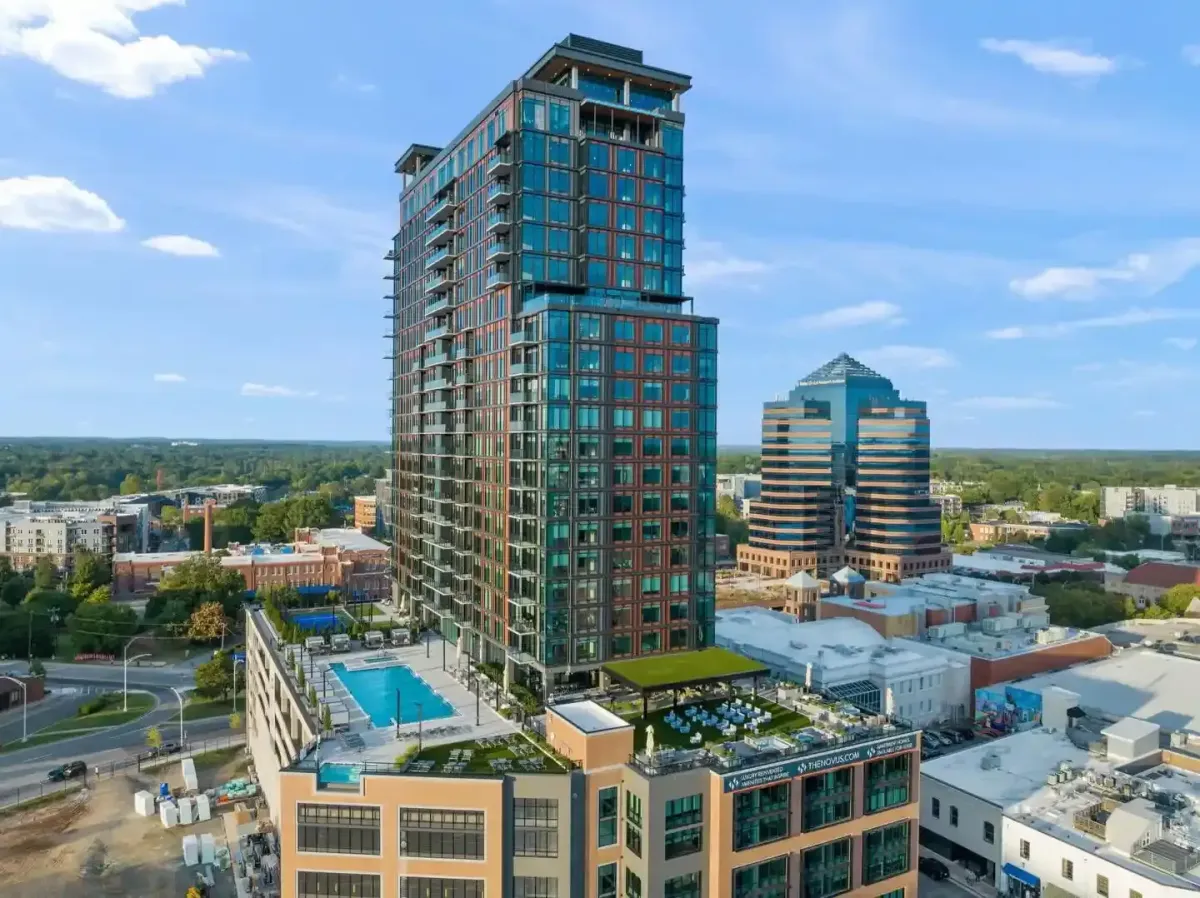
Future Growth & Development in Durham, NC (2026)
Durham doesn't have a single development project driving its growth story. What it has is more powerful for long-term residential appreciation — a convergence of pharmaceutical investment, technology expansion, urban revitalization, and sustained population inflow that is reshaping the city's identity and economic base simultaneously. In 2026, the signals are converging faster than at any point in Durham's post-tobacco history.
AbbVie Pharmaceutical Campus — The Anchor Investment
The most significant single development announcement for Durham buyers in 2026 is AbbVie's $1.4 billion pharmaceutical manufacturing campus expansion — one of the largest private investments in North Carolina history.
Investment: $1.4 billion in capital expenditure
Jobs: 700+ high-wage pharmaceutical and life sciences positions projected at full capacity
Timeline: Campus construction underway, operational opening expected around 2028
Location: Durham County, positioned within the RTP-adjacent life sciences corridor
Buyer Implication: A $1.4 billion employer investment of this scale drives sustained housing demand across multiple price bands — from entry-level workforce housing to executive relocation. The AbbVie announcement is the kind of catalyst that historically precedes a meaningful step-up in residential values in the surrounding market.
Hub RTP — The 2026 Milestone
The transformation of Research Triangle Park from a car-dependent office campus into a walkable, mixed-use urban district is the most consequential infrastructure shift in the Triangle's recent history — and Durham sits at its western gateway.
Current Status: Hub RTP opened its first phase in 2026 with retail, restaurants, outdoor programming, and public gathering space inside the park for the first time in its 60-year history.
Scale: The full Hub RTP vision includes residential towers, hospitality, a hotel, retail streets, and a connected trail network spanning the park's interior.
Durham Advantage: Durham residents have shorter access to Hub RTP than any other Triangle city. As the park transforms into a live-work-play destination, Durham's residential neighborhoods capture the proximity benefit first.
Buyer Implication: Hub RTP fundamentally changes the RTP commute story. When the park's interior becomes a walkable destination rather than a series of isolated corporate campuses, the calculus for where Triangle buyers want to live shifts — and Durham's 10–20 minute proximity becomes an even stronger competitive advantage.
Apple's Regional Campus Expansion
Apple's continued expansion of its Durham-area engineering and corporate campus represents one of the most significant technology employment investments in the Triangle's history.
Scale: Apple's regional campus expansion is projected to bring thousands of high-wage technology positions to the Durham-RTP corridor over the next several years.
Profile: Apple employees are among the highest-income relocation buyers in any market they enter — accelerating demand for both luxury and mid-range housing across Durham's neighborhood spectrum.
Buyer Implication: Technology sector in-migration from San Francisco, Seattle, Austin, and New York has already reshaped Durham's buyer profile. Apple's continued expansion deepens that trend and extends it through at least the next decade.
Durham Innovation District — Urban Density Investment
One of the most ambitious urban development projects in North Carolina is actively under construction in Durham's downtown core.
Scale: Approximately 15 acres with over 1.7 million square feet of planned development
Components: Office space, biotech laboratory facilities, apartments, retail, innovation hubs, and startup ecosystem infrastructure
Anchor: The district is designed to connect Duke University's research enterprise directly to downtown Durham's commercial and residential fabric — creating a seamless innovation corridor from West Campus to the American Tobacco District
Buyer Implication: Urban innovation districts of this scale historically drive significant residential appreciation in surrounding neighborhoods. Trinity Park, Forest Hills, and Old West Durham are the neighborhoods most directly adjacent to this investment corridor.
The Novus — Downtown Luxury High-Rise
Downtown Durham's skyline transformation continued in 2025 with the completion of The Novus — a 27-story luxury mixed-use tower delivering luxury condos, apartments, and ground-floor retail. The Novus signals Durham's transition into a genuine urban luxury residential market — the kind of project that historically expands the buyer ceiling across an entire downtown submarket.
East Durham Revitalization Corridor — Active Investment
Multi-year public and private investment along the Angier Avenue and Driver Street corridors continues reshaping East Durham from a disinvested neighborhood into one of the Triangle's most active revitalization stories.
Infrastructure: Road improvements, public art installations, streetscape upgrades, and new utility infrastructure along the primary commercial corridors
Private Investment: Independent businesses, breweries, coffee roasters, and residential renovation projects accelerating block by block
City DPA Program: The City of Durham's Down Payment Assistance Program (up to $80K forgivable) is specifically designed to support homeownership in revitalization corridors — aligning public subsidy with private investment momentum
Buyer Implication: East Durham represents the highest upside opportunity inside Durham city limits for value-oriented buyers. The appreciation trajectory in active revitalization corridors historically outperforms established neighborhoods during the transition period — and East Durham is mid-transition in 2026.
GoDurham Transit Expansion
Durham's public transit system is undergoing its most significant expansion in decades — funded by a $17 million federal investment.
Current Status: GoDurham bus service is fare-free through June 2026 as part of a ridership expansion initiative
Network Expansion: New routes connecting south Durham communities, RTP-adjacent corridors, and downtown to Duke University campuses
Long-Term Vision: Durham's transit master plan envisions Bus Rapid Transit (BRT) corridors connecting major employment centers — a development that would meaningfully improve commute options for car-dependent south Durham neighborhoods
Buyer Implication: Transit investment drives residential value appreciation in neighborhoods along new or improved routes — a well-documented pattern in urban markets nationally
Population Growth Momentum
Durham's growth fundamentals in 2026 are among the strongest of any major North Carolina city:
Population: ~312,000 city proper / ~352,166 Durham County
Growth rate: 1.64% annually — sustained over multiple years
In-migration profile: Predominantly high-income professionals from New York, DC, California, Florida, and Chicago — drawn by Duke, RTP, and Apple employment
Cost advantage: Durham's cost of living sits approximately 2% below the national average despite being one of the Southeast's most economically dynamic cities — a gap that continues driving in-migration from higher-cost metros
The Development Summary — What It Means for Buyers
Durham's growth story in 2026 is not driven by one project. It is driven by the convergence of six simultaneous signals:
AbbVie $1.4B campus — pharmaceutical employment anchor driving sustained housing demand
Hub RTP launch — fundamental transformation of the Triangle's largest employment campus
Apple campus expansion — high-income technology in-migration accelerating and deepening
Durham Innovation District — 1.7M sq ft of urban density investment adjacent to downtown
East Durham revitalization — active appreciation corridor with city-backed investment
GoDurham transit expansion — infrastructure investment improving connectivity and neighborhood values
No single one of these signals alone would justify the appreciation thesis. All six converging simultaneously — on top of an already nationally recognized food and arts scene and the strongest employment anchor in the Triangle — is exactly what historically precedes a market's transition from regional value play to fully priced urban address. The window between those two states is where the best real estate decisions get made.
📍 Phil's Growth Perspective: "I've watched Triangle markets mature over 20 years. The pattern is always the same — employers anchor the market, infrastructure follows, retail and culture build on top of that, and appreciation compounds as each layer attracts the next. Durham completed the first two layers years ago. What's happening in 2026 — AbbVie, Hub RTP, Apple, the Innovation District — is the third layer arriving all at once. The buyers who understand where Durham is in that cycle right now, and who move before the AbbVie campus opens and the Hub RTP transformation is fully priced in, are going to look very smart in five years. The question isn't whether Durham will be more expensive in 2030. The question is whether you want to buy before or after that happens."
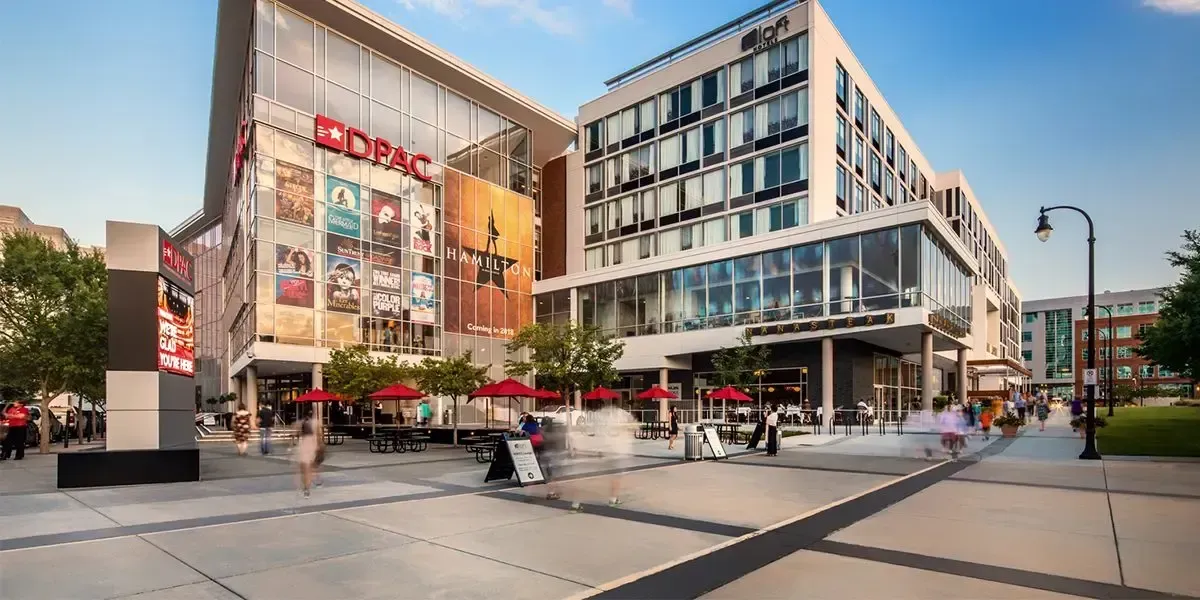
Awards & Recognition for Durham, NC
Durham has earned national recognition across multiple categories — culinary, cultural, economic, and quality of life — that reflects both its remarkable urban transformation and its standing as one of the most dynamic mid-sized cities in the United States. That recognition is increasingly driving relocation interest from buyers in high-cost markets who are discovering what Triangle residents have known for years.
New York Post — "Foodie Capital of the South"
Durham's culinary identity has earned it one of the most coveted food city designations in national media. The New York Post's recognition of Durham as the Foodie Capital of the South reflects a dining scene that has been building national credibility for over a decade — anchored by James Beard-nominated chefs, Michelin-recognized restaurants, and an independent food culture that major metros twice Durham's size cannot replicate.
For buyers evaluating Durham, this recognition matters beyond the dinner reservation. Food scene credibility drives relocation interest from exactly the demographic Durham is attracting — high-income professionals from New York, DC, San Francisco, and Chicago who are accustomed to world-class dining and will not compromise on it in their next city. When that audience reads "Foodie Capital of the South," Durham gets added to shortlists it might otherwise have missed.
Michelin Guide Recognition — 2025–2026
The Michelin Guide's expansion into North Carolina and its recognition of multiple Durham restaurants — including Seraphine, Nikos, Little Bull, and Nana's represent the most significant culinary recognition of any Triangle city. Michelin recognition places Durham in the company of cities like Chicago, New York, and Washington DC — a distinction that no other Triangle city shares.
For buyers, Michelin recognition is a proxy signal for the broader quality of urban life. Cities with Michelin-starred restaurants attract a specific type of resident — culturally sophisticated, high-earning, and committed to a city's long-term identity. That resident profile drives sustained demand for the neighborhoods surrounding the city's cultural core.
OpenTable Top 100 Restaurants in America — M Sushi (2023)
M Sushi was named to OpenTable's Top 100 Restaurants in America list in 2023 — the only North Carolina restaurant on the list that year. A single-restaurant recognition of this caliber in a city of Durham's size is a meaningful signal of the culinary talent and investment the city has attracted. It is the kind of recognition that puts Durham on the radar of food-driven relocation buyers who would not otherwise have considered a mid-sized Southern city.
"City of Medicine" Designation
Durham's "City of Medicine" designation reflects a healthcare and life sciences employment concentration that is unmatched in North Carolina and rare nationally. Nearly 1 in 4 Durham workers is employed in healthcare or a health-related industry — a concentration anchored by Duke University Health System, one of the top-ranked health systems in the United States, and reinforced by the RTP life sciences cluster housing companies including Biogen, IQVIA, Labcorp, and the incoming AbbVie campus.
For buyers, the City of Medicine designation means something specific: Durham's employment base is anchored by industries that are recession-resistant, growing, and nationally competitive. Healthcare and life sciences employment does not offshore, does not relocate, and does not contract in downturns the way technology or financial services can. That employment stability is a direct housing market stability signal.
Bon Appétit, Food & Wine & National Media Recognition
Durham has been featured consistently in Bon Appétit, Food & Wine, the New York Times, and Garden & Gun as one of America's most compelling food and lifestyle destinations. This sustained national media attention — spanning over a decade — is not a single viral moment. It is the accumulated result of a food and arts community that has built genuine national credibility through quality, consistency, and cultural authenticity.
For buyers evaluating Durham against other Triangle cities, this media footprint matters practically: it drives inbound relocation interest from exactly the buyer demographic that sustains and appreciates Durham's urban character long-term.
One of the Fastest-Growing Cities in North Carolina
Durham's sustained population growth of 1.64% annually — compounding over more than a decade — reflects the kind of demand that translates directly into residential appreciation. Unlike growth driven by a single employer or a single development project, Durham's population momentum is driven by a diversified set of pull factors: Duke employment, RTP access, cultural appeal, affordability relative to comparable coastal cities, and a quality of life that buyers from high-cost metros find immediately compelling.
American Underground — Google for Entrepreneurs Partner
Durham's designation as a Google for Entrepreneurs partner city through the American Underground — home to approximately 300 startups — reflects the city's standing as one of the most vibrant startup ecosystems in the Southeast. That designation signals to the national technology and venture capital community that Durham is a serious innovation hub — not just a research triangle suburb, but a city with its own entrepreneurial identity and talent pipeline.
For buyers, startup ecosystem depth is a leading indicator of long-term employment growth. The companies incubating in Durham today are the employers driving housing demand in five years.
The Recognition Summary — What It Means for Buyers
Awards and recognition matter in real estate for one practical reason: they drive buyer awareness, buyer awareness drives demand, and demand drives appreciation. When the Michelin Guide recognizes Durham restaurants, when the New York Post calls it the Foodie Capital of the South, and when M Sushi lands on OpenTable's national Top 100 — the pool of informed buyers considering Durham expands immediately.
For buyers already in the market, that expanding awareness is a tailwind. Durham's national recognition has been building for over a decade — but its residential pricing has not yet fully reflected the city's cultural and economic profile relative to comparable cities in other markets. The buyers who act before that gap closes are the ones who capture the most appreciation upside.
📍 Phil's Perspective on Recognition: "Recognition is a lagging indicator — it confirms what people who have been paying attention already knew. Durham's food scene, its employment base, and its urban character were world-class before the Michelin Guide made it official. What the national recognition does is expand the buyer pool — and an expanded buyer pool on a fixed housing supply means one thing for prices. I've watched this play out in every market I've worked in over 20 years. The buyers who wait for the recognition to be fully priced in always pay more for the same opportunity. Durham is still in the early innings of that repricing — and the AbbVie announcement, Hub RTP, and Apple's expansion haven't even hit the market yet."
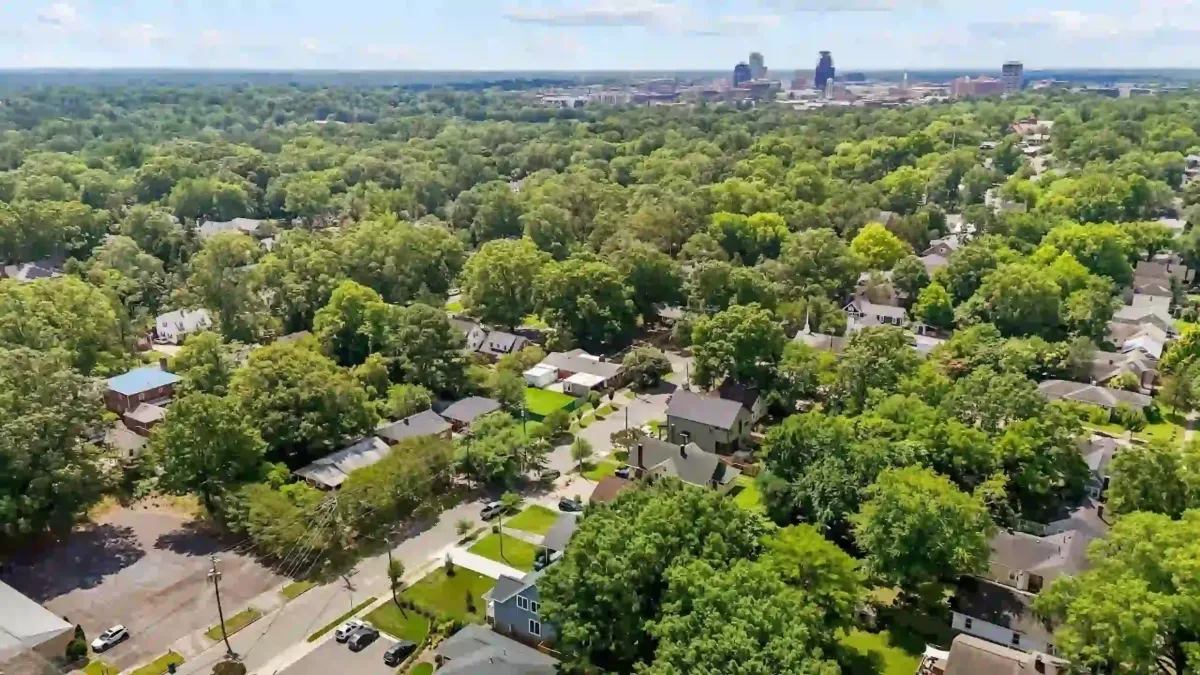
The Bottom Line: Pros & Cons of Living in Durham, NC (2026)
Every market has trade-offs. Durham's are more transparent than most — which is exactly why buyers who understand them make better decisions and stay longer. Here is the honest 2026 assessment.
✅ The Pros — Why Buyers Choose Durham
1. The Strongest Employment Base in the Triangle Duke University and Health System alone employs 43,000+ people — more than the entire employment base of most Triangle suburbs. Combined with 55,000+ RTP workers accessible in 10–20 minutes via NC-147, Durham offers employment proximity and diversity that no other Triangle city can match. For buyers whose job is in Durham or at RTP's western edge, the commute argument for living anywhere else is difficult to make.
2. Best Price-Per-Square-Foot Among Urban Triangle Cities At $222 per square foot and a median sold price of $395,000, Durham delivers 28% more home per dollar than Chapel Hill (~$310/sq ft) and 28% more than Cary (~$310/sq ft). For buyers relocating from New York, DC, or California, the value gap versus comparable coastal urban markets is the primary driver — and Durham's urban lifestyle makes the comparison feel legitimate in a way that a suburban alternative does not.
3. Nationally Recognized Food, Arts & Cultural Scene Michelin-recognized restaurants, a James Beard semifinalist chef community, DPAC, Motorco Music Hall, the Durham Bulls, Full Frame Documentary Film Festival — Durham's cultural output is extraordinary for a city its size. Buyers who prioritize a rich urban lifestyle and are unwilling to compromise on food and arts find that Durham is the only Triangle city that delivers it at this price point.
4. Walkable Urban Core That Cannot Be Manufactured Downtown Durham, the American Tobacco District, Brightleaf Square, and the Ninth Street corridor offer genuine walkability built over decades of organic urban investment. This is not a lifestyle center opened last year — it is a real city neighborhood with real history. In a state where walkability is rare, Durham's downtown core is a genuine differentiator.
5. $2B+ in Announced Private Investment AbbVie's $1.4 billion pharmaceutical campus, Apple's regional campus expansion, Hub RTP's launch, and the Durham Innovation District represent the largest convergence of private investment in Durham's post-tobacco history. Buyers purchasing in 2026 are buying before these catalysts are fully priced into the residential market.
6. City Down Payment Assistance — Up to $80,000 The City of Durham's Down Payment Assistance Program offers up to $80,000 forgivable over 15 years at 0% interest for qualifying first-time buyers. No other major Triangle city offers a DPA program at this scale. For buyers in the $280K–$395K price range, this program meaningfully changes the affordability math and aligns well with East Durham and south Durham entry-level inventory.
7. Duke University Health System — World-Class Healthcare at Your Door Durham residents have direct access to one of the top-ranked health systems in the United States without leaving their city. Duke Cancer Institute, Duke Children's Hospital, and Duke University Hospital are not regional assets Durham residents drive to — they are neighborhood institutions. For buyers with complex healthcare needs, older buyers, or families with specific medical priorities, this is a quality-of-life differentiator that no Triangle suburb can replicate.
8. Eno River State Park — Natural Recreation Inside the City 4,300+ acres of piedmont river corridor with 20+ miles of hiking trails, kayaking, swimming, and camping — accessible within 10–15 minutes of most central Durham neighborhoods. No other major Triangle city has a state park of this scale within its footprint.
⚠️ The Cons — What Buyers Need to Weigh Honestly
1. The Highest Combined Tax Rate in the Triangle At $0.9913 per $100 of assessed value, Durham's combined city/county tax rate is the highest of any major Triangle city. On a $395,000 home that's approximately $3,915 per year — roughly $390 more annually than Raleigh and $534 more than Cary. On a $750,000 home the difference versus Cary exceeds $1,000 per year. This is a real number that must be factored into your long-term budget, especially at the $750K+ price point.
2. Durham Public Schools Require More Due Diligence Durham Public Schools is a separate district from Wake County and school quality varies more significantly by campus. Some schools are exceptional — Durham School of the Arts and select magnet programs rank among the best in the state. Others perform below state averages. Buyers with school-age children must verify assignments at dpsnc.net for any specific address before making an offer — and must understand that the magnet programs they want may have competitive admission or multi-year waitlists.
3. Downtown Raleigh Is a Real Commute For buyers whose primary employment is in downtown Raleigh, the state government corridor, or east Raleigh, Durham's geographic position means a 25–35 minute off-peak commute that stretches to 40–50 minutes at peak hours on I-40. If Raleigh employment is your primary driver, living in Durham carries a real daily commute cost that buyers in Raleigh itself or closer suburbs do not pay.
4. Neighborhood Character Varies Block by Block Durham's urban fabric is more complex than any Wake County suburb. Established neighborhoods transition into revitalization corridors within a few blocks, and the character difference can be dramatic. Buyers who tour a specific house without walking the surrounding streets may be surprised by what's immediately adjacent. This requires more neighborhood-level due diligence than buying in a master-planned community.
5. RDU Airport Access Is Moderate RDU is 15–20 minutes from most Durham neighborhoods off-peak — reasonable but not the 10-minute convenience that Morrisville and Cary buyers enjoy. For frequent business travelers, the airport commute from Durham adds a meaningful time cost that is worth factoring in if you fly weekly.
6. Urban Crime Patterns Require Neighborhood-Level Research Durham's crime statistics are city-wide averages that obscure significant neighborhood-level variation. Established neighborhoods like Trinity Park, Forest Hills, Hope Valley, and Woodcroft have very different safety profiles than transitional corridors. Buyers should research specific neighborhoods rather than relying on city-level data, and should discuss neighborhood-specific context with their agent before making decisions based on aggregate statistics.
The Honest Summary
Durham is the RIGHT market if you:
✅ Work at Duke, NCCU, or the western edge of RTP
✅ Want genuine urban walkability and a nationally recognized food and arts scene
✅ Are relocating from a coastal metro and want comparable lifestyle at a fraction of the cost
✅ Can navigate school zone research or have no school-age children
✅ Want to buy before AbbVie, Hub RTP, and Apple's campus expansion are fully priced in
✅ Value cultural depth, historic character, and a city with a real identity
Durham is the WRONG market if you:
❌ Commute daily to downtown Raleigh or east Raleigh employment on a strict schedule
❌ Are prioritizing Wake County Public Schools as a non-negotiable
❌ Want a quiet, finished suburban environment with minimal urban complexity
❌ Need 10-minute RDU airport access for frequent business travel
❌ Prefer master-planned community predictability over urban neighborhood character
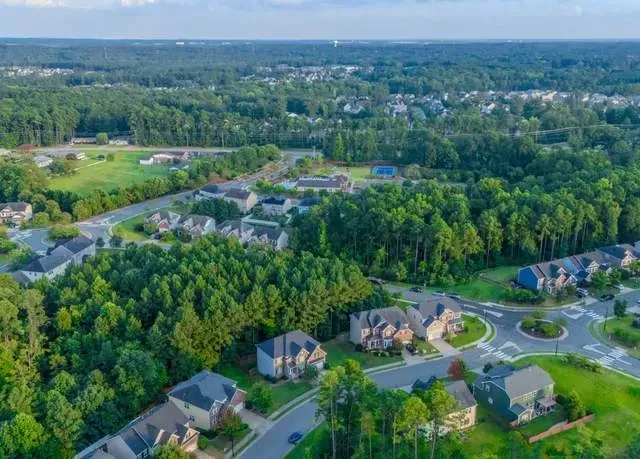
Is Durham, NC Safe?
The short answer: Durham is a safe city for the vast majority of its residents — particularly in its established and suburban neighborhoods. Like any city of 312,000 people, Durham's safety profile varies significantly by neighborhood, and city-wide statistics do not accurately represent what life feels like on a specific street in Trinity Park, Woodcroft, or Hope Valley.
The honest neighborhood-level reality:
Established neighborhoods including Trinity Park, Forest Hills, Hope Valley, Woodcroft, Falconbridge, Croasdaile Farms, and Treyburn have safety profiles that are comparable to or better than equivalent neighborhoods in Raleigh, Cary, or Chapel Hill. Residents in these areas consistently describe feeling safe, knowing their neighbors, and experiencing the kind of community cohesion that defines quality suburban and urban living.
Transitional corridors — particularly parts of East Durham and some downtown-adjacent blocks — have higher crime rates that are actively being addressed through the city's multi-year revitalization investment. Block-by-block variation is real in these areas, and buyers considering emerging neighborhoods should research specific streets rather than relying on neighborhood-level averages.
Safest areas for relocating buyers:
Trinity Park
Forest Hills
Hope Valley / Hope Valley Country Club
Woodcroft
Falconbridge
Croasdaile Farms
Treyburn
South Durham / Southpoint corridor
Colvard Farms
How to research safety for any specific Durham address:
NeighborhoodScout.com — block-level crime data and trend analysis
Niche.com — aggregated safety grades by neighborhood based on FBI crime data
City of Durham Open Data — official crime mapping tool
dconc.gov — Durham County public records and resources
Your real estate agent can help you access and interpret current data for any specific address during your due diligence period.
💡 Phil's Perspective: "When buyers ask me about Durham safety I give them the same answer every time: don't use city-level statistics to make a neighborhood-level decision. Durham's overall crime rate includes areas that no relocation buyer would ever consider living in — and it excludes the fact that Trinity Park, Forest Hills, and Woodcroft are as safe and community-oriented as anything in Wake County. My advice is to use NeighborhoodScout for the data, then spend a Saturday morning walking the specific streets you're considering. Durham neighborhoods tell you who they are in person in a way that no statistic captures."
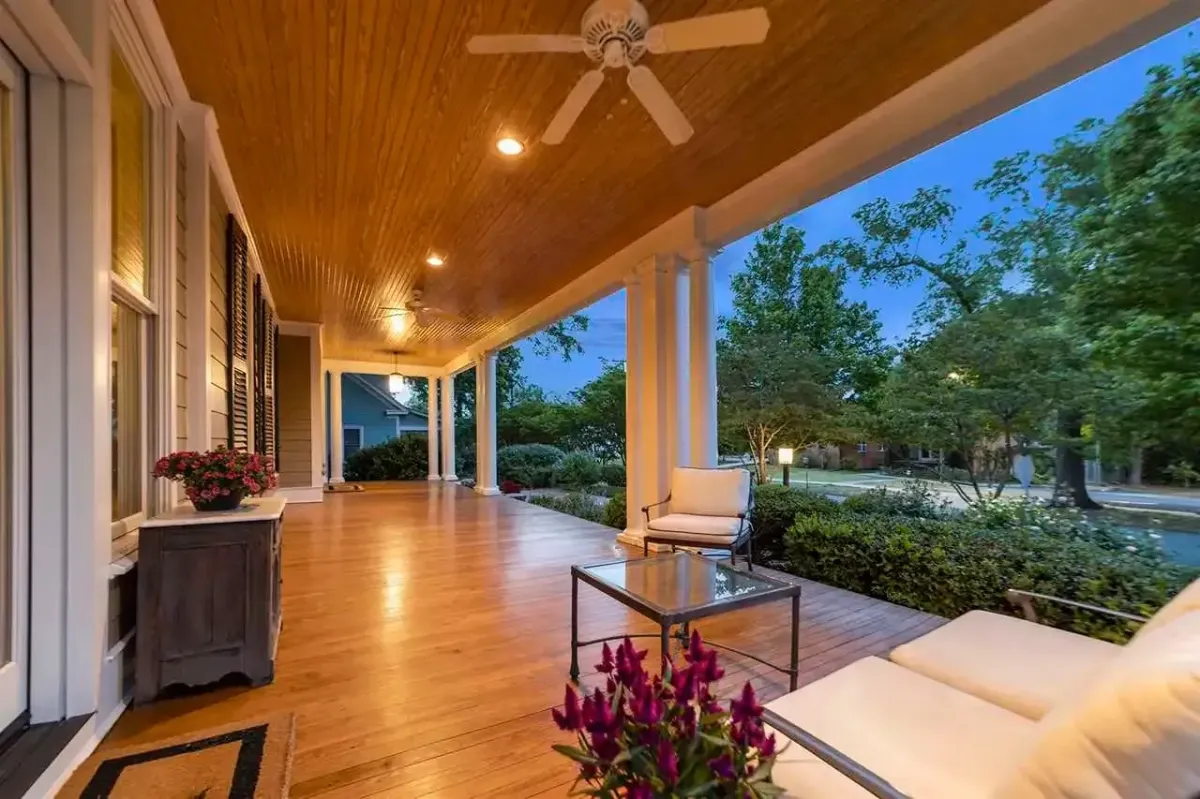
What Salary Do You Need to Live in Durham, NC (2026)?
One of the most searched questions from buyers relocating from New York, California, DC, and Florida — and the answer is more accessible than most coastal transplants expect.
To comfortably purchase a median-priced home in Durham ($395,000) with a 20% down payment, most financial advisors recommend a household income of approximately $95,000–$110,000 per year. With a 10% down payment, that range rises to approximately $110,000–$125,000.
For renters or buyers at lower price points, Durham's cost of living — approximately 2% below the national average — means the income threshold is meaningfully lower than comparable urban markets.
Monthly Cost Breakdown — $395,000 Home
| Cost | Monthly Estimate |
|---|---|
| Mortgage (20% down, 6.5% rate, 30yr) | ~$2,002/mo |
| Property Taxes ($3,915/yr) | ~$326/mo |
| Homeowner's Insurance | ~$120/mo |
| HOA (if applicable) | $0–$200/mo |
| Total Housing Cost | ~$2,448–$2,648/mo |
Monthly Cost of Living Beyond Housing
| Category | Monthly Estimate |
|---|---|
| Groceries (2-person household) | ~$400–$550 |
| Utilities (Duke Energy, avg.) | ~$150–$250 |
| Transportation (gas, insurance) | ~$300–$450 |
| Dining & Entertainment | ~$300–$600 |
| Healthcare (employer-supplemented) | ~$200–$400 |
| Total Non-Housing | ~$1,350–$2,250/mo |
Varies depending on lifestyle, family size, HOA situation, and down payment amount.
How Durham Compares to the Cities Buyers Are Leaving
| City | Median Home Price | Income Needed to Buy |
|---|---|---|
| San Francisco, CA | ~$1,300,000 | ~$320,000+/yr |
| New York City, NY | ~$780,000 | ~$190,000+/yr |
| Washington, DC | ~$650,000 | ~$160,000+/yr |
| Austin, TX | ~$525,000 | ~$130,000+/yr |
| Atlanta, GA | ~$420,000 | ~$105,000+/yr |
| Durham, NC ⭐ | ~$395,000 | ~$95,000–$110,000/yr |
A household earning $150,000 per year in San Francisco is effectively cost-burdened. That same household in Durham is comfortably upper-middle class — able to own a $500,000+ home, save aggressively, and access a nationally recognized food and arts scene without the financial anxiety that defines coastal urban living.
That gap is the single most powerful driver of Durham's in-migration from high-cost metros — and the reason Duke, RTP, and Apple recruiters consistently use Durham's cost of living as a closing argument when recruiting coastal talent.
"The salary question is the one I get most from out-of-state buyers — usually framed as 'can we actually afford this?' My answer is almost always yes, and usually more comfortably than they expect. A dual-income household with one Duke salary and one remote income can live exceptionally well in Durham — own a home in Trinity Park or Forest Hills, eat at Michelin-recognized restaurants regularly, and still save more than they ever could in the city they're leaving. That combination of urban quality and financial breathing room is what Durham delivers that no coastal city can replicate at any price point."
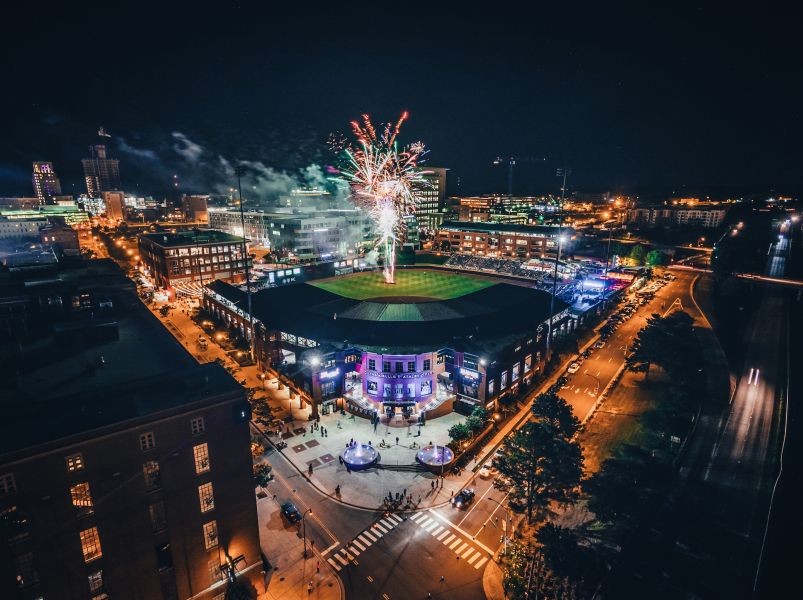
Why Are So Many People Moving to Durham, NC in 2026?
Durham is experiencing one of the most sustained in-migration waves of any mid-sized American city — and it is not a coincidence. It is the convergence of five pull factors that rarely exist in the same city at the same time.
1. The Jobs Are Here — and They Pay Well
Duke University and Health System employs 43,000+ people. Research Triangle Park houses 380+ companies employing 55,000+ workers. Apple's regional campus is expanding. AbbVie just committed $1.4 billion and 700+ jobs. Biogen, IQVIA, IBM, and Cisco are all here.
For professionals in healthcare, technology, life sciences, and research — Durham is not a compromise destination. It is where the jobs are. Buyers are not moving to Durham despite their career. They are moving because of it.
2. Coastal City Quality at Half the Price
Buyers moving to Durham from California, New York, DC, and Chicago consistently cite the same three factors: the jobs are real, the lifestyle is comparable, and the math finally works in their favor.
The calculation is simple and it is driving thousands of relocation decisions every year:
A $150,000 household income in San Francisco means financial stress
That same income in Durham means a paid-off mortgage, Michelin-starred dinners, and a savings account that actually grows
Durham's cost of living sits approximately 2% below the national average. Its cultural output — Michelin Guide recognition, DPAC, nationally ranked food scene, Duke's world-class institutions — rivals cities twice its size. Buyers from New York, DC, California, and Chicago are doing the math and moving.
3. The Food and Arts Scene Is the Real Deal
This is not marketing. The New York Post called Durham the Foodie Capital of the South. The Michelin Guide recognized Seraphine, Nikos, Little Bull, and Nana's. Bon Appétit, Food & Wine, and the New York Times have all written about Durham's dining scene in the past three years.
For buyers who built their lifestyle around great restaurants, live music, and cultural institutions in a coastal city — Durham is the only Triangle city that delivers a comparable experience. That is a specific and powerful pull factor for a specific and high-value buyer demographic.
4. The Urban Lifestyle That North Carolina Wasn't Supposed to Have
Walkable neighborhoods. Converted tobacco warehouse lofts. An independent music venue that books national acts. A performing arts center that ranks among the top-grossing mid-sized venues in the country. A minor league baseball park with the downtown skyline visible beyond the outfield wall.
Durham has built the kind of urban lifestyle that buyers from coastal cities assumed they would have to give up when they left. The discovery that they don't have to give it up — at a fraction of the cost — is the moment most out-of-state buyers decide Durham is the answer.
5. The Appreciation Story Is Still Early
Hub RTP opened in 2026. AbbVie breaks ground in 2028. Apple's campus is still expanding. The Durham Innovation District's 1.7 million square feet is still under development. East Durham's revitalization corridor is mid-transition.
Buyers who have been paying attention to Durham for the past decade know that the city's residential pricing has not yet fully caught up to its economic and cultural profile. The gap between what Durham delivers and what it costs is closing — but it has not closed yet. That gap is why buyers who are aware of it are moving now rather than waiting.
💡 Phil's Perspective: "I work with relocating buyers every week who tell me the same thing: 'We didn't expect Durham to be this good.' They came in expecting to compromise — expecting that leaving their coastal city meant giving up the food, the culture, the walkability, the career opportunities. And then they spend a Friday night in downtown Durham, walk through Trinity Park on a Saturday morning, and do the mortgage math on a Forest Hills home — and the conversation shifts from 'is Durham good enough' to 'why didn't we look here sooner.' That's the Durham story in 2026. And it's still early."

Experience Meets Innovation
I'm Phil Slezak, a Triangle-based real estate agent with more than 20 years of experience helping buyers, sellers, and relocating clients evaluate communities across Wake County and the greater Raleigh–Durham area.
This Durham, North Carolina guide is built to provide clear, objective local market insight — including home pricing trends, neighborhood differences, commute patterns to Duke and RTP, and long-term development considerations including the AbbVie campus, Hub RTP, and Apple's regional expansion.
As one of the first AI-Certified Real Estate Agents in the country, this means more than a credential. In a market moving at the pace of Durham, I use AI-assisted analysis to evaluate neighborhood-level pricing trends, inventory shifts, builder incentive cycles, and school assignment stability — giving you a faster, more defensible picture of what a specific home is actually worth before you write a check. That analytical layer, combined with two decades of local boots-on-the-ground experience, is what separates a confident move from an expensive mistake.
For many clients, a move to the Triangle isn't just a transaction — it's a major life transition. To provide more security and flexibility, I offer qualified clients access to several unique programs:
Quick Summary for Buyers
Durham, NC is best suited for buyers who want direct access to Duke University or Research Triangle Park employment, a walkable urban lifestyle with a nationally recognized food and arts scene, and genuine city character at a price point well below comparable coastal metros — while remaining connected to the broader Triangle's employment base and cultural amenities.
People Also Ask About Durham, NC
Is Durham NC cheaper than Raleigh? Durham's median sold price of $395,000 is slightly below Raleigh's median of ~$435,000 — making Durham modestly more affordable at the entry level. However Durham's combined city/county tax rate of $0.9913 per $100 is higher than Raleigh's $0.8721. The net monthly difference on a median-priced home is approximately $33 — a manageable gap that most buyers find justified by Durham's shorter RTP commute and urban lifestyle advantages.
What is Durham NC known for? Durham is known for four things that define its identity: Duke University and Duke Health System (the City of Medicine), Research Triangle Park access, the American Tobacco Campus redevelopment, and a nationally recognized food scene including Michelin-recognized restaurants Seraphine, Nikos, Little Bull, and Nana's. The Durham Bulls and DPAC round out a cultural identity that no other Triangle city replicates.
How far is Durham from Research Triangle Park? Research Triangle Park is 10–20 minutes from most Durham neighborhoods via NC-147 off-peak — the most direct RTP commute of any Triangle city. During the 8:00 AM morning rush expect 20–30 minutes depending on your specific neighborhood and destination within the park.
Want a list of the best Durham neighborhoods for your budget + commute?
👉 Text DURHAM to 984-789-4554 for a custom neighborhood short list.
Frequently Asked Questions About Durham, NC
Is Durham, NC a good place to live?
Yes. Durham consistently ranks among the most desirable cities in the Triangle and the broader Southeast. In 2026, it holds Michelin Guide recognition for multiple restaurants, national media designation as the "Foodie Capital of the South," and one of the strongest employment bases of any mid-sized American city anchored by Duke University's 43,000+ employees and Research Triangle Park's 55,000+ workers. With a median sold price of $395,000, a cost of living approximately 2% below the national average, and a walkable urban core that coastal transplants describe as the closest thing to a Northeast or West Coast city lifestyle in North Carolina — Durham offers a quality of life that is difficult to match at this price point anywhere in the country.
How much do homes cost in Durham, NC 2026?
As of Q1 2026, the median sold price in Durham is $395,000, with a median price per square foot of $222 — making Durham the most affordable urban city in the Triangle relative to its lifestyle and employment offering.
Entry-level: New construction townhomes and East Durham single-family homes start in the low-to-mid $300s.
Downtown / Brightleaf lofts and condos: $450,000–$700,000+
Historic neighborhoods (Trinity Park, Forest Hills): $450,000–$900,000+
Luxury communities (Hope Valley, Treyburn, Colvard Farms): $650,000–$2,400,000+
What is the property tax rate in Durham, NC in 2026?
The combined tax rate for properties within Durham city limits is $0.9913 per $100 of assessed value — City of Durham at $0.5363 plus Durham County at $0.4550. On a $395,000 home, annual taxes are approximately $3,915, or roughly $326 per month.
Note: Properties outside Durham city limits pay only the county rate of $0.4550 per $100 — approximately $1,797 annually on a $395,000 home. Some downtown properties may carry additional Municipal Service District (MSD) assessments. Always verify the total tax bill at dconc.gov before closing.
What are the best neighborhoods in Durham, NC?
According to Niche.com neighborhood data and local MLS trends, Durham's most consistently sought-after areas vary significantly by lifestyle priority. Your specific choice should depend on your commute, budget, and daily routine:
Trinity Park — Top-rated for historic character, walkability, and Duke proximity. Craftsman bungalows and Colonial Revivals on tree-lined streets. Highest demand and lowest inventory of any Durham neighborhood.
Forest Hills — Consistently rated among Durham's top established neighborhoods for architectural quality, tree canopy, and central location. Popular with Duke faculty and physicians.
Hope Valley — Top-rated for luxury suburban lifestyle and golf community amenities. Large lots, executive homes, and a 10-minute back road to RTP.
Woodcroft — Highest rated for RTP commute efficiency and value-to-lifestyle ratio in south Durham. Mature wooded lots and proven trail network.
Downtown / Brightleaf — Top-rated for walkability and urban lifestyle. Zero-drive access to DPAC, Durham Food Hall, and the Bulls Athletic Park.
East Durham — Highest upside rating of any Durham neighborhood in active transition. Most accessible price points inside city limits.
💡 Phil's Perspective: "I always tell Durham buyers: 'Best neighborhood' depends entirely on where you work and how you want to spend your evenings. A Duke physician and a remote tech worker from San Francisco will end up in completely different parts of town — and both will love where they land. Use Niche.com and GreatSchools.org for objective data, then spend a Saturday morning walking each neighborhood before you decide. Durham's neighborhoods feel very different on foot than they look on a map."
What schools serve Durham, NC?
Durham is served by Durham Public Schools (DPS), a separate district from Wake County. For 2026, DPS serves approximately 32,000 students across 53 schools. School quality varies significantly by campus — some schools, including Durham School of the Arts and select magnet programs, rank among the best in North Carolina. Others perform below state averages. Top options include Durham School of the Arts (competitive arts-integrated magnet), the NC School of Science and Mathematics (statewide residential high school for gifted students located in Durham), and Research Triangle High School (STEM-focused public charter).
Always verify your specific address at dpsnc.net, as school assignments change annually. If a specific school or magnet program is central to your decision, confirm application timelines and waitlist status before committing to a neighborhood.
What is the commute from Durham to RTP?
Off-peak, the drive to Research Triangle Park is 10–20 minutes via NC-147 (the Durham Freeway) — the most direct RTP commute of any Triangle city. During the 8:00 AM rush, expect 20–30 minutes depending on your specific neighborhood and destination within the park. Duke University is 5–15 minutes from most central Durham neighborhoods. RDU International Airport is 15–20 minutes via I-40 for most Durham residents.
Is Durham, NC safe?
Durham's safety profile varies significantly by neighborhood — more so than in suburban Triangle markets. Established neighborhoods including Trinity Park, Forest Hills, Hope Valley, Woodcroft, and Falconbridge have very different safety characteristics than transitional corridors. City-wide crime statistics do not accurately represent neighborhood-level conditions and should not be used as the primary basis for a location decision.
We recommend using objective third-party data sources to evaluate any specific address you are considering:
dconc.gov — Durham County official resources and public records
NeighborhoodScout.com — Block-level crime data and trend analysis
Niche.com — Aggregated safety grades by neighborhood based on FBI crime data
Your real estate agent can help you access current data for any specific address during your due diligence period.
How does Durham compare to Raleigh and Chapel Hill?
- Durham Wins On: Price per square foot ($222 vs. ~$230 Raleigh, ~$310 Chapel Hill), urban walkability, nationally recognized food and arts scene, RTP commute efficiency, and employment proximity for Duke and RTP workers.
- Raleigh Wins On: Wake County Public Schools, lower combined tax rate ($0.8721 vs. Durham's $0.9913), more suburban neighborhood variety, and state government employment access.
- Chapel Hill Wins On: Chapel Hill-Carrboro City Schools (among the best in NC), UNC employment proximity, and college-town atmosphere.
- The Bottom Line: If you work at Duke or RTP and want genuine urban energy at a value price point, Durham is the obvious choice. If Wake County schools are non-negotiable, Raleigh or a Wake County suburb fits better. If UNC is your employer, Chapel Hill makes more sense despite the premium.
Are there new construction homes available in Durham, NC?
Yes. As of Q1 2026, 27.7% of active listings — 318 of 1,146 homes — are new construction. This inventory is concentrated in south Durham along the US-15-501 and NC-751 corridors, with urban infill townhomes and condos available closer to downtown. Production builders including D.R. Horton, Lennar, Meritage Homes, and Stanley Martin are active in south Durham with entry points starting in the low-to-mid $300s.
Is Durham, NC a good place to raise a family?
According to Niche.com's 2026 data, Durham earns strong marks for outdoor recreation, diversity, and community engagement. Families with school-age children should approach Durham with more due diligence than Wake County suburbs — school quality varies by campus, and the magnet programs that earn the strongest ratings require competitive applications or lottery enrollment.
The combination of Eno River State Park, Sarah P. Duke Gardens, Duke Lemur Center, Museum of Life + Science, and Jordan Lake gives Durham families access to natural and educational amenities that rivals markets twice the city's size. For families whose children are Duke School, Durham School of the Arts, or charter school candidates — and who value urban lifestyle alongside those educational options — Durham is an exceptional family market.
For families evaluating specific neighborhoods, we recommend using Niche.com, GreatSchools.org, and the DPS school finder at dpsnc.net to evaluate schools, safety, and community fit for any specific address. Your agent can help you interpret that data during due diligence.
💡 Phil's Perspective: "The most common mistake I see out-of-state buyers make in Durham is treating it like a Wake County suburb with a higher tax rate. It's not. Durham is a city — with all the complexity, opportunity, and neighborhood-level nuance that comes with that. The buyers who thrive here are the ones who do the school zone research, walk the specific streets they're considering, and understand that the block-by-block variation is real. Get the school assignment verified at dpsnc.net before you fall in love with a house — not after. And confirm your tax jurisdiction at dconc.gov, because the difference between city limits and county-only rate is nearly $2,000 per year on a $395,000 home."
Verify current school assignments at dpsnc.net, tax rates at dconc.gov, and market data with your agent before making any purchase decision.

Next Steps: Talk to Phil About Durham
If you're seriously considering a move to Durham, the next step isn't more research — it's a conversation. The data on this page gives you the framework. A 15-minute call gives you the address-specific answers that no guide can provide.
Here's what we cover in that first call:
Your commute reality — based on your specific employer location and schedule, not a generic average
Your neighborhood shortlist — based on your budget, school priorities, lifestyle, and how much urban energy you want in your daily routine
Your new construction vs. resale decision — which builders are active in south Durham communities that match your criteria right now, and whether resale in an established neighborhood makes more sense for your situation
Your timeline — whether you should be in the market now, in 90 days, or watching and waiting
Your program eligibility — whether the Buyer Home Guarantee or Sold Zero Commission Program applies to your situation
Three ways to connect:
📅 Schedule a 15-Minute Strategy Call — Book directly here
📱 Text DURHAM to 984-789-4554 — Get instant market updates, coming soon alerts, and neighborhood comparisons.
🏠 Get Your Custom Durham Home Search — Tell us what you're looking for
📍 Phil's Final Perspective: Durham is a Buy-Into-the-Story market. The AbbVie $1.4 billion pharmaceutical campus, Apple's regional expansion, Hub RTP's transformation from car-dependent office park to walkable urban district, Michelin Guide recognition, and continued in-migration from coastal metros are the kinds of converging signals that historically produce meaningful appreciation in urban markets that follow this reinvestment pattern. Durham's story has been building for two decades — but the next chapter, driven by $2B+ in announced private investment that has not yet fully priced into the residential market, is the one that will define the next decade of Triangle real estate. The buyers who position themselves correctly before those signals reach critical mass are the ones who make the best long-term decisions. My job is to make sure you're one of them.
DISCLAIMER: All stats, data, house pricing, and local project timelines mentioned on this page are subject to change and are provided merely as information at the time of publication (Q2 2026). This guide is updated regularly using Durham County MLS data and local market reporting, but buyers should independently verify all information — especially school assignments, tax jurisdictions, development project timelines, and new construction availability — before making a purchase decision. School assignment information reflects Durham Public Schools data as of May 2026 — verify all assignments at dpsnc.net before making an offer. Tax jurisdiction information reflects Durham County Tax Administration data as of FY2025–2026 — verify your specific property tax rate at dconc.gov before closing.
Sources & Further Reading
For official city information, visit the City of Durham website at durhamNC.gov
For background on the city's history and demographics, see the Durham, NC Wikipedia entry
For neighborhood ratings and resident reviews, see Durham on Niche
For Durham tourism, dining, and community guides, visit Discover Durham
For Durham Public Schools assignment verification, visit dpsnc.net
For property tax rate verification, visit Durham County Tax Administration at dconc.gov
For Hub RTP development updates, visit HubRTP.com
For Research Triangle Park information, visit the RTP official website
For Durham County economic development, visit Durham County at dconc.gov
For Eno River State Park trail and access information, visit NC State Parks — Eno River
PHIL SLEZAK REAL ESTATE
PHIL SLEZAK REAL ESTATE
CONNECT
OUR PROGRAMS
LEGAL
Explore more Triangle relocation guides including Cary, Holly Springs, Fuquay-Varina, Wake Forest, and Raleigh.
Phil Slezak Real Estate
421 Fayetteville Street, Suite 1100
Raleigh, NC 27601
(984)-789-4554


© Copyright 2026. Phil Slezak Real Estate. All Rights Reserved.