
Living in Garner, NC (2026 Guide)
Is Garner the Best Suburb Near Raleigh in 2026?
Thinking about moving to Garner? This guide uses current Wake County MLS data to break down home prices, neighborhoods, and the 2026 commute reality. Whether you're comparing Garner to Clayton, Fuquay-Varina, or looking for the best value suburb south of Raleigh — here's what serious buyers need to know.
May 26, 2026
Living in Garner, NC: The Value Play South of Raleigh
Thinking about moving to Garner? The 2026 real estate market here tells a story that value-driven Triangle buyers need to hear. With a median sold price of $395,000, a price per square foot of just $186, and 42.65% of active listings being new construction — Garner delivers more home per dollar than any other Wake County suburb near Raleigh.
The market here is defined by one word: value. While buyers in Cary and Apex pay $295–$310 per square foot, Garner buyers are getting the same Triangle access, the same Wake County schools, and the same proximity to Raleigh at $186 per square foot. That gap — 37% more home per dollar versus Cary — is the Garner story in 2026.
Morning: The Raleigh Proximity Advantage
The day in Garner starts with an advantage that surprises most buyers: you're closer to downtown Raleigh than you think.
The Raleigh Run: From most Garner neighborhoods, downtown Raleigh is 10–20 minutes via I-40 or US-70 — a commute that beats most Triangle suburbs. For buyers who work in Raleigh's downtown core, state government corridor, or WakeMed health system, Garner is the most direct suburban address available.
The RTP Reality: Research Triangle Park is 25–35 minutes from most Garner neighborhoods — longer than Durham or Cary, but comparable to Wake Forest and meaningfully shorter than Clayton. For RTP commuters, Garner's value advantage at $186/sq ft makes the trade-off straightforward.
Afternoon: The New Construction Advantage
By midday, the reason Garner's new construction share hits 42.65% becomes obvious — builders followed the buyers south.
The Pipeline: Georgia's Landing, Oak Manor, Exchange at 401, Renaissance at White Oak, Auburn Village, Rollman Farms, and Magnolia Park represent one of the most active new construction corridors in Wake County. Buyers who missed the Apex and Holly Springs windows five years ago are finding that Garner is where that opportunity now sits.
The Value Gap: New construction in Garner has a median price of $416,380 — meaningfully below comparable new construction in Holly Springs, Fuquay-Varina, or Apex. For buyers who want a brand-new home at a value price point with Wake County schools, Garner is the strongest answer in the market right now.
Evening: A Community Finding Its Identity
As the sun sets, Garner offers something that surprises buyers who wrote it off as a pass-through suburb: a genuine community with a real downtown, a growing dining scene, and the kind of neighborhood character that comes from decades of established residential investment.
Downtown Garner: The historic downtown district along Garner Road is quietly becoming one of the more searched destinations in southern Wake County — with local restaurants, seasonal events, and a revitalization investment that gives Garner a community identity that newer master-planned suburbs can't replicate.
The Local Scene: Aversboro Restaurant & Sports Bar, Taco Addicts, and Smithfield's Chicken 'N Bar-B-Q anchor a dining scene that is expanding alongside Garner's population growth. The White Oak Crossing corridor — anchored by major retail and dining — gives Garner the commercial infrastructure that buyers from larger metros expect.
💡 Phil's Perspective
"I tell Garner buyers the same thing every time: the math doesn't lie. At $186 per square foot with Wake County schools, a 15-minute drive to downtown Raleigh, and one of the strongest new construction pipelines in the county — Garner is where the value conversation ends for buyers who do their homework. The buyers who are still looking in Apex and Cary at $295–$310 per square foot often don't realize they could get 37% more home in Garner for the same monthly payment. That gap is real, it's current, and it won't last forever."
The Honest Trade-Off
Garner's combined property tax rate of $1.0241 per $100 of assessed value is the highest of any major Triangle suburb — higher than Durham, Wake Forest, Apex, and Cary. On a $395,000 home that's approximately $4,045 per year in property taxes. Buyers comparing Garner to Apex or Cary should factor this into their monthly payment calculations before comparing list prices directly.
Garner also sits further from RTP than the western Triangle suburbs — a real consideration for buyers who commute to the park daily. And while the community character is growing, Garner doesn't yet have the downtown depth of Apex's Social District or Wake Forest's Renaissance District.
For buyers comparing Garner to Clayton or Fuquay-Varina, the question isn't whether Garner is better — it's whether the Raleigh proximity, Wake County schools, and value per square foot justify the higher tax rate and longer RTP commute. For most buyers south of Raleigh, the answer is yes.
That's not a knock on Garner. It's just the honest read of the market in 2026.
Watch: Living in Durham, NC


Garner, NC Population & Demographics
Population: ~40,477 (Town) / ~1,129,410 (Wake County) — Garner is one of Wake County's fastest-growing towns, adding residents steadily as buyers migrate south from Raleigh, Cary, and Apex seeking value and space. It delivers a genuine suburban community feel with expanding infrastructure, a revitalizing historic downtown, and one of the strongest new construction pipelines in southern Wake County.
County: Wake County, North Carolina.
Region: Raleigh–Durham–Chapel Hill Triangle (Southern Wake County).
Median Household Income: ~$72,000 — Reflecting a workforce concentrated in healthcare, manufacturing, retail, logistics, and government — anchored by proximity to Raleigh's broader employment base and Wake County's public sector. Garner's income profile is growing alongside its population as higher-earning buyers from Raleigh and surrounding markets relocate south.
Median Age: ~36.4 — A young, family-oriented demographic driven by first-time buyers, move-up buyers, and young families relocating from Raleigh and Cary who want more space and newer homes at accessible price points.
Educational Attainment: ~38% hold a Bachelor's Degree or higher — Supported by proximity to NC State, Wake Tech Community College, and the broader Triangle research university ecosystem. Garner's educational profile is rising alongside its income levels as the buyer mix shifts toward higher-earning professionals.
The Evolution of Garner — From Southern Suburb to Wake County Value Leader
Garner has undergone a quiet but significant transformation over the past decade. Once overlooked as a pass-through community south of Raleigh along US-70, Garner has emerged as one of Wake County's most active growth markets — driven by affordability migration from Raleigh, new construction investment, and a healthcare expansion anchor that is reshaping the town's economic identity.
Unlike the master-planned expansions of Holly Springs or the historic-district appeal of Apex, Garner's evolution is practical and value-driven — built on the straightforward proposition that buyers can get significantly more home, more lot, and more new construction for the same money, while staying inside Wake County's school district and within 20 minutes of downtown Raleigh.
In 2026, the town's growth trajectory is defined by four major catalysts:
The Duke Health Garner Campus: Duke Health's planned 22-acre medical campus on Timber Drive East — including medical office buildings, an ambulatory surgery center, an emergency department, specialty care, and oncology services — is projected to create approximately 600 jobs and more than 1 million annual clinical encounters. Phase 1 construction is underway. This is the single most significant economic development announcement in Garner's history and a direct housing demand driver across multiple price bands.
The White Oak Corridor: The White Oak Crossing retail and commercial district has transformed the town's commercial infrastructure — bringing major grocery, dining, fitness, and retail options that eliminated the "not enough amenities" criticism that once followed Garner. The corridor continues expanding with new tenants and developments.
The Exchange at 401: One of the largest mixed residential developments underway in Wake County — 1,300+ housing units including single-family homes, townhomes, and apartments — is adding significant inventory and reshaping Garner's residential landscape.
The I-540 Extension: The Western Wake Freeway extension of I-540 — connecting southern Wake County to RTP and the broader Triangle highway network — is a long-term commute and appreciation signal that positions Garner properties along the southern corridor for sustained demand as the extension progresses.
This convergence of healthcare investment, commercial maturation, residential development, and infrastructure improvement has created a market where real estate is increasingly viewed as a value opportunity — a community where the appreciation story is building but has not yet fully priced in the next decade of growth.
Jump to:
Garner Population & Demographics — Understanding Garner's growth story, median income, and the evolution from pass-through suburb to Wake County value leader.
Garner Market Report — Q1 2026 MLS data on median prices, days on market, new construction share, and what buyers should expect.
Garner Homes For Sale — Active inventory in the Wake County MLS updated daily.
Garner New Construction vs Resale — Master-planned communities, production builders, established neighborhoods, and the Housing Style Comparison.
How Garner Compares to Other Triangle Cities — Garner vs Clayton vs Fuquay-Varina vs Raleigh vs Knightdale — the ultimate comparison for southern Wake County buyers.
Nearby Triangle Relocation Guides — Explore all Triangle and Wake County community guides.
Garner Neighborhoods Guide — From Adams Point and Eagle Ridge to Chadbourne, Georgia's Landing, Auburn Village, and Downtown Garner.
Cost of Living in Garner — Property taxes, HOA fees, utilities, and the honest tax math buyers need before deciding.
Schools in Garner, NC — WCPSS assignments, high schools, charter options, and the Wake County vs Johnston County school district difference.
Parks and Outdoor Living — Lake Benson Park, White Deer Park, Jordan Lake, and Garner's expanding greenway network.
Amenities and Community Services — WakeMed Garner Healthplex, Duke Health campus, White Oak Crossing, and the 2026 event calendar.
Garner Dining and Entertainment — Aversboro, Smithfield's, Moonrunners, Eagle Ridge Golf, and the White Oak corridor dining scene.
Where Garner Is Located — Highway access, commute matrix, what surrounds Garner, and the southern Wake County geographic advantage.
Garner Future Growth — Duke Health 22-acre campus, Exchange at 401, Georgia's Landing, I-540 extension, and White Oak corridor expansion.
Awards and Recognition — Wake County's best value per square foot, Duke Health's vote of confidence, and Garner's data-validated growth story.
Pros and Cons of Living in Garner — The honest 2026 assessment of Garner's trade-offs.
Is Garner Safe? — Neighborhood-level safety reality, safest areas, and how to research any specific address.
What Salary Do You Need in Garner? — Monthly cost breakdown, Wake County comparison, and the Garner value proposition.
Why Are People Moving to Garner? — The five pull factors driving Garner sustained in-migration wave.
About Phil Slezak — How Phil uses AI-assisted analysis and 20+ years of local experience to protect your move.
FAQs About Garner, NC — Quick answers to the most common relocation questions buyers ask before moving to Garner.
Next Steps — Talk to Phil about Garner, request current listings, or text Garner to 984-789-4554.
Garner, NC Real Estate Market Snapshot (2026)
📊 Current Market Overview
| Metric | Value (Q1 2026) |
|---|---|
| Median Sold Price | $395,000 |
| Highest Sold Price | $1,500,000 |
| Median Price Per Sq. Ft. | $186.00 |
| Median Days on Market | 39 Days |
| Sale-to-List Price Ratio | 99% |
| Active Listings | 211 |
| New Construction Share | 42.65% (90 listings) |
| New Construction Median Price | $416,380 |
| Town of Garner Tax Rate | $0.5200 per $100 assessed value |
| Wake County Tax Rate | $0.5041 per $100 assessed value |
| Combined Tax Rate | $1.0241 per $100 assessed value |
| Typical Commute to Downtown Raleigh | 10–20 min via I-40 / US-70 |
| Typical Commute to RTP | 25–35 min via I-40 |
| Typical Commute to RDU Airport | 20–30 min via I-40 |
The most distinctive data point is Garner's 42.65% new construction share — 90 of 211 active listings — one of the highest ratios of any Wake County suburb. For buyers who want a brand-new home with modern finishes and builder incentives at a value price point, Garner's new construction pipeline is unmatched in southern Wake County. The new construction median of $416,380 remains meaningfully below comparable new product in Holly Springs, Fuquay-Varina, or Apex.
The most important financial consideration for Garner buyers is the combined town and county tax rate of $1.0241 per $100 assessed value — the highest of any major Triangle suburb. On a $395,000 home, that's approximately $4,045 per year in property taxes. Factor this into your monthly payment math before comparing Garner list prices to lower-tax suburbs directly. Tax rates apply to properties within Garner town limits. Properties in Wake County but outside Garner town limits pay only the county rate of $0.5041 per $100.
Garner, NC Homes for Sale - View Current Listings
Garner, NC Homes for Sale
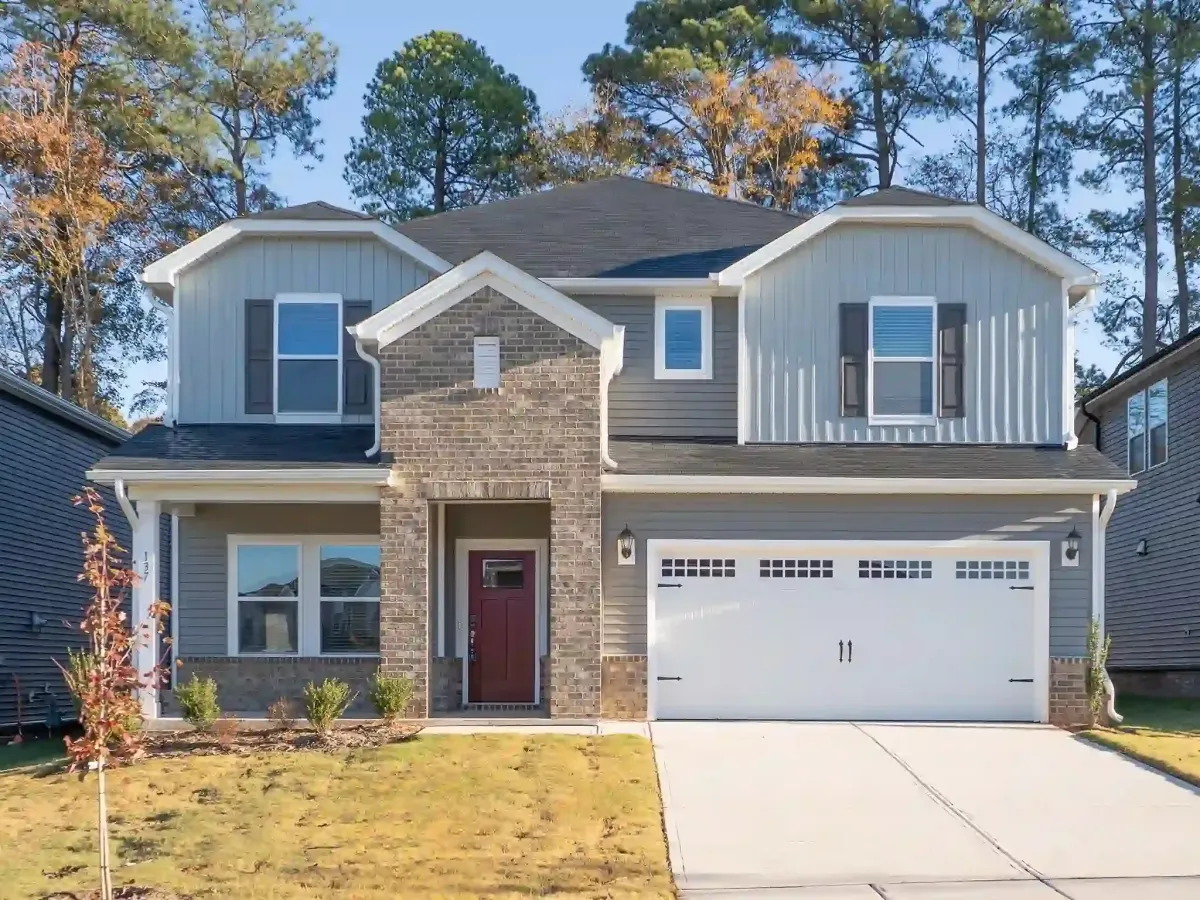
Browse current listings including new construction, resale homes, and luxury properties across all Garner neighborhoods.
👇 View Current Garner Listings 👇Listings open in a new tab — no login required
*Rate buydown availability and terms vary by builder, phase, and market conditions — verify directly with the builder's preferred lender. Age-qualified communities are governed by federal HOPA guidelines — buyers interested in this housing type should verify eligibility and availability directly.
Housing in Garner, NC: New Construction vs. Resale
Garner's housing landscape ranges from newer master-planned communities along the I-40 and White Oak corridors to established suburban neighborhoods with mature lots and community character built over decades. For most buyers, the choice comes down to brand-new construction with modern finishes and builder incentives versus established homes with larger lots, mature trees, and proven neighborhood identity.
Unlike Durham or Raleigh, Garner is primarily a new construction and suburban resale market — not an urban infill market. With 42.65% of active listings being new construction, Garner gives buyers more brand-new inventory options than almost any other Wake County suburb. That pipeline is the defining feature of the 2026 Garner market.
New Construction: Master-Planned Communities & Growth Corridors
New development in Garner is concentrated along three primary corridors: the White Oak and NC-42 corridor, the Cleveland Road and US-70 corridor, and the Timber Drive and I-40 interchange area.
The Profile: Garner's new construction skews heavily toward Craftsman and Transitional styles — open floor plans, energy-efficient systems, community pools, walking trails, and structured HOAs. The master-planned community format dominates, with Georgia's Landing, Oak Manor, Exchange at 401, Renaissance at White Oak, Auburn Village, Rollman Farms, and Magnolia Park all active in 2026.
The 2026 Advantage: With a new construction median of $416,380 — meaningfully below comparable new product in Holly Springs (~$460K), Fuquay-Varina (~$430K), or Apex (~$550K+) — Garner delivers the strongest new construction value proposition in southern Wake County. Several builders are offering mortgage rate buydowns and closing cost credits to move inventory. Entry-level new construction townhomes start in the low-to-mid $300s — one of the most accessible new build price points in Wake County.
The Trade-off: Garner's new construction is concentrated in suburban master-planned communities — not walkable urban districts. Buyers who want city energy or walkable retail within the community itself will need to drive to White Oak Crossing or downtown Raleigh. New construction lots in higher-density communities also tend to be smaller than resale lots in Garner's established neighborhoods.
Top Builders Active in Garner, NC
Production & Semi-Custom: D.R. Horton (most accessible price points across multiple Garner communities), Lennar (energy-efficient builds with strong amenity packages, active at Auburn Village), Pulte Homes (The Avenue at White Oak), Ryan Homes (townhome and single-family communities along the NC-42 corridor), and Smith Douglas Homes (value-focused single-family communities).
Semi-Custom & Move-Up: Toll Brothers (larger executive homes in select Garner communities), Taylor Morrison (lifestyle-focused floor plans with strong community amenity packages), and Davidson Homes (growing Wake County presence with value-focused semi-custom options).
Resale Homes: Character, Maturity & Neighborhood Identity
Established neighborhoods like Adams Point, Chadbourne, Eagle Ridge, Heather Hills, and Cleveland Bluffs offer mature tree canopies, larger lot sizes, and a distinct community identity that new construction communities rarely replicate immediately.
The Profile: Garner resale homes from the 1980s–2000s offer traditional two-story and ranch-style layouts on generous lots — often 0.25 to 0.5+ acres with established landscaping. Older sections of Heather Hills and Chadbourne feature the kind of mature wooded lots that buyers from newer master-planned communities specifically seek out when they want privacy and tree cover over modern finishes.
The 2026 Advantage: At a median of $186 per square foot, Garner resale homes deliver exceptional value relative to Wake County peers. With 39 days on market, buyers have more time to evaluate options and negotiate than in tighter markets — giving serious buyers a real opportunity to find value in established neighborhoods that command premiums in Apex or Holly Springs.
The Trade-off: Homes from the 1990s and early 2000s may need age-typical updates — roofs, HVAC systems, and kitchen modernization. Buyers evaluating resale in the $350,000–$500,000 range should budget for potential deferred maintenance, particularly in neighborhoods built before 2000.
Garner, NC Housing Style Comparison (2026 Cheat Sheet)
🏡 Find Your Garner Housing Style
| Style | Common Locations | Best Suited For |
|---|---|---|
| Master-Planned Community | Adams Point, Georgia's Landing, Auburn Village, Renaissance at White Oak | Buyers wanting community amenities, pools, trails, and newer construction with HOA management in a family-oriented setting. |
| Established Suburban | Chadbourne, Heather Hills, Heather Woods, Cleveland Bluffs | Buyers seeking mature lots, established tree canopy, larger lot sizes, and neighborhood character that new construction can't replicate. |
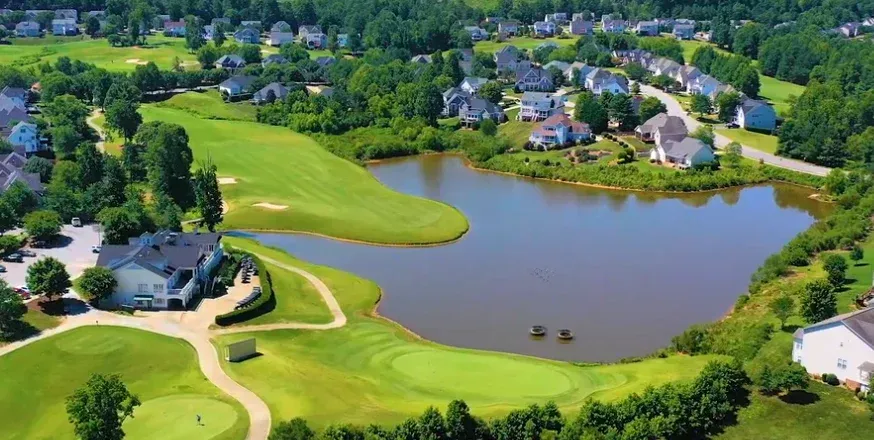
| Golf Community | Eagle Ridge, near Garner Country Club, Pine Hollow Golf Club area | Golf buyers, executives, retirees, and luxury relocation clients who want golf course living at a lower price point than Cary or North Raleigh. |
| New Construction Townhome | Rollman Farms, White Oak Corridor, Timber Drive area, NC-42 Corridor | First-time buyers, young professionals, and downsizers seeking low-maintenance living, modern finishes, and accessible price points under $400K. |
| Luxury & Executive | Kyndal, Chadbourne upper sections, Cleveland area custom lots, Inwood Forest | Move-up buyers and executives seeking larger homesites, custom finishes, and executive-style living at meaningfully lower prices than Apex or Cary. |
| Downtown & Historic | Downtown Garner historic district, Garner Road corridor | Buyers who want small-town character, walkable community identity, and proximity to local restaurants and events in Garner's revitalizing historic core. |
| Acreage & Custom | Cleveland Road corridor, rural Garner edges, custom lots near NC-42 | Buyers wanting 1–10 acre homesites, custom construction, privacy, and space — increasingly rare close to Raleigh and still available in Garner at accessible prices. |
💡 Phil's Perspective
"When clients tell me they want new construction in Garner, I always ask one question first: how important is your lot? Because Garner in 2026 gives you a genuine choice that most Triangle suburbs can't offer anymore — you can get a brand-new home in a master-planned community with a pool and amenities, or you can get a mature half-acre wooded lot in an established neighborhood. You just can't always get both in the same place.
If you want new construction with modern finishes under $420K, Georgia's Landing, Auburn Village, and the White Oak corridor communities are where the value is right now. Builders are offering buydowns and closing credits that make the math work better than it has in years.
But if your priority is space and privacy, don't overlook the resale inventory in Chadbourne and Heather Hills. Mature lots, established tree canopy, and prices that reflect the age of the home — not the location premium. My sleeper pick for 2026 in Garner? Eagle Ridge. Golf course community, executive-style homes, larger lots — at prices that genuinely surprise buyers who've been shopping in Cary or North Raleigh. Tour it once and the Garner question answers itself."
How Garner Compares to Other Triangle Suburbs
Buyers comparing Garner often also evaluate Clayton, Fuquay-Varina, and Raleigh. While all four offer strong quality of life and access to the Triangle's employment base, they serve very different priorities regarding commute tolerance, value per square foot, new construction availability, tax rate tolerance, and neighborhood character.
At-a-Glance Comparison (2026 Data)
How Garner Compares to Other Triangle Suburbs (2026)
| Garner | Clayton | Fuquay-Varina | Raleigh | Knightdale | |
|---|---|---|---|---|---|
| Median Sold Price | ~$395,000 | ~$370,000 | ~$410,000 | ~$435,000 | ~$385,000 |
| Price Per Sq Ft | $186 | ~$175 | ~$195 | ~$230 | ~$184 |
| Combined Tax Rate | $1.0241 | ~$0.9900 | ~$0.9271 | ~$0.8721 | ~$0.9921 |
| Median Days on Market | 39 Days | ~45 Days | ~35 Days | ~20 Days | 61 Days |
| Sale-to-List Ratio | 99% | ~98.5% | ~99% | ~99.5% | 98.5% |
| Market Character | Value suburban & new construction | Affordable eastern corridor | Southwest value & growth | Urban core & diverse | Eastern Wake value play |
| New Construction Share | 42.65% (90 listings) | Active | Strong | Limited | Moderate |
| Downtown Raleigh Commute | 10–20 min via I-40/US-70 | 30–40 min via US-70 | 25–40 min via US-401 | 5–15 min | 15–25 min via US-64 |
| RTP Commute | 25–35 min via I-40 | 40–55 min | 30–45 min | 15–25 min | 30–45 min |
| School District | Wake County Schools | Johnston County Schools | Wake County Schools | Wake County Schools | Wake County Schools |
| Major Growth Anchor | Duke Health 22-acre campus | UNC Health Johnston | Fujifilm / Biotech | State Gov't / Tech | Residential expansion |
| Best For | Value, Raleigh proximity & new construction | Maximum affordability | SW Wake value & biotech | Urban lifestyle & jobs | East Raleigh commuters & value |
Nearby Triangle Relocation Guides
Buyers researching Garner often compare it with other Wake County and Triangle communities. Explore the full guide library below.
Clayton: The Eastern Corridor Alternative
⚖️ The Trade-off: Clayton offers the lowest median price of any Triangle suburb at ~$370,000 and ~$175 per square foot — the only market that beats Garner on raw affordability. Johnston County Schools are a separate district from Wake County, and Clayton sits further from downtown Raleigh (30–40 minutes) and RTP (40–55 minutes). The combined tax rate of ~$0.99 per $100 is slightly below Garner's $1.0241.
✅ Why Choose Garner: Garner wins decisively on Raleigh proximity — 10–20 minutes to downtown versus Clayton's 30–40 minutes. For buyers who work in Raleigh's core, that 20-minute daily difference compounds into hundreds of hours over a year. Garner also delivers Wake County Public Schools versus Johnston County — a meaningful differentiator for families. And Garner's Duke Health campus investment, White Oak commercial infrastructure, and I-540 extension positioning give it stronger long-term appreciation signals than Clayton's more rural eastern corridor.
Fuquay-Varina: The Southwest Wake Alternative
⚖️ The Trade-off: Fuquay-Varina offers a median price of ~$410,000 and ~$195 per square foot — comparable to Garner but slightly higher on both metrics. It benefits from the Fujifilm and Genentech biotech corridor in Holly Springs, a growing downtown social district, and a 30–45 minute RTP commute. The combined tax rate of ~$0.9271 is meaningfully lower than Garner's $1.0241 — a real financial difference at higher price points. Wake County Public Schools apply in both markets.
✅ Why Choose Garner: Garner wins on Raleigh proximity — 10–20 minutes to downtown versus Fuquay-Varina's 25–40 minutes — and on price per square foot ($186 vs ~$195). For buyers whose employment is in Raleigh, downtown, or WakeMed's healthcare corridor, Garner's commute advantage is the deciding factor. Garner's new construction share of 42.65% also exceeds Fuquay-Varina's, giving buyers more brand-new inventory options at comparable or lower prices. For buyers working in the Holly Springs biotech corridor specifically, Fuquay-Varina's proximity makes more sense.
Raleigh: The Urban Core Alternative
⚖️ The Trade-off: Raleigh offers a larger city footprint, more suburban neighborhood variety, Wake County Public Schools, and a combined tax rate of ~$0.8721 — meaningfully lower than Garner's $1.0241. The downtown Raleigh commute from most Raleigh neighborhoods is 5–15 minutes, and the state government, tech, and healthcare employment base is more diverse than Garner's. Median sold price is ~$435,000 — higher than Garner's $395,000, and at ~$230 per square foot versus Garner's $186.
✅ Why Choose Garner: Garner delivers 19% more home per dollar than Raleigh at current pricing — and for buyers who work south of downtown or at WakeMed, the commute from Garner is comparable to or shorter than driving across Raleigh itself. Garner's 42.65% new construction share gives buyers brand-new inventory options that Raleigh's more built-out market can't match. For buyers who want a newer home, a larger lot, or a master-planned community with amenities at a value price point — while staying inside Wake County schools — Garner consistently delivers more home for the same monthly payment than Raleigh.
Knightdale: The Eastern Wake Alternative
⚖️ The Trade-off: Knightdale offers the closest price comparison to Garner in Wake County — median sold price of ~$385,000 and ~$184 per square foot, nearly identical to Garner's $395,000 and $186. With 61 days on market and a 98.5% sale-to-list ratio, Knightdale is a slower, more buyer-friendly market than Garner's 39 days. Wake County Public Schools apply in both markets. Knightdale sits northeast of Raleigh along US-64 and I-87 — a different commute corridor that works well for buyers employed in east Raleigh, the US-64 business corridor, or Wilson/Rocky Mount.
✅ Why Choose Garner: Garner wins on Raleigh proximity from the south — 10–20 minutes to downtown via I-40 and US-70 versus Knightdale's 15–25 minutes via US-64. More importantly, Garner's 42.65% new construction share significantly outpaces Knightdale's inventory, giving buyers far more brand-new options at comparable price points. Garner's Duke Health 22-acre campus investment and White Oak commercial corridor give it stronger long-term economic anchors than Knightdale's more residential-focused growth story. For buyers whose employment is south or southwest of Raleigh — WakeMed, downtown Raleigh, or the US-401 corridor — Garner is the better-positioned market. For buyers working in east Raleigh or along the US-64 corridor, Knightdale's commute advantage flips the equation.
💡 Phil's Perspective
"Every week I work with buyers who come into the Triangle with a budget and a shortlist that skips Garner — usually because they assume it's too far from everything or the tax rate kills the math. What surprises them is how often Garner wins when you run the actual numbers.
At $186 per square foot with a 10–20 minute drive to downtown Raleigh, Garner is not a distant compromise. It is a competitive market that is priced below what its location, school district, and new construction pipeline would suggest. Buyers who have been looking in Apex or Holly Springs often discover they've been paying a $150,000–$230,000 premium for a zip code — when their commute from Garner would be comparable and their home would be significantly larger.
The buyers who win in Garner are the ones who do the math, drive the commute at 8:00 AM before making an offer, and move before the Duke Health campus opens and the I-540 extension is fully priced into the market. That window is open right now. It won't stay open indefinitely."
Garner, NC Neighborhoods Guide (2026)
Neighborhood information is provided for general informational purposes only. Phil Slezak Real Estate does not endorse or recommend specific neighborhoods based on demographic composition. School ratings, rankings, and neighborhood data sourced from Niche.com, GreatSchools.org, and public MLS records. All buyers are encouraged to personally research neighborhoods, schools, and local amenities based on their own priorities. For school assignment verification, contact Wake Public Schools directly.
Garner, NC is one of the most searched value suburbs near Raleigh — and the neighborhoods here are the primary reason why. Whether you're moving to Garner from California, New York, DC, or Florida, or comparing Garner NC real estate to Raleigh and Clayton, finding the right neighborhood is the most important decision you'll make. The best neighborhoods in Garner NC vary significantly by lifestyle, commute, and budget — from master-planned communities with resort-style amenities to established suburban pockets with mature lots and golf course living. This guide breaks down every major Garner neighborhood so you can find the right fit before you start touring.
Adams Point — Best Master-Planned Family Community
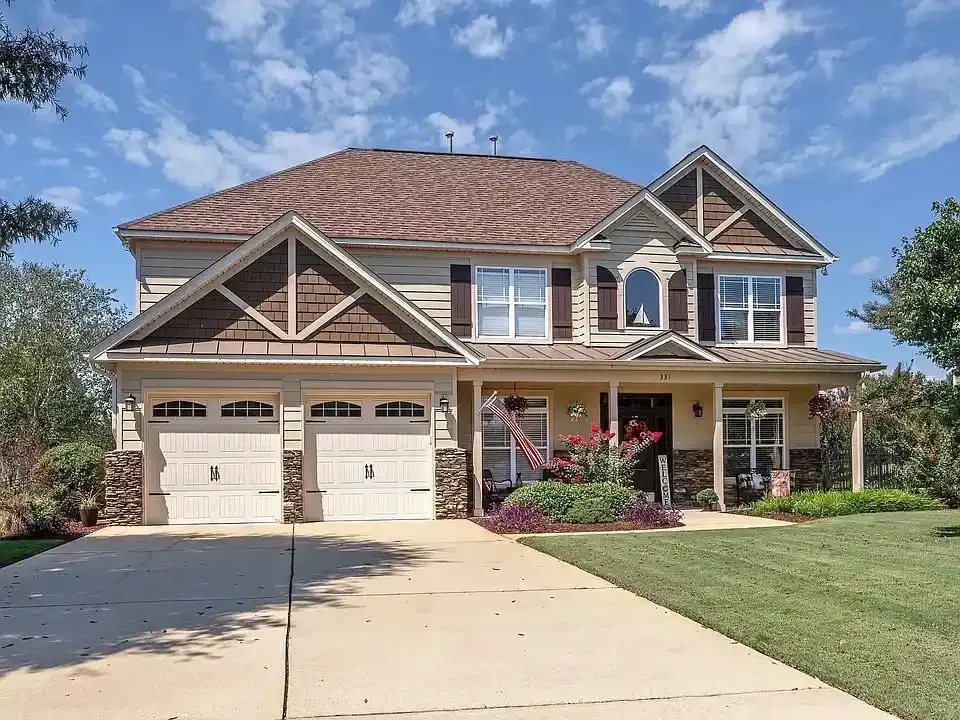
The most consistently searched neighborhood in Garner — and for good reason. Adams Point is a large master-planned community with a pool, community amenities, newer construction, and large homesites along the I-40 corridor. It offers the combination of modern finishes, community infrastructure, and easy highway access that first-time buyers and move-up buyers from Raleigh and Cary specifically seek when they move south.
Home Prices: $380,000–$550,000
Home Style: Modern Craftsman, transitional single family, newer construction
Lot Sizes: Generous — 0.25 to 0.5+ acres in most sections
Commute: 15–20 min to downtown Raleigh via I-40, 30–35 min to RTP
Walkability: Low — car-dependent, short drive to White Oak Crossing amenities
Best For: First-time buyers, move-up buyers, Raleigh commuters, and relocation clients from out of state who want a master-planned community feel with newer homes and amenity infrastructure at a value price point
The Honest Note: Adams Point is a large community — character and lot sizes vary by section. Homes closer to I-40 have more highway noise than interior sections. Tour multiple streets before committing to a specific address.

Eagle Ridge — Best Golf Community
Garner's best-known and most consistently searched golf community — built around the Eagle Ridge Golf Club. Larger executive-style homes, scenic golf course lots, and a lifestyle that buyers from Cary and North Raleigh specifically seek at a fraction of the price. Eagle Ridge is Phil's sleeper pick for 2026 value in Garner.
Home Prices: $400,000–$700,000+
Home Style: Traditional two-story, executive single family, golf course homes
Lot Sizes: Generous — 0.3 to 0.75+ acres with golf course and wooded views
Commute: 15–20 min to downtown Raleigh, 30–40 min to RTP
Walkability: Low — car-dependent, golf cart access within community
Best For: Golf buyers, executives, retirees, and luxury relocation clients who want golf course living at prices meaningfully below comparable communities in Cary, North Raleigh, or Apex
The Honest Note: Eagle Ridge homes vary significantly in age and condition — from early 2000s construction to more recent builds. Budget for potential updates on older sections. Always verify golf club membership fees and community amenity costs before closing.

Chadbourne — Best Established Upscale Neighborhood
One of Garner's most established and sought-after neighborhoods. Chadbourne offers larger homes, mature tree canopy, estate-style lots, and quiet suburban streets that have attracted professionals and families for decades. It delivers the kind of established neighborhood identity that master-planned communities take years to develop.
Home Prices: $420,000–$650,000+
Home Style: Traditional two-story, Colonial, transitional single family
Lot Sizes: Generous — 0.35 to 0.6+ acres with established landscaping
Commute: 15–20 min to downtown Raleigh, 30–35 min to RTP
Walkability: Low — car-dependent suburban living
Best For: Professionals, families, and buyers who want an established neighborhood with mature lots, privacy, and long-term community stability — without paying Apex or North Raleigh prices
The Honest Note: Homes in Chadbourne range from the 1990s to 2000s — age-typical updates including roofs, HVAC, and kitchen modernization are common at the lower end of the price range. Budget accordingly.
White Oak Area — Best Commercial Corridor Neighborhood
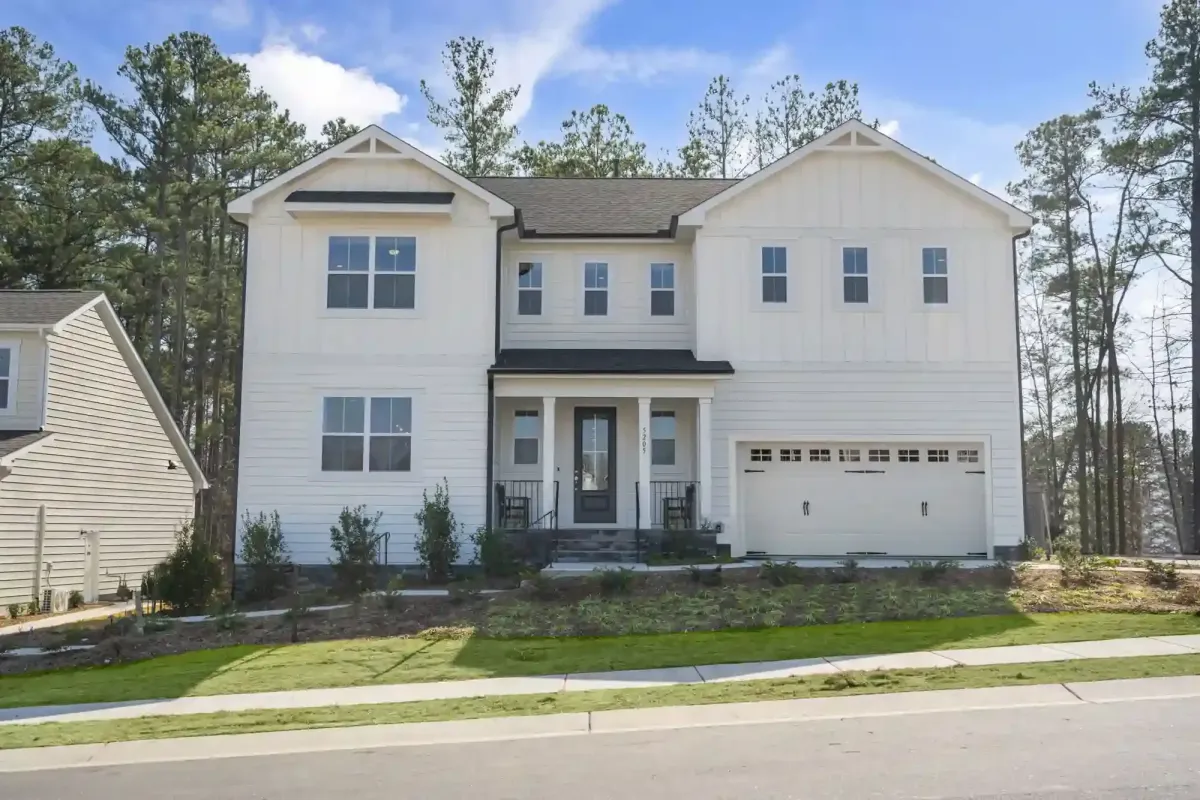
The White Oak corridor has become Garner's fastest-growing residential area — driven by White Oak Crossing's retail and dining anchor, new construction communities, and easy I-40 and US-70 access. Buyers who want new construction with immediate retail convenience consistently land here.
Home Prices: $350,000–$500,000 (varies by community)
Home Style: New construction Craftsman, transitional single family, townhomes
Lot Sizes: Moderate — 0.15 to 0.3 acres in most new construction communities
Commute: 10–15 min to downtown Raleigh via I-40, 25–30 min to RTP
Walkability: Moderate — White Oak Crossing shopping and dining within short drive or walk from some communities
Best For: First-time buyers, young families, and relocation buyers who want new construction with modern finishes, immediate retail access, and one of Garner's shortest downtown Raleigh commutes
The Honest Note: The White Oak corridor is still actively developing — construction activity, traffic, and infrastructure improvements are ongoing. Buyers who want a finished, quiet neighborhood should evaluate specific streets carefully before committing.

Cleveland Bluffs / Cleveland Springs — Best Value New Construction Area
One of Garner's strongest value-and-new-construction search corridors. The Cleveland Road area has attracted major builder investment with newer communities targeting first-time buyers and young families who want brand-new homes at accessible price points inside Wake County.
Home Prices: $330,000–$460,000
Home Style: New construction Craftsman, transitional single family, townhomes
Lot Sizes: Moderate — 0.15 to 0.35 acres in most communities
Commute: 15–25 min to downtown Raleigh, 30–40 min to RTP
Walkability: Low — car-dependent
Best For: First-time buyers, young families, and buyers relocating from expensive states who want a brand-new home with modern finishes at the most accessible price points inside Wake County
The Honest Note: Some Cleveland corridor communities are in earlier development phases — verify builder timelines, infrastructure completion status, and HOA reserve fund health before making an offer on new construction.
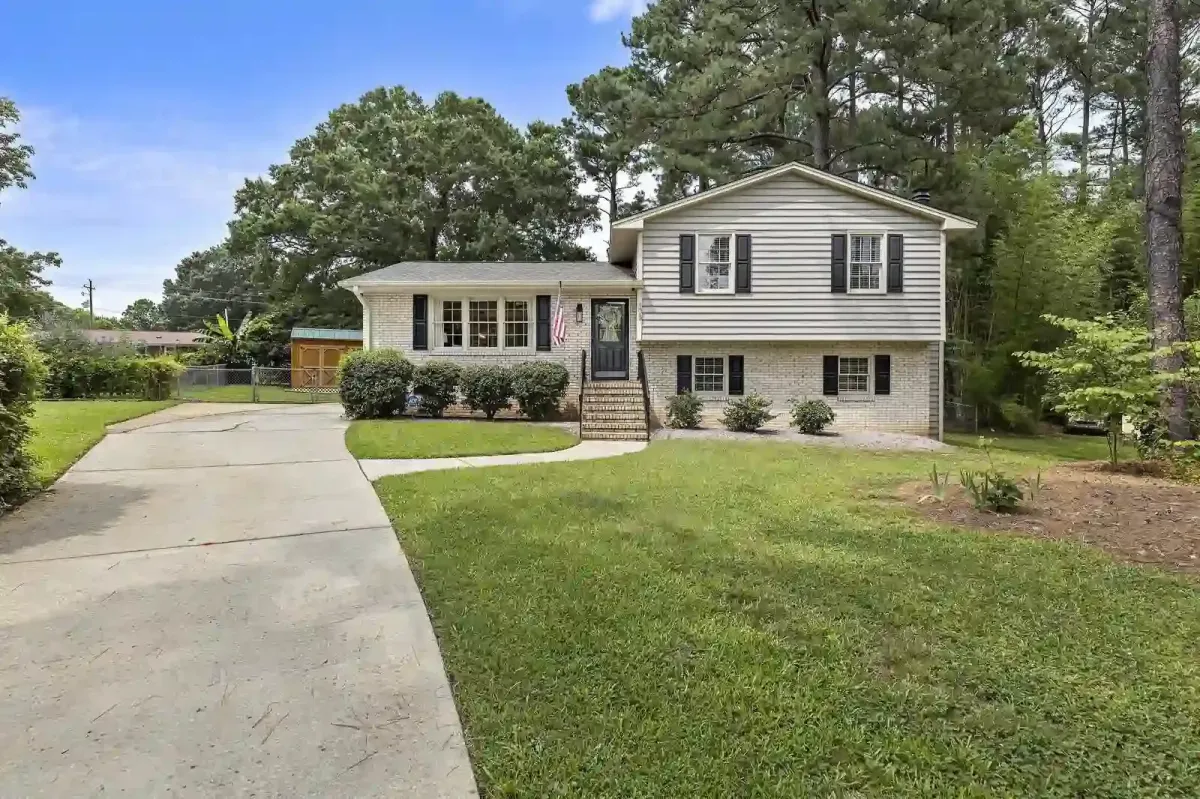
Heather Hills / Heather Woods — Best Established Family Neighborhood
Strong and consistent search traffic from buyers wanting established neighborhoods with mature landscaping, community identity, and larger lots without the HOA intensity of master-planned communities. Heather Hills offers the kind of neighborhood character that takes decades to develop — and buyers who tour it consistently find it delivers more than they expected.
Home Prices: $350,000–$500,000
Home Style: Traditional ranch, two-story single family, split-level
Lot Sizes: Generous — 0.25 to 0.5+ acres with mature trees
Commute: 15–20 min to downtown Raleigh, 30–35 min to RTP
Walkability: Low — car-dependent with neighborhood walking routes
Best For: Families, buyers wanting established community feel, and buyers who prefer mature landscaping and privacy over new construction community density
The Honest Note: Homes here are primarily from the 1980s–1990s and will need age-typical updates. The value per square foot is strong — but budget for potential roof, HVAC, and cosmetic modernization at the lower end of the price range.
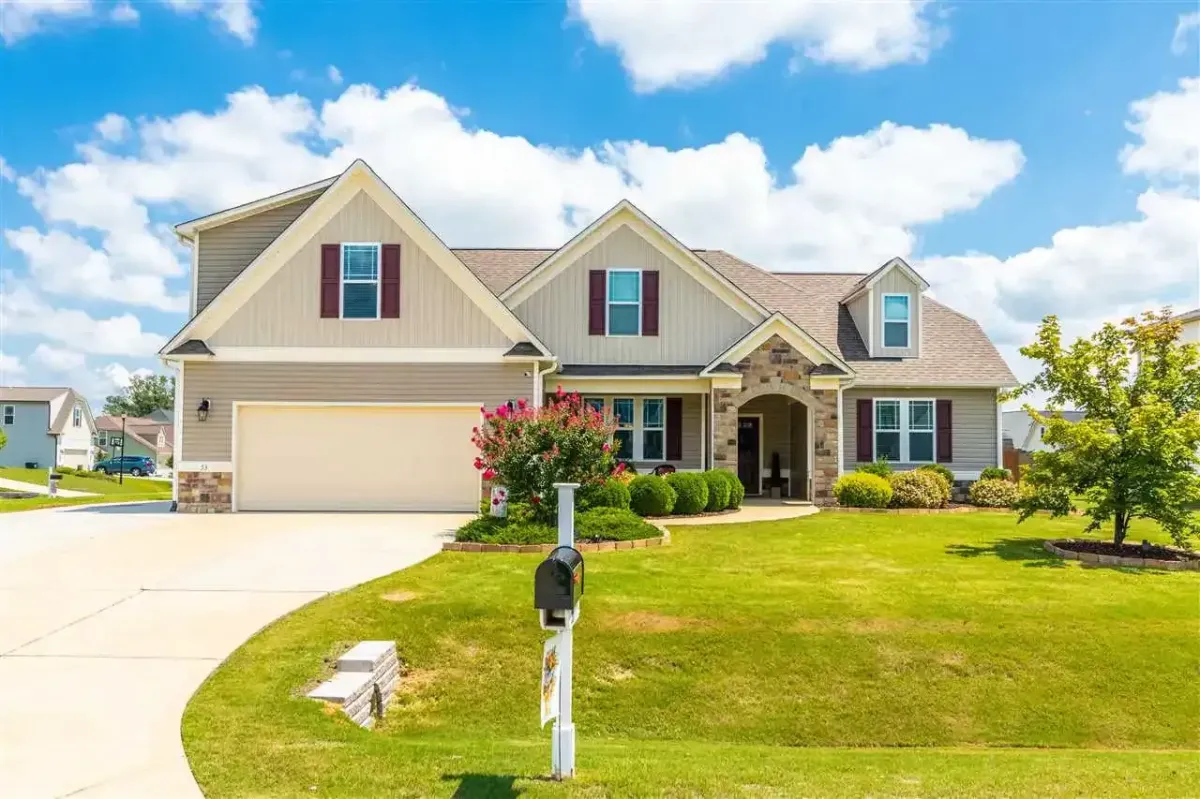
Kyndal — Best Move-Up Executive Community
One of Garner's growing higher-end searches — Craftsman-style homes, large lots, pool amenities, and easy commuter access. Kyndal attracts move-up buyers and executives who want newer construction, more space, and executive-style finishes at prices that would buy a significantly smaller home in Cary or Apex.
Home Prices: $380,000–$500,000+
Home Style: Craftsman, transitional executive single family
Lot Sizes: Generous — 0.3 to 0.6+ acres
Commute: 15–20 min to downtown Raleigh, 30–35 min to RTP
Walkability: Low — car-dependent
Best For: Move-up buyers, executives, and relocation buyers from high-cost metros who want newer construction, executive finishes, and larger lots at prices that make the Garner value story feel tangible
The Honest Note: Kyndal is a smaller, more boutique community than Adams Point or Georgia's Landing — inventory is more limited and moves relatively quickly when priced correctly.
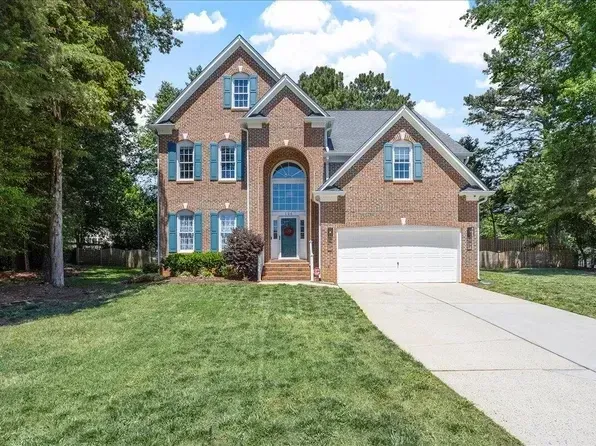
Downtown Garner — Best Small-Town Character Neighborhood
Quietly becoming more popular every year as Garner's historic downtown district revitalizes. The Garner Road corridor and surrounding historic neighborhoods offer small-town character, walkable community identity, proximity to local restaurants and seasonal events, and a genuine sense of place that master-planned suburbs can't replicate.
Home Prices: $280,000–$420,000
Home Style: Historic bungalows, ranch-style, older single family
Lot Sizes: Moderate urban lots — established character throughout
Commute: 10–15 min to downtown Raleigh, 25–30 min to RTP
Walkability: Moderate — improving as downtown revitalization continues
Best For: Buyers who want small-town community identity, walkable access to local dining and events, and the most accessible price points inside Garner's established residential core
The Honest Note: Downtown Garner is a neighborhood in active revitalization — character varies block by block more than in established suburban communities. Walk the specific streets before committing. Older homes will need modernization budgets.
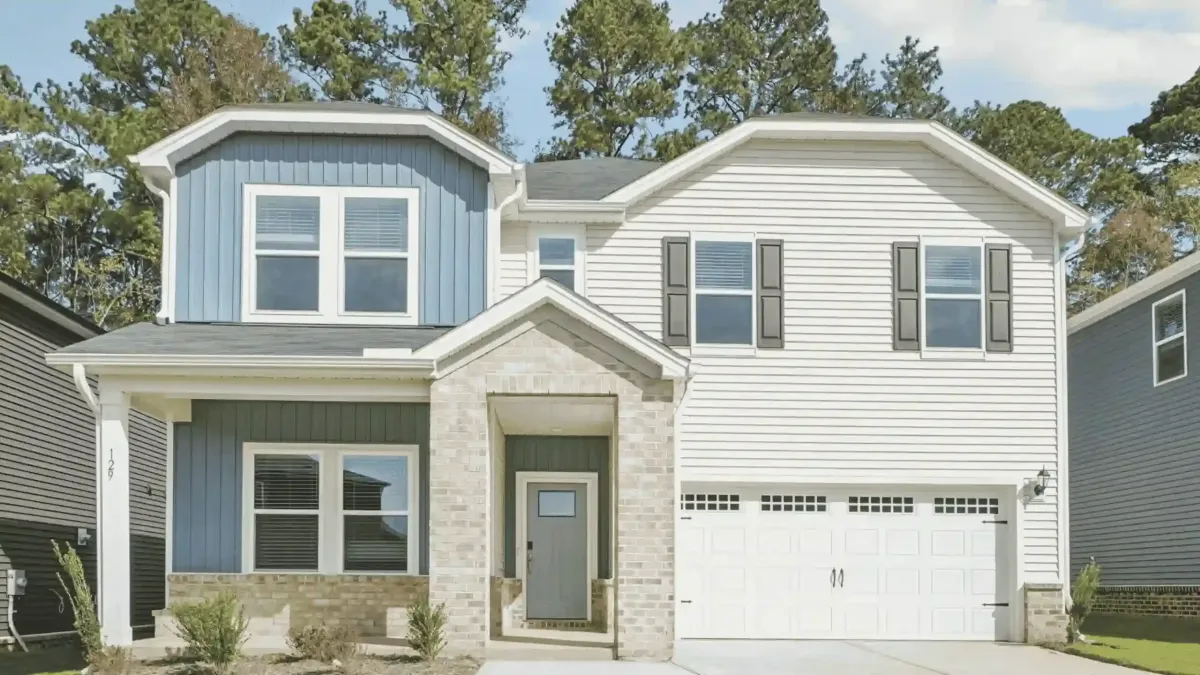
Also Worth Knowing
Georgia's Landing
— One of Garner's most talked-about new master-planned communities with hundreds of homes, trails, amenities, and a large-scale residential footprint that is becoming a major relocation destination for buyers priced out of Raleigh.
Oak Manor
— A large planned residential development with 575 homes offering newer construction and family-oriented layouts at value price points. One of the stronger new construction search drivers in Garner in 2026.
Auburn Village
— A growing community near the Lennar footprint with resort-style amenities, modern floor plans, and active adult options. Getting major search traffic from buyers relocating from Florida, New York, and New Jersey.
Magnolia Park
— Large-scale planned residential community with single-family homes and townhomes along an active development corridor. Appeals to first-time buyers and young families seeking newer inventory at accessible prices.
Rollman Farms
— Townhome-focused development with strong affordability, commuter access, and newer construction. Townhome demand in Garner has expanded significantly as affordability pressure from Raleigh and Cary pushes buyers south.
🏘️ Neighborhood Selection Tips from Phil
Three things I tell every Garner buyer before they start touring:
Verify school assignments first. Wake County Public Schools assignments are address-specific and change annually. Use the WCPSS address lookup tool at wcpss.net before making an offer — not after. Never purchase based on proximity to a school without verifying the current assignment for that exact address.
Drive your commute at 8:00 AM. I-40 and US-70 northbound toward Raleigh during morning rush behave very differently than Google Maps suggests at noon. A home in the Cleveland corridor has a different commute experience than a home near White Oak. Test the reality before you sign.
Check new construction phase and infrastructure status. With 42.65% of active listings being new construction, Garner has more builder communities than almost any Wake County suburb. Verify construction phase completion, infrastructure timelines, and HOA reserve fund health before making an offer — especially in communities that are still in early phases.
*Verify current school assignments directly with Wake County Public Schools before making any purchase decision based on a specific school. Properties outside Garner town limits may be subject to different tax rates — specifically the county-only rate of $0.5041 per $100 versus the combined town and county rate of $1.0241 per $100. Confirm applicable tax rates with your agent before making an offer.

Cost of Living & Taxes in Garner, NC (2026)
Garner delivers one of the strongest value propositions in Wake County — more home per square foot than any other major suburb near Raleigh, a robust new construction pipeline, and Wake County Public Schools. The trade-off is the highest combined property tax rate of any major Triangle suburb. Here is the complete financial picture buyers need before making a decision.
Property Taxes
Garner property owners inside town limits pay a combined Wake County and town tax rate of $1.0241 per $100 of assessed value for FY2025–2026:
Wake County rate: $0.5041 per $100
Town of Garner municipal rate: $0.5200 per $100
Combined rate: $1.0241 per $100
What that means in real dollars:
Garner, NC Property Tax Estimates (2026)
| Home Value | Annual Tax Bill | Monthly Equivalent |
|---|---|---|
| $350,000 | $3,584 | ~$299/mo |
| $395,000 Median | $4,045 | ~$337/mo |
| $416,380 New Construction Median | $4,263 | ~$355/mo |
| $500,000 | $5,121 | ~$427/mo |
| $650,000 | $6,657 | ~$555/mo |
| $1,000,000 | $10,241 | ~$853/mo |
| $1,500,000 | $15,362 | ~$1,280/mo |
Garner's combined rate of $1.0241 is the highest of any major Triangle suburb — higher than Durham ($0.9913), Wake Forest ($0.9371), Apex ($0.8731), Fuquay-Varina ($0.9271), and Cary ($0.8571). The differential on a $395,000 home versus Cary is approximately $614 per year — a real number worth factoring into your monthly payment calculations before comparing list prices directly.
Properties in Wake County but outside Garner town limits pay only the county rate of $0.5041 — approximately $1,991 annually on a $395,000 home. Always verify the tax jurisdiction for any specific property at wakegov.com before closing.
Home Value and What You Get
At a median sold price of $395,000 and $186 per square foot, Garner delivers the strongest value per dollar of any Wake County suburb near Raleigh:
vs. Cary (~$310/sq ft) — 40% more home per dollar
vs. Apex (~$295/sq ft) — 37% more home per dollar
vs. Fuquay-Varina (~$195/sq ft) — 5% more home per dollar
vs. Raleigh (~$230/sq ft) — 19% more home per dollar
vs. Durham (~$222/sq ft) — 16% more home per dollar
A $450,000 budget in Garner buys a newer single-family home in Adams Point or Chadbourne with a generous lot, community amenities, and Wake County school access. That same budget in Cary is likely a townhome or a significantly smaller resale without a yard. In Apex it gets you an entry-level resale or a small new construction townhome. The value gap is real and it is one of the most powerful arguments for the Garner market in 2026.
New Construction Value
With 42.65% of active listings being new construction — 90 of 211 active homes — Garner offers one of the strongest new build pipelines of any Wake County suburb. Production builders including D.R. Horton, Lennar, Pulte Homes, Ryan Homes, and Smith Douglas Homes are active across multiple Garner communities with entry points starting in the low-to-mid $300s. The new construction median of $416,380 remains well below comparable new product in Holly Springs, Fuquay-Varina, or Apex — making Garner the strongest new construction value play in southern Wake County.
New construction buyers in Garner consistently report getting more square footage, more lot, and stronger builder incentives than comparable new builds in Apex or Holly Springs at the same price point — while maintaining a 10–20 minute Raleigh commute.
Everyday Cost of Living
Beyond housing, Garner's cost of living tracks closely with the broader Triangle market:
Groceries: White Oak Crossing anchors Garner's grocery and retail landscape with Harris Teeter, Walmart Supercenter, Aldi, and multiple specialty retailers within a short drive of most neighborhoods. Food Lion and Publix serve additional corridors throughout the town.
Healthcare: WakeMed Garner Healthplex provides emergency and primary care within the town footprint — no need to drive to Raleigh for routine healthcare. The incoming Duke Health 22-acre campus on Timber Drive East — with a full emergency department, ambulatory surgery center, and specialty care — will dramatically expand Garner's healthcare infrastructure when Phase 1 opens.
Dining: Aversboro Restaurant & Sports Bar, Taco Addicts, Smithfield's Chicken 'N Bar-B-Q, and a growing roster of local and national dining options along the White Oak corridor give Garner residents genuine dining variety. Downtown Raleigh's full restaurant ecosystem is 15 minutes away for buyers who want city-level dining options.
Utilities: Duke Energy serves most of Garner's residential base. Average monthly utility costs for a 2,500 sq ft home run approximately $150–$200 in moderate months and $250–$350 in peak summer and winter months — consistent with Triangle averages.
HOA Fees: Master-planned communities in Garner carry HOA fees that vary by community and amenity level. Adams Point runs approximately $400–$700 annually. Georgia's Landing and Auburn Village run $600–$1,200 annually depending on amenity tier. Eagle Ridge carries higher fees reflecting golf community infrastructure. Always request full HOA financials including reserve fund status before making an offer on any community.
The Honest Tax Math
Garner's higher combined tax rate is the most common financial objection buyers raise. Here is how to think about it honestly:
The $614 annual tax premium versus Cary on a $395,000 home is $51 per month. For that $51, Garner buyers get 40% more home per square foot, one of the strongest new construction pipelines in Wake County, a 10–20 minute Raleigh commute, and the same Wake County Public Schools that make Cary attractive in the first place.
Versus Raleigh, the annual tax premium on a $395,000 home is approximately $593 per year — $49 per month. For that $49, Garner buyers get 19% more home per square foot, significantly more new construction options, larger lot sizes, and master-planned community amenities that Raleigh's more urban residential market doesn't offer.
The buyers who should weigh the tax differential most carefully are those purchasing at the $700,000+ level — where the annual dollar difference between Garner and Cary or Apex exceeds $1,400 per year. At that level, the tax math is a genuine factor in long-term financial planning and worth modeling carefully before committing to a Garner town limits address versus a Wake County address outside town limits.
Garner, NC Schools — What Buyers Need to Know
Garner is served by Wake County Public School System (WCPSS), the largest school district in North Carolina and one of the most respected in the Southeast. For buyers relocating from out of state, WCPSS is consistently ranked among the top large school districts in the country by academic performance metrics — and it is one of Garner's most powerful competitive advantages over nearby Clayton, which sits in Johnston County's separate school district.
High Schools Serving Garner
Garner Magnet High School Garner's flagship public high school — a large, comprehensive high school with a magnet program focus that sets it apart from most suburban high schools in Wake County. Garner Magnet has strong academic programs, competitive athletics, and a performing arts tradition. The school serves a significant portion of Garner's established residential base and has seen continued investment as the town's population has grown.
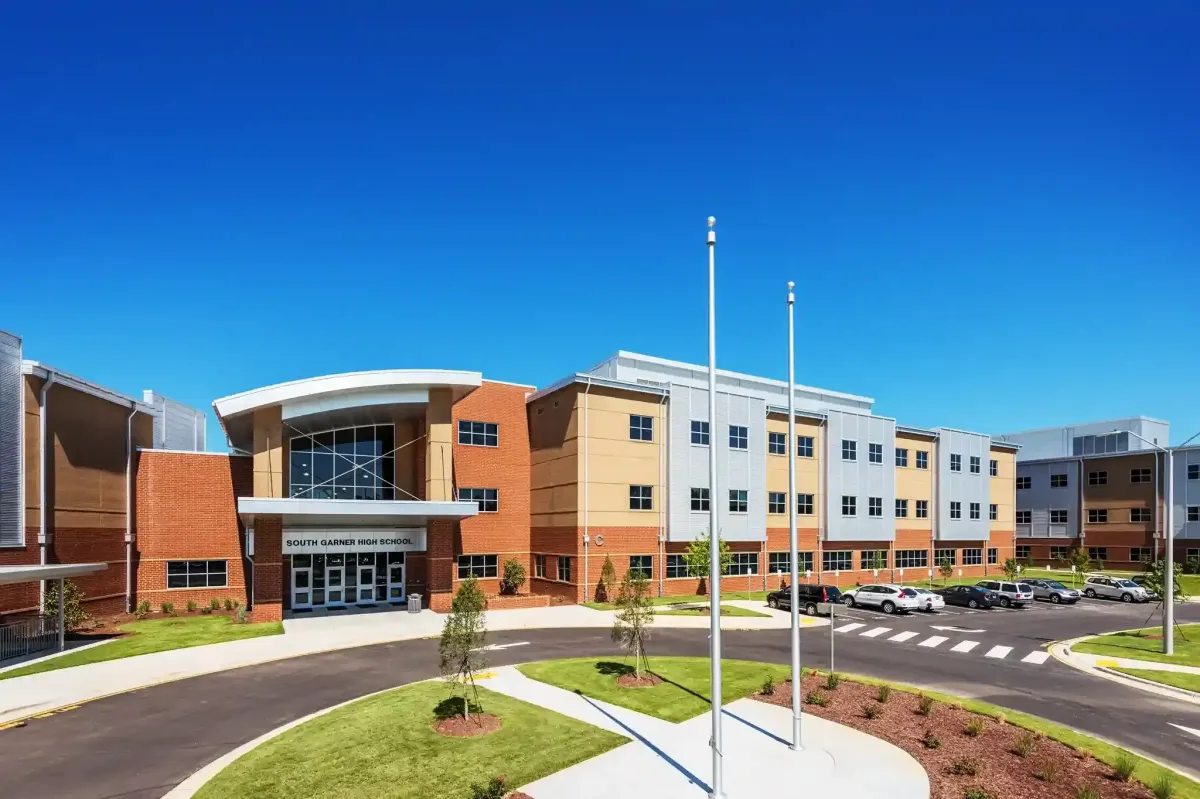
South Garner High School South Garner High School serves Garner's newer southern and eastern growth corridors. It is one of Wake County's newer high schools with modern facilities, strong STEM programming, and a growing athletics and academic tradition. South Garner consistently performs at or above state averages on academic metrics and is a primary school consideration for buyers in the Cleveland Road and NC-42 growth corridors.
Knightdale High School Serves portions of Garner's eastern and northeastern growth corridors near the Wake County boundary. A community-focused high school with strong athletics and a tight-knit student culture.
The Wake County School Assignment Reality
This is the most important thing I tell every buyer considering Garner — and it applies to every Wake County suburb equally:
School assignments in Wake County are address-specific and change annually. Proximity to a school does not guarantee assignment to that school. Several schools serving high-growth Garner corridors have operated under enrollment caps in recent years, meaning new residents may be assigned to schools outside their immediate area.
Three rules every Garner buyer must follow:
Use the WCPSS Address Lookup Tool at wcpss.net for your specific property address before making an offer — not after going under contract.
Never purchase a home based on proximity to a school without verifying the current assignment for that exact address.
Ask your agent about enrollment cap history for any school that is central to your family's decision. Caps can change year to year.
Charter and Private School Options
Garner and the surrounding southern Wake County area have a growing charter and private school ecosystem for families with specific educational priorities:
Wake Preparatory Academy — K–12 public charter school with a college-preparatory focus serving Wake County families. Lottery-based enrollment.
Thales Academy Garner — Private classical K–12 school with a structured curriculum and affordable tuition relative to comparable private options. Located directly in Garner.
Franklin Academy — Public charter school serving K–12 with a college-preparatory focus in Wake County.
Cardinal Charter Academy — K–8 public charter school with strong academic performance. Lottery-based enrollment.
Wake Tech Community College — Located in Raleigh with multiple campus locations accessible from Garner — a meaningful resource for dual enrollment high school students and adult learners.
Charter schools in Wake County use a lottery-based enrollment system. Applications typically open in January for the following school year. If a specific charter school is central to your family's decision, verify enrollment timelines and waitlist status before committing to a neighborhood.
Elementary and Middle School Feeder Patterns
Elementary and middle school assignments follow the same address-specific WCPSS system. Key elementary schools serving Garner neighborhoods include:
Aversboro Elementary — Serves portions of central and northern Garner neighborhoods.
Timber Drive Elementary — Serves portions of the Timber Drive and southern Garner growth corridors.
Vandora Springs Elementary — Serves portions of established Garner neighborhoods near the town core.
East Garner Elementary — Serves eastern Garner residential areas.
South Garner Elementary — Serves southern Garner growth corridors.
Middle schools feeding into Garner high schools include North Garner Middle, East Garner Middle, and North Garner Middle — all subject to address-specific assignment verification at wcpss.net.
💡 Phil's School Advisory
"The number one mistake I see relocation buyers make in Garner — and in every Wake County suburb — is assuming that because a neighborhood is near a highly rated school, their kids will attend that school. Wake County doesn't work that way. I've had buyers lose their preferred school assignment because the address they chose was on the wrong side of a boundary line that changed that spring.
Use wcpss.net. Use it before you fall in love with the house. It takes three minutes and it can save you from a decision you'll spend years second-guessing. And if you're coming from a state like California, New York, or Florida with very different school assignment systems — Wake County's address-specific model will feel unfamiliar at first. That's exactly why you want an agent who knows which addresses are safely inside which zones."
*Verify current school assignments directly with Wake County Public Schools before making any purchase decision based on a specific school. Properties outside Garner town limits may be subject to different tax rates — confirm with your agent before making an offer.

Parks & Outdoor Living in Garner, NC
Garner has invested significantly in parks, greenways, and outdoor recreation over the past decade — and the results consistently surprise buyers who assumed a southern Wake County suburb wouldn't have much to offer outdoors. Anchored by Lake Benson Park and White Deer Park, Garner's outdoor amenity package is stronger than most buyers expect — and its proximity to Jordan Lake and the broader Wake County greenway network adds a regional recreation layer that gives residents genuine outdoor variety year-round.
Lake Benson Park — The Crown Jewel
Garner's flagship park and one of the most beloved green spaces in southern Wake County. Lake Benson Park surrounds a 165-acre lake with walking and biking trails, fishing access, kayak and canoe launch areas, picnic shelters, a playground, and open green space that draws residents from across the town year-round.
The park is a daily destination for Garner residents — walkers, cyclists, anglers, and families all coexist in a natural setting that delivers genuine outdoor recreation without leaving the town limits. For buyers evaluating quality of life in Garner versus other southern Wake County suburbs, Lake Benson Park is one of the strongest differentiators the town offers. The combination of water access, trail infrastructure, and open space is rare at this scale inside a suburban Wake County community.
Lake Benson Park — Town of Garner
White Deer Park — Nature Center & Walking Trails
One of Garner's most distinctive park assets — White Deer Park features a nature center, walking trails through natural woodland, wildlife observation areas, and educational programming that makes it a primary destination for families with young children and nature enthusiasts throughout the year.
The nature center offers hands-on exhibits, environmental education programs, and seasonal programming that connects Garner residents to the natural ecosystem of the piedmont North Carolina landscape. For buyers who want nature-based recreation integrated into their daily routine without driving to a state park, White Deer Park delivers it within the town footprint.
White Deer Park — Town of Garner
Garner Recreation Center — Community Fitness & Programming
The Garner Recreation Center serves as the town's primary community fitness and programming hub — with a gymnasium, fitness equipment, indoor pool, multipurpose rooms, and a year-round schedule of recreational programming for all age groups. For buyers who want community fitness infrastructure without a private gym membership, the Recreation Center is a meaningful quality-of-life asset.
Garner Recreational Park — Sports Fields & Active Recreation
A large multi-use athletic facility serving Garner's youth sports leagues, adult recreational programs, and community events year-round. Soccer fields, baseball diamonds, tennis courts, playgrounds, and open green space make it the primary venue for Garner's active family demographic and youth athletic community.
Centennial Park — Downtown Community Green Space
Located in the heart of downtown Garner, Centennial Park serves as the town's primary community gathering space — hosting seasonal events, farmers markets, outdoor concerts, and community programming that anchors downtown Garner's growing social identity. A short walk from local restaurants and the historic downtown district.
Garner Greenway System — Growing Network
Garner's greenway network is actively expanding with trail corridors connecting neighborhoods to parks, schools, and the downtown core. Key greenway connections include trails along the White Oak Creek and Swift Creek corridors — with the town's greenway master plan calling for continued expansion as new residential development adds demand for trail connectivity throughout the southern Wake County network.
While not yet at Cary's 100-mile scale, Garner's greenway infrastructure is functional, growing, and directly connected to the broader Wake County trail network that gives residents access to regional greenway destinations.
Outdoor Recreation Beyond the Parks
Garner's outdoor lifestyle extends well beyond the formal park system:
Jordan Lake State Recreation Area — 20–25 minutes southwest of most Garner neighborhoods via US-70 and NC-751, Jordan Lake offers 14,000 acres of reservoir with boating, swimming, fishing, camping, and eagle watching. One of the Triangle's premier outdoor recreation assets and a direct amenity for Garner residents seeking lake recreation without driving to the mountains.
Yates Mill County Park — A Wake County park just north of Garner featuring a restored 19th-century grist mill, pond, walking trails, and wildlife observation in a quiet natural setting. A hidden gem for Garner residents who want a peaceful outdoor escape close to home.
William B. Umstead State Park — 30 minutes north via I-40, Umstead offers 5,000+ acres of piedmont forest with hiking, mountain biking, equestrian trails, and primitive camping — one of the most visited state parks in North Carolina and a genuine outdoor recreation anchor for the entire Triangle region.
Eagle Ridge Golf Club — Garner's premier golf destination offering an 18-hole championship course within the Eagle Ridge community. Eagle Ridge Golf Club
Garner Country Club — A private club serving Garner's golf community with course access and social amenities. Garner Country Club
The Outdoor Living Summary
Garner's outdoor amenity package is significantly stronger than most buyers expect — anchored by Lake Benson Park's 165-acre lake, White Deer Park's nature center, the Garner Recreation Center's community fitness infrastructure, and Jordan Lake's regional recreation access just 20 minutes away. The greenway network is growing. The golf options are genuine. And for a southern Wake County suburb at a $186 per square foot price point, the outdoor quality of life is a meaningful differentiator that buyers from Apex and Cary consistently underestimate until they tour it.

Amenities & Community Services: The Durham Standard
Garner has undergone a significant commercial transformation over the past decade. The "too many rooftops, not enough amenities" criticism that once followed southern Wake County suburbs no longer applies to Garner in 2026. The White Oak Crossing corridor, an expanding healthcare network, a revitalizing historic downtown, and a community services infrastructure that has matured alongside Garner's population growth have collectively created a town where buyers no longer need to drive to Raleigh for everyday needs.
White Oak Crossing — The Commercial Anchor
The White Oak Crossing retail and commercial district along US-70 and I-40 is Garner's answer to a major suburban retail destination — and it has delivered. Anchored by major grocery, dining, fitness, and retail options, White Oak Crossing has become the commercial center of southern Wake County and one of the primary reasons buyers who previously overlooked Garner are now actively choosing it.
The Vibe: A true suburban retail destination with national brands, local dining options, and the kind of commercial density that buyers from Raleigh and Cary expect as a baseline. Not a lifestyle destination in the same way as Wake Forest's Grove 98 — but a fully functional commercial hub that covers every daily errand.
Current Anchors: Harris Teeter, Walmart Supercenter, Target, Aldi, Hobby Lobby, Petco, multiple fitness options, and a growing roster of dining and specialty retail tenants. The corridor continues adding tenants as Garner's population growth attracts new commercial investment.
The Future: The White Oak corridor is not a finished product — it is an active commercial ecosystem that continues expanding alongside Garner's residential growth. Retail follows rooftops, and with one of the strongest new construction pipelines in Wake County, Garner's commercial base will continue deepening through 2026 and beyond.
Downtown Garner & The Historic District
The historic downtown district along Garner Road is Garner's most distinctive community asset — and its revitalization is one of the most searched and most underappreciated stories in southern Wake County real estate.
Aversboro Restaurant & Sports Bar — Downtown Garner's anchor dining destination and a genuine community institution. Aversboro has been the go-to for local dining, sports viewing, and community gatherings for years — the kind of neighborhood restaurant that gives a town its identity. Aversboro Restaurant
Garner Performing Arts Center — A community arts venue hosting theater productions, concerts, gallery exhibitions, and cultural programming that gives Garner a genuine arts identity beyond its suburban footprint. Garner Performing Arts Center
Downtown Farmers Market — Seasonal market connecting Garner residents to local farms, artisan vendors, and community programming in the heart of the historic district.
Seasonal Events & Festivals — Downtown Garner hosts an active calendar of community events including holiday celebrations, outdoor concerts, food festivals, and community gatherings that anchor the town's social identity and reinforce the small-town character that buyers from larger metros specifically seek.
The Garner Healthcare Network
Garner's healthcare infrastructure has expanded significantly in recent years — and the Duke Health campus announcement signals an even stronger healthcare future for the town.
WakeMed Garner Healthplex — Full-service emergency department and primary care serving Garner's residential base with 24/7 emergency access without driving to Raleigh. The Healthplex has meaningfully upgraded Garner's healthcare accessibility and is a primary quality-of-life differentiator for the town versus more rural southern Wake County alternatives.
Duke Health Garner Campus (Coming 2026–2027) — Duke Health's planned 22-acre medical campus on Timber Drive East — including medical office buildings, ambulatory surgery center, emergency department, specialty care, and oncology services — is projected to create approximately 600 jobs and more than 1 million annual clinical encounters. Phase 1 construction is underway. When operational, Garner residents will have Duke Health System access without leaving the town — a healthcare infrastructure upgrade that no other southern Wake County suburb can claim.
UNC Health Rex — Multiple UNC Health Rex primary care and specialty locations accessible within a short drive of most Garner neighborhoods via I-40 toward Raleigh.
For buyers evaluating Garner against other southern Wake County towns, the combination of WakeMed Garner Healthplex and the incoming Duke Health campus gives Garner a healthcare trifecta that is rare for a community its size.
Dining & Local Favorites
Aversboro Restaurant & Sports Bar — Downtown Garner's cornerstone dining destination. The community gathering place that defines Garner's local identity.
Taco Addicts — A beloved local taco concept with a devoted Garner following and consistently strong reviews. One of the most searched local dining destinations in town.
The Original Smithfield's Chicken 'N Bar-B-Q — A North Carolina institution with a Garner location serving the classic eastern NC barbecue tradition that buyers from out of state consistently discover and return to. A must-try for any relocation buyer touring Garner.
Full Bloom Coffee — Local coffee options serving Garner's growing professional and remote worker population.
White Oak Crossing Dining Corridor — National chains including Chick-fil-A, Panera Bread, Olive Garden, and multiple fast-casual options serving the White Oak commercial district.
The Garner Event Calendar (2026)
Garner Homegrown Festival — An annual community festival celebrating local culture, food, arts, and community identity in downtown Garner. One of the town's most anticipated annual events.
Movies in the Park — Seasonal outdoor movie screenings at Lake Benson Park bringing families together in one of the town's most scenic natural settings.
Downtown Concert Series — Outdoor live music programming in the historic downtown district throughout spring and summer.
Garner Farmers Market — Seasonal Saturday market connecting residents to local farms, artisan food vendors, and community programming throughout the growing season.
Holiday Events — Seasonal programming including holiday parades, lighting ceremonies, and community gatherings anchored by the downtown district.
💡 Local Insight: For the best Garner evening, start with dinner at Aversboro downtown, then take a sunset walk along the Lake Benson Park trail. It's an evening that genuinely surprises buyers who came in expecting a pass-through suburb — because Garner stopped being just a pass-through suburb several years ago.
Amenities as a Buyer Consideration
Adams Point / White Oak area: Best served by the White Oak Crossing commercial corridor — grocery, dining, fitness, and medical all within 5–10 minutes.
Eagle Ridge / Chadbourne: Quick access to both the White Oak corridor and downtown Garner via US-70 — the best of both commercial ecosystems.
Cleveland Bluffs / South Garner: Closest to the NC-42 and Cleveland Road commercial growth corridors — and 15–20 minutes to White Oak Crossing for major retail needs.
Downtown Garner / Historic District: Best positioned for walkable community identity — Aversboro, the Performing Arts Center, and seasonal events all within easy reach.
Heather Hills / Heather Woods: Well-positioned between downtown Garner and the White Oak corridor — moderate drive to both with established neighborhood character in between.

The Garner Dining Scene — Southern Wake County's Growing Food Culture
Garner is not a nationally recognized food destination — and it doesn't pretend to be. What it delivers is something different and increasingly valuable to buyers relocating from larger metros: a genuine local dining identity anchored by community institutions, a rapidly expanding commercial corridor with national and regional brands, and 15-minute access to downtown Raleigh's full restaurant ecosystem when residents want something more. That combination — local authenticity plus city access — is the Garner dining story in 2026.
Downtown Garner — Local Favorites & Community Institutions
Aversboro Restaurant & Sports Bar — Downtown Garner's anchor dining destination and the restaurant that defines the town's social identity. Aversboro delivers a full menu of American favorites, a strong sports bar atmosphere, and the kind of regulars-know-your-name community feel that is increasingly rare in fast-growing suburbs. If you make one dining stop before your home search is over, make it here. It tells you more about Garner's community character than any neighborhood tour.
Mi Peru Peruvian Cuisine — A local favorite delivering authentic Peruvian dishes to a devoted Garner following. One of the more distinctive dining options in southern Wake County — the kind of independent restaurant that gives a community genuine culinary character beyond the national chain corridor.
The Original Smithfield's Chicken 'N Bar-B-Q — A North Carolina institution and a Garner staple. Eastern NC whole-hog barbecue done the traditional way — wood-smoked, vinegar-based, and served with the sides that define the state's culinary heritage. For buyers relocating from outside the South, this is a required stop.
Garibaldi of Garner — A well-regarded local Italian and Mexican dining destination with a loyal Garner following. Consistently popular among established residents and a go-to for family dining in the community.
Angie's Restaurant — A beloved local favorite with deep roots in the Garner community. The kind of neighborhood restaurant that regulars return to week after week — exactly the type of dining institution that tells you a community has genuine local character.
Alexander's Mediterranean Restaurant — Authentic Mediterranean cuisine serving Garner's growing and diverse residential base. A distinctive local option that rounds out Garner's dining variety beyond the standard suburban chain corridor.
Moonrunners Saloon — A Garner live music and dining venue that has become one of the more distinctive evening destinations in southern Wake County. Regular live music programming, a full bar, and a casual atmosphere that gives Garner residents a genuine night-out option without driving to Raleigh.
White Oak Crossing & Commercial Corridor
For buyers relocating from major metros, the White Oak Crossing corridor delivers the familiar national brand dining options that make the transition to a new market feel immediately comfortable.
Chick-fil-A — A perpetual crowd favorite and a reliable Garner staple along the White Oak corridor.
Logan's Roadhouse — A full-service steakhouse and American comfort food destination anchoring the White Oak dining corridor. Popular with families and a reliable go-to for casual sit-down dining in southern Wake County.
SmashnDash — A local favorite burger concept with a growing Garner following. The kind of independent quick-serve option that residents discover and return to regularly.
Panera Bread — A consistent morning and lunch destination for Garner's growing remote worker and professional population.
Cookout — A beloved NC-born fast-food chain with a devoted local following and one of the best value menus in the state. A genuine Triangle institution.
Five Guys — Consistently popular for the White Oak corridor's lunch and dinner crowd.
Starbucks — Multiple locations serving Garner's morning commuter traffic along the US-70 and I-40 corridors.
📍 Expert Advice: For the best Garner evening, start with dinner at Aversboro downtown or explore Mi Peru for something different, walk Centennial Park after dinner, and finish at Moonrunners for live music. It's a night that surprises buyers who came in expecting a bedroom suburb — because Garner has been building a genuine community identity for years and it shows.
📍 Local Tip: Garner's dining scene is expanding faster than most outsiders realize. The Duke Health campus announcement, continued residential growth, and White Oak corridor commercial investment are all driving new dining concepts into the market. Buyers who tour Garner today will find a meaningfully richer dining landscape in 18–24 months. The trajectory matters as much as the current snapshot.
Arts, Culture & Entertainment
Garner Performing Arts Center — Garner's primary community arts venue hosting theater productions, concerts, gallery exhibitions, and cultural programming year-round.
Moonrunners Saloon — Live music, a full bar, and a casual atmosphere that has made Moonrunners one of the more distinctive evening destinations in southern Wake County.
Eagle Ridge Golf Club — Championship 18-hole golf within Garner's own community footprint. A lifestyle amenity that buyers from Cary and North Raleigh are consistently surprised to find at Garner's price point.
Garner Country Club — A private club offering golf, social programming, and community amenities for Garner's established residential base.
Lake Benson Park Events — Seasonal outdoor programming including Movies in the Park, community festivals, and recreational events at Garner's flagship park throughout the year.
Downtown Raleigh — 15 Minutes Away — When Garner residents want the full urban entertainment experience — DPAC, PNC Arena, Raleigh Convention Center, James Beard-nominated restaurants, live music venues, and the full Raleigh nightlife ecosystem — it is a 15-minute drive up I-40. That proximity is one of Garner's most underappreciated quality-of-life advantages.
📍 Local Insight: The best kept secret in Garner is a summer evening at Lake Benson Park during Movies in the Park — families spread out on the lawn, the lake visible in the background, and the kind of community atmosphere that buyers from larger metros specifically moved here to find. It's the moment when buyers stop comparing Garner to Raleigh and start appreciating what Garner actually is.
Where Garner, NC Is Located in the Triangle
Garner sits in the southern tier of Wake County, approximately 8–12 miles south of downtown Raleigh along the I-40 and US-70 corridors. It occupies a strategically practical position in the Triangle — close enough to Raleigh's employment base, healthcare network, and cultural amenities to function as a genuine urban-adjacent community, while delivering the suburban space, new construction inventory, and value per square foot that Raleigh itself can no longer offer at comparable price points.
The Geographic Reality
Garner is the closest major value suburb to downtown Raleigh. The I-40 and US-70 corridors provide direct, well-established highway connections to Raleigh's core — a commute that runs 10–20 minutes off-peak from most Garner neighborhoods. That proximity is Garner's single most important competitive advantage over other southern Wake County suburbs like Clayton and Fuquay-Varina, and it is the primary reason buyers who discover Garner stop looking elsewhere.
What that geographic position also means: Garner is not a distant bedroom community that happens to be affordable. It is a close-in suburb with genuine Raleigh access, Wake County schools, and a value proposition that most buyers only discover after spending months looking in markets they can't afford. The buyers who find Garner early are the ones who make the best decisions in 2026.
For buyers working at WakeMed's main campus, downtown Raleigh's state government corridor, or the NC State University research corridor — Garner's geographic position delivers commute efficiency that Wake Forest, Fuquay-Varina, or Clayton simply cannot replicate for those specific employment destinations.
Distance & Drive Times from Garner (2026)
Off-peak estimates. Peak-hour times to downtown Raleigh and I-40 corridors add 10–20+ minutes depending on time of day and route.
| Destination | Distance | Off-Peak Drive | Peak-Hour Note |
|---|---|---|---|
| 🏙️ Downtown Raleigh | ~8–12 miles | 10–20 min | 20–30 min peak via I-40/US-70 |
| 🏥 WakeMed Main Campus | ~8–12 miles | 10–15 min | 15–25 min peak |
| 🎓 NC State University | ~10–14 miles | 15–20 min | 20–30 min peak |
| ✈️ RDU International Airport | ~18–22 miles | 20–25 min | 25–35 min peak via I-40 |
| 🏢 Research Triangle Park (RTP) | ~22–28 miles | 25–35 min | 35–50 min peak via I-40 |
| 🏙️ Durham | ~25–30 miles | 30–40 min | 40–55 min peak via I-40 |
| 🏘️ Cary | ~18–22 miles | 20–30 min | 30–40 min peak |
| 🏘️ Clayton | ~14–18 miles | 20–25 min | 25–35 min peak via US-70 |
| 🏘️ Fuquay-Varina | ~18–22 miles | 25–35 min | 35–45 min peak |
| 🏘️ Apex | ~22–26 miles | 25–35 min | 35–50 min peak |
| 🏘️ Wake Forest | ~30–35 miles | 40–55 min | 55–75 min peak |
| 🌊 Jordan Lake State Recreation Area | ~18–22 miles | 20–25 min | 25–35 min peak via US-70/NC-751 |
| 🛍️ White Oak Crossing | ~2–6 miles | 5–10 min | 10–15 min peak |
| 🌊 Lake Benson Park | ~2–5 miles | 5–10 min | 10–15 min peak |
What Surrounds Garner
One of the questions buyers from out of state consistently ask is what lies around Garner — and whether the town feels isolated from the broader Triangle. The answer is no. Garner sits at the intersection of several important corridors:
Raleigh — Immediately to the north via I-40 and US-70. Downtown Raleigh, NC State University, WakeMed's main campus, and the state government employment corridor are all 10–20 minutes from most Garner neighborhoods. Raleigh's full retail, dining, healthcare, and entertainment ecosystem is available without a significant commute.
Clayton / Johnston County — To the east via US-70 and I-40, Johnston County represents the transition out of Wake County's school district and into a more rural eastern corridor. Garner buyers who consider Clayton should factor in the school district difference — Wake County versus Johnston County — as the primary trade-off.
Fuquay-Varina / Holly Springs — To the southwest via US-401 and NC-42, the southwest Wake County growth corridor offers comparable value but a longer Raleigh commute. Garner's proximity advantage over these markets is most significant for buyers working in downtown Raleigh or the WakeMed corridor.
Smithfield / Johnston County — Further southeast, representing the true rural transition out of the Triangle's suburban market. Garner buyers who want acreage or rural land often look to the Johnston County edge for larger parcels at accessible prices.
The Triangle Context — Where Garner Fits
The Research Triangle region is anchored by three university cities — Raleigh (NC State), Durham (Duke), and Chapel Hill (UNC) — with Research Triangle Park sitting at the geographic center. Garner sits in the southern tier of this triangle, directly south of Raleigh along the I-40 spine.
In the broader suburban hierarchy:
Closest downtown Raleigh access: Garner and North Raleigh suburbs (10–20 min)
Best value per square foot in Wake County: Garner ($186/sq ft)
Strongest new construction pipeline in southern Wake County: Garner (42.65%)
Best Wake County suburb for Raleigh south commuters: Garner
Strongest healthcare growth anchor in southern Wake County: Garner (Duke Health 22-acre campus)
Most accessible golf community living near Raleigh: Garner (Eagle Ridge, Garner Country Club)
Garner's position in this hierarchy is clear — it is the value leader of southern Wake County, with the strongest Raleigh proximity of any affordable suburb and an appreciation story anchored by healthcare investment, new construction momentum, and infrastructure expansion that has not yet fully priced into the residential market.
The Commute Reality in Geographic Context
Garner's geographic position creates its primary advantage — and its primary trade-off.
The advantage: Downtown Raleigh is 10–20 minutes from most Garner neighborhoods via I-40 and US-70. WakeMed's main campus is 10–15 minutes. NC State University is 15–20 minutes. RDU Airport is 20–25 minutes via I-40. For buyers whose employment is in Raleigh's core, Garner's commute efficiency is genuinely competitive with suburbs that cost $150,000–$230,000 more.
The trade-off: Research Triangle Park is 25–35 minutes from most Garner neighborhoods — longer than Durham (10–20 min) or Cary (10–20 min). For buyers who commute to RTP daily on a strict schedule, Garner's geographic position adds meaningful commute time versus the western Triangle suburbs. The I-540 extension — when complete — will improve this connectivity, but that improvement is years away from full realization.
This is why employment location is the single most important variable in the Garner decision. The same address that is a 15-minute commute for a state government employee working near the Capitol is a 35-minute commute for an RTP engineer. Getting that variable right before choosing a neighborhood is the first conversation worth having.
📍 Phil's Geographic Perspective: "I tell Garner buyers to think of it as the southward extension of Raleigh — not as a distant suburb. If your office is in downtown Raleigh, WakeMed, or the NC State corridor, Garner is a 15-minute drive with no tolls and straightforward highway access. The commute is easier than people assume before they test it. If your office is at Cisco or IBM in RTP, you're looking at 30–40 minutes depending on where in the park your building sits — and that's a real factor worth driving before you commit. I've had buyers discover Garner and never look at another market. I've also had buyers decide the RTP commute doesn't work for their schedule. The first conversation is always about the commute — because everything else about Garner's value proposition is hard to argue with once you know the drive works."
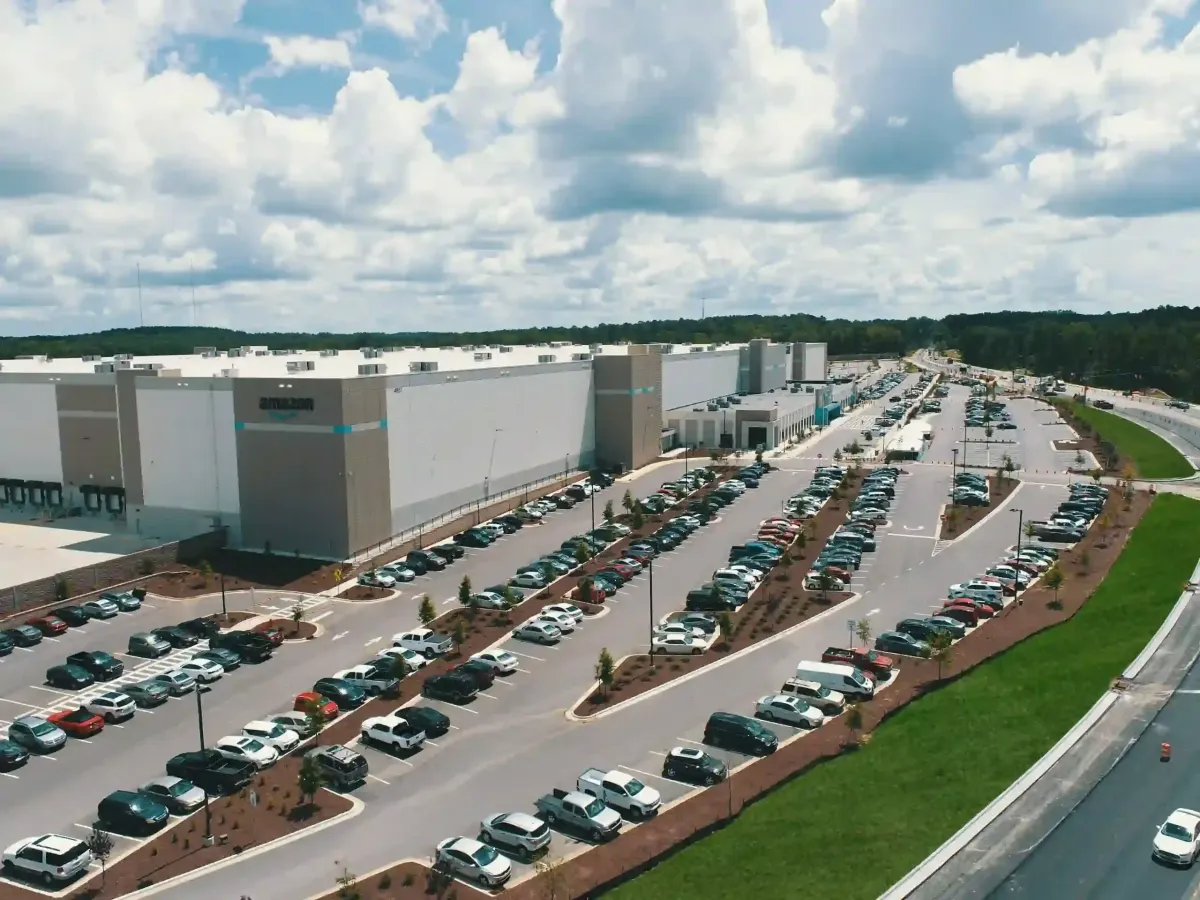
Future Growth & Development in Garner, NC (2026)
Garner doesn't have a single billion-dollar anchor project like Veridea in Apex or the S-Line rail in Wake Forest. What it has is arguably more powerful for near-term residential appreciation — a convergence of healthcare investment, residential development momentum, infrastructure expansion, and commercial maturation that is reshaping the town's identity from a pass-through suburb into one of Wake County's most strategically positioned growth markets.
In 2026 the signals are converging faster than at any point in Garner's recent history.
Duke Health Garner Campus — The Anchor Investment
The most significant single development announcement for Garner buyers in 2026 is Duke Health's planned 22-acre medical campus on Timber Drive East — one of the most consequential healthcare infrastructure investments in southern Wake County's history.
Scale: 22 acres of dedicated medical campus along the Timber Drive East corridor
Components: Medical office buildings, ambulatory surgery center, emergency department, specialty care clinics, and oncology services
Jobs: Approximately 600 jobs projected at full capacity
Clinical Impact: More than 1 million annual clinical encounters projected
Timeline: Phase 1 construction underway — additional phases through 2027
Buyer Implication: A Duke Health campus of this scale drives sustained housing demand across every price band — from entry-level workforce housing for healthcare workers to executive relocation for physicians and administrators. The announcement positions Garner as a healthcare employment destination, not just a Raleigh bedroom community — and that shift in identity historically drives meaningful residential appreciation in surrounding markets.
Exchange at 401 — The Residential Volume Story
One of the largest mixed residential developments underway in Wake County is reshaping Garner's housing inventory landscape.
Scale: 1,300+ housing units across multiple product types
Components: Single-family homes, townhomes, and apartments serving multiple buyer and renter profiles
Location: Along the US-401 corridor in southern Garner
Buyer Implication: Large-scale residential developments of this size bring commercial investment, school infrastructure, and infrastructure upgrades in their wake — the same pattern that transformed Holly Springs and Fuquay-Varina over the past decade. Exchange at 401 is the residential volume signal that Garner's growth is not slowing.
Georgia's Landing — The Master-Planned Destination Community
One of Garner's most actively searched and most talked-about new master-planned communities — Georgia's Landing is becoming a primary relocation destination for buyers priced out of Raleigh, Cary, and Apex.
Scale: Hundreds of homes across multiple phases with trails, amenities, and community infrastructure
Profile: Large-scale master-planned community with the amenity package and community character that national relocation buyers specifically seek
Buyer Implication: Georgia's Landing is generating significant search traffic from buyers relocating from Florida, New York, New Jersey, and California — the same demographic that transformed Holly Springs a decade ago. Buyers who get in during early phases consistently capture the most appreciation as the community matures.
Oak Manor — 575 Homes of New Inventory
A large planned residential development adding significant new construction inventory to Garner's southern growth corridors.
Scale: 575 homes across single-family and townhome product types
Profile: Family-oriented layouts with newer construction finishes at value price points
Buyer Implication: Oak Manor is one of the stronger new construction search drivers in Garner in 2026 — and its scale means builder competition within the community will likely produce meaningful incentives for early buyers.
Magnolia Park — Active Development Corridor
A large-scale planned residential community adding single-family homes and townhomes along one of Garner's most active development corridors.
Scale: Significant single-family and townhome inventory across multiple phases
Profile: Entry-level and move-up buyers seeking newer construction at accessible price points inside Wake County
Buyer Implication: Magnolia Park is part of the broader residential wave reshaping Garner's southern corridors — adding inventory, infrastructure, and commercial investment as each phase opens.
Auburn Village — Resort-Style Amenities & Active Adult Options
A growing community near the Lennar footprint with resort-style amenities, modern floor plans, and active adult options that are generating major search traffic from buyers relocating from Florida, New York, and New Jersey.
Profile: Resort-style community amenities, modern floor plans, executive-style homes, and Del Webb-style active adult options
Buyer Implication: Auburn Village is capturing the same retiree and active adult relocation wave that drove demand in Holly Springs — buyers leaving high-cost Northeast and Florida markets who want new construction, low maintenance, and community amenity infrastructure at a fraction of what comparable communities cost in their home markets.
The I-540 Extension — The Long-Term Infrastructure Signal
The Western Wake Freeway extension of I-540 connecting southern Wake County to RTP and the broader Triangle highway network is the infrastructure investment that most directly affects Garner's long-term commute calculus and appreciation trajectory.
Current Status: Active construction on multiple segments of the I-540 extension
Impact: When fully operational the extension will meaningfully reduce drive times from southern Wake County communities — including Garner — to RTP and the western Triangle employment corridor
Buyer Implication: Buyers who position themselves in Garner before the I-540 extension is fully operational and priced into the market are making the same strategic move that Fuquay-Varina buyers made before the US-401 improvements — buying before the infrastructure improvement fully closes the commute gap
White Oak Corridor — Continued Commercial Expansion
The White Oak Crossing commercial district continues expanding with new retail, dining, medical, and fitness tenants as Garner's population growth attracts sustained commercial investment.
Current Status: Both major quadrants of White Oak Crossing are active with continued outparcel development and new tenant additions
Medical Growth: Multiple medical office and specialty care facilities joining the corridor alongside the Duke Health campus announcement
Buyer Implication: Commercial maturation of this corridor is the final piece that eliminates the "not enough amenities" objection that once followed Garner. As White Oak continues adding tenants, Garner's day-to-day convenience infrastructure increasingly matches what buyers expect from Cary or Apex — at $186 per square foot
Rollman Farms & Auburn Station — Townhome Demand Wave
Townhome-focused developments responding to one of the strongest demand trends in Wake County — buyers who want new construction at entry-level price points without the maintenance burden of a single-family home.
Profile: Newer construction townhomes with modern finishes at the most accessible new construction price points in Wake County
Buyer Implication: Townhome demand in Garner has expanded significantly as affordability pressure from Raleigh and Cary pushes first-time buyers and downsizers south. Rollman Farms and Auburn Station are capturing that demand wave with product that simply doesn't exist at comparable prices closer to Raleigh.
Population Growth Momentum
Garner's growth fundamentals in 2026 are among the strongest of any Wake County municipality:
Population: ~40,477 town proper — one of the fastest-growing towns in southern Wake County
Growth driver: Affordability migration from Raleigh, Cary, and Apex — buyers who cannot afford those markets at current prices but want Wake County schools and Raleigh proximity
In-migration profile: First-time buyers, young families, move-up buyers, and out-of-state relocators from Florida, New York, New Jersey, and California drawn by value, Wake County schools, and Raleigh access
Commercial follow-through: Retail, healthcare, and employer investment following the residential rooftops — the classic suburban growth cycle in active execution
The Development Summary — What It Means for Buyers
Garner's growth story in 2026 is not driven by one project. It is driven by the convergence of six simultaneous signals:
Duke Health 22-acre campus — healthcare employment anchor driving sustained multi-price-band housing demand
Exchange at 401 — 1,300+ unit residential volume signal confirming sustained growth momentum
Georgia's Landing & Oak Manor — master-planned community destination development attracting national relocation buyers
I-540 extension — infrastructure improvement that will close the RTP commute gap when operational
White Oak corridor maturation — commercial infrastructure reaching the critical mass that eliminates the amenity gap
Townhome demand wave — entry-level new construction inventory responding to affordability migration from higher-cost Wake County markets
No single one of these signals alone would justify the appreciation narrative. All six converging simultaneously — on a foundation of $186 per square foot pricing, Wake County schools, and 10–20 minute Raleigh access — is exactly what historically precedes a market's transition from overlooked value play to recognized growth destination.
📍 Phil's Growth Perspective: "I've watched Wake County markets mature over 20 years. The pattern is always the same — residential growth attracts commercial investment, commercial investment attracts healthcare, healthcare attracts employers, and employers drive appreciation. Garner is at the commercial-to-healthcare transition right now. The Duke Health campus announcement is the signal that the cycle is accelerating. Buyers who understand where Garner is in that cycle — and who can see past the 'it's just south of Raleigh' perception — are going to look very smart in five years. The value gap between Garner and its Wake County neighbors has never been wider. It will not stay that wide indefinitely."
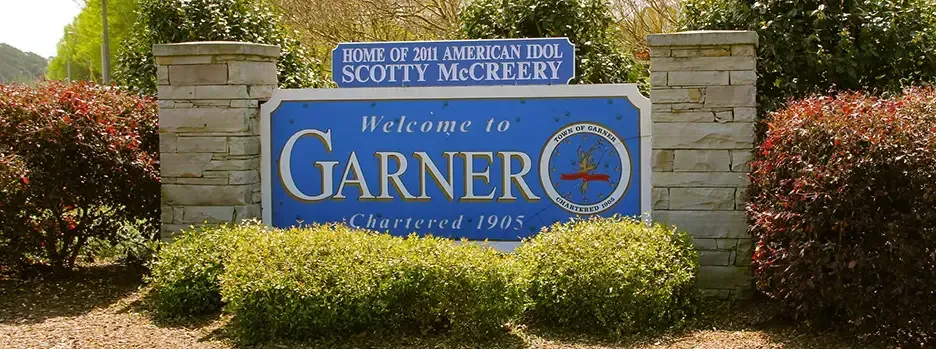
Awards & Recognition for Garner, NC
Garner has not yet earned the kind of splashy national headline recognition that Wake Forest received from Travel + Leisure or that Durham earned from the Michelin Guide. That is precisely the point — and precisely the opportunity. Garner's recognition story in 2026 is about data-driven validation from sources that serious relocation buyers and real estate investors actually use — and the signals are all pointing the same direction.
Wake County's Fastest-Growing Southern Suburb
Garner consistently ranks among the fastest-growing municipalities in Wake County and the broader Triangle — a designation that reflects years of sustained residential investment, affordability-driven migration from Raleigh and Cary, and commercial development finally catching up to residential demand.
At a population growth rate that has placed Garner among Wake County's most active expansion markets, the town's trajectory is validated not by a magazine headline but by the most honest metric available: where buyers are actually choosing to move when they can no longer afford their first-choice markets. That population momentum is self-reinforcing — more residents attract more retail, more healthcare, and more employer investment, which in turn attracts more residents.
Niche.com — Consistently Recognized for Value & Schools
Niche.com — one of the most widely referenced third-party neighborhood and community rating platforms — consistently gives Garner strong grades for:
Public Schools — Wake County Public School System grades reflect consistently across all Garner addresses
Cost of Living — Garner's value per square foot and affordability relative to comparable Wake County suburbs earns strong cost-of-living ratings
Commute — Garner's proximity to downtown Raleigh and I-40 access earns favorable commute ratings versus more distant southern Wake County alternatives
Family-Friendliness — Garner's parks, recreation infrastructure, and community character earn consistent family-oriented ratings
For buyers who use Niche as part of their relocation research — and a significant percentage of out-of-state buyers do — Garner's profile is a positive signal that reinforces the value proposition the data already supports.
Wake County's Best Value Per Square Foot
At $186 per square foot — the lowest median price per square foot of any major Wake County suburb in Q1 2026 — Garner holds a data-validated distinction that no marketing campaign can manufacture: it delivers more home per dollar than any comparable Wake County community with the same school district access and Raleigh proximity.
That distinction matters because it is verifiable, current, and directly actionable. Buyers who compare Garner's $186 per square foot to Apex's $295, Cary's $310, or Holly Springs' comparable figures are looking at real MLS data — not editorial opinion. The value recognition is in the numbers.
Duke Health's Vote of Confidence
When Duke Health — one of the most rigorously data-driven healthcare systems in the United States — commits to a 22-acre medical campus in a specific community, it is making a statement about that community's long-term growth trajectory that no magazine ranking can replicate. Duke Health's site selection process evaluates population growth, demographic trends, income projections, and long-term residential demand before committing $100M+ in capital.
The Duke Health Garner campus announcement is the most credible third-party validation of Garner's growth trajectory available in 2026. It signals that one of the most sophisticated institutional investors in North Carolina has looked at Garner's data and concluded that the community's growth story is real, sustained, and worthy of a generational infrastructure commitment.
For buyers evaluating Garner's long-term appreciation potential — that signal matters more than any magazine ranking.
Amazon & Major Employer Recognition
Garner is home to one of the largest Amazon fulfillment centers in the Research Triangle — a significant employer presence that reflects the town's strategic position along the I-40 logistics corridor and its accessibility to Raleigh's workforce base.
Amazon's fulfillment center presence signals something important to buyers evaluating Garner's economic stability: major logistics and e-commerce employers choose locations based on workforce access, highway infrastructure, and long-term operational viability. Garner's I-40 and US-70 position makes it one of the most strategically located logistics communities in the Triangle — and the employment base that comes with that positioning is a direct housing demand driver across Garner's workforce price bands.
The Recognition Summary — What It Means for Buyers
Garner's recognition story is not about magazine headlines — it is about data signals that precede mainstream recognition. The pattern in every Wake County suburb that has transitioned from overlooked to nationally recognized follows the same sequence: value-driven population growth → commercial investment → healthcare anchor → employer commitment → mainstream recognition → pricing reflects the story.
Garner is in the value-driven growth and commercial investment phase of that cycle right now. The Duke Health campus announcement and the Exchange at 401 development signal the healthcare anchor phase beginning. Buyers who recognize where Garner sits in that cycle — and who act before mainstream recognition closes the value gap — are making the same move that Fuquay-Varina buyers made before the Fujifilm announcement and Holly Springs buyers made before the biotech corridor arrived.
The window is open. It will not stay open indefinitely.
📍 Phil's Perspective on Recognition: "I've been telling buyers about Garner's value for years — before the Duke Health announcement, before Exchange at 401, before Georgia's Landing started drawing national relocation traffic. The data has always been there: $186 per square foot, Wake County schools, 15 minutes to downtown Raleigh. What changes when a market gets national recognition is not the fundamentals — it's the price. The fundamentals in Garner are as strong as I've seen in 20 years of working this market. The recognition is coming. The question is whether you're going to buy before or after it arrives."

The Bottom Line: Pros & Cons of Living in Garner, NC (2026)
Every market has trade-offs. Garner's are more transparent than most — which is exactly why buyers who understand them make better decisions and stay longer. Here is the honest 2026 assessment.
✅ The Pros — Why Buyers Choose Garner
1. Best Price Per Square Foot of Any Major Wake County Suburb At $186 per square foot and a median sold price of $395,000, Garner delivers more home per dollar than any other Wake County suburb near Raleigh. Versus Cary ($310/sq ft) that's 40% more home. Versus Apex ($295/sq ft) that's 37% more. For buyers relocating from high-cost metros, the value gap is the primary driver — and unlike value markets in more distant locations, Garner delivers this pricing inside Wake County with full school district access and 10–20 minute Raleigh proximity.
2. Closest Major Value Suburb to Downtown Raleigh At 10–20 minutes from downtown Raleigh via I-40 and US-70, Garner delivers the best Raleigh proximity of any affordable Wake County suburb. For buyers working in Raleigh's downtown core, state government corridor, WakeMed, or NC State — no other value market in Wake County puts you closer. That commute advantage compounds over years into hundreds of hours of recovered time.
3. Strongest New Construction Pipeline in Southern Wake County With 42.65% of active listings being new construction — 90 of 211 active homes — Garner offers more brand-new inventory than any comparable Wake County suburb. From entry-level townhomes in the low-to-mid $300s to executive homes in Kyndal and Eagle Ridge, the builder ecosystem is active and diverse. Buyers who want new construction without paying Apex or Holly Springs premiums consistently find that Garner is the answer.
4. Wake County Public Schools Every Garner address delivers access to Wake County Public School System — the largest and one of the most respected school districts in North Carolina. This is Garner's most significant competitive advantage over Clayton and eastern Johnston County markets that offer comparable pricing but a separate, lower-rated school district. For families, Wake County schools at Garner's price point is a combination that is increasingly difficult to find anywhere in the Triangle.
5. Duke Health 22-Acre Campus — Coming 2025–2027 The most significant economic development announcement in Garner's history is actively under construction. When operational, the Duke Health Garner campus will bring 600+ jobs, 1M+ annual clinical encounters, and the institutional validation of one of the most data-driven healthcare systems in the country. Buyers purchasing in 2026 are buying before this catalyst is fully priced into the residential market.
6. Golf Community Living at Value Pricing Eagle Ridge Golf Club and Garner Country Club give Garner buyers access to golf community living at prices that are simply not available in Cary, Apex, or North Raleigh. For buyers who want a golf lifestyle without a golf community price tag, Garner's Eagle Ridge is the strongest value proposition in Wake County.
7. Jordan Lake & Outdoor Recreation Access Jordan Lake State Recreation Area — 20–25 minutes from most Garner neighborhoods — provides 14,000 acres of boating, swimming, fishing, camping, and eagle watching. Combined with Lake Benson Park's 165-acre lake, White Deer Park's nature center, and the broader Wake County greenway network, Garner's outdoor amenity package consistently surprises buyers who underestimated it.
8. Amazon & Major Employer Base Garner's position along the I-40 logistics corridor has attracted Amazon's major Triangle fulfillment center — a significant employer presence that stabilizes Garner's workforce housing demand across multiple price bands and signals the town's long-term strategic value to major employers.
⚠️ The Cons — What Buyers Need to Weigh Honestly
1. The Highest Combined Tax Rate of Any Major Triangle Suburb At $1.0241 per $100 of assessed value, Garner's combined town and county tax rate is the highest of any major Triangle suburb — higher than Durham ($0.9913), Wake Forest ($0.9371), Fuquay-Varina ($0.9271), Apex ($0.8731), Raleigh ($0.8721), and Cary ($0.8571). On a $395,000 home that's approximately $4,045 per year — roughly $614 more annually than Cary and $593 more than Raleigh. This is a real number that must be factored into your monthly payment calculations, especially at higher price points.
2. RTP Commute Is Longer Than Western Triangle Suburbs Research Triangle Park is 25–35 minutes from most Garner neighborhoods — significantly longer than Durham (10–20 min) or Cary (10–20 min). For buyers who commute to RTP daily on a strict 8-to-5 schedule, Garner's geographic position adds meaningful daily commute time versus western Triangle alternatives. The I-540 extension will improve this over time — but that improvement is years away from full realization.
3. Ongoing Construction & Growth Pains With one of the strongest new construction pipelines in Wake County, Garner's active growth corridors come with the reality of ongoing construction activity — land clearing, road widening, and infrastructure upgrades that define a market in active expansion. Buyers who want a finished, quiet community with minimal development activity should look at more built-out markets like Cary. Buyers who want growth potential should view this as the feature it is.
4. Dining & Entertainment Scene Still Developing While Garner's dining scene is expanding and improving, it does not yet match the depth and variety of Apex's Social District, Wake Forest's Renaissance District, or downtown Raleigh's full restaurant ecosystem. Buyers who prioritize a walkable, diverse local dining scene as a daily lifestyle feature will need to drive to Raleigh regularly — or recalibrate expectations about what a southern Wake County suburb delivers versus a city. The 15-minute Raleigh drive makes this manageable but it is a real lifestyle trade-off.
5. Downtown Garner Is Still Revitalizing Garner's historic downtown district is on an upward trajectory — but it is not yet the finished, walkable social district that buyers from Apex or Wake Forest have come to expect. Block-by-block variation is real, revitalization is ongoing, and the character gap between Garner's downtown and more mature suburban downtowns is honest. The trajectory is positive — but buyers who need a fully finished downtown today should tour it before committing.
6. Neighborhood Character Varies Significantly Garner's residential fabric ranges from established neighborhoods with mature lots and community identity to brand-new master-planned communities still building out their character. Block-by-block variation is real — particularly in areas near active development corridors. Buyers should tour multiple neighborhoods and specific streets before committing to an address.
The Honest Summary
Garner is the RIGHT market if you:
✅ Work in downtown Raleigh, WakeMed, NC State, or the south Raleigh employment corridor
✅ Want maximum home per dollar inside Wake County with full school district access
✅ Want new construction at a value price point that simply doesn't exist in Apex or Holly Springs anymore
✅ Want to buy before the Duke Health campus and I-540 extension are fully priced in
✅ Value golf community living, lake recreation, and suburban space over urban walkability
✅ Can tolerate ongoing construction activity as the price of being in a growth market
Garner is the WRONG market if you:
❌ Commute to RTP daily on a strict schedule and need under 20 minutes
❌ Want a walkable, finished downtown dining and entertainment district today
❌ Need to minimize property taxes at higher purchase price points
❌ Prefer a fully built-out community with minimal ongoing development
❌ Work primarily in Durham or Chapel Hill — the commute from Garner adds meaningful daily time versus western Triangle alternatives

Is Garner, NC Safe?
The short answer: Garner is generally considered one of the safer and more suburban communities in the greater Raleigh area — particularly in its established neighborhoods and master-planned communities. Like any growing town of 40,000+ residents, Garner's safety profile varies by neighborhood and corridor, and city-wide statistics do not accurately represent what life feels like on a specific street in Eagle Ridge, Adams Point, or Chadbourne.
The Honest Neighborhood-Level Reality
Established and master-planned neighborhoods in Garner have safety profiles that are comparable to or better than equivalent neighborhoods in similar Wake County suburbs. Residents in communities like Eagle Ridge, Adams Point, Chadbourne, Kyndal, and Heather Hills consistently describe feeling safe, knowing their neighbors, and experiencing the kind of community cohesion that defines quality suburban living.
Areas closer to commercial corridors and transitional zones — particularly along US-70 and some sections near the town's older commercial strips — have higher incident rates than the residential neighborhoods most relocation buyers are evaluating. As with any growing suburb, the character difference between Garner's established residential communities and its commercial transition areas is real and worth understanding before choosing a specific address.
Safest areas for relocating buyers:
Eagle Ridge Golf Community
Adams Point
Chadbourne
Kyndal
Heather Hills / Heather Woods
Georgia's Landing
Auburn Village
White Oak area new construction communities
Cleveland Bluffs / Cleveland Springs newer sections
How to research safety for any specific Garner address:
NeighborhoodScout.com — Block-level crime data and trend analysis. The most granular safety research tool available for any specific Garner address — open in new tab.
Niche.com — Garner — Aggregated safety grades by neighborhood based on FBI crime data — open in new tab.
Town of Garner Police Department — Official crime statistics and community safety resources from Garner's own police department — open in new tab.
Wake County Open Data — County-level public records and data resources — open in new tab.
Your real estate agent can help you access and interpret current data for any specific address during your due diligence period.
Garner vs. Raleigh Safety Context
One of the most common questions buyers ask is how Garner's safety compares to Raleigh. The general answer: Garner's established residential neighborhoods have a more suburban safety profile than comparable Raleigh neighborhoods at similar price points. As a smaller town with a more residential character, Garner tends to have lower overall incident rates than Raleigh's more urban and densely populated areas — though Raleigh's established suburban neighborhoods like North Raleigh and Brier Creek also have strong safety profiles.
The most important takeaway for buyers: do not use city-level statistics to make a neighborhood-level decision in either market. Research the specific streets and specific addresses you are considering — not the town average.
💡 Phil's Perspective: "When buyers ask me about Garner safety I give them the same answer I give about every market: the zip code number tells you almost nothing. The specific street tells you everything. Eagle Ridge and Adams Point feel like classic safe suburban neighborhoods because they are — established community identity, neighbors who know each other, and the kind of residential character that comes from years of stable homeownership. The areas near some of the older commercial strips on US-70 tell a different story. My advice is always the same: use NeighborhoodScout for the data, drive the specific streets you're considering on a weekday evening, and talk to neighbors before you make an offer. Garner's residential neighborhoods are safe — but like any growing town, not every block is the same."
What Salary Do You Need to Live Comfortably in Garner, NC (2026)?
One of the most searched questions from buyers relocating from New York, California, DC, and Florida — and the answer is more accessible than most buyers expect.
To comfortably purchase a median-priced home in Garner ($395,000) with a 20% down payment, most financial advisors recommend a household income of approximately $85,000–$100,000 per year. With a 10% down payment, that range rises to approximately $100,000–$115,000.
Garner's median price per square foot of $186 — the lowest of any major Wake County suburb — means buyers get significantly more home for their income than in Apex, Cary, or Holly Springs at comparable salary levels.
Monthly Cost Breakdown — $395,000 Home
| Cost | Monthly Estimate |
|---|---|
| Mortgage (20% down, 6.5% rate, 30yr) | ~$2,002/mo |
| Property Taxes ($4,045/yr) | ~$337/mo |
| Homeowner's Insurance | ~$110/mo |
| HOA (if applicable) | $0–$150/mo |
| Total Housing Cost | ~$2,449–$2,599/mo |
Monthly Cost of Living Beyond Housing
| Category | Monthly Estimate |
|---|---|
| Groceries (2-person household) | ~$400–$550 |
| Utilities (Duke Energy, avg.) | ~$150–$250 |
| Transportation (gas, insurance) | ~$300–$450 |
| Dining & Entertainment | ~$250–$500 |
| Healthcare (employer-supplemented) | ~$200–$400 |
| Total Non-Housing | ~$1,300–$2,150/mo |
Varies depending on lifestyle, family size, HOA situation, and down payment amount.
How Garner Compares to the Cities Buyers Are Leaving
| City | Median Home Price | Income Needed to Buy |
|---|---|---|
| San Francisco, CA | ~$1,300,000 | ~$320,000+/yr |
| New York City, NY | ~$780,000 | ~$190,000+/yr |
| Washington, DC | ~$650,000 | ~$160,000+/yr |
| Austin, TX | ~$525,000 | ~$130,000+/yr |
| Atlanta, GA | ~$420,000 | ~$105,000+/yr |
| Cary, NC | ~$625,000 | ~$155,000+/yr |
| Apex, NC | ~$623,500 | ~$154,000+/yr |
| Garner, NC ⭐ | ~$395,000 | ~$85,000–$100,000/yr |
A household earning $120,000 per year in Cary or Apex is effectively budget-constrained — buying at the entry level of those markets and stretching to afford it. That same household in Garner is comfortably positioned — buying a newer single-family home with a generous lot, community amenities, and Wake County schools, with meaningful financial breathing room left over.
That gap — $155,000 income needed in Cary versus $85,000–$100,000 in Garner for comparable lifestyles — is the single most powerful driver of Garner's in-migration from higher-cost Wake County markets and coastal metros. The math works in Garner in a way it simply doesn't in most Triangle alternatives.
"The salary question is the one I get most from out-of-state buyers — usually framed as 'can we actually afford the Triangle?' My answer when they're considering Garner is almost always: not only can you afford it, you can afford more than you expected. A dual-income household with two moderate professional salaries can own a brand-new home in Adams Point or Georgia's Landing, have Wake County schools, a 15-minute drive to downtown Raleigh, and still save aggressively — something that is simply not possible at the same income level in Cary, Apex, or Holly Springs. That combination of affordability, location, and school district quality is what Garner delivers that no other Wake County market replicates at this price point."

Why Are So Many People Moving to Garner, NC in 2026?
Garner is experiencing one of the most sustained in-migration waves of any southern Wake County community — and it is not a coincidence. It is the convergence of five pull factors that rarely exist in the same market at the same time.
1. The Math Finally Works — And It Works Better Here Than Anywhere Else in Wake County
Buyers moving to Garner from California, New York, DC, and Chicago consistently cite the same realization: the Triangle math works, and it works best in Garner.
At $186 per square foot with Wake County Public Schools and a 10–20 minute drive to downtown Raleigh — Garner delivers a combination that no other Wake County suburb replicates at this price point. Buyers who have been priced out of Apex ($295/sq ft), Cary ($310/sq ft), or Holly Springs ($260+/sq ft) discover that Garner gives them everything they were looking for in those markets at 37–40% less per square foot.
The calculation is simple and it is driving hundreds of relocation decisions every year:
A $120,000 household income in Cary means buying at the very bottom of that market and stretching every month
That same income in Garner means a newer single-family home with a yard, community amenities, Wake County schools, and financial breathing room
Buyers from coastal metros doing the math on North Carolina affordability almost always land in Garner when they discover it — because no other Wake County market delivers this combination of proximity, schools, and value simultaneously.
2. Wake County Schools at a Price That Actually Makes Sense
Wake County Public School System is one of the most searched relocation factors for families moving to the Triangle — and one of the most powerful competitive advantages Garner holds over comparable value markets in Johnston County and beyond.
Clayton offers comparable pricing to Garner in many cases. But Clayton is Johnston County — a separate school district that consistently ranks below Wake County by most published metrics. For families who have done the school district research, the choice between Garner and Clayton often comes down to one line: Wake County schools or Johnston County schools.
Garner wins that comparison every time for school-focused buyers — and at $186 per square foot, it delivers Wake County schools at a price point that Fuquay-Varina, Holly Springs, and Apex can no longer match.
3. New Construction That Actually Fits the Budget
The new construction story in Garner in 2026 is one of the strongest in Wake County — and buyers from markets where new construction has become inaccessible are responding.
With 42.65% of active listings being new construction and a new construction median of $416,380, Garner delivers brand-new homes at prices that put modern finishes, energy-efficient systems, builder warranties, and community amenities within reach of buyers who assumed new construction was no longer an option for them in Wake County.
Georgia's Landing, Oak Manor, Auburn Village, Exchange at 401, and Rollman Farms are generating search traffic from buyers relocating from Florida, New York, New Jersey, and California who want new construction in a Wake County community at a price point that stopped existing in Holly Springs and Fuquay-Varina several years ago. Garner is where that opportunity now sits.
4. Raleigh Is Right There
This is the piece that surprises buyers most when they first research Garner — the Raleigh proximity.
Downtown Raleigh is 10–20 minutes from most Garner neighborhoods via I-40 and US-70. WakeMed's main campus is 10–15 minutes. NC State University is 15–20 minutes. The state government employment corridor is 15–20 minutes. The full Raleigh restaurant, entertainment, and cultural ecosystem — DPAC, PNC Arena, downtown dining, live music — is 15 minutes up I-40 when residents want it.
Buyers who assumed that Garner's affordability came with a significant Raleigh commute penalty discover that it doesn't — at least not for buyers working in Raleigh itself. That discovery is consistently the moment buyers stop comparing Garner to other markets and start making offers.
5. The Duke Health Announcement Changed the Conversation
Before the Duke Health 22-acre campus announcement, Garner was a value market that buyers found through research. After the announcement it became a market that buyers are actively targeting because of it.
Duke Health's commitment to a 22-acre medical campus with an emergency department, ambulatory surgery center, and specialty care on Timber Drive East is the kind of institutional signal that transforms how buyers perceive a community. When one of the most data-driven healthcare systems in the country commits a generational infrastructure investment to a specific town, it is validating that town's long-term growth trajectory in the most credible way possible.
For buyers who understand what healthcare anchor investment does to surrounding residential markets — the WakeMed effect on Cary's south corridors, the Duke effect on Durham's established neighborhoods — the Garner Duke Health announcement is a clear signal that the appreciation story is just beginning.
💡 Phil's Perspective: "I work with buyers every week who tell me the same thing: 'We didn't know Garner was this close to Raleigh.' They came in with a budget that ruled out Apex and Cary, assumed they'd have to compromise on schools or commute, and then discovered that Garner gives them everything they were looking for — Wake County schools, 15 minutes to downtown Raleigh, new construction under $420K, and a value per square foot that makes the monthly payment work at their income. The conversation always shifts from 'what's the catch?' to 'why didn't we look here sooner?' That's the Garner story in 2026. And the buyers who find it before the Duke Health campus opens and the I-540 extension closes the RTP commute gap are going to look very smart in five to seven years."

Experience Meets Innovation
I'm Phil Slezak, a Triangle-based real estate agent with more than 20 years of experience helping buyers, sellers, and relocating clients evaluate communities across Wake County and the greater Raleigh–Durham area.
This Garner, North Carolina guide is built to provide clear, objective local market insight — including home pricing trends, neighborhood differences, commute patterns to Duke and RTP, and long-term development considerations including the Duke Health 22-acre campus, Exchange at 401, and the I-540 extension.
As one of the first AI-Certified Real Estate Agents in the country, this means more than a credential. In a market moving at the pace of Garner, I use AI-assisted analysis to evaluate neighborhood-level pricing trends, inventory shifts, builder incentive cycles, and school assignment stability — giving you a faster, more defensible picture of what a specific home is actually worth before you write a check. That analytical layer, combined with two decades of local boots-on-the-ground experience, is what separates a confident move from an expensive mistake.
For many clients, a move to the Triangle isn't just a transaction — it's a major life transition. To provide more security and flexibility, I offer qualified clients access to several unique programs:
Quick Summary for Buyers
Garner, NC is best suited for buyers who want maximum value per square foot inside Wake County, a 10–20 minute commute to downtown Raleigh, access to Wake County Public Schools, and one of the strongest new construction pipelines in southern Wake County — at a price point that Apex, Cary, and Holly Springs can no longer deliver.
People Also Ask About Garner, NC
Is Garner NC cheaper than Raleigh? Yes — meaningfully so on a price per square foot basis. Garner's median sold price of $395,000 is below Raleigh's ~$435,000, and at $186 per square foot versus Raleigh's ~$230, Garner buyers get 19% more home per dollar. The trade-off is Garner's combined tax rate of $1.0241 per $100 — the highest of any major Triangle suburb — versus Raleigh's $0.8721. On a $395,000 home the net tax difference is approximately $593 per year or $49 per month.
What is Garner NC known for? Garner is known for four things that define its 2026 identity: the strongest value per square foot of any major Wake County suburb ($186/sq ft), one of the highest new construction shares in southern Wake County (42.65%), the Duke Health 22-acre medical campus currently under construction, and its position as the closest affordable suburb to downtown Raleigh at 10–20 minutes via I-40 and US-70.
How far is Garner from downtown Raleigh? Downtown Raleigh is 10–20 minutes from most Garner neighborhoods via I-40 or US-70 off-peak — one of the shortest commutes of any value-priced Wake County suburb. During the 8:00 AM morning rush expect 20–30 minutes depending on your specific neighborhood and route.
Want a list of the best Garner neighborhoods for your budget + commute?
👉 Text GARNER to 984-789-4554 for a custom neighborhood short list.
Frequently Asked Questions About Garner, NC
Is Garner, NC a good place to live?
Yes. Garner consistently delivers one of the strongest value propositions of any Wake County suburb — $186 per square foot, Wake County Public Schools, a 10–20 minute drive to downtown Raleigh, and one of the most active new construction pipelines in southern Wake County. The Duke Health 22-acre campus under construction and the I-540 extension in progress position Garner for sustained appreciation. For buyers who prioritize value, Raleigh proximity, and Wake County schools over walkable urban amenities, Garner delivers more than almost any other Wake County market at comparable price points.
How much do homes cost in Garner, NC 2026?
As of Q1 2026, the median sold price in Garner is $395,000 with a median price per square foot of $186 — the lowest of any major Wake County suburb. The highest sold price was $1,500,000. New construction median is $416,380. Entry-level townhomes start in the low-to-mid $300s.
Established neighborhoods like Chadbourne and Eagle Ridge range from $420,000 to $700,000+.
New master-planned communities including Georgia's Landing and Auburn Village offer a range of price points from the mid-$300s to $600,000+.
What is the property tax rate in Garner, NC in 2026?
The combined town and county tax rate for properties within Garner town limits is $1.0241 per $100 of assessed value for FY2025–2026 — Town of Garner at $0.5200 plus Wake County at $0.5041. On a $395,000 home, annual taxes are approximately $4,045 or roughly $337 per month. This is the highest combined rate of any major Triangle suburb.
Properties outside Garner town limits pay only the Wake County rate of $0.5041 per $100 — approximately $1,991 annually on a $395,000 home. Always verify the complete tax picture at wakegov.com before closing.
What are the best neighborhoods in Garner, NC?
According to Niche.com neighborhood data and local MLS trends, Garner's most consistently sought-after areas vary significantly by lifestyle priority. Your specific choice should depend on your commute, budget, and whether you want new construction or established neighborhood character:
Adams Point — Top-rated for master-planned community amenities, newer construction, and family-friendly layout. Generous lots, community pool, and easy I-40 access. Garner's most consistently searched neighborhood for relocation buyers.
Eagle Ridge — Top-rated for golf course lifestyle and executive-style homes at value pricing. Larger lots, scenic golf course views, and prices well below comparable communities in Cary or North Raleigh. Phil's sleeper pick for 2026.
Chadbourne — Consistently rated among Garner's top established neighborhoods for mature lots, architectural quality, and long-term community stability. Popular with professionals and families who want neighborhood character that takes decades to develop.
Kyndal — Top-rated for move-up buyers seeking newer construction, executive finishes, and generous homesites at prices that surprise buyers coming from Apex or Holly Springs.
Heather Hills / Heather Woods — Highest rated for established suburban character, mature landscaping, and larger lot sizes. Strong community identity and the kind of tree canopy that new construction communities take years to replicate.
Georgia's Landing / Auburn Village — Top-rated for buyers who want resort-style amenities, modern floor plans, and master-planned community infrastructure at Garner's value price point. Generating the most out-of-state relocation search traffic of any Garner community in 2026.
Downtown Garner — Top-rated for small-town community identity and most accessible price points in Garner's established residential core. Best fit for buyers who value walkable community character over suburban amenity packages.
💡 Phil's Perspective: "I always tell Garner buyers: 'Best neighborhood' depends entirely on two questions — do you want new construction or a mature lot, and how important is the golf lifestyle? Those two variables divide Garner buyers more cleanly than almost any other market I work in. Buyers who want new construction under $420K with a community pool land in Adams Point, Georgia's Landing, or Auburn Village. Buyers who want a half-acre wooded lot with mature trees land in Chadbourne or Heather Hills. And buyers who discover Eagle Ridge almost always stop looking at anything else. Use Niche.com and GreatSchools.org for objective data, then drive the specific neighborhoods on a Saturday morning before you decide. Garner's neighborhoods feel very different on the ground than they look on a map."
What schools serve Garner, NC?
Garner is served by Wake County Public School System (WCPSS), the largest school district in North Carolina and one of the most respected in the Southeast. For 2026, WCPSS serves approximately 160,000+ students across 200+ schools district-wide — one of the top-performing large school districts in the country by academic performance metrics. Unlike nearby Clayton which falls in Johnston County's separate school district, every Garner address delivers full Wake County school access — one of the town's most significant competitive advantages.
School quality is consistently strong across Garner's assigned schools. Top options serving Garner addresses include Garner Magnet High School (magnet program focus with strong academic and performing arts programming), South Garner High School (newer facilities with strong STEM programming and growing athletics tradition), and multiple well-regarded elementary and middle schools throughout the town's residential corridors.
Always verify your specific address at wcpss.net before making an offer — school assignments in Wake County are address-specific and change annually. If a specific school is central to your family's decision, confirm the current assignment for that exact address directly with the district before committing to a neighborhood.
What is the commute from Garner to RTP?
Downtown Raleigh is 10–20 minutes from most Garner neighborhoods via I-40 and US-70 off-peak. WakeMed's main campus is 10–15 minutes. Research Triangle Park is 25–35 minutes via I-40 — longer than Durham or Cary but comparable to Wake Forest. RDU International Airport is 20–25 minutes via I-40. During the 8:00 AM morning rush add 10–20 minutes to Raleigh and RTP drive times. Always drive your specific commute route at peak hours before committing to a neighborhood.
Is Garner, NC safe?
Garner is generally considered one of the safer suburban communities near Raleigh — particularly in established neighborhoods and master-planned communities. Eagle Ridge, Adams Point, Chadbourne, Kyndal, Heather Hills, Georgia's Landing, and Auburn Village have safety profiles comparable to equivalent neighborhoods in similar Wake County suburbs. City-wide statistics do not accurately represent neighborhood-level conditions.
Use NeighborhoodScout.com, Niche.com, and the Town of Garner Police Department resources to research any specific address.
How does Garner compare to Clayton and Fuquay-Varina?
Garner wins over Clayton on two critical factors:
Raleigh proximity (10–20 min vs Clayton's 30–40 min) and Wake County Public Schools versus Johnston County Schools. Versus Fuquay-Varina, Garner offers a slightly lower price per square foot ($186 vs ~$195), a stronger Raleigh commute for buyers working downtown, and a higher new construction share (42.65% vs Fuquay-Varina's strong but lower pipeline). Fuquay-Varina's lower combined tax rate (~$0.9271 vs Garner's $1.0241) is a meaningful financial difference at higher price points — particularly above $600,000.
Are there new construction homes available in Garner, NC?
Yes — extensively. As of Q1 2026, 42.65% of active listings — 90 of 211 homes — are new construction, with a median new construction price of $416,380. This is one of the highest new construction shares of any Wake County suburb. Active communities include Georgia's Landing, Oak Manor, Auburn Village, Exchange at 401, Magnolia Park, and Rollman Farms. Production builders including D.R. Horton, Lennar, Pulte Homes, Ryan Homes, and Smith Douglas Homes are all active in Garner with entry points starting in the low-to-mid $300s.
Is Garner, NC growing?
Yes — significantly. Garner is one of Wake County's fastest-growing municipalities, driven by affordability migration from Raleigh and Cary, sustained new construction investment, and major employer anchors including the Duke Health 22-acre medical campus currently under construction. With 42.65% of active listings being new construction — 90 of 211 active homes — and major developments including Exchange at 401 (1,300+ units), Georgia's Landing, Oak Manor, and Auburn Village all active in 2026, Garner's residential growth pipeline is one of the strongest in southern Wake County. The I-540 extension in progress will further accelerate growth by improving RTP connectivity when operational. Population growth, commercial investment, and healthcare infrastructure are all converging simultaneously — the classic pattern that historically precedes a market's transition from overlooked value play to recognized growth destination.
Is Garner, NC a good place to raise a family?
According to Niche.com's 2026 data, Garner earns strong marks for public schools, outdoor activities, and family-friendliness — reflecting the combination of Wake County Public School System access, community parks infrastructure, and suburban space that family-oriented buyers specifically seek.
The combination of Lake Benson Park, White Deer Park, and Jordan Lake State Recreation Area gives Garner families access to outdoor recreation and nature-based amenities that rival markets twice the town's size. WakeMed Garner Healthplex and the incoming Duke Health campus provide healthcare infrastructure directly within the community.
For families evaluating specific neighborhoods, we recommend using Niche.com, GreatSchools.org, and the WCPSS school finder at wcpss.net to evaluate schools, community fit, and amenity access for any specific address. Your agent can help you interpret that data during due diligence.
Always verify school assignments at wcpss.net for any specific address before making an offer — Wake County assignments are address-specific and change annually.
💡 Phil's Perspective: "The most common mistake I see out-of-state buyers make in Garner is focusing on the tax rate before they run the full math. Yes — $1.0241 is the highest combined rate of any major Triangle suburb. But when you divide that rate into a $186 per square foot purchase price and compare it to Cary at $310 per square foot, the monthly payment math almost always favors Garner. The buyers who thrive here are the ones who drive the commute before they make an offer, verify the school assignment for the specific address at wcpss.net, and understand that the new construction communities look very different from the established neighborhoods — and both have buyers who love them. Get the school assignment verified before you fall in love with a house — not after. And confirm your tax jurisdiction at wakegov.com, because the difference between Garner town limits and Wake County-only rate is over $2,000 per year on a $395,000 home."
Verify current school assignments at wcpss.net, tax rates at wakegov.com, and market data with your agent before making any purchase decision.

Next Steps: Talk to Phil About Garner
If you're seriously considering a move to Garner, the next step isn't more research — it's a conversation. The data on this page gives you the framework. A 15-minute call gives you the address-specific answers that no guide can provide.
Here's what we cover in that first call:
Your commute reality — based on your specific employer location and schedule, not a generic average. A Raleigh downtown commute from Garner is very different from an RTP commute — and knowing which one applies to you changes the neighborhood conversation entirely.
Your neighborhood shortlist — based on your budget, school priorities, lifestyle, and whether you want new construction with community amenities or established character with mature lots
Your new construction vs. resale decision — which builders are active in Garner communities that match your criteria right now, current incentives available, and whether resale in an established neighborhood makes more financial sense for your situation
Your timeline — whether you should be in the market now, in 90 days, or watching and waiting for the Duke Health campus announcement to shake inventory loose
Your program eligibility — whether the Buyer Home Guarantee or Sold Zero Commission Program applies to your situation
Three ways to connect:
📅 Schedule a 15-Minute Strategy Call — Book directly here
📱 Text GARNER to 984-789-4554 — Get instant market updates, coming soon alerts, and neighborhood comparisons.
🏠 Get Your Custom Garner Home Search — Tell us what you're looking for
📍 Phil's Final Perspective: Garner is a Buy-Before-the-Story-Breaks market. The Duke Health campus under construction, the Exchange at 401 adding 1,300+ units of residential momentum, the I-540 extension progressing toward completion, and continued affordability migration from Raleigh and Cary are the kinds of converging signals that historically produce meaningful appreciation in suburban markets before the national audience arrives. Garner's value gap versus its Wake County neighbors — 37–40% more home per dollar than Apex or Cary at the same school district — has never been wider. It will not stay this wide indefinitely. The buyers who position themselves correctly before the Duke Health campus opens and mainstream recognition closes the gap are the ones who make the best long-term decisions. My job is to make sure you're one of them.
DISCLAIMER: All stats, data, house pricing, and local project timelines mentioned on this page are subject to change and are provided merely as information at the time of publication (Q2 2026). This guide is updated regularly using Wake County MLS data and local market reporting, but buyers should independently verify all information — especially school assignments, tax jurisdictions, development project timelines, and new construction availability — before making a purchase decision. School assignment information reflects WCPSS data as of May 2026 — verify all assignments at wcpss.net before making an offer. Tax jurisdiction information reflects Wake County Tax Administration data as of FY2025–2026 — verify your specific property tax rate at wakegov.com before closing.
Sources & Further Reading
For official town information, visit the Town of Garner website
For background on the town's history and demographics, see the Garner, NC Wikipedia entry
For neighborhood ratings and resident reviews, see Garner on Niche
For Wake County Public Schools assignment verification, visit wcpss.net
For property tax rate verification, visit Wake County Tax Administration at wakegov.com
For Duke Health Garner campus updates, visit Duke Health at dukehealth.org
For Lake Benson Park information, visit Town of Garner Parks & Recreation
For White Deer Park information, visit Town of Garner Parks & Recreation
For Jordan Lake State Recreation Area, visit NC State Parks — Jordan Lake
For Research Triangle Park information, visit the RTP official website
For Wake County economic development, visit Wake County at wakegov.com
For Garner community events and programming, visit the Town of Garner
PHIL SLEZAK REAL ESTATE
PHIL SLEZAK REAL ESTATE
CONNECT
OUR PROGRAMS
LEGAL
Explore more Triangle relocation guides including Cary, Holly Springs, Fuquay-Varina, Wake Forest, and Raleigh.
Phil Slezak Real Estate
421 Fayetteville Street, Suite 1100
Raleigh, NC 27601
(984)-789-4554


© Copyright 2026. Phil Slezak Real Estate. All Rights Reserved.